
Fashion
WOW founder Dimas Gimeno: “Channels no longer exist, retail must move beyond physical and digital”
Translated by
Nazia BIBI KEENOO
Published
October 31, 2025
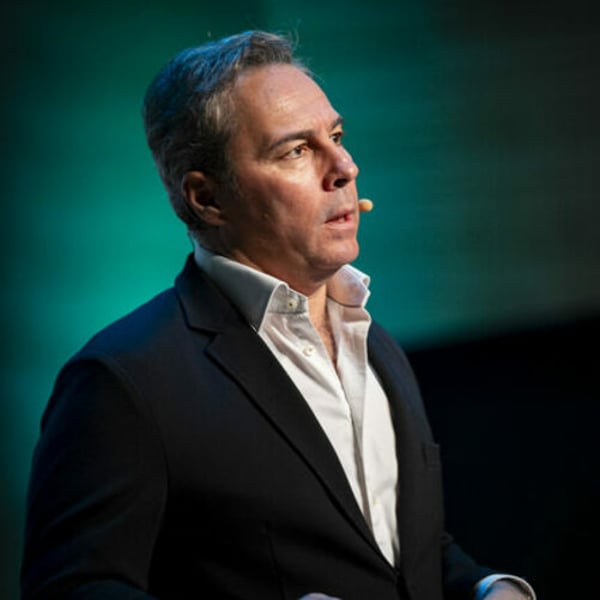
WOW opened its doors on Madrid’s Gran Vía in 2022, bringing a new department store concept to the heart of the Spanish capital. In 2023, it opened a second store on Calle Serrano and, in 2025, the company aims to reach €30 million ($32 million) in sales, with long-awaited profitability expected between 2026 and early 2027. Its founder, Dimas Gimeno, former president of El Corte Inglés, gave a talk on Thursday, Oct. 30, at the 4th Aragonese Congress on Commerce and Innovation, held in Zaragoza and organized by the Government of Aragon. FashionNetwork.com spoke with Gimeno about his vision for retail and the challenges facing the sector in general—and the platform he founded in particular.
FashionNetwork.com: You mentioned at the beginning of your talk that retail defines a city’s identity. How can that identity be maintained in a world where commerce is increasingly uniform?
Dimas Gimeno: By focusing on the local. It’s essential to recognize that a city—and its retail—should represent local products. And that’s where I think Spain is particularly privileged, because it offers an extraordinary variety of craftsmanship and gastronomy. We are also manufacturers and home to thriving brands—that’s what tourists are looking for.
FNW: You maintain that omnichannel has not worked, despite being the big bet of many brands, and that we must move toward “phygital.” Why?
D. G.: Omnichannel is a concept—a goal. I think it was conceived the wrong way. Why do I think it didn’t work? Because, at the time, it was framed—quite logically for those of us already in the physical world—as the task of digitizing our offline reality. It made sense: if your business is there, you adapt the new to what you already have.
However, it has been demonstrated that this alone isn’t sufficient. It’s not about digitizing the physical, but about understanding that you have to be 100% digital and, from there, design your physical presence. Now they call it “unified commerce”; I call it “phygital.” The key is to understand that channels no longer exist. We must stop thinking in terms of “physical” and “digital.” There’s one customer who moves fluidly, engages with your brand constantly, and in different ways.
FNW: Do customers no longer make that distinction between channels?
D. G.: If you ask a customer about physical or digital channels, they probably don’t care. They may have discovered you on a social network; from there, if they decide to buy, they’ll naturally move to your e-commerce. And from e-commerce, you guide them into the physical store. Why? Because the physical store is where true loyalty is forged, the brand develops far more, and, above all, the conversion rate is much higher.
Think of the shopping basket we all recognize online: the key would be for that basket to be the same in-store and online. Omnichannel doesn’t work because it simply digitizes a physical process. And the first requirement for being unified is that your range is 100% available online. Many brands and retailers still haven’t achieved this because it’s highly complex.
FNW: How can small businesses face this challenge? These are the ones that give cities their identity.
D. G.: By being very true to themselves—making sure what they sell is authentic, different, and unique. In that respect, small businesses are unbeatable. They also have a tremendously valuable relationship with their customers. We’re talking about generations, neighborhoods, personal connections—that’s fundamental.
However, these businesses struggle to invest in technology because they’re too small. They should also make their physical offer purchasable online. But individually, they can’t do it. Platforms must emerge that aggregate many small players and, by pooling them, create a kind of digital marketplace that unites them. That’s where I think public funding should play a role.

FNW: Why do you believe the physical store is the future of retail?
D. G.: First, because I consider myself a shopkeeper and because I’ve been a salesperson; I know what I’m talking about and I know how important it is. It’s a wonderful profession, although it’s not always well-regarded because it demands hard work. But I’m an advocate because I’ve seen—and I know—what a well-executed physical store can do when a customer comes in and wants to buy everything. The digital channel can’t do that; only a physical store can.
If you add to that a distinctive, surprising product proposition and a salesperson who is well-trained, passionate about what they sell, and equipped with today’s technological tools, you’ll be creating something unparalleled. That’s the key to competing with the big platforms: it’s exactly what they can’t do.
FNW: Customer experience, along with omnichannel, is one of the most recurring concepts in recent years. What should retailers offer customers?
D. G.: If you asked someone from the last century about customer experience, they’d say, “What’s that?” The experience itself is a combination of various things. For example, you can have a beautiful store, but if the salesperson hasn’t treated the customer well, the experience is ruined.
It’s a space that catches the eye, where you want to be, but where there’s also someone who attends to you, cares about you, perhaps even knows who you are. And thanks to that person, when you plan to buy one thing, you end up buying seven. That—and leaving satisfied—is a shopping experience. It’s about getting to know your customer, bringing them the product they want, even beyond that, and ensuring they return. And that was already true in the last century.
FNW: You discuss the importance of sales staff, but is it challenging to find those profiles for retail, as is the case in the hospitality industry?
D. G.: The service sector as such has the same problem: it’s not a career that’s well regarded. At WOW, we are successfully attracting top salespeople and, above all, young individuals who are eager to pursue a career in this field. This challenge has always existed: you need a good recruitment process, but you also have to train and motivate your people.
Another important point is to offer a professional career path within the company, with room for growth. If the idea is to hire people, keep them for a year, and then replace them… who wants to be a salesperson in a model like that?
FNW: Speaking of WOW, what is the company’s current status?
D. G.: We have been around for three and a half years. At that time, our ambition and what we want to achieve haven’t changed, but there has been a learning curve in understanding the economic model. It’s one thing to be clear that you’re presenting something truly unique and innovative, and another to learn how to translate that into profitability.
If you’re doing something different, you have to understand how you achieve profitability. It’s something we’ve already learned: we’re not profitable yet, but it’s a horizon we can already see. The idea is that, at some point next year, or at the latest, by the beginning of the following year, we will be profitable.
The key to our growth continues to be our commitment to the physical store, and in Spain, Barcelona is a city where we’d clearly like to be. But our big bet is digital. In digital, you can explore markets more cost-effectively and with less risk. The important thing, in any case, is to be profitable: no company grows if it isn’t.
FNW: What percentage does the online channel represent in your business?
D. G.: We had to change our technology platform less than a year ago, and now we’re working with Shopify. So we’ve had to reset our digital operations. Online is now growing strongly, and our idea is that, in 2026, it will account for more than 15% of the business. Of course, in the long term, it has to exceed that percentage by a wide margin.
FNW: Is your platform also available outside Spain?
D. G.: Yes, although, for the moment, we are only shipping within the European Union. The plan is to begin entering new markets in 2026.
FNW: Which store performs better, Gran Vía or Serrano?
D. G.: Serrano is a more rewarding store because it’s bigger; it delivers results more quickly. However, Gran Vía is surprising us: it’s a much more eye-catching store, and now that we’re taking greater care of it and expanding the range, it’s going to bring us plenty of satisfaction. Serrano has a higher turnover because it’s larger and has a much more recurrent customer base; Gran Vía is surprising us because it’s experiencing the boom along this retail corridor.
FNW: You talk about curating the assortment—what does that mean?
D. G.: The first phase of WOW was product curation, but obviously, this isn’t just about selecting brands; otherwise, we’d be a magazine or a museum, and we’d charge admission. From there, we embarked on a journey to understand the economic model and move a little closer to something more traditional—more commercial, with more recognizable stores.
At one point, we carried higher-priced products from luxury and semi-luxury brands, and we’ve phased out many of them—not because they didn’t sell well, but because of the purchasing model. We’ve had to evolve toward a more profitable format. When luxury brands force you to buy the merchandise, that’s where the numbers don’t stack up; it’s not so much about choosing one product or another.
Curating the range remains key, and we want to invest even more in it—bringing in different, innovative brands that can’t be found in physical stores. That’s the value proposition, regardless of whether the brands are expensive or affordable.
This article is an automatic translation.
Click here to read the original article.
Copyright © 2025 FashionNetwork.com All rights reserved.