
Politics
Takeaways from Tallahassee — Roster of hope
Missing Children’s Day isn’t an observance that screams “feel-good story.”
But this week’s 28th annual ceremony in Tallahassee paired the necessary remembrance with considerably more hopeful news.
It’s been more than four decades since FDLE launched the Missing Endangered Persons Information Clearinghouse, a first-of-its-kind effort in 1983, and it continues producing brag-board-worthy stats. The latest: In 2025, MEPIC issued 81 Missing Child Alerts and seven AMBER Alerts. As of Monday, all seven AMBER Alerts and 77 Missing Child Alerts had ended with the safe recovery of the missing children.
But MEPIC doesn’t work alone — it relies on juvenile justice workers, local police, federal law enforcement, some very good dogs and even everyday people to ensure reports and tips become reunification trips — and this year, FDLE handed out awards to more than 20 people and a trio of K-9s without whom Monday would have had substantially more gloom.
At the top of the list with the Commissioner’s Award was Katherine Gomez, whose work touched three major operations that recovered 60 children in the Tampa Bay region, 122 missing children across several states and 43 vulnerable youths across three states. Canh Bui, Crystal Patterson, Anthony Corso, Madeline Lopez, Michaela Darty and Kailee Healey shared the John and Revé Walsh Award for their work on Operation Cupid’s Arrow, a multiagency effort to locate critically missing and endangered children.
Other honorees did the painstaking investigative work that doesn’t fit neatly into a paragraph block on an awards ceremony itinerary. In St. Petersburg, Detective Rachel Hunter found a 14-year-old in immediate danger, then spent months mapping the network of offenders who had preyed on the child; FDLE’s Douglas Patterson and Green Cove Springs Police Detective Cora Milliken pursued a child-exploitation investigation from Florida to Rhode Island, securing 15 felony charges and an arrest; and federal officers Alvin L. Vincent and William Talaera were recognized for Operation LOCATE, which FDLE says located 408 unaccompanied children who had been placed with sponsors.

FDLE spared us from asking the J-school 101 question and named the K-9 honorees — Layla, Hank and Ziva — and their humans, too. Layla and Ritchie Kaplan found hidden digital devices that proved crucial to a Tampa child-exploitation investigation; Hank and Coleman “Ryan” O’Gara followed a one-mile trail through streets, sugar sand and woods to find a missing teen unharmed; and Ziva and Tony Sun located two endangered juveniles.
Then there were two Duval County Public Schools employees whose ordinary workdays took an extraordinary turn. School bus operator Ann Tatum, certified only five months earlier, was transporting 34 kindergartners and two chaperones to the Jacksonville Zoo when a semi rear-ended her bus. She kept her cool, phoned dispatch, and maintained control of the situation until firefighters arrived to take the baton, earning her School Bus Operator of the Year honors.
The same event saw teacher Franz Lerch act without hesitation to get the youngsters to safety — he even aided a student trapped by a seat belt while comforting the students, coordinating with first responders and keeping parents in the loop. The parent of the entangled kindergartner later showed up at a Duval School Board meeting to call him a “hero” on the record, a clear precursor to receiving the Citizen of the Year award.
The story behind another award began with someone whose name does not appear on the list. A citizen recognized a vehicle associated with an active Georgia AMBER Alert and provided authorities with real-time updates. The call set in motion a pursuit involving Law Enforcement Task Force/Team of the Year Award winners Richard K. Norris and Adrian Myers of FHP and Liberty County deputies William Buckhalt, Robert Livingston and Wesley Tharpe — a chase that ultimately ended with the infant safely returned to family.
But the unknown tipster’s act makes it clear that heroism doesn’t require leading multistate operations, being on the human end of a bloodhound’s leash, or piloting 10 tons of steel with three dozen hyperactive distractions in the rearview.
It can be rather ordinary: noticing an alert, recognizing the vehicle and making the call. More information on Florida’s AMBER & Missing Child Alerts, as well as the Purple Alert, Silver Alert and the newly created Spectrum Alert can be found here.
___
Coming up, the usual assortment of news, intel, and observations from the week that was in Florida’s capital city by Peter Schorsch, Drew Wilson, Drew Dixon, Liam Fineout and the staff of Florida Politics.
But first, the “Takeaway 5” — the Top 5 stories from the week that was:
— Take 5 —
Cruel and unconstitutional — A lawsuit has arrived one year after Florida Politics detailed how the Department of Children and Families’ (DCF) failure to move mentally ill inmates into treatment centers due to insufficient funding from the Legislature exposed the state to costly legal action. Disability Rights Florida has filed a federal complaint accusing DCF of leaving people deemed incompetent to stand trial by a court stuck in county jails for months — far beyond the two-week deadline required under state law. Lawyers from the Southern Poverty Law Center, Florida Justice Institute and the Washington law firm Terris Pravlik & Millian filed the suit, which names DCF interim Secretary Kathryn Williams as the defendant in her official capacity. At issue: a state law that gives DCF 15 days to move a defendant found incompetent from jail to a state mental health treatment facility upon receipt of the court’s commitment paperwork, after which the criminal case is frozen until the defendant regains competency.
Constitutional clash — On Monday, the Republican Party of Florida announced its support for Amendment 1, which would increase the amount of money that could be kept in the budget stabilization fund to 25%. Then Gov. Ron DeSantis took the opposite position. “This is a foolish constitutional amendment proposal. We already have a maxed-out rainy-day fund and have recorded the largest surpluses in state history. Any additional revenue should be used to lower taxes, including by assisting local governments with grants so that homestead properties can be exempt from local property taxes. Surplus revenue could also be used to remove tolls once the property tax issue is settled,” DeSantis said Monday. His position runs counter to that of party Chair Evan Power. “Floridians work hard for what they have. Government should not spend it all and then come back for more,” said Power. “Amendment 1 keeps Florida prepared for storms, emergencies, and downturns without raising taxes.”
DeSantis has doubts — In the wake of a new St. Pete Polls survey showing Amendment 3 with just 45% support, DeSantis is voicing pessimism about whether the proposed homestead exemption increase can pass in November. “I don’t know if it’s going to pass with 60%. I wanted to be bolder, and I thought that would bring out more voters who maybe aren’t enthused about voting,” DeSantis said at the University of Alabama’s Shelby Institute. DeSantis wanted school levies to also be subject to the increased homestead exemption and for a trust fund to be set up for fiscally constrained counties, two planks of his proposal that didn’t make it into the version approved by the Legislature. But despite the final product not being what he ordered, DeSantis said as recently as last month that he thought it would succeed. While it’s unclear whether voters’ resistance to the amendment is because it didn’t go far enough, this week’s poll makes clear that it clears 60% with only one group: Republicans. And just 63% of them support it. Independents favor it 40% to 32%, nowhere near the threshold, and Democrats oppose it, 48% to 24%.
Excellent prognosis — White House Chief of Staff Susie Wiles, a longtime Florida political consultant, has a clean bill of health after a breast cancer diagnosis in March. “After a medical appointment at the Mayo Clinic this week, my pathology results came back clear. I am cancer-free,” Wiles posted to social media. President Donald Trump revealed in March that Wiles had been diagnosed with early-stage breast cancer, but that her prognosis was excellent and she would be able to continue to work as she battled the disease. “Her Strength and her Commitment to continue doing the job she loves, and does so well, while undergoing treatment, tells you everything you need to know about her. Susie, as one of my closest and most important advisers, is tough and deeply committed to serving the American People. She will soon be better than ever,” Trump predicted. Supporters of Wiles, many of them Floridians, expressed gratitude and joy in the comments following Wiles’s update.
Case closed — Attorney General James Uthmeier has announced a settlement to an ongoing lawsuit with coffee giant Starbucks. The legal action, filed in December, alleged that Starbucks was engaging in “race-based quotas” when hiring employees at its 934 shops in Florida. Uthmeier now says the company has agreed to stop the practice. “Every Floridian deserves to be hired, promoted, and compensated based on merit, qualifications, and character — not race or sex,” Uthmeier said. “This resolution ensures that Starbucks’ policies and practices fully comply with Florida’s civil rights laws. DEI (diversity, equity and inclusion) can never be an excuse to violate civil rights. We appreciate Starbucks’ cooperation in reaching this settlement.” The civil legal action against Starbucks was filed in the 10th Judicial Circuit Court in Highlands County. The 21-page lawsuit didn’t single out a particular incident or an individual. But it pointed to a series of practices Starbucks has engaged in over the past five years that the suit said resulted “in a pattern or practice of discrimination.”
— Guns and ships —
This week in Lakeland, DeSantis announced the second year of the Second Amendment Sales Tax Holiday, which provides tax relief on firearms, ammunition and a wide range of hunting, fishing and camping supplies through Dec. 31.
DeSantis also broke ground on the Florida Archery Center at Tenoroc in Lakeland, which, on paper, will expand opportunities for Floridians to participate in shooting sports and enjoy the outdoors safely.
“Since I became Governor, we have enacted billions of dollars in tax cuts. This year’s hunting, fishing and camping sales tax holiday — ongoing through Dec. 31 — will provide Floridians with even more tax relief. We are proud to protect Floridians’ Second Amendment rights while helping hunters, anglers, and sportsmen keep more of their hard-earned money,” DeSantis said.

The sales tax holiday began Sept. 1 and runs through Dec. 31. During the window, Florida will suspend the collection of sales tax on eligible firearms, ammunition and hunting, fishing and camping equipment.
“Consumers can take advantage of the 2026 Hunting, Fishing, and Camping Sales Tax Holiday by purchasing qualifying supplies tax-free from Sept. 1 through Dec. 31. Thanks to Gov. DeSantis and the Legislature, this is an opportunity to invest in equipment that helps connect people with Florida’s great outdoors,” added Florida Fish and Wildlife Conservation Commission Chief Conservation Officer George Warthen.
The holiday is projected to provide approximately $40 million in tax relief to Florida’s hunters, anglers and sportsmen.
The Florida Archery Center at Tenoroc was authorized in this year’s state budget. Tenoroc provides the public with supervised rifle and handgun ranges, sporting clays, 5-stand, trap, air rifle and archery ranges, allowing Floridians to meet other sports enthusiasts, shoot responsibly and exercise their Second Amendment rights safely.

— Green for the blue —
This week, while visiting everyone’s favorite butter town, Land O’Lakes, DeSantis awarded more than $10 million in bonuses to 1,506 new law enforcement officers through the Florida Law Enforcement Recruitment Bonus Program, including 38 new recruits in Pasco County.
Nearly 12,500 new law enforcement officers across the state have received bonuses through the program since 2022, totaling more than $83 million.
“We have awarded nearly 12,500 bonuses totaling more than $83 million to our law enforcement officers. We have also made record-breaking investments in officer pay, benefits, training, and protections for the men and women who put their lives on the line to protect the people of our state. We continue to build on this foundation to keep Florida the most law enforcement-friendly state in the country,” said Gov. DeSantis.

The program provides a one-time $5,000 after-tax bonus to newly recruited and employed officers in recognition of their choice to serve in Florida. The bonuses are part of a broader initiative to solidify Florida’s position as the nation’s “law-and-order state.”
Under the Fiscal Year 2026-27 budget, DeSantis also secured an additional $19.8 million in pay increases for sworn state law enforcement officers. Beyond the $5,000 recruitment bonus, benefits of becoming a Florida law enforcement officer include financial stability, upward mobility, health and retirement benefits, student loan forgiveness programs, home loan programs and more.
For more information about the Florida Law Enforcement Recruitment Bonus Payment, visit FloridaJobs.org/Recognition-and-Recruitment.

— No bars —
Floridians fed up with nonstop scam calls and texts may soon see tougher penalties if Attorney General Uthmeier gets his way.
“If you’re anything like me, you’ve probably been on the receiving end of nonstop calls and texts” pitching potential rip-offs, Uthmeier said during a news conference in Pembroke Pines.
Uthmeier said his office is drafting proposals for lawmakers to consider during the 2027 Legislative Session. He said the office has acted against several scams, but penalties are often limited to misdemeanor charges. Uthmeier wants the state to beef up sentences.

“This is a heightened priority for us,” Uthmeier said. “We also need new legislation to crack down.”
Those scams include bogus law enforcement fundraisers, fake jury-duty requests and false claims that police will arrest residents. Countless others exist.
“That needs to be a heightened felony with mandatory jail time,” Uthmeier said.
Uthmeier also wants to pressure telecommunications providers whose platforms carry the fraudulent traffic.
“We also want to put legal requirements on the telecommunications providers … that they cut off an unlawful campaign,” Uthmeier said. “They need to take deliberate action to shut it down.”
— Running up the score —
Agriculture Commissioner Wilton Simpson is adding another 1,076 acres to the list of Florida farmland permanently protected from development.
The Agriculture Department announced rural lands protection easements covering three farms. The properties include the 85-acre Young Family Farm timber tract in Putnam County, the 75-acre David and Elizabeth Hunt cow-calf ranch in Polk County and the centerpiece — the 916-acre G-3 Ranch Addition, also in Polk County.
The G-3 deal dwarfed the other two tracts in both acreage and cost. The easement cost $6.45 million, including $500,000 from Polk County.

G-3 covers pasture, row crops, pine forest and former citrus groves being converted to strawberry and watermelon production. Creeks on the property feed the Peace River, and the land may also provide habitat for Florida panthers and other wildlife.
Properties secured via the Rural and Family Lands Protection Program remain privately owned, and farming operations continue as normal. The money that changes hands purchases the parcels’ development rights, which allows the state to block future pickleball complexes … or, you know, development in general.
Though RFLPP has been around for 25 years now, one could be forgiven for believing it launched when Simpson took office in January 2023 — of the quarter-million acres in the state’s easement inventory, nearly 182,000 were added during the Trilby Republican’s first term.

— A&M HOF —
Now is their time to shine.
On Monday, Agriculture Commissioner Simpson and the Florida Agricultural Hall of Fame Foundation announced Jeffrey Dewey Gargiulo, Lynetta and Ken Griner, and Ron St. John as the 2027 Florida Agricultural Hall of Fame inductees. For more than 45 years, the Florida Agricultural Hall of Fame has honored men and women who made long-lasting contributions to Florida agriculture and mentored young people who will carry the industry forward.
The induction ceremony will take place at the Florida State Fair’s Agricultural Hall of Fame Banquet on Feb. 9, 2027. Congratulations are in order for the inductees.
“Florida agriculture not only puts food on our tables, but it sustains communities in every corner of the state and is the backbone of our economy, supporting hundreds of billions of dollars in annual economic impact. Florida agriculture’s success is due to the old-fashioned hard work, vision, and leadership of people like Jeffrey Dewey Gargiulo, Lynetta and Ken Griner, and Ron St. John,” said Commissioner Simpson.
“Each of these Florida Agricultural Hall of Fame inductees has strengthened and grown Florida agriculture through innovation, entrepreneurship, service, and supporting the next generation of farmers, ranchers, and growers.”
Gargiulo has spent the last four decades helping shape Florida agriculture and the national produce industry. In 1978, he co-founded Gargiulo Inc. with his brother, John, sold it to Monsanto in 1997, and later became President and CEO of Sunkist Growers, where he helped expand global sourcing operations. He and his wife, Valerie, established Gargiulo Vineyards in Napa Valley in the early 2000s and contributed to philanthropy by co-founding the Naples Children & Education Foundation and the Naples Winter Wine Festival.

The Griners’ planned career paths took a hard right turn in 1989 with the tragic death of her brother, Tommy Usher, which led them to focus on the family’s multigenerational agricultural operation, Usher Land & Timber. She has been a member of the Florida Forestry Association since 1988 and became its first female president in 2012. She served 14 years on the Suwannee River Water Management District Governing Board, including 10 years as Chair, and served on the Florida Forever Advisory Council and, for more than a decade, on the Acquisition & Restoration Council and the Florida Forestry Council. Ken has served as President of the Florida Cattlemen’s Association, Chair of the Florida Cattle Enhancement Board and a Board member of the National Cattlemen’s Beef Association.
St. John started on a dairy farm in Western New York, but after moving to Florida in 1986 and establishing Levy County Dairy, he became a pioneer in advanced dairy practices. He founded Alliance Dairies, which grew into one of the region’s leading dairy enterprises. He is also a supporter of environmental conservation, cooperative leadership, education, entrepreneurship, youth agriculture, hospice care and international dairy development.
For more information about the inductees, the Florida Agricultural Hall of Fame or the banquet, visit FloridaAgHallofFame.org.

— Money for nothin2’ —
Chief Financial Officer Blaise Ingoglia is rebranding Florida’s unclaimed property website, one of the state’s most popular public services.
The website Floridatreasurehunt.gov is being recast to ClaimyourcashFL.gov. The Florida Department of Financial Services Division of Unclaimed Property returns assets to residents of the Sunshine State who may have overlooked or lost track of cash being held in utility deposits, stagnant bank accounts, outstanding paychecks or refunds they never claimed.
Ingoglia acknowledged that the unclaimed property program has long been successful in returning assets to Floridians but said it was time for a rebrand. The website now directs residents to an online portal where they can search for money owed to them using only verified identification.

“It’s long past due for a rebranding of the name,” Ingoglia said of the program while on the University of Central Florida campus. “The emphasis is on yours, not ours. … Unbelievably, 1 in 5 Floridians has abandoned property.”
Floridatreasurehunt.gov has carried that moniker for 20 years — and this year alone, several months have set records for returns to Floridians claiming abandoned property.
The unclaimed property program focuses on monetary property in financial assets only. Physical property is not part of the service.
Ingoglia held the announcement on the UCF campus and presented a $41,700 check to school officials. His Office found that amount in outstanding unclaimed assets.
— Instagram of the week —


— Red snapper ahoy, hopefully —
Republican U.S. Sen. Ashley Moody is renewing efforts to secure approval for new Exempted Fishing Permit (EFP) applications for red snapper.
Moody is leading a South Atlantic congressional delegation urging the U.S. Department of Commerce to approve new permits for catching the species in federal waters. Moody has pursued the issue since March, though Commerce has not approved the applications.
She and several other lawmakers have worked to extend the red snapper season in Atlantic waters. In 2025, the red snapper season lasted only two days under federal regulations. A federal court also halted prior EFPs for Florida’s approved red snapper season in May.
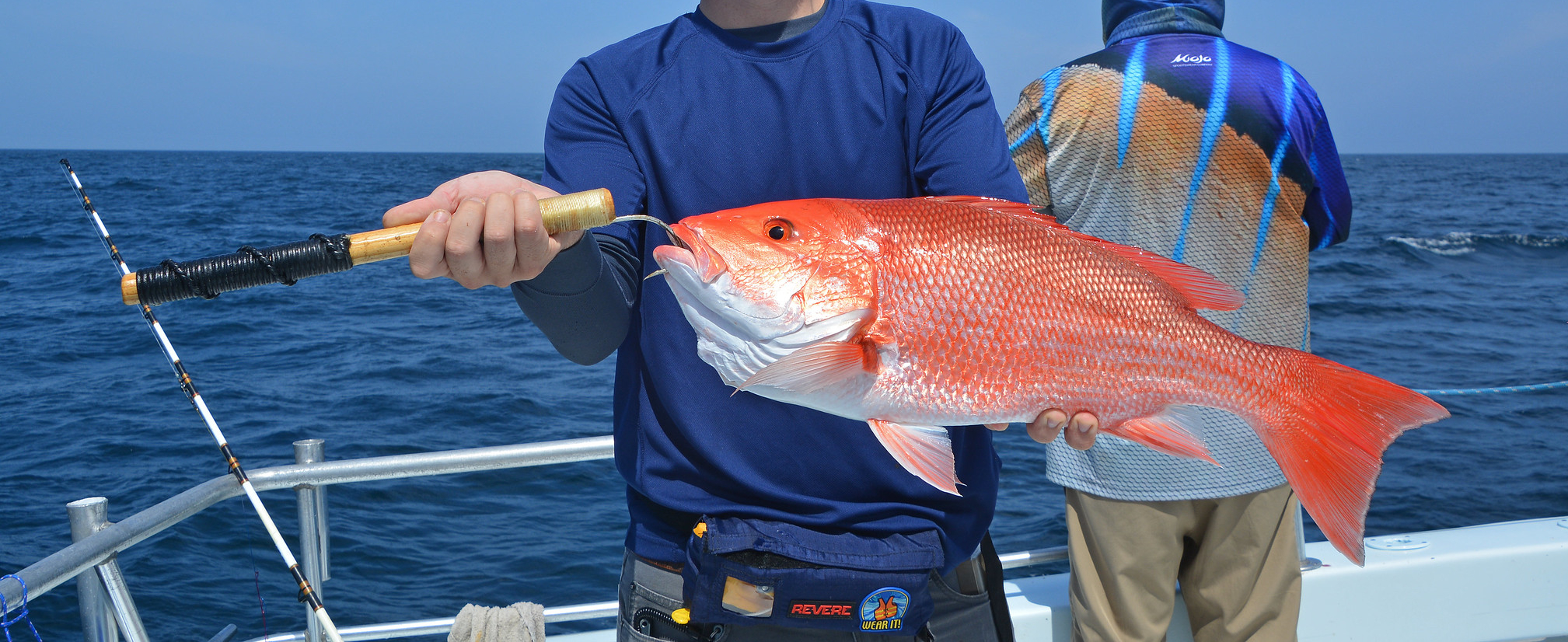
In a press release, Moody said her objective is to secure more state control over red snapper fishing in Florida. She said states have worked with the National Oceanic and Atmospheric Administration to develop stronger EFP application processes, and they want Commerce officials to move forward.
Approving the EFPs would improve recreational access, strengthen conservation based on the best available science, and support the coastal economies that depend on red snapper fisheries, according to Moody.
“South Atlantic anglers deserve more than a two-day red snapper season. We have already seen the success of state-led management in the Gulf, where Florida’s red snapper season grew to 126 days in 2025 while maintaining healthy fish stocks. That’s why I am leading an effort to ensure we can manage our own red snapper season and continue strengthening our recreational fishing opportunities,” Moody said.

— Xello-ent! —
Less than two months after the State Board of Education approved him for the job, Education Commissioner Henry Mack has federal dollars to put behind one of his longtime priorities.
The Florida Department of Education has been awarded $6.6 million from the U.S. Departments of Labor and Education to expand work-based learning for Florida students, particularly those in rural areas or without reliable transportation.
The money will expand Xello, the state’s career-planning and work-based learning platform. FDOE says more than 1.1 million students actively use the system. The grant will add virtual work experience, simulated industry challenges, technical skills exercises, and pre-apprenticeship opportunities, giving students access to career exposure without requiring them to travel far afield.
The effort will focus on industries the state considers both fast-growing and high-paying, including aviation and aerospace, life sciences, energy security, agricultural technology, information technology and cybersecurity. Florida Virtual Campus and Florida State University will help carry out the expansion.
“Florida’s workforce strategy is simple: every student should graduate with a clear path to a good job, not just a diploma,” Mack said. “These funds strengthen the strategy by giving millions of middle and high school students direct exposure to the kind of work in industries critical to the future of the Florida economy.”
The award follows Mack’s broad early-September reorganization of FDOE’s leadership team, aimed at better coordinating education and workforce programs. Mack previously oversaw career and adult education, vocational rehabilitation and other workforce-focused divisions at the agency.
— Disclosure day —
A little TO on the AI for students.
This week, the Florida State Board of Education announced it had adopted new rules governing the use of artificial intelligence (AI) and educational technology in Florida School Districts, charter School Boards and Florida College System institutions. The move creates a comprehensive, parent-centered framework for AI from VPK through college.
Florida’s new rules require AI to provide additional support for teachers and parents, not replace them, and require greater classroom transparency about how educational tools are used, including for students dually enrolled at Florida colleges.
“Florida will not outsource childhood to a chatbot. We welcome tools that help teachers teach, and students learn. We will not accept tools that hide from parents, harvest student data, grade kids in secret, or pretend to be a friend. In this state, a teacher stands in front of the class, a parent has the last word, and a student still has to think,” said Gov. DeSantis.
At a minimum, School Districts, charter School Boards and Florida College System institutions must adopt transparent policies governing AI and other educational technologies. They must notify parents when an AI instructional tool is approved — including the tool’s name, the courses involved, and how students will interact with it — and give parents the choice to opt their child into using the tool or to receive a non-AI alternative.

“An educated person can use a powerful tool without becoming dependent on it. That is the line Florida is drawing,” said Florida Commissioner of Education Mack.
“AI belongs in a classroom when it sharpens instruction, elevates or enhances the learning experience, protects privacy, and leaves the student’s own mind stronger than it found it. It does not belong in a classroom when it writes the essay, scores the child in secret, offers itself as a companion, or co-opts the intellectual virtue of critical thinking. We are preparing Floridians for an AI economy. We are not raising a generation that outsources judgment or rationality.”
Florida’s message for students, parents and teachers is that the state will not choose between innovation and humanity. Students will be prepared for an AI-driven world but won’t be trained by it, profiled by it, befriended by it or replaced by it.
“Boards exist to protect the conditions of real learning. These rules do that. They tell every District and college in Florida: publish the tools, tell the parents, keep the records, prove the instructional value, and do not let a vendor turn a child into training data. Innovation without those conditions is not leadership. It is abdication,” said State Board of Education Chair Ryan Petty.

— Downing drownings —
A new study shows Florida far exceeded the rest of the country in the number of drownings over a five-year period.
The analysis by Grigor Law Injury & Car Accident Lawyers found that 5,372 people drowned in Florida from 2020 through 2024. That’s an average of 1,074.4 deaths per year.
The next-closest state was Washington with 305 drownings per year.
Florida also ranked near the top in drownings per 100,000 residents, according to the analysis.
“That equates to a drowning fatality rate of 4.81 per 100,000 residents, the fifth highest of any U.S. state. By comparison, Alaska, the first-ranked state, recorded a rate of 8.63, and the national lowest, Connecticut, recorded just 2.01,” the study concluded.

The law firm’s analysts consulted the U.S. Centers for Disease Control and Prevention’s Web-based Injury Statistics Query and Reporting System to compile its rankings.
The figures support Florida lawmakers’ concerns. The Legislature this year approved a new measure to make it easier for parents to get swim lessons for their children.
Gov. DeSantis signed the measure (SB 428), which took effect July 1. It expands eligibility for the state’s Swimming Lesson Voucher Program from children ages 1 through 4 to those ages 1 through 7.

— Yes, yes and no —
Florida TaxWatch has released its guide to the three proposed constitutional amendments on Florida’s Nov. 3 ballot, recommending yes votes on the first two and a no vote on Amendment 3.
Amendment 1 would raise the cap on the state’s Budget Stabilization Fund from 10% to 25% of general revenue collections and generally require annual transfers of up to $750 million.
Amendment 2, meanwhile, would exempt tangible personal property used in agricultural production or agritourism from property taxes.
TaxWatch opposes Amendment 3, which, among other changes, would raise the homestead exemption for non-school taxes to $150,000 in 2027 and $250,000 in 2028 and cut the annual assessment cap on non-homestead property from 10% to 5%.
The watchdog group isn’t alone in opposing the controversial measure. State economists estimate it would cut $5 billion from local government budgets in the 2027-28 fiscal year, with losses expected to grow thereafter.

As for the recommendations, TaxWatch said they are anchored in “a determination of its appropriateness as a constitutional amendment, given the belief that the contents of the Florida Constitution should be limited to matters that are essential or fundamental.”
Florida TaxWatch President and CEO Jeff Kottkamp explained: “A proposed amendment may very well be a good idea, but voters must ask themselves, ‘Does it belong in the Constitution, or should the Legislature decide if it should be in statute?’ The Constitution loses much of its significance as the foundation of government when the process of constitutional amendment is used as a substitute for legislation.”
All three measures were placed on the ballot by the Legislature and require at least 60% approval to pass. Florida TaxWatch’s guide can be viewed here.
— Is your refrigerator running? —
Cool as ice.
Florida A&M University (FAMU) recently renovated a laboratory that houses a dilution refrigerator, a machine capable of creating an environment colder than outer space. It is one of two purchased through a pair of five-year National Science Foundation grants totaling $10 million.
While the name might make you hungry, it’s not a fridge like the one in your kitchen: There are no shelves or food inside. Its sole job is to remove nearly every trace of heat and vibration so researchers can study qubits — the extraordinarily sensitive building blocks of quantum computers.
Together, the refrigerators and the quantum research they enable put FAMU at the forefront of a rapidly developing field with potential applications ranging from medicine and health data protection to weather forecasting and fertilizer production with less energy and pollution.
“I want to be here for the breakthrough. I want to be here when it happens,” said Charles Weatherford, physics professor and Director of the FAMU Center for Plasma Science and Technology, where the Quantum Lab is located.

The lab also gives FAMU students the opportunity to learn on sophisticated equipment at the leading edge of science without leaving the 850 area code.
“The refrigerator is required to achieve the operating environment for the qubits. We have to get rid of thermal noise so we can manipulate the quantum state and harness its properties for computing,” said Wei Guo, a professor of mechanical and aerospace engineering at the FAMU-FSU College of Engineering.
“This research is all about developing better qubits. If we can build a large-scale quantum computer, then we can solve complicated problems that even large clusters of classical computers cannot solve.”
The research is also helping determine whether advanced computing can protect clinical health information by comparing methods of generating the random numbers used in cybersecurity.
It could also help with drug development: Researchers could use advanced computing to model how molecules interact, potentially narrowing the search for compounds that perform a specific medical function. They could also explore materials that are stronger, more efficient, or capable of conducting electricity with far less energy loss.
“We could do something really important here in this lab,” added Weatherford.

— Bye, bye Alford … Mike next? —
Big changes are coming for the Garnet and Gold sports.
This week, Florida State University (FSU) announced that Michael Alford is no longer serving as Vice President and Director of Intercollegiate Athletics, effective Sept. 14.
FSU President Richard McCullough appointed Bruce Warwick — the current Senior Associate Athletics Director — to serve as Interim Director of Athletics while the university conducts a national search for a permanent successor.
“Michael Alford has served the University and our student-athletes with dedication, and we thank him for his contributions to our athletics programs. As we begin this transition, our focus remains on the success of our teams and continuing to provide every competitive advantage we can to our student-athletes, coaches, and staff,” McCullough said.
Alford joined FSU as Director of Athletics in 2021 after serving as President of Seminole Boosters, Inc. During his tenure, FSU football head coach Mike Norvell led the Seminoles to a 13-0 season in 2023, but they were left out of the College Football Playoff in a controversial move — one defended by naïve talking heads such as ESPN’s Kirk Herbstreit. The Mouse is never wrong!

Following that season, Norvell signed an eight-year, $84 million contract extension amid supposed interest from Alabama, which was looking for Nick Saban’s replacement. Since that extension, which Alford oversaw, FSU football has gone 8-18 — and plays this Saturday against the very school that wanted Norvell and is doing just fine without him. Hindsight is 20/20.
“Changes like this are never easy, but sometimes necessary,” Florida State Board of Trustees Chair Peter Collins said. “We have made significant investments and structural changes in our athletics program and Seminole Boosters over the past few years, but more are needed. This step begins the next phase of restructuring that the University must commit to in order to compete in this era of college sports. The President and the Board are in lockstep on the mission and what the results must be.”
Warwick, who was hired at Florida State in 2020 after an extensive career with the NFL’s Los Angeles Rams, will oversee the athletics department’s day-to-day operations during the transition.
“It is important that we remain dedicated to providing continuity and support to our student-athletes, coaches and staff, who remain our top priority,” Warwick said.

— Purple until 2030 —
On Tuesday, Tallahassee State College (TSC) announced that it had renewed its designation as a Collegiate Purple Star Campus — recognition of TSC’s continued support for military-connected students and families.
The Collegiate Purple Star Campus Designation recognizes Florida colleges and universities that demonstrate a commitment to helping military students and families successfully transition to and navigate college. The designation lasts three academic calendar years, extending TSC’s status through April 2030.
“Military-connected students bring tremendous experience, perspective, and leadership to our campus community. We are proud to continue providing the resources and support they need to achieve their educational and career goals. This designation reflects the commitment of our faculty and staff to ensuring every student has the opportunity to succeed,” said Jim Murdaugh, President of TSC.

A highlight of TSC’s commitment to military families is the Richard W. and Karen B. Moore Veterans Success Center — TSC’s one-stop resource for veterans, active-duty military members, reservists, National Guard members and military-connected families. The center helps students navigate educational benefits, connect with college and community resources and transition from military service to college and the workforce.
“Maintaining this designation reflects the work we do every day to make sure our military-connected students know they have a place at TSC and people here who are ready to help them. We are honored to serve those who have served our country and their families,” said Benjamin Carman, TSC Veterans Success Center Manager.
Florida College System Chancellor Kathryn S. Hebda also congratulated TSC on maintaining the designation and recognized its continued dedication to military students and families.
— 6 awards added to the display —
Get the speech ready and hope you don’t get played off by the orchestra.
This week, Leon County Government announced it had received six state and national awards for public relations excellence from the Florida Public Relations Association (FPRA), the City-County Communications & Marketing Association (3CMA), and the National Association of County Information Officers (NACIO).
The annual FPRA Golden Image Awards recognize outstanding public relations programs in Florida. The 3CMA Savvy Awards recognize government communications and programs that effectively engage constituents. NACIO’s Awards of Excellence honor the work of county government communicators and their departments nationwide.
“These award-winning projects reflect Leon County’s commitment to deliver timely, relevant, and engaging communications for all the citizens we serve. The communication efforts of our County continue to set a high standard and exceed expectations, reaching citizens in innovative and impactful ways to keep them informed and connected,” said Leon County Commission Chair Christian Caban.

Leon County received two FPRA Golden Image Awards of Distinction: one in the website category for “Leon County Citizens Connect App/Emergency Information Portal” and one in the specialty-item category for “World Athletics Cross Country Championships Tallahassee 26 Library Card.”
Leon County won a 3CMA Silver Circle Award in the graphic design/other marketing tools category for “Leon County Government Miccosukee Community Center History Wall.”
“Leon County is dedicated to working alongside residents to deliver exceptional and essential services,” stated Leon County Administrator Vincent S. Long.
“Our Community and Media Relations team consistently finds new ways to promote transparency and connect citizens to our many County programs and services.”
Leon County also received three NACIO Awards of Excellence.
“Our communications team excels in connecting citizens with County services that shape our community. This recognition from state and national organizations speaks to the creativity, professionalism, and dedication of our Community and Media Relations team,” added Leon County Public Information and Communications Manager Kianna Gilley.
— New senior center —
A new playground for the older folks.
On Sept. 23, the City of Tallahassee invites the entire 850 community to a 10:30 a.m. ribbon-cutting ceremony celebrating the opening of the second, 40,000-square-foot Tallahassee Senior Center.
The center will expand access to lifelong learning, wellness, community, fitness, art, music and more. Attendees may enjoy refreshments and tour the facility after the ceremony. The second senior center, at 2743 Welaunee Boulevard, will provide the community’s growing population of active adults with more opportunities.
“Opening the second Tallahassee Senior Center is a testament to the City’s commitment to transformative projects that enhance the well-being of our community. The additional center will allow the City to better serve the growing senior population and the need for expanded programs for current and future residents,” Tallahassee Mayor John Dailey said.
Since 1978, Tallahassee Senior Services has operated from the historic Armory building on North Monroe Street, which was built in 1935 to accommodate military troops. Today, the building is home to classes, games, concerts and community gatherings.

With the second location, the flagship site and 14 smaller neighborhood branches, staff and volunteers will coordinate nearly 200 activities a month and host programs serving approximately 500 seniors a day.
“We are incredibly excited to welcome the community through the doors of Tallahassee’s second senior center. This beautiful building will be a place where friendships grow as seniors stay active, engaged and connected. We know the profound impact that investing in projects like this has on our community’s quality of life and appreciate everyone who helped get us to this point,” stated Senior Services Manager Ceola Grant.
The new building isn’t just for seniors; the entire Tallahassee community can enjoy it. Hours of operation will be 9 a.m. to 5 p.m.
Schedule information for the Welaunee Boulevard and N. Monroe Street centers will be available at Talgov.com/Seniors and in the weekly Tallahassee Senior Services newsletter.
For questions, visit Talgov.com/Seniors or call 850-891-4000.

— Emmy winners breakdown —
TV’s biggest night was Monday — the Emmys — so instead of the usual movie write-up, here’s what went down and a good list of what you should catch up on.
Numbers-wise, Apple TV led the night with 28 wins, followed by HBO Max with 21 and Netflix with 16. But the big story was Apple TV’s “Widows Bay,” which took home Best Comedy Series, beating the final season of the critically acclaimed, fan-favorite, and Television Academy-adored “Hacks” from the kings of TV themselves, HBO Max.
Widow’s Bay took home 14 Emmys, the most ever for a comedy series in a single season, breaking the record set by “The Studio” last year. It finished just four behind the overall record set by “Shogun” in 2024.
Matthew Rhys took home Lead Actor in a Comedy Series for Widow’s Bay and Lead Actor in a Limited Series/Anthology/TV Movie for “The Beast In Me” on the same night — the first person ever to do so — upsetting Oscar Isaac in “BEEF” Season 2 along the way. Rhys also has a Lead Actor in a Drama Series Emmy for “The Americans,” making him the only actor with a lead Emmy in all three categories.
Longtime TV veterans Hiro Murai and Katie Dippold took home gold for directing and creating and writing the series, respectively. Scene-stealer Kate O’Flynn beat Hannah Einbinder from Hacks in the supporting actress category, meaning no one has repeated in the category in seven years.
The same can’t be said for Jean Smart, who won Lead Actress in a Comedy for Hacks. She became the first person to go undefeated in the category for every season of her show. Five for five.
Stephen Root, a comedy icon of the past 30 years, won Best Supporting Actor in a Comedy for Widow’s Bay and even had a University of Florida shoutout on the prompter image below. It was considered a big upset over Harrison Ford for his turn in “Shrinking,” which was also up for a handful of awards Monday.

On the drama side, it was more of a “spread the love” evening. The sci-fi auteur series “Pluribus” took home Best Writing in a Drama Series for creator Vince Gilligan, the longtime showrunner behind The X-Files, Breaking Bad and Better Call Saul. It was his first win in the category — crazy when you think of the work he’s written. The show also won Lead Actress in a Drama for Rhea Seehorn, whom fans know from BCS.
Slow Horses took home an upset win for Best Direction in a Drama Series, the second year in a row it has been the dark horse (pun intended) and come out on top. Allison Janney sent shock waves through the theater when she won Best Supporting Actress in a Drama Series for Netflix’s “The Diplomat.” Notably, the show’s lead, Keri Russell, was also nominated this year and has never won an acting Emmy. She is married to Rhys, who made history and took home three Emmys that night, including one for producing Widow’s Bay. Ouch.
Tom Pelphrey won Supporting Actor in a Drama Series for HBO’s crime show “Task” while everyone’s favorite doctor, Noah Wyle, won Lead Actor for “The Pitt” for the second year in a row. The show also took home the Best Drama Series award. Many thought it would take home more major awards Monday, but parity took over.
“DTF St. Louis,” the darkly quirky and funny murder mystery, won Best Limited Series, as well as writing, directing, and two supporting acting awards. The show was created, written and directed by former FSU student Steven Conrad. Sally Field upset ’90s-nostalgia fans who wanted “Love Story” to win Lead Actress in a Limited or Anthology Series or Movie, taking the award for “Remarkably Bright Creatures,” which also won TV Movie. Two massive Emmy wins for the book-turned-TV movie.
Lastly, “The Late Show With Stephen Colbert” won Outstanding Variety Series in its final year, and “South Park” won its sixth Emmy in its 29-year run for its latest jabs at President Trump, which went viral.
— Capitol Directions —

Byron Donalds — Crossways arrow — A tenth-of-a-point lead is the Pepsi One of polling. Technically not zero. And in no way sweet.
David Jolly — Up arrow — Outspent seven-to-one, tied statewide, and an October riposte coming down the pike. Fabius Cunctator knew how to wait out elephants, too.
Angie Nixon — Crossways arrow — “Why don’t we just … wait here for a little while. See what happens?”
Ashley Moody — Crossways arrow — Sean Shaw was within two in September. Aramis Ayala was within seven. Then “Hells Bells” started playing.
James Uthmeier — Up arrow — His name is on so many Ashley Moody wins, he’s basically Larry Coker, J.D.
Wilton Simpson — Up arrow — “Because he’s not just self-important, he’s actually important.”
Nikki Fried — Up arrow — Get Right Wednesday presale is open. Lineup TBA.
Republican fundraisers — Up arrow — TIL the BEP is staffed by 913 likely Florida voters.
DCF — Down arrow — Apparently staffed entirely by people who hear a smoke alarm and file a noise complaint.
Ballard Partners — Up arrow — An agreement with Barrera today. Agrément tomorrow?
Jesus Tundidor — Up arrow — Not a coronation. Just Swiss timing.
Jack Brewer Foundation — Up arrow — Iron bars may keep a father in, but they don’t have to keep him out of his children’s lives.
FSU Law — Up arrow — When you’re ready to throw the remote through the TV at 3:35 p.m., take a deep breath and repeat after us: 91.8%. 91.8%.
FSU Athletics — Double down arrow — Heads. Will. Roll … in ascending order of buyout.
FSU Football — Crossways arrow — Hey, at least the lights will be on.
The post Takeaways from Tallahassee — Roster of hope appeared first on Florida Politics – Campaigns & Elections. Lobbying & Government..