Connect with us

Business

Qualcomm CEO warns that ‘everybody’s playing to win’ when it comes to an AI bubble—but it’s too early to call winners

Published

on


  • Qualcomm CEO Cristiano Amon said it’s too early to call winners in the AI race, comparing the current boom to the dot-com era while predicting the technology will bring long-term, transformative impact. His comments come amid growing concerns from industry leaders that soaring AI valuations may signal a developing market bubble.

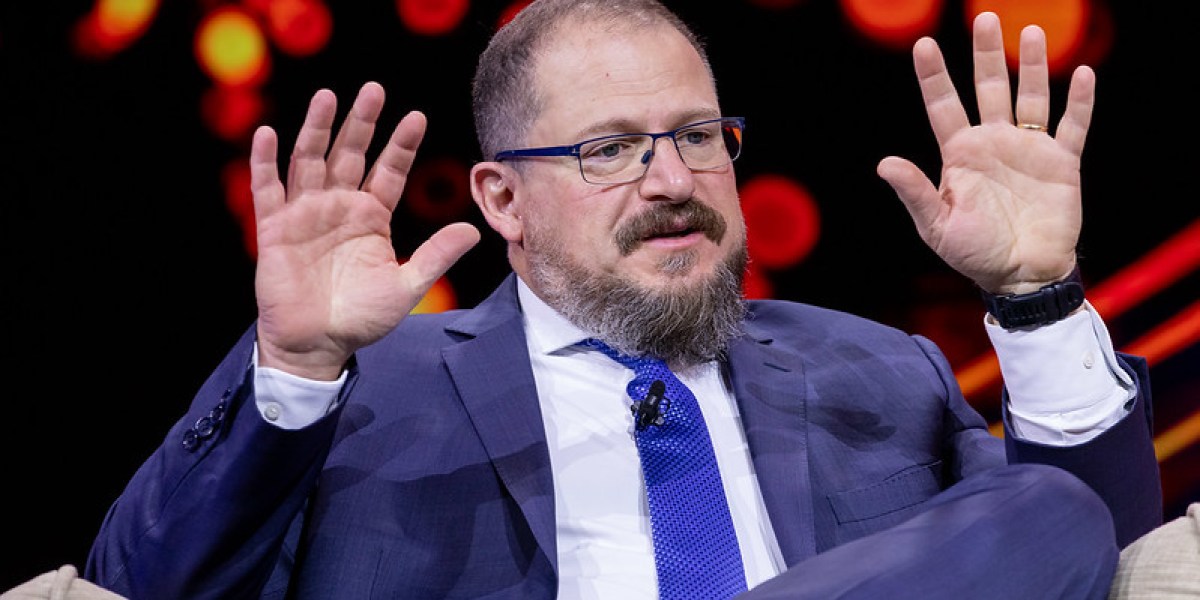
Cristiano Amon, the CEO of Qualcomm, said that when it comes to the question of an AI bubble, “everybody’s playing to win,” but it’s still too early to predict exactly how it will play out in the long term.

“It’s hard right now to declare who the winners are,” he told the audience at the Fortune Global Forum in Riyadh. “The opportunity is probably bigger than people think, but it’s going to become a competitive environment very soon.”

Comparing the AI industry to the dot-com era, Amon said that the internet is much bigger now than people ever dreamed 25 years ago.

“Who we expected to be the winners in the early days—it changed. It happened at different places in different industries, but it was much bigger than people thought in 1990, and I feel it this way about AI,” he said. “When you think about AI in the long term, it is going to be massive, and it’s probably underestimated.”

Amon called AI a “massive opportunity,” but acknowledged there will be intense competition in the space. He said companies that “have invested in architectures that are able to compete and be able to deal with the efficiency that is going to be required are going to be very well positioned” for this competition.

Fears that the AI industry might be in a bubble reminiscent of the dot-com era, when valuations surged far ahead of proven profitability, have been simmering over the last few months. As Big Tech companies continue to pour billions into AI development and deals, concerns have been growing that this investment may be outpacing sustainable growth. Industry figures, including former Intel CEO Pat Gelsinger and Bridgewater Associates founder Ray Dalio, have all voiced concerns about a potential AI bubble.

Earlier this year, Dalio warned that the current cycle on Wall Street appeared to be “very similar” to that seen in 1998 and 1999, before the dot-com bust. OpenAI CEO Sam Altman also weighed in when he suggested over the summer that investors might be “overexcited” about AI and compared the market’s reaction to the dot-com boom. 

“When bubbles happen, smart people get overexcited about a kernel of truth,” he said in an interview reported by The Verge. “If you look at most of the bubbles in history, like the tech bubble, there was a real thing. Tech was really important. The internet was a really big deal. People got overexcited.”

Amazon founder Jeff Bezos also described the current AI surge as an “industrial bubble,” acknowledging the hype but seeing long-term value.


Source link

Continue Reading

Business

Bessent says Trump’s $2,000 checks would need congressional vote

Published

on


Treasury Secretary Scott Bessent said President Donald Trump’s proposal to send $2,000 “dividend” payments from tariffs to US citizens would require congressional approval.  

“We will see,” Bessent said on Fox News’ Sunday Morning Futures. “We need legislation for that.”

Trump, who has touted the billions raised in US tariff revenue this year, has talked about the checks as public frustration mounts over the cost of living. Speaking to reporters on Air Force One on Friday, Trump said the checks would go out sometime next year to “everybody but the rich.”

“It’s a lot of money,” he said. “But we’ve taken in a lot of money from tariffs. The tariffs allow us to give a dividend.” He added that “we’re also going to be reducing debt.” 

Read More: Trump’s $2,000 Tariff ‘Dividend’ Marks Throwback to Covid Checks

The plan could cost the US government double what it’s projected to take in for 2025, according to one estimate. The Committee for a Responsible Federal Budget, a centrist watchdog group, estimated a preliminary $600 billion cost for the proposal, if the dividends were designed along the lines of government stimulus payments during the Covid pandemic. 

Net US tariff revenue for the fiscal year through September totaled $195 billion and many economists have penciled in about $300 billion for calendar-year 2025.

Bessent said Americans should start feeling more economic relief in the beginning of next year, citing the tax cuts in Trump’s signature policy bill passed earlier this year. 

“So I would expect in the first two quarters we are going to see the inflation curve bend down and the real income curve substantially accelerate,” he said.  


Source link

Continue Reading

Business

The Coast Guard has seized a record amount of cocaine while Trump says interdiction has failed

Published

on


 In justifying American military strikes on boats suspected of smuggling drugs, President Donald Trump has asserted that the longtime U.S. strategy of interdicting such vessels at sea has been a major failure.

“We’ve been doing that for 30 years,” he said last month, “and it’s been totally ineffective.”

Trump’s comments came around the same time that the U.S. Coast Guard announced it had set a record for cocaine seizures — a haul of 225 metric tons of the drug over the previous year. That milestone, however, has not dissuaded the Republican president from upending decades of U.S. counternarcotics policy.

Under Trump, the U.S. military has blown up 20 suspected drug boats, resulting in 80 deaths, in the Pacific Ocean and Caribbean Sea. Trump and other top officials have contended that such boats are being operated by narco-terrorists and cartel members with deadly drugs bound for America.

The strikes have generated international pushback from foreign leaders, human rights groups, Democrats and some Republicans who have raised concerns that the United States is engaging in extrajudicial killings that undermine its stature in the world.

Veterans of the drug war, meanwhile, say U.S. resources would be better spent doubling down on the traditional approach of interdicting drug boats, especially in the long term. That is because crews of drug boats frequently have valuable intelligence that can help authorities better target cartels and trafficking networks. Dead men, they say, tell no tales.

The Coast Guard has fought the drug war a long time

The Coast Guard for decades has interdicted small vessels suspected of smuggling illicit narcotics. Much of that work is focused on halting shipments of cocaine, most of which is produced in the jungles of Colombia.

Working with partner nations and other federal agencies — the Drug Enforcement Administration, the departments of State and Justice as well as U.S. Southern Command’s Joint Interagency Task Force-South in Key West, Florida — the aim is to inflict heavy losses on traffickers and limit the amount of drugs entering the U.S.

That campaign, by at least one measure, has never been more successful, despite constant complaints by the Coast Guard that it lacks funding to seize even more drugs.

The Coast Guard’s recent record cocaine seizure was almost 40% higher than the past decade’s annual average. The haul included 38 tons of cocaine offloaded by the cutter Hamilton when it returned from a two-month patrol. It was the largest amount confiscated by a single Coast Guard ship during a deployment, the Coast Guard reported. The interdictions have continued as part of what’s known as Operation Pacific Viper even during the federal government shutdown, with several cutters reporting major seizures last month.

In almost every case, drug smugglers have been brought to the U.S. for prosecution, and valuable information about ever-changing smuggling routes and production methods was collected — all without any loss of life and a far lower cost to American taxpayers. Experts said each missile strike is likely to cost far more than the payload of cocaine on every ship.

“The Coast Guard has extraordinary powers and authorities to do effective drug interdiction without killing unidentified people on small boats,” said Douglas Farah, a national security expert on Latin America and president of IBI Consultants. “When resourced, they are far more effective, sustainable and likely legal than the current Pentagon-led operations.”

Trump administration officials say strategy needed to change

Secretary of State Marco Rubio this week defended the shift in strategy, saying that “interdictions alone are not effective.”

“Interdictions have limited to no deterrent effect,” he added. “These drug organizations, they’ve already baked in the fact they may lose 5% of their drug shipments. It doesn’t stop them from coming.”

Part of the problem is that demand for cocaine is high, and supplies have never been so robust, according to authorities and experts. A sign of that trend: Cocaine prices have been hovering at historical lows for more than a decade.

The Coast Guard also does not have enough vessels or crew to halt it all. At most, it seizes not even 10% of the cocaine that officials believe flows to the U.S. on small vessels through what is known as the “Transit Zone” — a vast area of open water larger than Russia.

Cocaine shipments bound for the U.S. primarily work their way up the west coast of South America to Central America and then overland into the U.S. via Mexico. Shipments heading to Europe are smuggled through the Caribbean, often hidden in container ships.

Such interdiction efforts target cocaine, not fentanyl

In social media posts, Trump has claimed that his strikes have blown up boats carrying fentanyl and that each destroyed vessel has saved 25,000 American lives. According to experts and former U.S. counternarcotics officials, Trump’s statements are either exaggerations or false.

For the past decade, U.S. officials have sounded the alarm about rising overdose deaths in the U.S., particularly from opioids and synthetic opioids. Overdose deaths from opioidspeaked in 2023 at 112,000 but dropped to 74,000 in April. Experts have attributed that decline mostly to Biden administration efforts to boost the availability of lifesaving drugs that prevent overdose deaths.

The drug flowing to the U.S. from South America is cocaine. Fentanyl, on the other hand, is typically trafficked to the U.S. overland from Mexico, where it is produced with chemicals imported from China and India. Cocaine overdose deaths are less frequent than those from fentanyl. In the last year, just under 20,000 people in America died from cocaine overdoses, federal data shows.

Trump and administration officials have also claimed that the crews of targeted vessels were narco-terrorists or members of cartels.

The Associated Press visited a region in Venezuela from which some of the suspected boats have departed and identified four men who were killed in the strikes. In dozens of interviews, residents of the region and relatives said t he dead men were mostly laborers or fisherman making $500 a trip.

Law enforcement officials and experts echoed those findings, saying the smugglers captured by the Coast Guard are hired for little money to ferry drugs from point A to point B.

“They are hardly kingpins,” said Kendra McSweeney, an Ohio State University geographer who has spent years researching U.S. drug policies.

Trump administration officials recently promoted big seizures

In April, months before Trump launched his military campaign, his attorney general, Pam Bondi, traveled to South Florida to welcome home the Coast Guard cutter James from its latest antinarcotics patrol. It had seized 20 tons of cocaine worth more than $500 million.

Flanked by FBI Director Kash Patel, she praised a “prosecutor-led, intelligence driven approach to stopping these criminal enterprises in their tracks.”

“This is not a drop in the bucket,” said Bondi, standing in front of the vessel loaded with colorful, plastic-wrapped bales of narcotics stacked several feet high. “Behind you is half a billion dollars of pure, uncut cocaine.”


Source link

Continue Reading

Business

The 2026 class of American Rhodes scholars includes 5 students at U.S. military academies

Published

on


Five students at U.S. military academies and three each from Yale University, Harvard University and the Massachusetts Institute of Technology are among the 32 American winners named Sunday as 2026 Rhodes scholars.

The group includes students focused on housing, health outcomes, sustainability and prison reentry programs. They include:

Alice L. Hall of Philadelphia, a varsity basketball player at MIT who also serves as student body president. Hall, who has collaborated with a women’s collective in Ghana on sustainability tools, plans to study engineering.

Sydney E. Barta of Arlington, Virginia, a Paralympian and member of the track team at Stanford University, who studies bioengineering and sings in the Stanford acapella group “Counterpoint.” Barta plans to study musculoskeletal sciences.

Anirvin Puttur of Gilbert, Arizona, a senior at the U.S. Air Force Academy who serves as an instructor pilot and flight commander. Puttur, who is studying aeronautical engineering and applied mathematics, also has a deep interest in linguistics and is proficient in four languages.

The students will attend the University of Oxford as part of the Rhodes scholar program, which awards more than 100 scholarships worldwide each year for students to pursue two to three years of graduate studies.

Named after British imperialist and benefactor Cecil John Rhodes, the scholarship was established at Oxford in 1903. The program has more than 8,000 alumni, many of whom have pursued careers in government, education, the arts and social justice.


Source link

Continue Reading

Trending

Copyright © Miami Select.