
Business
How can Europe achieve its growth potential?

Despite the scale and longevity of Europe’s largest businesses, many are struggling to achieve the same pace of growth as companies in the U.S.
The combined revenues of the companies on the Fortune 500 Europe list rose 4% to a record high of $15.5 trillion this year and profits climbed 3% to $1 trillion. However, on a constant currency basis, the percentage increase in revenues is less than 1% and net profits actually declined. In contrast, the U.S. companies on the Fortune 500 saw profits rise by 12.4% and revenue by 5.4%.
Addressing this growth issue represents a significant challenge for Europe’s largest companies and was the overarching question executives debated at the Fortune CEO Forum, held in London on 16 September.
Here, some of those business leaders share their views on how to drive European growth.
Microsoft
Samer Abu-Ltaif, president for Europe, the Middle East, and Africa, Microsoft
Europe has several strengths. It has talent, great levels of trust and leads on responsible innovation—and it has done for centuries. But at this point in time, there is a need to re-evaluate how we can evolve the regulatory framework that exists in Europe from being sometimes pre-regulating or over-regulating to becoming one that drives innovation. This is what will enable Europe to excel.

Joe Maher
Nicole Melillo, managing director, Volvo U.K.
I believe Europe’s biggest opportunity for growth is around the sustainability agenda. Everyone shares that common goal to lower carbon emissions. I understand that our industry, the transport industry, is a big contributor. So Volvo very much should be part of the solution, not the problem. We’re working together to make sure, with other manufacturers, that we’re able to move forward in that space.

Mastercard
Kelly Devine, president, Mastercard Europe
Europe has a fantastic history of innovation, and there’s a real opportunity to capitalize on that. European companies need to foster that innovation from the talent that’s coming out of our universities and create the investment capacity. We need to make sure we’re retaining that talent in Europe and answer the question: How do we make sure that we’re creating the programs that enable those entrepreneurs to take the steps they need to be able to grow and scale their businesses here in Europe?
EDF
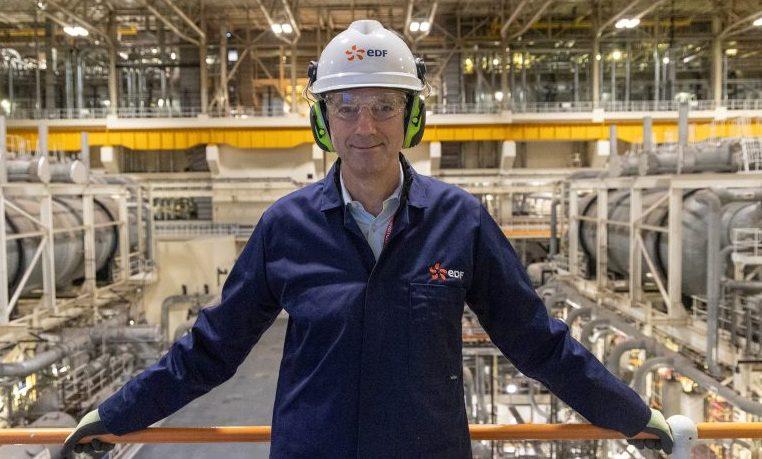
Alex Chisholm, U.K. chair, EDF
The lack of competitiveness within Europe is a reflection of high energy costs. It’s not only me who says that, it’s also within the Draghi report [on EU competitiveness] and is reflected in the U.K. government’s industrial strategy, so we need to really address this. With cheaper energy and plentiful electricity, Europe can improve its energy security, and that will be very good overall for our competitiveness and future growth.
This also represents an opportunity for Europe. The European energy system is only 23% electrified and we are importing 97% of the crude oil that we need and around 83% of the gas. That is money being spent elsewhere in ways that are not sustainable. If we improve our electrification, that will be very good for the environment, economy, and employment. I know that is the ambition that Europe has, but it needs to be more serious in embracing electrification, and the U.K. is part of that, too.
Bloomberg / Contributor
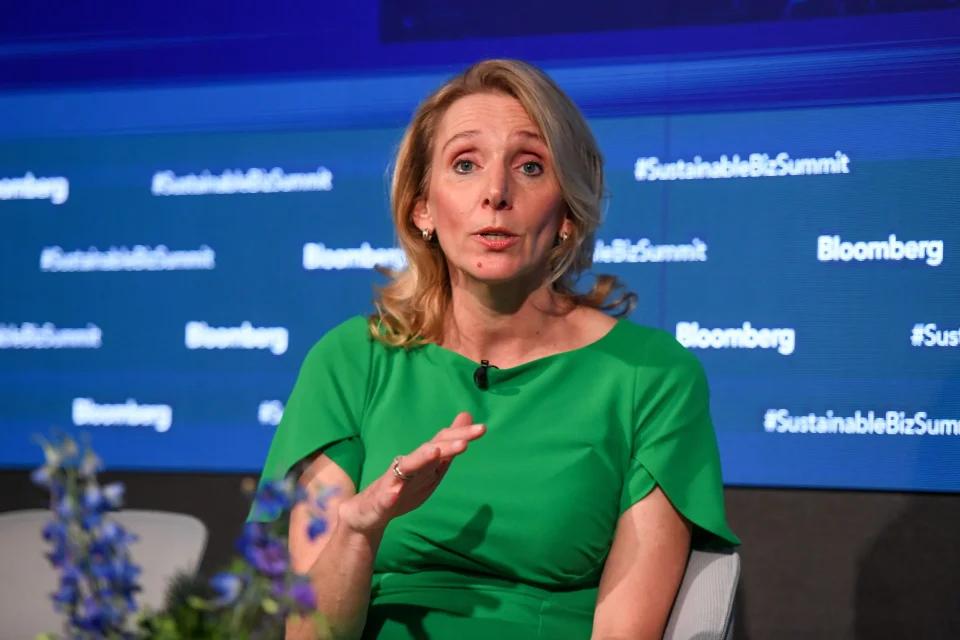
Hanneke Faber, CEO, Logitech
There are a lot of opportunities for growth in Europe. We’re a very wealthy continent with about a half billion people and we have some real strengths in engineering, innovation, and education, with some of the best technical universities on the planet.
But Europe needs to improve productivity. AI represents a huge opportunity for this. At Logitech, we’ve built more than 3,000 AI agents and AI has become deeply embedded in the work we do—not just in engineering but across all functions. This is reflected in our operating expenses as a percent of sales—it was up about 200 basis points last year. AI played a big role in that and that’s an opportunity across the continent.
Anant Maheshwari, president and CEO of global regions, Honeywell
Companies in Europe are grappling with increased energy costs and challenges around energy security, sustainability, and ensuring a continuous supply. The positive is that we are starting from a good position. Nearly half the mix of energy in Europe is already renewable, and there is a lot of focus and openness to try new sources, for example, in biofuels and other new technologies. Europe will continue to lead the world in terms of its push for energy sustainability and this is a good thing, not just for Europe but for the world.
We need to focus on Europe’s strengths and how Europe can position those strengths to the rest of the world. Europe definitely has a lot of capability within life sciences and healthcare, and I think that should remain Europe’s key advantage compared to the rest of the world. Similarly, Europe’s renewed focus on aerospace and defense, is likely to create a lot of positive cycles of additional industries and engineering, that’s going to help Europe going forward. So I strongly believe focusing on industries that are Europe’s strength and doubling down on them represents the best path for sustained growth and success for Europe.
Anthropic
Pip White, head of U.K. & Ireland, Northern Europe, and Israel, Anthropic
The biggest thing holding Europe back from achieving its growth potential is the CEO and board-level mandate. I still think we’re in the infancy of AI adoption and organizations really understanding the art of what’s possible with this technology. We still see niche use cases of AI around productivity, but organizations should also think about whole-scale transformation. But these discussions need to take place at the board level in order for us to accelerate the opportunities that this technology can deliver.
For the latest coverage and updates from Fortune CEO Forum, as well as insights into the companies on our list, visit this page.