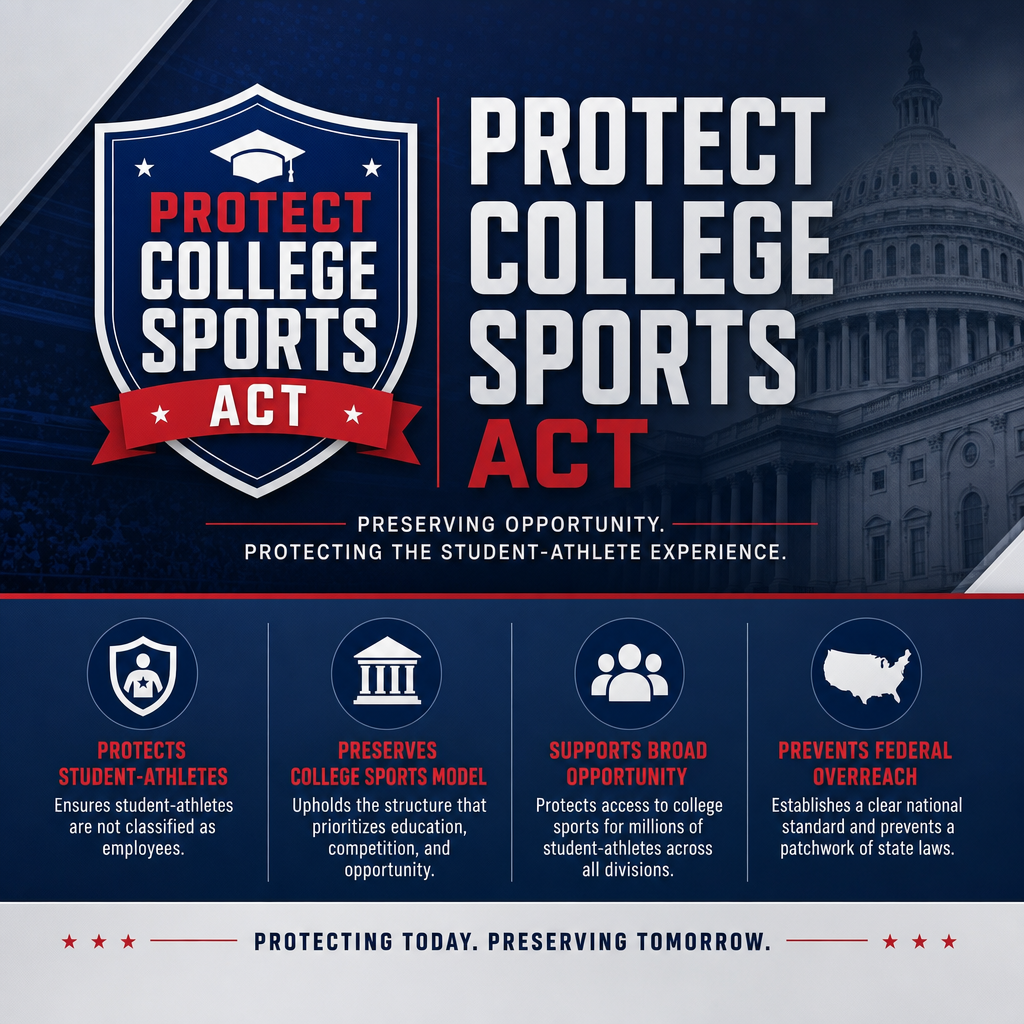
Senate Advances College Sports Reform After 74–24 Vote
Things are getting interesting on the congressional front as college sports inches closer to federal oversight. On September 14, 2026, the Senate voted 74–24 to proceed with the bipartisan Protect College Sports Act, clearing the 60‑vote filibuster threshold and moving the bill toward a final floor vote. The action marked one of the most significant steps Congress has taken in years to address the legal and financial turmoil surrounding college athletics. ABC News reported the vote as a major breakthrough for lawmakers seeking national standards.
What the Bill Would Do
The Protect College Sports Act aims to replace the current patchwork of state laws with a unified federal framework governing athlete compensation, name‑image‑likeness deals, transfers, and eligibility. ABC News noted that the bill includes caps on agent endorsement fees, expanded scholarship and health benefits, and greater NCAA authority to enforce national rules. Supporters argue these measures would stabilize the system, reduce litigation, and prevent bidding wars between schools and boosters. Critics, including voices highlighted by POLITICO, warn that the bill grants too much power to the NCAA without enough safeguards for athletes.
Political Dynamics Behind the Vote
The bill is sponsored by Sen. Ted Cruz of Texas and Sen. Maria Cantwell of Washington, an unusual bipartisan pairing that has helped push the legislation forward. ABC News reported that twenty‑five Democrats joined most Republicans in supporting the motion to proceed. Minority Leader Chuck Schumer also backed advancing the bill. Opposition came from all four Black Democrats — Cory Booker, Raphael Warnock, Lisa Blunt Rochester, and Angela Alsobrooks — who raised concerns about athlete protections. The NAACP publicly opposed the bill as well, according to AP News.
President Donald Trump said he would sign the legislation “immediately” if it reaches his desk, ABC News reported.
Why the Vote Matters
The 74–24 tally cleared the filibuster and signaled broad Senate interest in addressing what AP News described as the “chaos” of college sports: spiraling costs, lawsuits, and disputes over the transfer portal. With midterms approaching, lawmakers see this bill as the last best chance to impose national rules before courts or state legislatures reshape the landscape on their own.
What Comes Next
The Protect College Sports Act now heads to a final Senate vote. If approved, it will move to the House, where POLITICO notes it faces its own political hurdles. The coming weeks will determine whether Congress can deliver the first major federal overhaul of college sports in decades.