Connect with us

Business

The skills you need to get hired in 2026, according to Coursera CEO Greg Hart

Published

on


It hasn’t been the easiest year to land a job, and in 2026, the employment landscape will likely remain just as volatile. Managers will be grappling with how to deploy AI in their businesses and what skills they really need on the team to bring about efficiencies. Companies will also be wrangling with policy headwinds such as tariffs and the normalization of the base rate, as well as how consumer spending will hold up through the rest of the year.

So far, it’s been younger workers who have struggled the most. According to a November note from Oxford Economics, Gen Z job seekers—currently aged 13 to 28—are facing multiple barriers to landing a role. With hiring tracking downward, unemployment has risen particularly fast among those with less experience, so while America’s overall unemployment rate has sat around 4%, those in the 16 to 19 age bracket are contending with a 14% rate, while 19 to 24-year-olds average around 9%.

Education is a significant factor in the job prospects of young people: Those who have a college degree face a fractionally lower unemployment rate at the time of writing (a little over 6%) than peers with a high school diploma or some level of college training. While debate is rife about whether college degrees are worth the financial burden, it’s evident that employers want to hire people who have demonstrated a commitment to learning.

Enter the trend of “microcredentials,” professional certificates that demonstrate a candidate is pursuing additional training or qualifications to support the roles they’re applying for. According to $1.3 billion learning platform Coursera, more than 90% of employers would rather hire a candidate with a microcredential on their CV than one without.

According to Coursera’s CEO, Greg Hart, the most popular programs on the site revolve around technology and, more specifically, AI. Particular professional certificates that stand out are two from Google: ‘Foundations of Data Science’ and an analytics program called ‘Data, Data, Everywhere.’ Also popular is Google’s project management certificate, as well as a ‘Foundations of Cybersecurity’ course.

The platform’s Jobs Skills report for 2025 found that employers’ priorities for applicants align with the skills individuals are developing: GenAI and HR technology are the most in-demand skills, followed by soft skills such as assertiveness and stakeholder communications.

While a cynic might argue that the CEO of an education platform would recommend learning as a way to get a foot on the career ladder, Hart’s take is shared by some of the world’s most famous CEOs. JPMorgan Chase CEO, Jamie Dimon, advises young people to ditch social media and “learn, learn, learn, learn, learn, learn, learn” instead. Citadel CEO, Ken Griffin, advises to never stop learning, and Bridgewater Associates founder Ray Dalio advises youngsters to “realize that you know virtually nothing.”

“We do see a big spike in enrolments, typically, in January,” Hart tells Fortune in an exclusive interview. “It’s sort of like gym enrolments, people are thinking new year, new you, that kind of thing, and education is obviously one of the best ways to refashion oneself.”

Looking ahead, generative AI will continue to be the expertise of the moment: “It’s the most in-demand skill in our history as a company right now,” Hart says.

However, that’s not to the exclusion of soft skills and insight into other sectors. Healthcare, for instance, is experiencing an increase in interest. That aligns with the employment picture in the U.S., with the Bureau of Labor Statistics reporting that the industry is one of the few sectors experiencing employment growth at present.

A lack of soft skills is also presenting barriers for young people to get hired. Last year, a report from technology education provider General Assembly found that fewer than half of workers (48%) and just 12% of mid-level executives think today’s entry-level workers are adequately prepared for the workforce. Among the key factors adding to the lack of confidence was that managers felt new workforce entrants lacked skills like communication, collaboration, and adaptability needed to succeed in their organizations.

“I do think that as people recognize that AI is enabling technology to do more and more of people’s jobs, the value of the human side of the equation actually increases,” added Hart. “Your functional knowledge in a world where AI is now doing more of the function, it’s not that it’s less important, it’s that it’s not as much of a distinguisher anymore.”

‘The courses I told my sons to take’

Hart practises what he preaches, revealing the courses he advises his two Gen Z sons, aged 22 and 21, to take.

Hart’s elder son is a finance major, and as such, “I told him to take Gen AI for finance. It’s highly convenient, it’s directly relevant, and after he finished that—he liked it—the next question was ‘What should I take next?’

“I said, ‘Go look through the Gen AI-related certifications and figure out which one you think is most relevant. I can tell you that being facile with data is going to be useful in your career, so look at how Gen AI can help you be really good at data analytics. What finance majors used to do is just spend time on spreadsheets, so figure out how you can use Gen AI to do that more effectively and put it on your resume.”

Hart’s younger son is a video game design major, and Gen AI was again recommended for capabilities like project management. But Hart added: “I said to him: ‘You need to develop as many skills related to game design as you possibly can, so not just your hard skills around coding or around multimedia, but how you knit all of that together. Project management, regardless of what you do in life, is a hugely effective and useful skill, so look at some of the things that are around project management, look at some of the things around entrepreneurship as well.”


Source link

Continue Reading

Business

Why Singapore is the only Southeast Asian country in Pax Silica, the U.S.’s new AI ‘inner circle’

Published

on


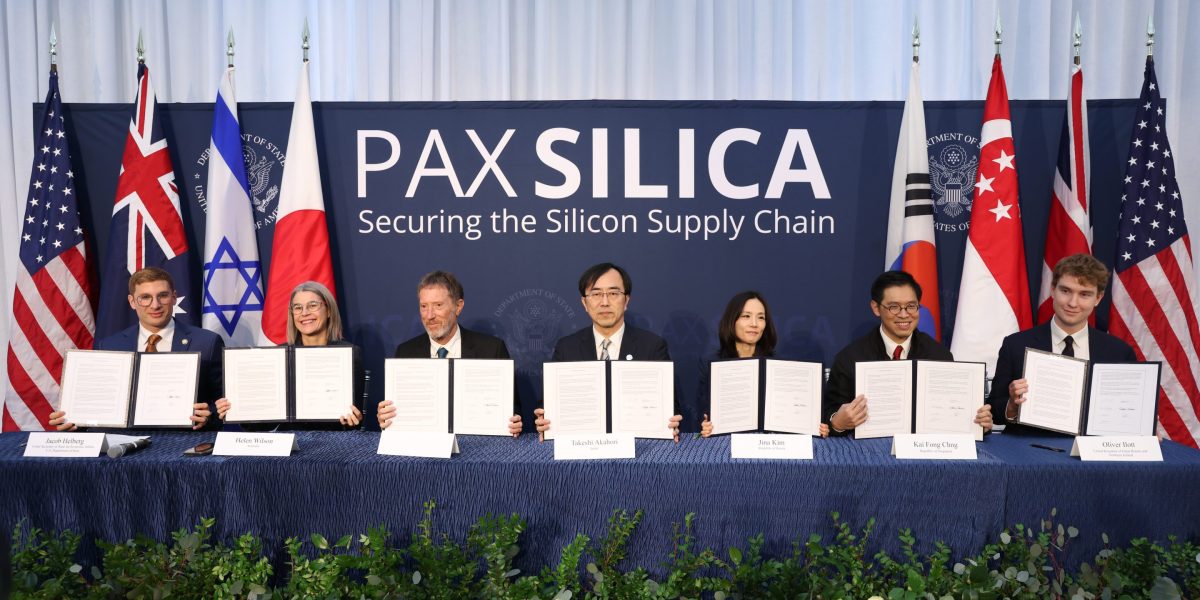
With its new Pax Silica Declaration, Washington has picked its most trusted partners in the AI sector: An array of close U.S. allies, including Australia, the U.K., and Israel. 

Yet despite deepening trade relations between the U.S. and ASEAN nations like Thailand, Malaysia and Vietnam, Singapore remains the agreement’s only Southeast Asian signatory. That decision comes even as ASEAN nations like Malaysia are investing in their own AI industries, like semiconductors and data centers.

Singapore is “precisely the kind of ‘trusted node’ the U.S. is seeking to anchor AI-era supply chains,” says Ruben Durante, a professor of economics and Provost’s Chair at the National University of Singapore (NUS). Singapore “offers strong governance, regulatory credibility, capital markets, logistics, and advanced data center and connectivity infrastructure.”

The country has a long history with chips. U.S.-based National Semiconductor set up a plant there in 1968, followed by the government’s creation of Chartered Semiconductor Manufacturing in 1987. Singapore now accounts for around 10% of all chip production. 

More recently, Singapore has strived to become an “AI nation,” investing in skilling programs to train its workforce and encouraging local AI development. The country has also attracted billions of dollars’ worth in cloud computing and data centers, including from Big Tech companies like Amazon and Google

While the U.S. is trying to shore up its AI supply chain, Singapore might also benefit from being part of Pax Silica, Atreyi Kankanhalli, a computing professor from NUS, suggests. Being part of Pax Silica gives the country—which has less land area than New York City—a seat at the table when the U.S. discusses joint ventures in chip production and logistics. It also gives the resource-poor city-state a safety net to ward off future supply shocks, while enabling access to the latest AI technologies. 

Both the U.S. and China are trying to leverage their dominance in particular industries against each other. 

Washington has blocked the sale of advanced processors, key to training and running AI models, to China since 2022. Beijing, in turn, has slapped export controls on rare earth minerals, a crucial component used for semiconductors and magnets in the AI supply chain. (China has a stranglehold on rare earths, supplying 90% of the world’s processed rare earths and rare earth magnets.)

“The AI race is often framed as a battle over data or models, but the real constraints are increasingly physical—chips, energy and supply chains,” says Simon Chesterman, a law professor from NUS and the senior director of AI governance at research institute AI Singapore.

In addition to Singapore, the U.S. included several close allies in the Pax Silica agreement: Japan, South Korea, Australia, the U.K. and Israel.

Japan and South Korea were chosen as they anchor advanced semiconductor manufacturing, says Durante of NUS. Additionally, Australia is central for critical minerals, the U.K. contributes standards-setting and intelligence alignment, and Israel brings high-end AI and defense-related innovation.

Experts think that the U.S.’s inner circle on AI will soon expand. Durante, from NUS, argues that a small founding group will facilitate early coordination on sensitive issues. Several non-signatories, like the Netherlands and the United Arab Emirates, were involved in initial discussions of the Pax Silica, which Durante sees as an “outer ring” of contributors, even if they’re not yet fully aligned with the U.S

“Expansion will depend on whether Pax Silica develops concrete mechanisms, such as financing, standards, or procurement coordination,” he says, adding that countries which combine industrial relevance with willingness to align on economic-security priorities are the most likely candidates for addition. 

While other Southeast Asia countries could eventually become important nodes in the AI supply chain, they still face constraints like a lack of infrastructure and dispersed talent, explains Anant Shivraj, a managing director and partner at Boston Consulting Group (BCG). 

Yet this could soon change, as Vietnam and Malaysia strive to become key hubs in the region, particularly in semiconductors and data centers.

“Pax Silica’s first wave is more focused on countries that can anchor long-term control, governance, and security across the AI stack,” says Shivraj. “Many countries play essential roles, and even if they are not part of the inner circle yet, that circle may well expand.”


Source link

Continue Reading

Business

Florida congresswoman accused of stealing $5 million in COVID funds insists she’s innocent

Published

on


U.S. Rep. Sheila Cherfilus-McCormick reiterated her innocence Monday outside a Miami federal courthouse, where she faces charges of conspiring to steal $5 million in federal COVID-19 disaster funds.

Cherfilus-McCormick was scheduled to be arraigned, but her attorney requested the proceeding be rescheduled to Jan. 20 so that she could finalize her legal team. Prosecutors didn’t object, and Judge Lisette Reid agreed to the new date. The hearing lasted less than five minutes.

“I just want to make it very clear that I am innocent,” Cherfilus-McCormick said immediately after leaving court. “In no way did I steal any kind of funds. I’m committed to the people of Florida and my district.”

Cherfilus-McCormick, a Democrat, has pleaded not guilty. She is facing 15 federal counts that accuse her of stealing funds that had been overpaid to her family’s health care company, Trinity Healthcare Services, in 2021. The company had a contract to register people for COVID-19 vaccinations.

Cherfilus-McCormick’s attorney, David Oscar Markus, said the case involves mistakes that generally aren’t even misdemeanors, let alone felonies. He said he believes the case is politically motivated.

Cherfilus-McCormick was arrested in November and then freed on a $60,000 bond. In addition to bail, the judge said Cherfilus-McCormick must surrender her personal passport, and is allowed to travel only between Florida, Washington, D.C., Maryland and the Eastern District of Virginia.

She has been allowed to retain her congressional passport so she can perform certain duties for her job.

According to the federal indictment, prosecutors said that within two months of receiving the funds in 2021, more than $100,000 had been spent on a 3-carat yellow diamond ring for the congresswoman.

The health care company owned by Cherfilus-McCormick’s family had received payments through a COVID-19 vaccination staffing contract, the indictment said. Her brother, Edwin Cherfilus, requested $50,000, but they mistakenly received $5 million and didn’t return the difference.

Prosecutors said the funds received by Trinity Healthcare were distributed to various accounts, including to friends and relatives who then donated to Cherfilus-McCormick’s campaign for Congress.

Cherfilus-McCormick won a special election in January 2022 to represent Florida’s 20th District, which includes parts of Broward and Palm Beach counties, after Rep. Alcee Hastings died in 2021.

The charges she faces include theft of government funds; making and receiving straw donor contributions; aiding and assisting a false and fraudulent statement on a tax return; money laundering, as well as conspiracy charges associated with each of those counts.

According to a previous statement provided by Cherfilus-McCormick’s chief of staff, she doesn’t plan to resign from office. She said she has cooperated with “every lawful request” and will continue to do so until the matter is resolved.


Source link

Continue Reading

Business

Trump says he still might fire Powell as Fed chair pick looms

Published

on


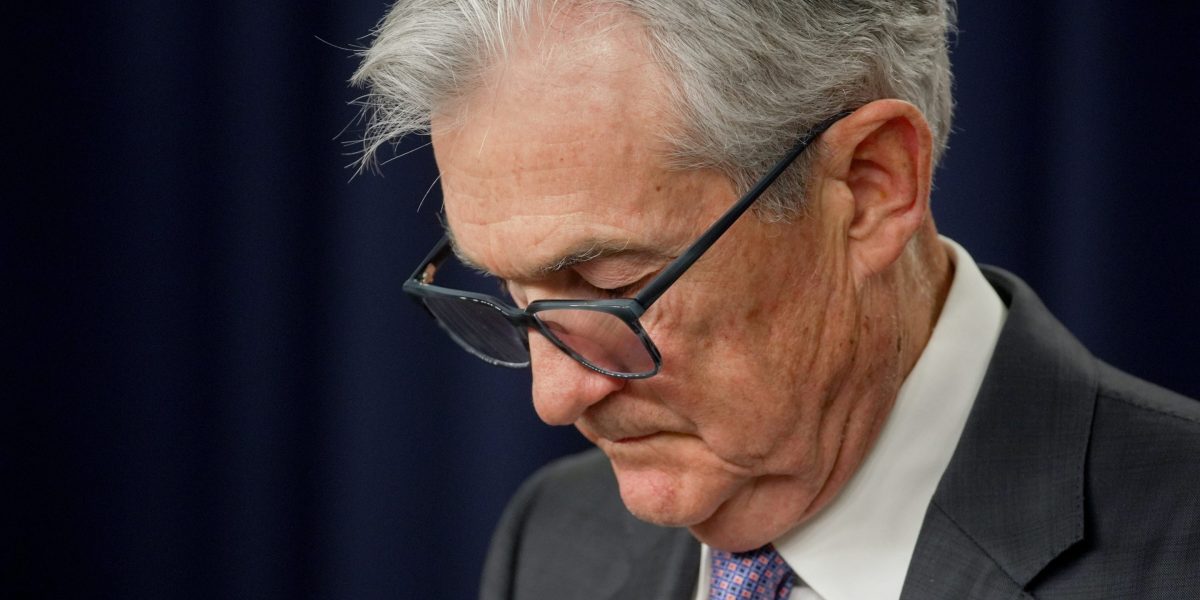
President Donald Trump teased that he has a preferred candidate to be the next chair of the Federal Reserve, but is in no hurry to make an announcement — while also musing that he might fire the central bank’s current leader, Jerome Powell.

“I do, still do — hasn’t changed,” Trump said at a press conference Monday, when asked if he has a favorite candidate. “I’ll announce him at the right time. There’s plenty of time.”

Trump added the Powell should resign and that he’d “love to fire him.”

“Maybe I still might,” Trump told reporters at his Mar-a-Lago resort in Florida.

Trump did not specify who is his leading chair candidate and said an announcement would be made in “January sometime.” 

National Economic Council Director Kevin Hassett has been seen as the frontrunner, though Trump has also expressed interest in former Fed governor Kevin Warsh. Other finalists in the process have included current Fed governors Christopher Waller and Michelle Bowman and BlackRock’s Rick Rieder. 

Earlier: Bessent Sees Room for a Future Revamp of the Fed’s 2% Target

Trump has made numerous cryptic — and sometimes contradictory — remarks about his decision-making process regarding the new central bank chief. The president earlier in December said he’d narrowed the pool of contenders down to one, but subsequently said he was considering multiple candidates and has heaped praise on several of the names on the short list.

Trump has long been a critic of Powell, who he picked to lead the central bank during his first term. The president has indicated he wants the next chair to more aggressively cut interest rates as the White House looks to lower mortgage costs.

He said Monday he was considering a “gross incompetence” lawsuit against Powell related to an ongoing renovation project at the Fed. Powell’s term as chair is set to end in May of 2026, but his term on the Fed’s Board of Governors doesn’t expire until 2028.

Join us at the Fortune Workplace Innovation Summit May 19–20, 2026, in Atlanta. The next era of workplace innovation is here—and the old playbook is being rewritten. At this exclusive, high-energy event, the world’s most innovative leaders will convene to explore how AI, humanity, and strategy converge to redefine, again, the future of work. Register now.


Source link

Continue Reading

Trending

Copyright © Miami Select.