Connect with us

Business

The retirement of this notoriously finicky card marks the end of an era for one of the world’s oldest and largest transit systems

Published

on


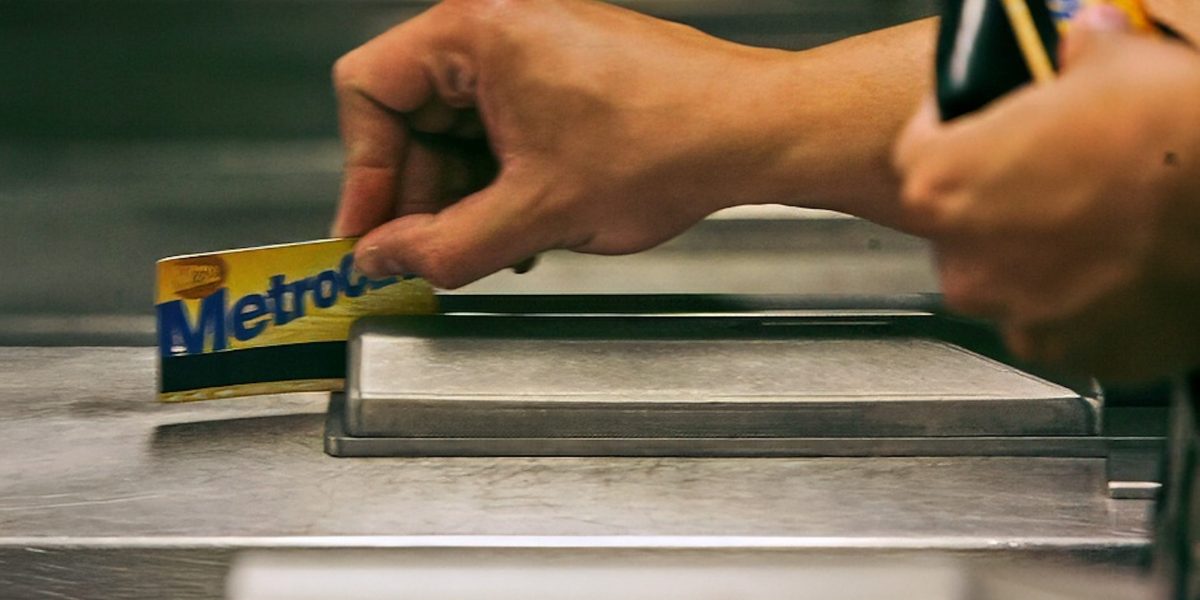
When the MetroCard replaced the New York City subway token in 1994, the swipeable plastic card infused much-needed modernity into one of the world’s oldest and largest transit systems.

Now, more than three decades later, the gold-hued fare card and its notoriously finicky magnetic strip are following the token into retirement.

The last day to buy or refill a MetroCard is Dec. 31, 2025, as the transit system fully transitions to OMNY, a contactless payment system that allows riders to tap their credit card, phone or other smart device to pay fares, much like they do for other everyday purchases.

Transit officials say more than 90% of subway and bus trips are now paid using the tap-and-go system, introduced in 2019.

Major cities around the world, including London and Singapore, have long used similar contactless systems. In the U.S., San Francisco launched a pay-go system earlier this year, joining Chicago and others.

MetroCards upended how New Yorkers commute

The humble MetroCard may have outlasted its useful life, but in its day it was revolutionary, says Jodi Shapiro, curator at the New York Transit Museum in Brooklyn, which opened an exhibit earlier this month reflecting on the MetroCard’s legacy.

Before MetroCards, bus and subway riders relied on tokens, the brass-colored coins introduced in 1953 that were purchased from station booths. When the subway opened in 1904, paper tickets cost just a nickel, or about $1.82 in today’s dollars.

“There was a resistance to change from tokens to something else because tokens work,” Shapiro said on a recent visit to the museum, housed underground in a decommissioned subway station. “MetroCards introduced a whole other level of thinking for New Yorkers.”

The Metropolitan Transportation Authority launched public campaigns to teach commuters how to swipe the originally blue-colored cards correctly, hoping to avoid the dreaded error message or lost fares. Officials even briefly toyed with the idea of an quirky mascot, the Cardvaark, before coming to their senses.

The cards quickly became collectors items as the transit system rolled out special commemorative editions marking major events, such as the “Subway Series” between baseball’s New York Mets and the New York Yankees in the 2000 World Series. At the time, a fare cost $1.50.

Artists from David Bowie and Olivia Rodrigo to seminal New York hip hop acts, such as the Wu-Tang Clan, the Notorious B.I.G. and LL Cool J, have also graced the plastic card over the years, as have iconic New York shows like Seinfeld and Law & Order.

“For me, the most special cards are cards which present New York City to the world,” said Lev Radin, a collector in the Bronx. “Not only photos of landmarks, skylines, but also about people who live and make New York special.”

Perfecting the correct angle and velocity of the MetroCard swipe also became something of a point of pride separating real New Yorkers from those just visiting.

During her failed 2016 presidential campaign, Hillary Clinton, a former U.S. Senator from New York, took an excruciating five swipes at a Bronx turnstile. In fairness, her chief Democratic opponent at the time, U.S. Sen. Bernie Sanders of Vermont, a native Brooklynite, didn’t even appear to realize tokens had been discontinued.

Cost savings and lingering concerns

Unlike the MetroCard rollout, OMNY has required little adjustment.

Riders reluctant to use a credit card or smart device can purchase an OMNY card they can reload, similar to a MetroCard. Existing MetroCards will also continue to work into 2026, allowing riders to use remaining balances.

MTA spokespersons declined to comment, pointing instead to their many public statements as the deadline approaches.

The agency has said the changeover saves at least $20 million annually in MetroCard-related costs.

The new system also allows unlimited free rides within a seven-day period because the fare is capped after 12 rides. It’ll max out at $35 a week once the fare rises to $3 in January.

Still, new changes come with tradeoffs, with some critics raising concerns about data collection and surveillance.

Near Times Square on a recent morning, Ronald Minor was among the dwindling group of “straphangers” still swiping MetroCards.

The 70-year-old Manhattan resident said he’s sad to see them go. He has an OMNY card but found the vending machines to reload it more cumbersome.

“It’s hard for the elders,” Minor said as he caught a train to Brooklyn. “Don’t push us aside and make it like we don’t count. You push these machines away, you push us away.”

John Sacchetti, another MetroCard user at the Port Authority stop, said he likes being able to see his balance as he swipes through a turnstile so he knows how much he’s been spending on rides.

“It’s just like everything else, just something to get used to,” he said as he headed uptown. “Once I get used to it, I think it’ll be okay.”

This story was originally featured on Fortune.com


Source link

Continue Reading

Business

Homeland Security investigates Minnesota for apparent fraud costing taxpayers up to $9 billion

Published

on


Federal Homeland Security officials were conducting a fraud investigation on Monday in Minneapolis, Department of Homeland Security Secretary Kristi Noem said.

The action comes after years of investigation that began with the $300 million scheme at the nonprofit Feeding Our Future, for which 57 defendants in Minnesota have been convicted. Prosecutors said the organization was at the center of the country’s largest COVID-19-related fraud scam, when defendants exploited a state-run, federally funded program intended to provide food for children.

federal prosecutor alleged earlier in December that half or more of the roughly $18 billion in federal funds that supported 14 programs in Minnesota since 2018 may have been stolen.

Minnesota Gov. Tim Walz said then that fraud will not be tolerated and that his administration “will continue to work with federal partners to ensure fraud is stopped and fraudsters are caught.”

Noem on Monday posted a video on the social platform X showing DHS officers going into an unidentified business and questioning the person working behind the counter. Noem said that officers were “conducting a massive investigation on childcare and other rampant fraud.”

“The American people deserve answers on how their taxpayer money is being used and ARRESTS when abuse is found,” U.S. Immigration and Custom Enforcement posted.

The action comes a day after FBI Director Kash Patel said on X that the agency had “surged personnel and investigative resources to Minnesota to dismantle large-scale fraud schemes exploiting federal programs.”

Patel said that previous fraud arrests in Minnesota were “just the tip of a very large iceberg.”

President Donald Trump has criticized Walz’s administration over the fraud cases to date.

In recent weeks, tensions have been high between state and federal enforcement in the area as the Trump administration’s immigration crackdown focused on the Somali community in the Minneapolis-St. Paul area, which is the largest in the country.

Among those running schemes to get funds for child nutrition, housing services and autism programs, 82 of the 92 defendants are Somali Americans, according to the U.S. Attorney’s Office for Minnesota.

Walz spokesperson Claire Lancaster said that the governor has worked for years to “crack down on fraud” and was seeking more authority from the Legislature to take aggressive action. Walz has supported criminal prosecutions and taken a number of other steps, including strengthening oversight and hiring an outside firm to audit payments to high-risk programs, Lancaster said.


Source link

Continue Reading

Business

Down Arrow Button Icon

Published

on


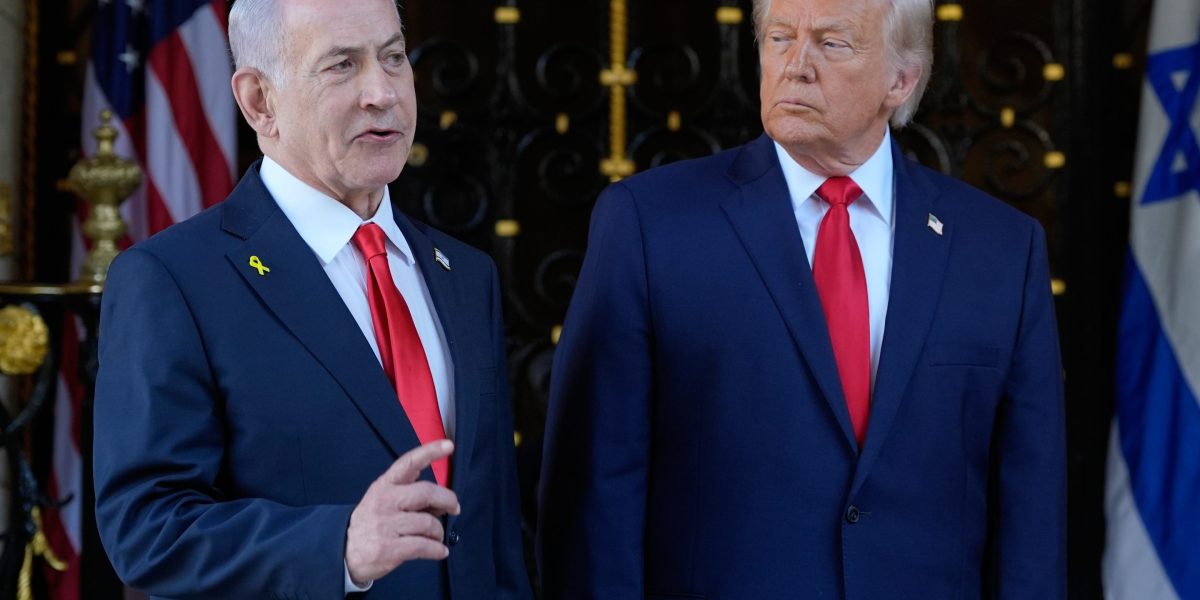
President Donald Trump warned Iran against reconstituting its nuclear program Monday as he welcomed Israeli Prime Minister Benjamin Netanyahu to his home in Florida for wide-ranging talks.

The warning comes after Trump has insisted that Tehran’s nuclear capabilities were “completely and fully obliterated” by U.S. strikes on key nuclear enrichment sites in June. But Israeli officials have been quoted in local media expressing concern about Iran rebuilding its supply of long-range missiles capable of striking Israel.

“Now I hear that Iran is trying to build up again,” Trump told reporters soon after Netanyahu arrived at his Mar-a-Lago estate. “And if they are, we’re going to have to knock them down. We’ll knock them down. We’ll knock the hell out of them. But hopefully that’s not happening.”

Trump’s warning to Iran comes as his administration has committed significant resources to targeting drug trafficking in South America and the president looks to create fresh momentum for the U.S.-brokered Israel-Hamas ceasefire. The Gaza deal is in danger of stalling before reaching its complicated second phase that would involve naming an international governing body and rebuilding the devastated Palestinian territory.

Iran has insisted that it is no longer enriching uranium at any site in the country, trying to signal to the West that it remains open to potential negotiations over its atomic program. But Netanyahu was expected to discuss with Trump the need to potentially take new military action against Tehran just months after launching a 12-day war on Iran.

The Iranian mission to the United Nations did not immediately respond to a request for comment on Trump’s warning.

Trump criticized Iran anew for not making a deal to completely disarm its nuclear program ahead of the U.S. and Israeli strikes earlier this year.

“They wish they made that deal,” Trump said.

Gaza ceasefire progress has slowed

Trump, with Netanyahu by his side, said he wants to get to the second phase of the Gaza deal “as quickly as we can.”

“But there has to be a disarming of Hamas,” Trump added.

The ceasefire between Israel and Hamas that Trump championed has mostly held, but progress has slowed recently. Both sides accuse each other of violations, and divisions have emerged among the U.S., Israel and Arab countries about the path forward.

The truce’s first phase began in October, days after the two-year anniversary of the initial Hamas-led attack on Israel that killed about 1,200 people. All but one of the 251 hostages taken then have been released, alive or dead.

The Israeli leader, who also met separately with Secretary of State Marco Rubio and Defense Secretary Pete Hegseth, has signaled he is in no rush to move forward with the next phase as long as the remains of Ran Gvili are still in Gaza.

Gvili’s parents met with Netanyahu as well as Rubio, U.S. envoy Steve Witkoff and the president’s son-in-law, Jared Kushner, in Florida on Monday. The Gvilis are expected to meet with Trump later in the day, according to the Hostages and Missing Families Forum, a group that advocates for families of abductees of the Oct. 7, 2023, attack.

“They’re waiting for their son to come home,” Trump said of the family of the young police officer known affectionately as “Rani,”

Next phase is complex

The path ahead is certainly complicated.

If successful, the second phase would see the rebuilding of a demilitarized Gaza under international supervision by a group chaired by Trump and known as the Board of Peace. The Palestinians would form a “technocratic, apolitical” committee to run daily affairs in Gaza, under Board of Peace supervision.

It further calls for normalized relations between Israel and the Arab world and a possible pathway to Palestinian independence. Then there are thorny logistical and humanitarian questions, including rebuilding war-ravaged Gaza, disarming Hamas and creating a security apparatus called the International Stabilization Force.

Much remains unsettled

Two main challenges have complicated moving to the second phase, according to an official who was briefed on those meetings. Israeli officials have been taking a lot of time to vet and approve members of the Palestinian technocratic committee from a list given to them by the mediators, and Israel continues its military strikes.

Trump’s plan also calls for the stabilization force, proposed as a multinational body, to maintain security. But it, too, has yet to be formed. Whether details will be forthcoming after Monday’s meeting is unclear.

A Western diplomat said there is a “huge gulf” between the U.S.-Israeli understanding of the force’s mandate and that of other major countries in the region, as well as European governments.

All spoke on the condition of anonymity to provide details that haven’t been made public.

The U.S. and Israel want the force to have a “commanding role” in security duties, including disarming Hamas and other militant groups. But countries being courted to contribute troops fear that mandate will make it an “occupation force,” the diplomat said.

Hamas has said it is ready to discuss “freezing or storing” its arsenal of weapons but insists it has a right to armed resistance as long as Israel occupies Palestinian territory. One U.S. official said a potential plan might be to offer cash incentives in exchange for weapons, echoing a “buyback” program Witkoff has previously floated.

Trump makes case once again for Netanyahu pardon

The two leaders, who have a long and close relationship, heaped praise on each other. Trump also tweaked the Israeli leader, who at moments during the war has raised Trump’s ire, for being “very difficult on occasion.”

Trump also renewed his call on Israeli President Isaac Herzog to grant Netanyahu, who is in the midst of a corruption trial, a pardon.

Netanyahu is the only sitting prime minister in Israeli history to stand trial, after being charged with fraud, breach of trust and accepting bribes in three separate cases accusing him of exchanging favors with wealthy political supporters.

Trump has previously written to Herzog to urge a pardon and advocated for one during his October speech before the Knesset. He said Monday that Herzog has told him “it’s on its way” without offering further details.

“He’s a wartime prime minister who’s a hero. How do you not give a pardon?” Trump said.

Herzog’s office said in a statement that the Israeli president and Trump have not spoken since the pardon request was submitted, but that Herzog has spoken with a Trump representative about the U.S. president’s letter advocating for Netanyahu’s pardon.

“During that conversation, an explanation was provided regarding the stage of the process in which the request currently stands, and that any decision on the matter will be made in accordance with the established procedures,” the Israeli president’s office. “This was conveyed to President Trump’s representative, exactly as President Herzog stated publicly in Israel.”


Source link

Continue Reading

Business

Silicon Valley summit offers rare insight into humanoid robots—and China is the clear winner

Published

on


Robots have long been seen as a bad bet for Silicon Valley investors — too complicated, capital-intensive and “boring, honestly,” says venture capitalist Modar Alaoui.

But the commercial boom in artificial intelligence has lit a spark under long-simmering visions to build humanoid robots that can move their mechanical bodies like humans and do things that people do.

Alaoui, founder of the Humanoids Summit, gathered more than 2,000 people this week, including top robotics engineers from Disney, Google and dozens of startups, to showcase their technology and debate what it will take to accelerate a nascent industry.

Alaoui says many researchers now believe humanoids or some other kind of physical embodiment of AI are “going to become the norm.”

“The question is really just how long it will take,” he said.

Disney’s contribution to the field, a walking robotic version of “Frozen” character Olaf, will be roaming on its own through Disneyland theme parks in Hong Kong and Paris early next year. Entertaining and highly complex robots that resemble a human — or a snowman — are already here, but the timeline for “general purpose” robots that are a productive member of a workplace or household is farther away.

Even at a conference designed to build enthusiasm for the technology, held at a Computer History Museum that’s a temple to Silicon Valley’s previous breakthroughs, skepticism remained high that truly humanlike robots will take root anytime soon.

“The humanoid space has a very, very big hill to climb,” said Cosima du Pasquier, co-founder of Haptica Robotics, which works to give robots a sense of touch. “There’s a lot of research that still needs to be solved.”

The Stanford University postdoctoral researcher came to the conference in Mountain View, California, just a week after incorporating her startup.

“The first customers are really the people here,” she said.

Researchers at the consultancy McKinsey & Company have counted about 50 companies around the world that have raised at least $100 million to develop humanoids, led by about 20 in China and 15 in North America.

China is leading in part due to government incentives for component production and robot adoption and a mandate last year “to have a humanoid ecosystem established by 2025,” said McKinsey partner Ani Kelkar. Displays by Chinese firms dominated the expo section of this week’s summit, held Thursday and Friday. The conference’s most prevalent humanoids were those made by China’s Unitree, in part because researchers in the U.S. buy the relatively cheap model to test their own software.

In the U.S., the advent of generative AI chatbots like OpenAI’s ChatGPT and Google’s Gemini has jolted the decades-old robotics industry in different ways. Investor excitement has poured money into ambitious startups aiming to build hardware that will bring a physical presence to the latest AI.

But it’s not just crossover hype — the same technical advances that made AI chatbots so good at language have played a role in teaching robots how to get better at performing tasks. Paired with computer vision, robots powered by “visual-language” models are trained to learn about their surroundings.

One of the most prominent skeptics is robotics pioneer Rodney Brooks, a co-founder of Roomba vacuum maker iRobot who wrote in September that “today’s humanoid robots will not learn how to be dexterous despite the hundreds of millions, or perhaps many billions of dollars, being donated by VCs and major tech companies to pay for their training.” Brooks didn’t attend but his essay was frequently mentioned.

Also missing was anyone speaking for Tesla CEO Elon Musk’s development of a humanoid called Optimus, a project that the billionaire is designing to be “extremely capable” and sold in high volumes. Musk said three years ago that people can probably buy an Optimus “within three to five years.”

The conference’s organizer, Alaoui, founder and general partner of ALM Ventures, previously worked on driver attention systems for the automotive industry and sees parallels between humanoids and the early years of self-driving cars.

Near the entrance to the summit venue, just blocks from Google’s headquarters, is a museum exhibit showing Google’s bubble-shaped 2014 prototype of a self-driving car. Eleven years later, robotaxis operated by Google affiliate Waymo are constantly plying the streets nearby.

Some robots with human elements are already being tested in workplaces. Oregon-based Agility Robotics announced shortly before the conference that it is bringing its tote-carrying warehouse robot Digit to a Texas distribution facility run by Mercado Libre, the Latin American e-commerce giant. Much like the Olaf robot, it has inverted legs that are more birdlike than human.

Industrial robots performing single tasks are already commonplace in car assembly and other manufacturing. They work with a level of speed and precision that’s difficult for today’s humanoids — or humans themselves — to match.

The head of a robotics trade group founded in 1974 is now lobbying the U.S. government to develop a stronger national strategy to advance the development of homegrown robots, be they humanoids or otherwise.

“We have a lot of strong technology, we have the AI expertise here in the U.S.,” said Jeff Burnstein, president of the Association for Advancing Automation, after touring the expo. “So I think it remains to be seen who is the ultimate leader in this. But right now, China has certainly a lot more momentum on humanoids.”


Source link

Continue Reading

Trending

Copyright © Miami Select.