On Jan. 4, 2023, GE HealthCare Technologies (No. 219 on the Fortune 500) debuted as a standalone public company on the Nasdaq exchange. Since then, its stock is up almost 50%. It was the first of three businesses to be spun off in the breakup of General Electric, the conglomerate founded on the inventions of Thomas Edison that went public in 1892 and became one of the original 12 components of the Dow Jones Industrial Average four years later. (GE Vernova, No. 130, and GE Aerospace, No. 118, each went public on the New York Stock Exchange in April 2024.)
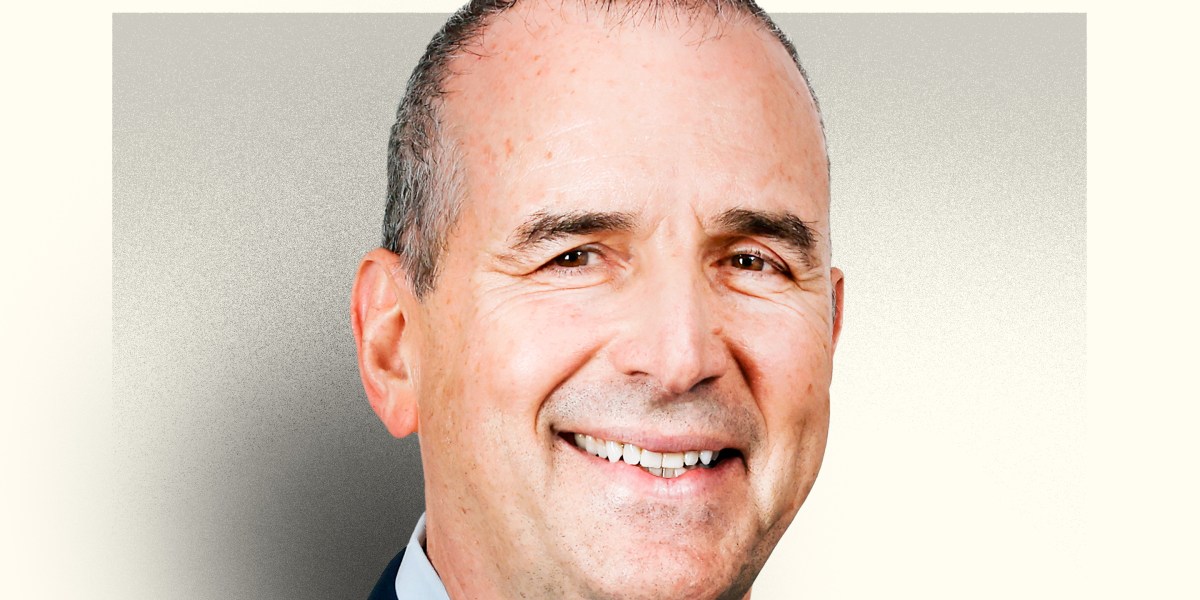
GE HealthCare CEO Peter J. Arduini, the man tapped to lead the $20 billion-a-year business, spoke to Fortune about how he’s forging a new chapter for the medical technology and digital health company while drawing on GE’s legacy.
This interview has been edited and condensed for clarity.
You were initially at GE during the Jack Welch years, starting in 1990, and left a few years after Jeff Immelt took over. What do you think made GE stand apart?
At the time, I was a Proctor & Gamble guy, and I did not love the grocery business. I got a call from someone who talked about a perfect opportunity in technology and global businesses at a company called GE Medical Systems at the time. I didn’t even know GE had a medical business then.
Going to GE in those days, with its leadership development, you had the opportunity to take on bigger responsibilities at a very young age—I look back and say, probably too young an age. But it was one of those rare companies where they gave you bold assignments and you had this wide diversity of potential opportunities that you could play in. You learned how to run a company the GE way. The candor and the openness about what’s working, what’s not working, really permeated, how to do the right thing. It was tough culture, but you knew it was a fair culture, and that’s what really made it successful under Jack.
After leaving in 2005, what made you decide to come back?
A headhunter called and said, [the then-GE CEO] Larry Culp wants to speak with you.’ And I said, ‘I don’t know if I’m really interested in going back to GE.’ My wife convinced me to give a call back. I talked to the headhunter, and he said, ‘Well, I’ll pass it on to Larry.’ Literally, 10 minutes later, I got a text that said, ‘Hey, Pete, this is Larry Culp. I’d love to chat with you.’ I texted back to say, ‘Well, look, I can contact your assistant.’ And Larry, right then, said, ‘Hey, do you have five minutes now?’ That’s the essence of Larry; he’s a very down-to-earth guy, a very focused and very intentional guy.
Those five minutes convinced you to take the job?
It was probably more than the five, but honestly, his impact and his leadership made a difference. This was a chance to create three separate companies, to take this company public. I got very interested and very excited about it.
Why did it make sense for GE HealthCare to be a separate company?
Everything has a cycle. On the technology side and on the market side, there was such a fast transition and evolution, with new competitors coming into new markets. When you’re in a larger business, in many cases, decisions take longer. And focus matters in our business. It is all about signal to noise; you want more signal, less noise. In a larger company, there has to be a little bit more noise.
The past three years have been interesting time for med tech. Looking back, what did you over-index on or under-appreciate?
At a macro level, look at the environment, between the China market, which was always a double-digit growth or changing the geopolitical environment and how we need to change around our supply chains because of tariffs. Those are kind of the unplanned events that where you ask: Do you have the right people? Do you have a management system that can deal with the clock speed and the differentiation? Do you have the right innovation-processing capability? If you don’t have the innovation, it’s difficult to get the price, it’s difficult to hold share, it’s difficult to grow. We were somewhat of a cash cow as part of the GE integrated model. We weren’t starved, but we weren’t funded for leading innovation. So I’d say one of the things I felt that I did well—and, like most credit, comes from listening to people that are wiser than you and having humility to understand that that’s the action—is lean into innovation.
You think what products you need, four years out, and fund them to the max, because it’s the rules of the farm. You got to get the seeds in the ground. They’ve got to germinate. You got to get the plants to grow till you get fruit. In our business, that’s a three to five year cycle.
“We laid out this purpose of creating a world where health care has no limits, and a big part of that was to say we’re humble to know that we don’t have all the answers.”GE HealthCare CEO Peter J. Arduini
I think our teams did a really good job with the focus on making the right investments early. In 2018, to give an example, we probably spent $750 million to $800 million on research and development. R&D will be north of $1.4 billion this year. So we fundamentally doubled the R&D investment. We cut costs in other areas and simplified some of the company.
Through lean manufacturing techniques?
We changed some of the field organization, about 40% to 50% of the leaders. We upgraded talent across the board, and I spent a lot of time on what our vision is, what our values are, and do we have the right people who can match up to that? In the last two years, we’ve really made a lot of progress on what we’re calling our heartbeat management system, which is really about a lean principles construct for how you run your company. What is the daily management at different levels in the organization? What is standard work that is needed to be done in all areas, the use of Kaizen and really bringing customer employees into the decision making?
Larry Culp is a big proponent of Kaizen and I think back to GE’s reputation in promoting Six Sigma. How would you say the culture has shifted as an independent company?
I tried to take the GE of old and took what was really good: how we think about our distribution of leadership, how we actually talk about leader development, how we build out our own Crotonville virtual university of development. The GE model was really stellar, and, honestly, prior to Larry coming back, some of that had dissolved. We didn’t even really do performance reviews in the same way and he brought that back.
I would say I even reached back further to some of the Jack Welch-period of tools, There are things that we did really well that we want to utilize in a more contemporary way. As an example, I think Crotonville was a fabulous destination for training and development, In today’s world, it’s not practical to bring everybody to upstate New York, but we can take the tools and the capabilities and recreate that in virtual and other environments around the world.
In health care, we had our own distinct way of thinking about innovation pipeline, and it was something called worldwide product. It had kind of phased away in the last decade or so, and I resurrected it, but in a new format: more digital focused, more connected …from diagnosis through therapy, through action, follow up and how the money flows. The integration of cloud-based computing and artificial intelligence. We look at the full stack for the company. And that’s been a game changer for us to take valuable resources and move them.
What is the vision?
We laid out this purpose of creating a world where health care has no limits, and a big part of that was to say we’re humble to know that we don’t have all the answers. We want to work with customers on jointly solving problems which, again, is the core to the lean mindset. Servant leadership as a big part of it, which turns the pyramid upside down. My job is to help everybody else get their job done. We’re all focused on the customer. We’re all focused on the patient. We spent a lot of time talking about entrepreneurship because in our business, the way we’re going to be successful is in this broader ecosystem. We don’t have to own everything, we don’t have to make everything, but we have to be more creative. We talk about teamwork and inclusive teams. We actually drive and reward and recognize people on how well they live up to those values.
The landscape has shifted for global companies. Where do you see the biggest challenges and opportunities right now?
If I think about med tech as an industry, it’s an American gem. Still, 70%-plus of the products are made the United States, the majority of the IP, the technology is here. And so having that protected or enhanced by our government policy is important.
We’ve spent a lot of time trying to make that case clear and I think, for the most part, it’s been heard. Having global footprints and manufacturing and R&D is super critical because you can’t make everything in the United States to be competitive. You can’t, in a world post-COVID, have an integrated single point of control for all supply chains. Many of us used to say, here’s the least expensive place to buy this, or the best quality, then we would do it one place and ship it all over the world. We found during COVID that’s just not the model that works.
We’re bringing more and more U.S. products and their subcomponents back to North America. In China, we used to ship in 75% of the products from different parts around the world. Now we make 85%, almost 90% of the products in China, for China.
Why do you want to be in China?
Look,it’s 1.4 billion people, where 400 million have reasonable. We often forget that. You know, we’re a nation of 375 million people, and you can judge how good our care is. There’s still a billion people in China that don’t have adequate care, and so at some point, it will be the largest health care market. I’m a big believer that, with China and the U.S., the more we work together in harmony, it’s only going to help the world. And honestly, for companies like us, it’s really a necessity for being able to kind of reach our full potential.
You’ve been at companies that are known as training grounds for leaders. I’d just love to hear your reflections on being in a CEO role the last three years.
I think authenticity is super important. I can be an extrovert when needed, but I tend to be a little bit more introverted. In today’s world, with our younger employee base, being out front and being vocal as the senior leader—not necessarily the charismatic leader, but the communicator directly to individuals—is super important. Social media gets more reads from your employees than even some internal communications. It’s a reality.
I think this ability to reach people in many different ways is critical for running a company. Leaning in on what the mission of the company is, and the why and helping people understand the why, is also critical. And then there’s the classic age-old factor of bringing customers into the story, talking about how you’ve changed the life of a patient. This could be your mother, your father on that table. The more I can empower people to live those values, that’s how we get excellence.
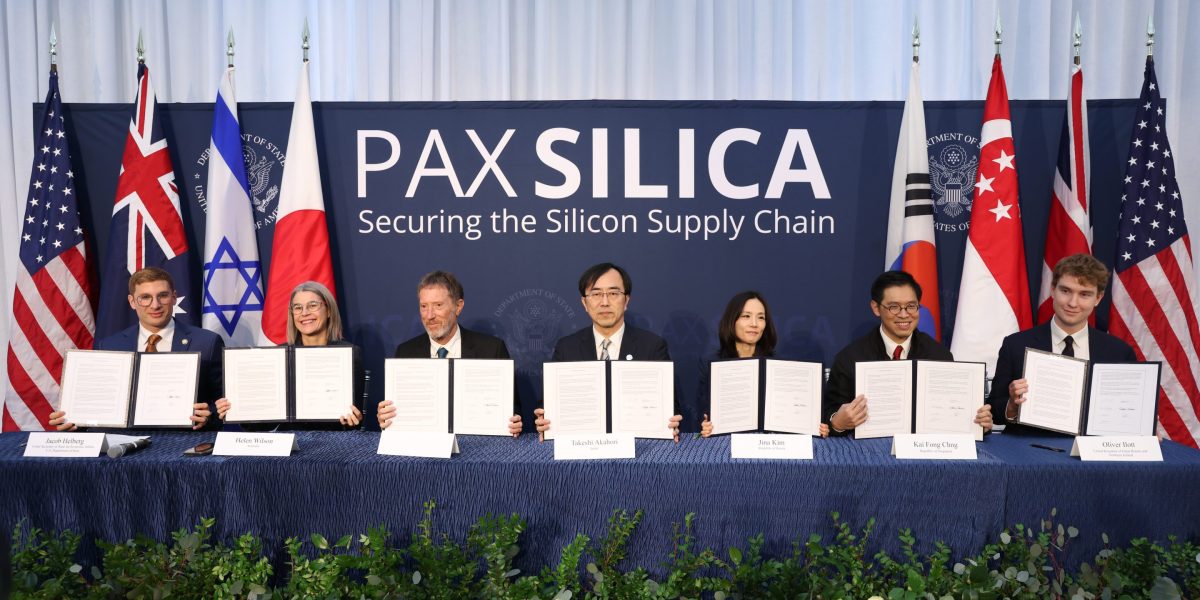
With its new Pax Silica Declaration, Washington has picked its most trusted partners in the AI sector: An array of close U.S. allies, including Australia, the U.K., and Israel.
Yet despite deepening trade relations between the U.S. and ASEAN nations like Thailand, Malaysia and Vietnam, Singapore remains the agreement’s only Southeast Asian signatory. That decision comes even as ASEAN nations like Malaysia are investing in their own AI industries, like semiconductors and data centers.
Singapore is “precisely the kind of ‘trusted node’ the U.S. is seeking to anchor AI-era supply chains,” says Ruben Durante, a professor of economics and Provost’s Chair at the National University of Singapore (NUS). Singapore “offers strong governance, regulatory credibility, capital markets, logistics, and advanced data center and connectivity infrastructure.”
The country has a long history with chips. U.S.-based National Semiconductor set up a plant there in 1968, followed by the government’s creation of Chartered Semiconductor Manufacturing in 1987. Singapore now accounts for around 10% of all chip production.
More recently, Singapore has strived to become an “AI nation,” investing in skilling programs to train its workforce and encouraging local AI development. The country has also attracted billions of dollars’ worth in cloud computing and data centers, including from Big Tech companies like Amazon and Google.
While the U.S. is trying to shore up its AI supply chain, Singapore might also benefit from being part of Pax Silica, Atreyi Kankanhalli, a computing professor from NUS, suggests. Being part of Pax Silica gives the country—which has less land area than New York City—a seat at the table when the U.S. discusses joint ventures in chip production and logistics. It also gives the resource-poor city-state a safety net to ward off future supply shocks, while enabling access to the latest AI technologies.
Both the U.S. and China are trying to leverage their dominance in particular industries against each other.
Washington has blocked the sale of advanced processors, key to training and running AI models, to China since 2022. Beijing, in turn, has slapped export controls on rare earth minerals, a crucial component used for semiconductors and magnets in the AI supply chain. (China has a stranglehold on rare earths, supplying 90% of the world’s processed rare earths and rare earth magnets.)
“The AI race is often framed as a battle over data or models, but the real constraints are increasingly physical—chips, energy and supply chains,” says Simon Chesterman, a law professor from NUS and the senior director of AI governance at research institute AI Singapore.
In addition to Singapore, the U.S. included several close allies in the Pax Silica agreement: Japan, South Korea, Australia, the U.K. and Israel.
Experts think that the U.S.’s inner circle on AI will soon expand. Durante, from NUS, argues that a small founding group will facilitate early coordination on sensitive issues. Several non-signatories, like the Netherlands and the United Arab Emirates, were involved in initial discussions of the Pax Silica, which Durante sees as an “outer ring” of contributors, even if they’re not yet fully aligned with the U.S
“Expansion will depend on whether Pax Silica develops concrete mechanisms, such as financing, standards, or procurement coordination,” he says, adding that countries which combine industrial relevance with willingness to align on economic-security priorities are the most likely candidates for addition.
Yet this could soon change, as Vietnam and Malaysia strive to become key hubs in the region, particularly in semiconductors and data centers.
“Pax Silica’s first wave is more focused on countries that can anchor long-term control, governance, and security across the AI stack,” says Shivraj. “Many countries play essential roles, and even if they are not part of the inner circle yet, that circle may well expand.”
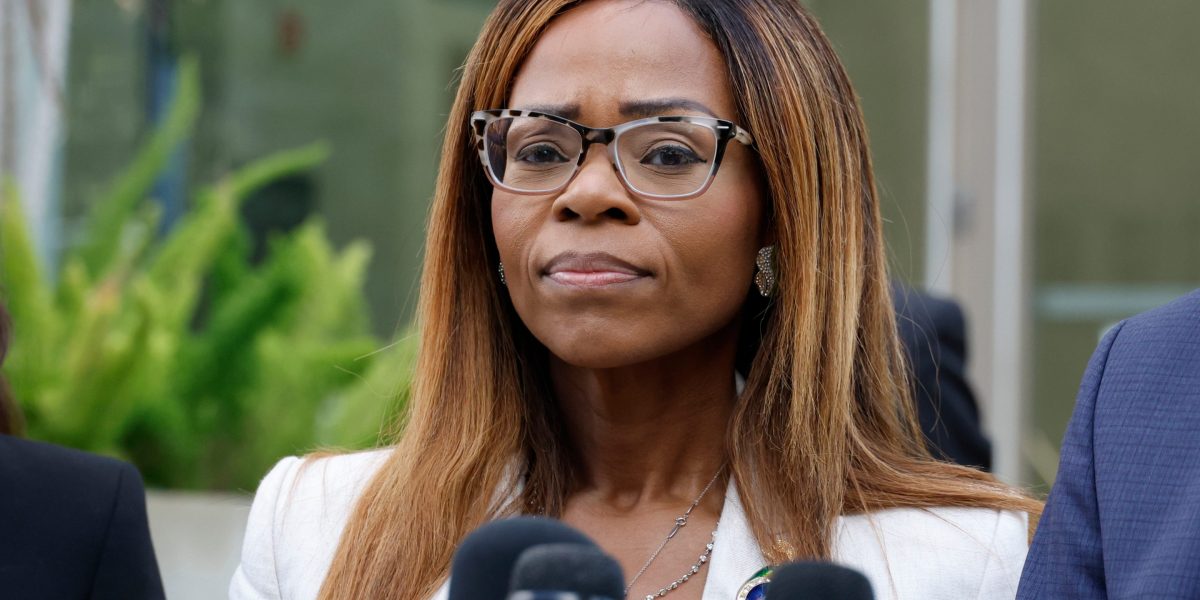
U.S. Rep. Sheila Cherfilus-McCormick reiterated her innocence Monday outside a Miami federal courthouse, where she faces charges of conspiring to steal $5 million in federal COVID-19 disaster funds.
Cherfilus-McCormick was scheduled to be arraigned, but her attorney requested the proceeding be rescheduled to Jan. 20 so that she could finalize her legal team. Prosecutors didn’t object, and Judge Lisette Reid agreed to the new date. The hearing lasted less than five minutes.
“I just want to make it very clear that I am innocent,” Cherfilus-McCormick said immediately after leaving court. “In no way did I steal any kind of funds. I’m committed to the people of Florida and my district.”
Cherfilus-McCormick, a Democrat, has pleaded not guilty. She is facing 15 federal counts that accuse her of stealing funds that had been overpaid to her family’s health care company, Trinity Healthcare Services, in 2021. The company had a contract to register people for COVID-19 vaccinations.
Cherfilus-McCormick’s attorney, David Oscar Markus, said the case involves mistakes that generally aren’t even misdemeanors, let alone felonies. He said he believes the case is politically motivated.
Cherfilus-McCormick was arrested in November and then freed on a $60,000 bond. In addition to bail, the judge said Cherfilus-McCormick must surrender her personal passport, and is allowed to travel only between Florida, Washington, D.C., Maryland and the Eastern District of Virginia.
She has been allowed to retain her congressional passport so she can perform certain duties for her job.
According to the federal indictment, prosecutors said that within two months of receiving the funds in 2021, more than $100,000 had been spent on a 3-carat yellow diamond ring for the congresswoman.
The health care company owned by Cherfilus-McCormick’s family had received payments through a COVID-19 vaccination staffing contract, the indictment said. Her brother, Edwin Cherfilus, requested $50,000, but they mistakenly received $5 million and didn’t return the difference.
Prosecutors said the funds received by Trinity Healthcare were distributed to various accounts, including to friends and relatives who then donated to Cherfilus-McCormick’s campaign for Congress.
Cherfilus-McCormick won a special election in January 2022 to represent Florida’s 20th District, which includes parts of Broward and Palm Beach counties, after Rep. Alcee Hastings died in 2021.
The charges she faces include theft of government funds; making and receiving straw donor contributions; aiding and assisting a false and fraudulent statement on a tax return; money laundering, as well as conspiracy charges associated with each of those counts.
According to a previous statement provided by Cherfilus-McCormick’s chief of staff, she doesn’t plan to resign from office. She said she has cooperated with “every lawful request” and will continue to do so until the matter is resolved.
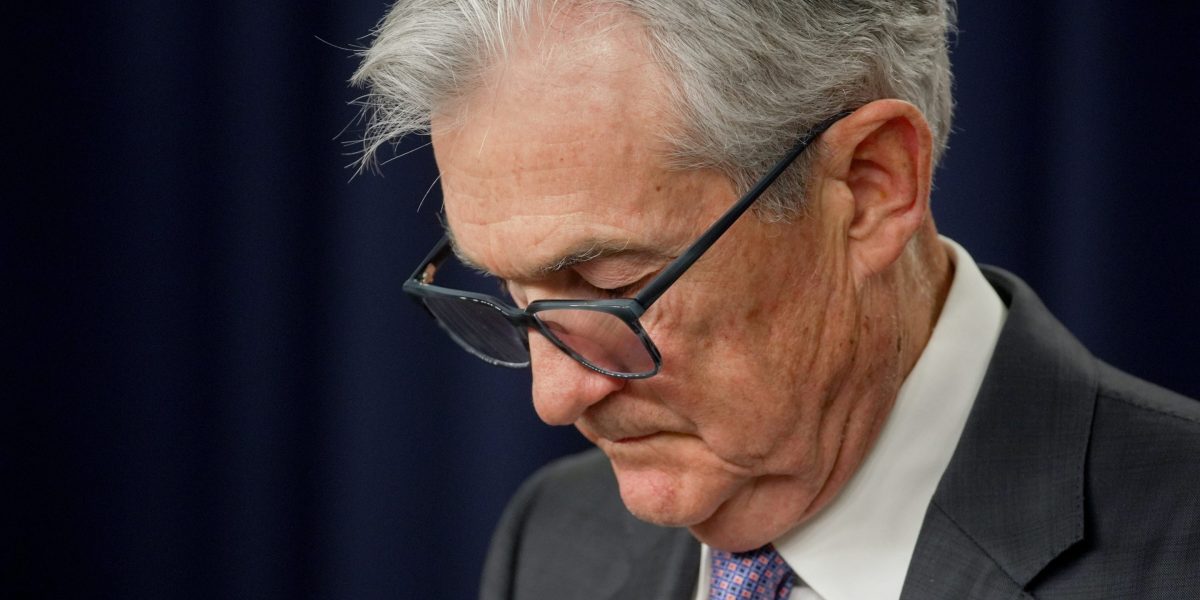
President Donald Trump teased that he has a preferred candidate to be the next chair of the Federal Reserve, but is in no hurry to make an announcement — while also musing that he might fire the central bank’s current leader, Jerome Powell.
“I do, still do — hasn’t changed,” Trump said at a press conference Monday, when asked if he has a favorite candidate. “I’ll announce him at the right time. There’s plenty of time.”
Trump added the Powell should resign and that he’d “love to fire him.”
“Maybe I still might,” Trump told reporters at his Mar-a-Lago resort in Florida.
Trump did not specify who is his leading chair candidate and said an announcement would be made in “January sometime.”
National Economic Council Director Kevin Hassett has been seen as the frontrunner, though Trump has also expressed interest in former Fed governor Kevin Warsh. Other finalists in the process have included current Fed governors Christopher Waller and Michelle Bowman and BlackRock’s Rick Rieder.
Trump has made numerous cryptic — and sometimes contradictory — remarks about his decision-making process regarding the new central bank chief. The president earlier in December said he’d narrowed the pool of contenders down to one, but subsequently said he was considering multiple candidates and has heaped praise on several of the names on the short list.
Trump has long been a critic of Powell, who he picked to lead the central bank during his first term. The president has indicated he wants the next chair to more aggressively cut interest rates as the White House looks to lower mortgage costs.
He said Monday he was considering a “gross incompetence” lawsuit against Powell related to an ongoing renovation project at the Fed. Powell’s term as chair is set to end in May of 2026, but his term on the Fed’s Board of Governors doesn’t expire until 2028.
Join us at the Fortune Workplace Innovation Summit May 19–20, 2026, in Atlanta. The next era of workplace innovation is here—and the old playbook is being rewritten. At this exclusive, high-energy event, the world’s most innovative leaders will convene to explore how AI, humanity, and strategy converge to redefine, again, the future of work. Register now.





 Politics8 years ago