In an era of vibe-coding, words still have some meaning. Or at least, they do when they’re harbingers of doom, foretelling a world of mass unemployment and economic ruin. Just over a week ago, a Substack essay by the investment research firm Citrini Research went viral on social media, sparking a market plunge based on its prediction of near-term, AI-spurred financial collapse.
Citrini was far from the only voice prophesying such a pessimistic future. As Allie recently wrote about, public markets have been spooked for weeks by the so-called SaaS-pocalypse, where valuable software companies like Salesforce, Adobe, and Workday see their moats eroded by AI agents. And even beyond the individual companies themselves, there are well-founded concerns that private equity funds have become over-indexed in flimsy software stakes that could trigger a wider collapse.
Other established analysts have pushed back against Citrini’s fear-mongering, which one Fortune editor described as “a highly speculative piece of financial fiction.” That includes Citadel, whose Frank Flight pointed out that demand for software engineers is rising rapidly and that white-collar jobs are unlikely to be replaced by agents anytime soon due to the cost and availability of compute.
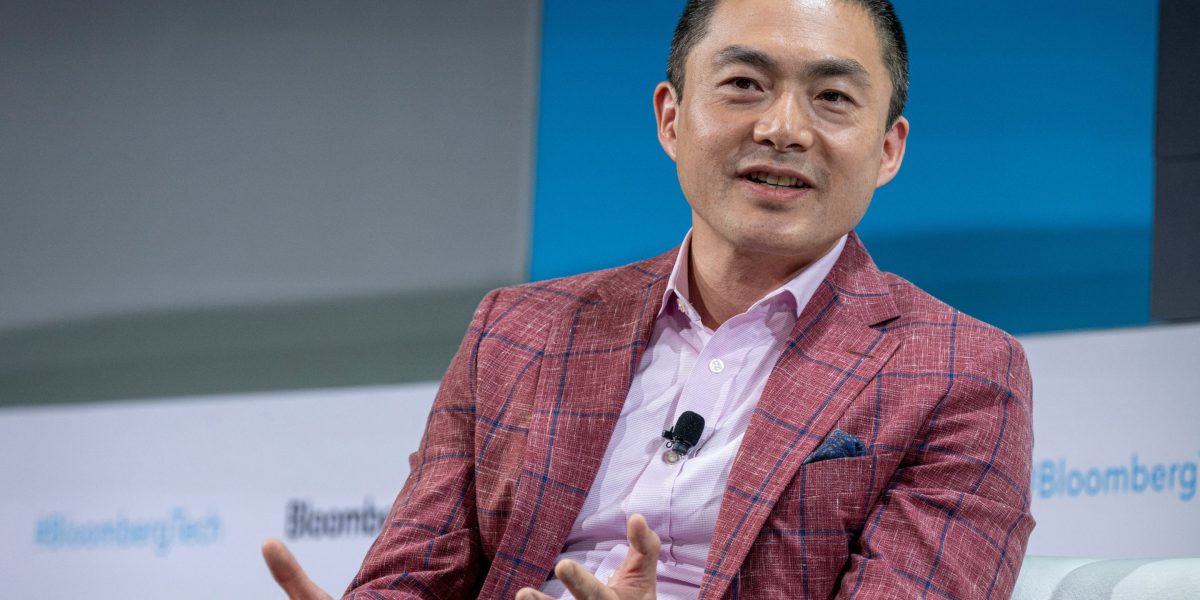
Still, I was curious how top venture capitalists—the only type of professional investors likely more exposed to software than private equity firms—were feeling about their portfolios. Last week, I had the chance to catch up with Sequoia partner, and new co-steward, Alfred Lin. He recently co-led the Series A for a financial AI platform called Rowspace, which allows investment operations like private equity firms to sift through years of their own complex data. Rowspace’s pitch is not unlike what Claude Cowork purports to do, but Lin said that he wasn’t worried about the inevitable challenge from the Anthropics of the world.
“The notion that SaaS is dead, I think, is overblown,” he told me. “This whole notion that foundation models are going to take over and everything will only work on the foundation model—it’s not quite how things work.”
Lin brought up a historical analog. When personal computers first came out, users had to use command-line interfaces to execute applications. Then, of course, came along graphical user interfaces, which allowed users to more easily interact with programs. “People want simple,” he said. “They want to do things a particular way or certain way, and the foundation model is not going to be able to cater to every single way that someone wants to do [something] in all these different industries.”
Aside from all of the other obvious moats, from network effects to data security, Lin said the biggest advantage for founders today is being willing to be AI native and to move faster than competitors. “The proliferation of vertical SaaS has been a profitable way to invest,” he put simply. “I think there will be a proliferation of vertical AI companies too.”
Leo Schwartz
X: @leomschwartz
Email: leo.schwartz@fortune.com
Submit a deal for the Term Sheet newsletter here.
Joey Abrams curated the deals section of today’s newsletter. Subscribe here.
VENTURE DEALS
– Rapidus Corporation, a Tokyo, Japan-based semiconductor company, raised $1.7 billion in funding. The Japanese government and 32 private sector companies including Development Bank of Japan Inc., SoftBank, Canon, Fujitsu, and Sony Group participated in the round.
– Revel, a Los Angeles, Calif.-based software platform for hardware testing and controls, raised $150 million in Series B funding. Index Ventures led the round and was joined by Redpoint Ventures, Thrive Capital, Felicis, and Abstract Ventures.
– Inhouse, a Los Angeles, Calif.-based AI legal platform, raised $5 million seed funding. Run Ventures led the round and was joined by participation from Royal Street Ventures, Switch, and LegalZoom cofounder Brian Liu.
– OutPost Bio, a London, U.K.-based biotech company, raised $3.5 million in pre-seed funding. Merantix Capital and Seedcamp co-led the round and were joined by OpenSeed VC, Defined, and others
– Escargot, a New York-based digital celebration and e-card startup, raised $2.75 million in funding. Wischoff Ventures and Hannah Grey Ventures led the round and were joined by South Park Commons, Magic Fund, and others.
PRIVATE EQUITY
– Wise Equity invested an undisclosed amount in FAS International, a Vicenza, Italy-based vending machine manufacturer.
– CPP Investments and Equinix acquired atNorth, a Gothenburg, Sweden-based data center company, from Partners Group in a $4 billion deal.
EXITS
– Searchlight Capital Partners and Abry Partners agreed to take KORE Group Holdings, an Atlanta, Georgia-based global Internet of Things (IoT) company, private, in a $726 million deal.
– Charoen Pokphand Group will sell a 10% stake in True Corp., a Bangkok, Thailand-based telecommunications company, with most of the shares going to UBS Group AG, in a $1.6 billion transaction.
OTHERS
– Dubai Aerospace Enterprise agreed to buy Macquarie AirFinance Ltd., a San Francisco-based global aviation lessor for $7 billion.
IPOS
– RMG ML Sports Holdings, an Incline Village, Nevada-based blank check company led by Riverside Management Group’s James Carpenter, filed to raise up to $261 million in an initial public offering of 26.1 million units priced at $10.
– Edison Oncology Holding, a Menlo Park, Calif.-based Phase 2 biotech company, withdrew its plans for an initial public offering. It had filed to raise $25 million in an offering of 2.8 million shares priced between $8 and $10.
– Billion Group Holdings, a Hong Kong-based distributor of high-end food products, withdrew its plans for an initial public offering. It had filed to raise $8 million in an offering of 1.6 million shares priced between $4 and $6.