Connect with us

Business

The retirement of this notoriously finicky card marks the end of an era for one of the world’s oldest and largest transit systems

Published

on


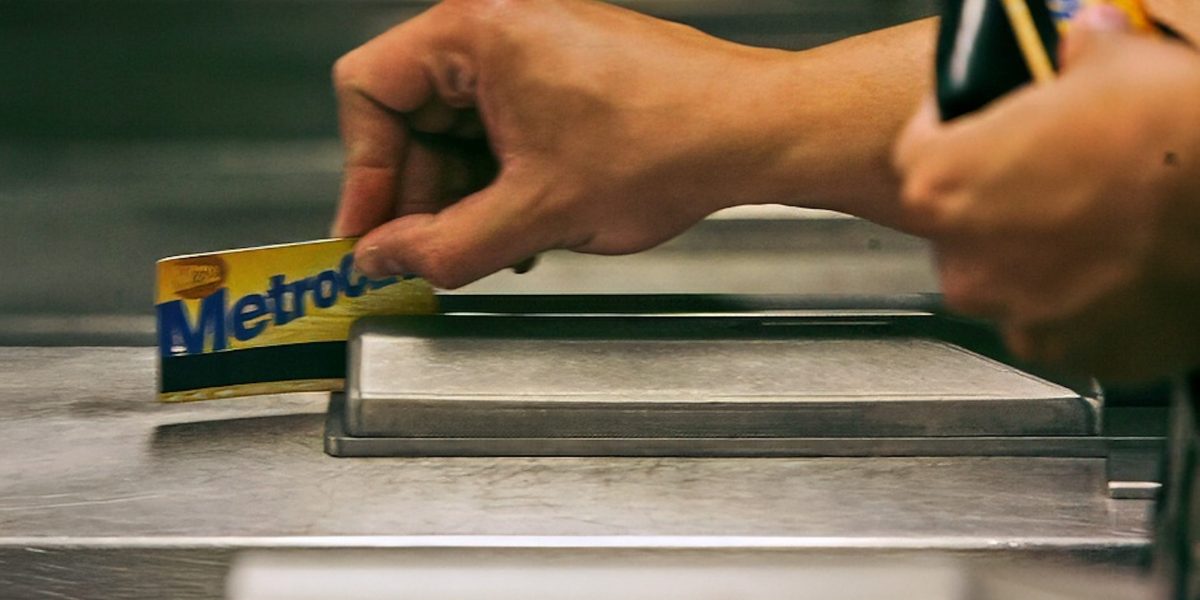
When the MetroCard replaced the New York City subway token in 1994, the swipeable plastic card infused much-needed modernity into one of the world’s oldest and largest transit systems.

Now, more than three decades later, the gold-hued fare card and its notoriously finicky magnetic strip are following the token into retirement.

The last day to buy or refill a MetroCard is Dec. 31, 2025, as the transit system fully transitions to OMNY, a contactless payment system that allows riders to tap their credit card, phone or other smart device to pay fares, much like they do for other everyday purchases.

Transit officials say more than 90% of subway and bus trips are now paid using the tap-and-go system, introduced in 2019.

Major cities around the world, including London and Singapore, have long used similar contactless systems. In the U.S., San Francisco launched a pay-go system earlier this year, joining Chicago and others.

MetroCards upended how New Yorkers commute

The humble MetroCard may have outlasted its useful life, but in its day it was revolutionary, says Jodi Shapiro, curator at the New York Transit Museum in Brooklyn, which opened an exhibit earlier this month reflecting on the MetroCard’s legacy.

Before MetroCards, bus and subway riders relied on tokens, the brass-colored coins introduced in 1953 that were purchased from station booths. When the subway opened in 1904, paper tickets cost just a nickel, or about $1.82 in today’s dollars.

“There was a resistance to change from tokens to something else because tokens work,” Shapiro said on a recent visit to the museum, housed underground in a decommissioned subway station. “MetroCards introduced a whole other level of thinking for New Yorkers.”

The Metropolitan Transportation Authority launched public campaigns to teach commuters how to swipe the originally blue-colored cards correctly, hoping to avoid the dreaded error message or lost fares. Officials even briefly toyed with the idea of an quirky mascot, the Cardvaark, before coming to their senses.

The cards quickly became collectors items as the transit system rolled out special commemorative editions marking major events, such as the “Subway Series” between baseball’s New York Mets and the New York Yankees in the 2000 World Series. At the time, a fare cost $1.50.

Artists from David Bowie and Olivia Rodrigo to seminal New York hip hop acts, such as the Wu-Tang Clan, the Notorious B.I.G. and LL Cool J, have also graced the plastic card over the years, as have iconic New York shows like Seinfeld and Law & Order.

“For me, the most special cards are cards which present New York City to the world,” said Lev Radin, a collector in the Bronx. “Not only photos of landmarks, skylines, but also about people who live and make New York special.”

Perfecting the correct angle and velocity of the MetroCard swipe also became something of a point of pride separating real New Yorkers from those just visiting.

During her failed 2016 presidential campaign, Hillary Clinton, a former U.S. Senator from New York, took an excruciating five swipes at a Bronx turnstile. In fairness, her chief Democratic opponent at the time, U.S. Sen. Bernie Sanders of Vermont, a native Brooklynite, didn’t even appear to realize tokens had been discontinued.

Cost savings and lingering concerns

Unlike the MetroCard rollout, OMNY has required little adjustment.

Riders reluctant to use a credit card or smart device can purchase an OMNY card they can reload, similar to a MetroCard. Existing MetroCards will also continue to work into 2026, allowing riders to use remaining balances.

MTA spokespersons declined to comment, pointing instead to their many public statements as the deadline approaches.

The agency has said the changeover saves at least $20 million annually in MetroCard-related costs.

The new system also allows unlimited free rides within a seven-day period because the fare is capped after 12 rides. It’ll max out at $35 a week once the fare rises to $3 in January.

Still, new changes come with tradeoffs, with some critics raising concerns about data collection and surveillance.

Near Times Square on a recent morning, Ronald Minor was among the dwindling group of “straphangers” still swiping MetroCards.

The 70-year-old Manhattan resident said he’s sad to see them go. He has an OMNY card but found the vending machines to reload it more cumbersome.

“It’s hard for the elders,” Minor said as he caught a train to Brooklyn. “Don’t push us aside and make it like we don’t count. You push these machines away, you push us away.”

John Sacchetti, another MetroCard user at the Port Authority stop, said he likes being able to see his balance as he swipes through a turnstile so he knows how much he’s been spending on rides.

“It’s just like everything else, just something to get used to,” he said as he headed uptown. “Once I get used to it, I think it’ll be okay.”

This story was originally featured on Fortune.com


Source link

Continue Reading

Business

Florida congresswoman accused of stealing $5 million in COVID funds insists she’s innocent

Published

on


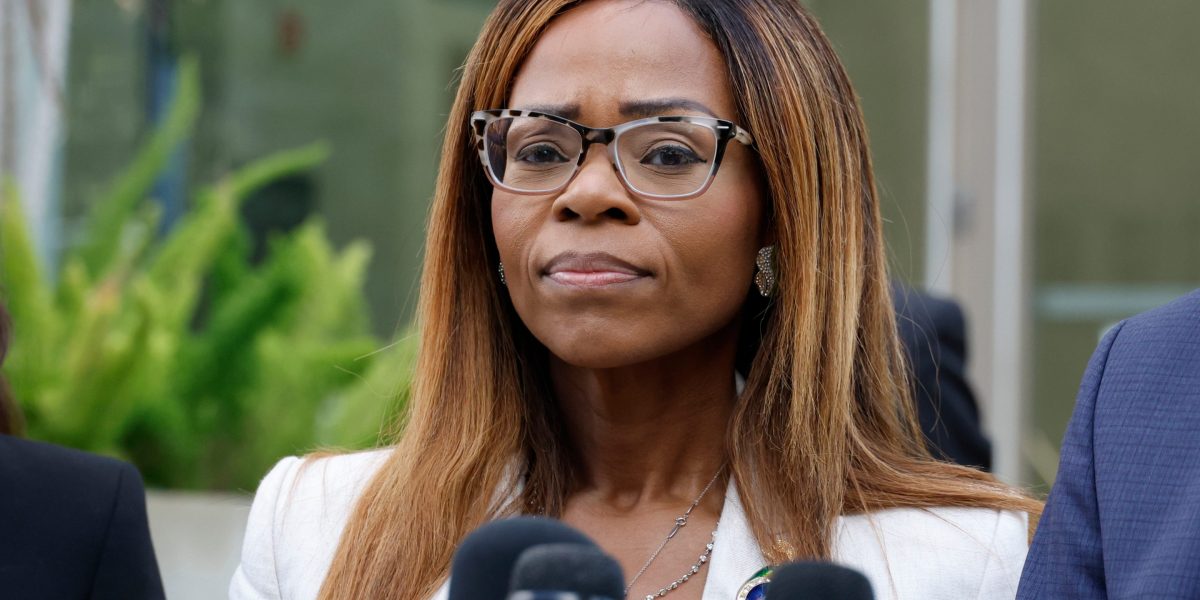
U.S. Rep. Sheila Cherfilus-McCormick reiterated her innocence Monday outside a Miami federal courthouse, where she faces charges of conspiring to steal $5 million in federal COVID-19 disaster funds.

Cherfilus-McCormick was scheduled to be arraigned, but her attorney requested the proceeding be rescheduled to Jan. 20 so that she could finalize her legal team. Prosecutors didn’t object, and Judge Lisette Reid agreed to the new date. The hearing lasted less than five minutes.

“I just want to make it very clear that I am innocent,” Cherfilus-McCormick said immediately after leaving court. “In no way did I steal any kind of funds. I’m committed to the people of Florida and my district.”

Cherfilus-McCormick, a Democrat, has pleaded not guilty. She is facing 15 federal counts that accuse her of stealing funds that had been overpaid to her family’s health care company, Trinity Healthcare Services, in 2021. The company had a contract to register people for COVID-19 vaccinations.

Cherfilus-McCormick’s attorney, David Oscar Markus, said the case involves mistakes that generally aren’t even misdemeanors, let alone felonies. He said he believes the case is politically motivated.

Cherfilus-McCormick was arrested in November and then freed on a $60,000 bond. In addition to bail, the judge said Cherfilus-McCormick must surrender her personal passport, and is allowed to travel only between Florida, Washington, D.C., Maryland and the Eastern District of Virginia.

She has been allowed to retain her congressional passport so she can perform certain duties for her job.

According to the federal indictment, prosecutors said that within two months of receiving the funds in 2021, more than $100,000 had been spent on a 3-carat yellow diamond ring for the congresswoman.

The health care company owned by Cherfilus-McCormick’s family had received payments through a COVID-19 vaccination staffing contract, the indictment said. Her brother, Edwin Cherfilus, requested $50,000, but they mistakenly received $5 million and didn’t return the difference.

Prosecutors said the funds received by Trinity Healthcare were distributed to various accounts, including to friends and relatives who then donated to Cherfilus-McCormick’s campaign for Congress.

Cherfilus-McCormick won a special election in January 2022 to represent Florida’s 20th District, which includes parts of Broward and Palm Beach counties, after Rep. Alcee Hastings died in 2021.

The charges she faces include theft of government funds; making and receiving straw donor contributions; aiding and assisting a false and fraudulent statement on a tax return; money laundering, as well as conspiracy charges associated with each of those counts.

According to a previous statement provided by Cherfilus-McCormick’s chief of staff, she doesn’t plan to resign from office. She said she has cooperated with “every lawful request” and will continue to do so until the matter is resolved.


Source link

Continue Reading

Business

Trump says he still might fire Powell as Fed chair pick looms

Published

on


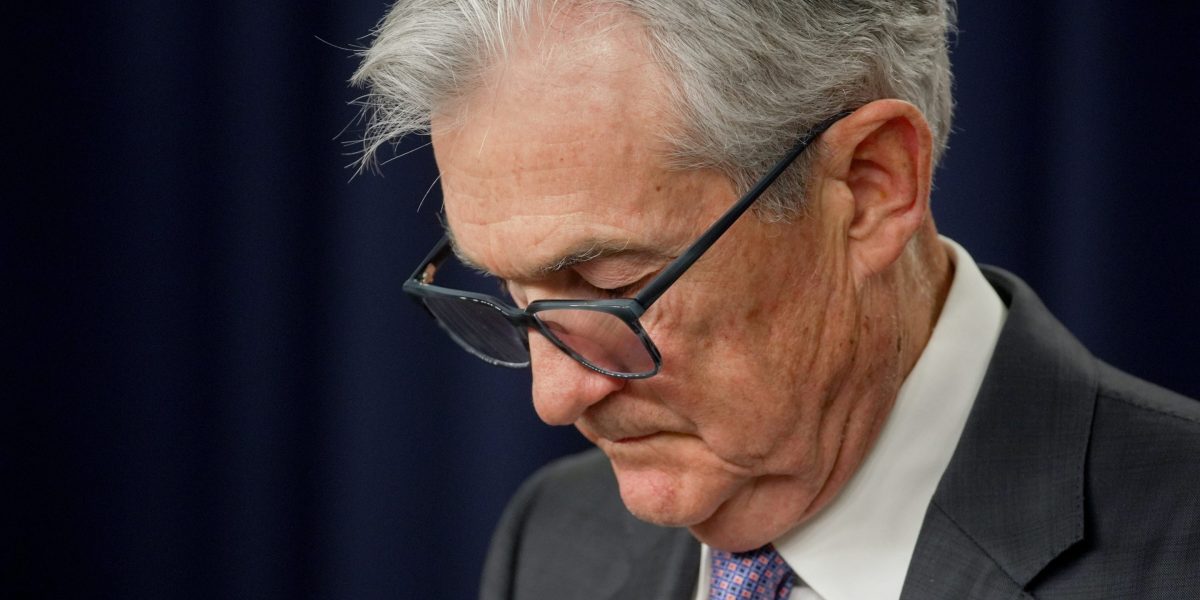
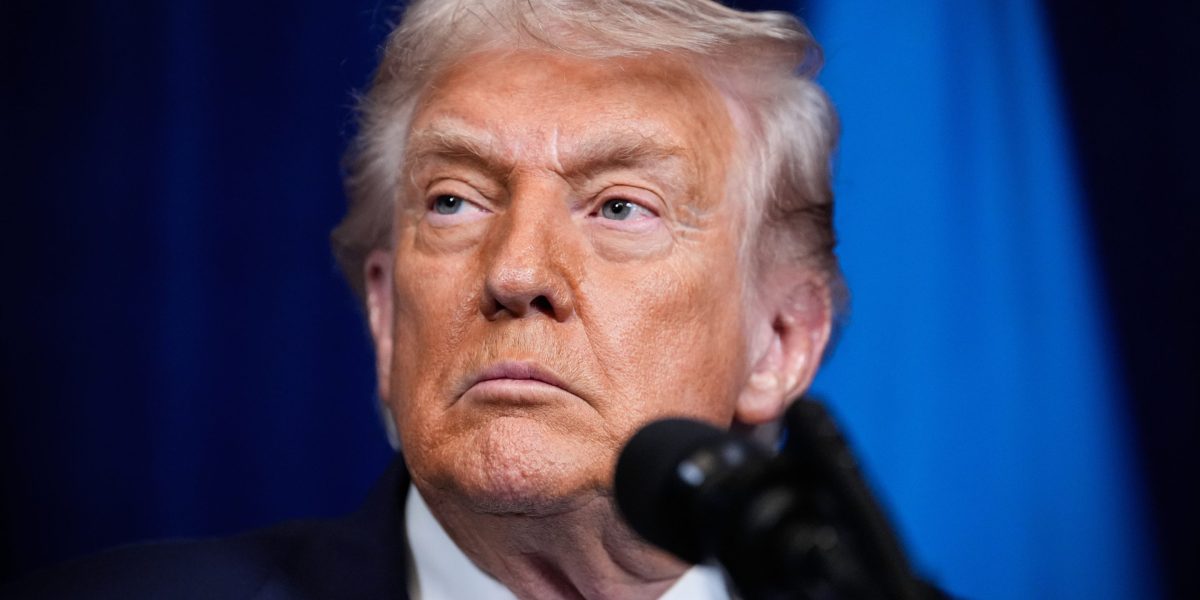
President Donald Trump teased that he has a preferred candidate to be the next chair of the Federal Reserve, but is in no hurry to make an announcement — while also musing that he might fire the central bank’s current leader, Jerome Powell.

“I do, still do — hasn’t changed,” Trump said at a press conference Monday, when asked if he has a favorite candidate. “I’ll announce him at the right time. There’s plenty of time.”

Trump added the Powell should resign and that he’d “love to fire him.”

“Maybe I still might,” Trump told reporters at his Mar-a-Lago resort in Florida.

Trump did not specify who is his leading chair candidate and said an announcement would be made in “January sometime.” 

National Economic Council Director Kevin Hassett has been seen as the frontrunner, though Trump has also expressed interest in former Fed governor Kevin Warsh. Other finalists in the process have included current Fed governors Christopher Waller and Michelle Bowman and BlackRock’s Rick Rieder. 

Earlier: Bessent Sees Room for a Future Revamp of the Fed’s 2% Target

Trump has made numerous cryptic — and sometimes contradictory — remarks about his decision-making process regarding the new central bank chief. The president earlier in December said he’d narrowed the pool of contenders down to one, but subsequently said he was considering multiple candidates and has heaped praise on several of the names on the short list.

Trump has long been a critic of Powell, who he picked to lead the central bank during his first term. The president has indicated he wants the next chair to more aggressively cut interest rates as the White House looks to lower mortgage costs.

He said Monday he was considering a “gross incompetence” lawsuit against Powell related to an ongoing renovation project at the Fed. Powell’s term as chair is set to end in May of 2026, but his term on the Fed’s Board of Governors doesn’t expire until 2028.

Join us at the Fortune Workplace Innovation Summit May 19–20, 2026, in Atlanta. The next era of workplace innovation is here—and the old playbook is being rewritten. At this exclusive, high-energy event, the world’s most innovative leaders will convene to explore how AI, humanity, and strategy converge to redefine, again, the future of work. Register now.


Source link

Continue Reading

Business

Trump claims victory in drug-smuggling crackdown, but key details remain a mystery

Published

on


President Donald Trump has indicated that the U.S. has “hit” a dock facility along a shore as he wages a pressure campaign on Venezuela, but the U.S. offered few details.

Trump initially seemed to confirm a strike in what appeared to be an impromptu radio interview Friday, and when questioned Monday by reporters about “an explosion in Venezuela,” he said the U.S. struck a facility where boats accused of carrying drugs “load up.”

“There was a major explosion in the dock area where they load the boats up with drugs,” Trump said as he met in Florida with Israeli Prime Minister Benjamin Netanyahu. “They load the boats up with drugs, so we hit all the boats and now we hit the area. It’s the implementation area. There’s where they implement. And that is no longer around.”

It is part of an escalating effort to target what the Trump administration says are boats smuggling drugs bound for the United States. It moves closer to shore strikes that so far have been carried out by the military in international waters in the Caribbean Sea and eastern Pacific Ocean.

Trump declined to say if the U.S. military or the CIA carried out the latest strike or where it occurred. He did not confirm it happened in Venezuela.

“I know exactly who it was, but I don’t want to say who it was. But you know it was along the shore,” Trump said.

Trump first referenced the strike on Friday, when he called radio host John Catsimatidis during a program on WABC radio and discussed the U.S. strikes on alleged drug-carrying boats. The attacks have killed at least 105 people in 29 known strikes since early September.

“I don’t know if you read or saw, they have a big plant or a big facility where they send the, you know, where the ships come from,” Trump said. “Two nights ago, we knocked that out. So, we hit them very hard.”

Trump did not offer any additional details in the interview.

Defense Secretary Pete Hegseth or one of the U.S. military’s social media accounts has in the past typically announced every boat strike in a post on X, but there has been no post of any strike on a facility.

The Pentagon on Monday referred questions to the White House, which did not immediately respond to a message seeking more details. The press office of Venezuela’s government did not immediately respond to a request for comment on Trump’s statement.

Trump for months has suggested he may conduct land strikes in South America, in Venezuela or possibly another country, and in recent weeks has been saying the U.S. would move beyond striking boats and would strike on land “soon.”

In October, Trump confirmed he had authorized the CIA to conduct covert operations in Venezuela. The agency did not immediately respond to a message seeking comment Monday.

Along with the strikes, the U.S. has sent warships, built up military forces in the region, seized two oil tankers and pursued a third.

The Trump administration has said it is in “armed conflict” with drug cartels and seeking to stop the flow of narcotics into the United States.

Venezuelan President Nicolás Maduro has insisted the real purpose of the U.S. military operations is to force him from power.

White House chief of staff Susie Wiles said in an interview with Vanity Fairpublished this month that Trump “wants to keep on blowing boats up until Maduro ‘cries uncle.’”


Source link

Continue Reading

Trending

Copyright © Miami Select.