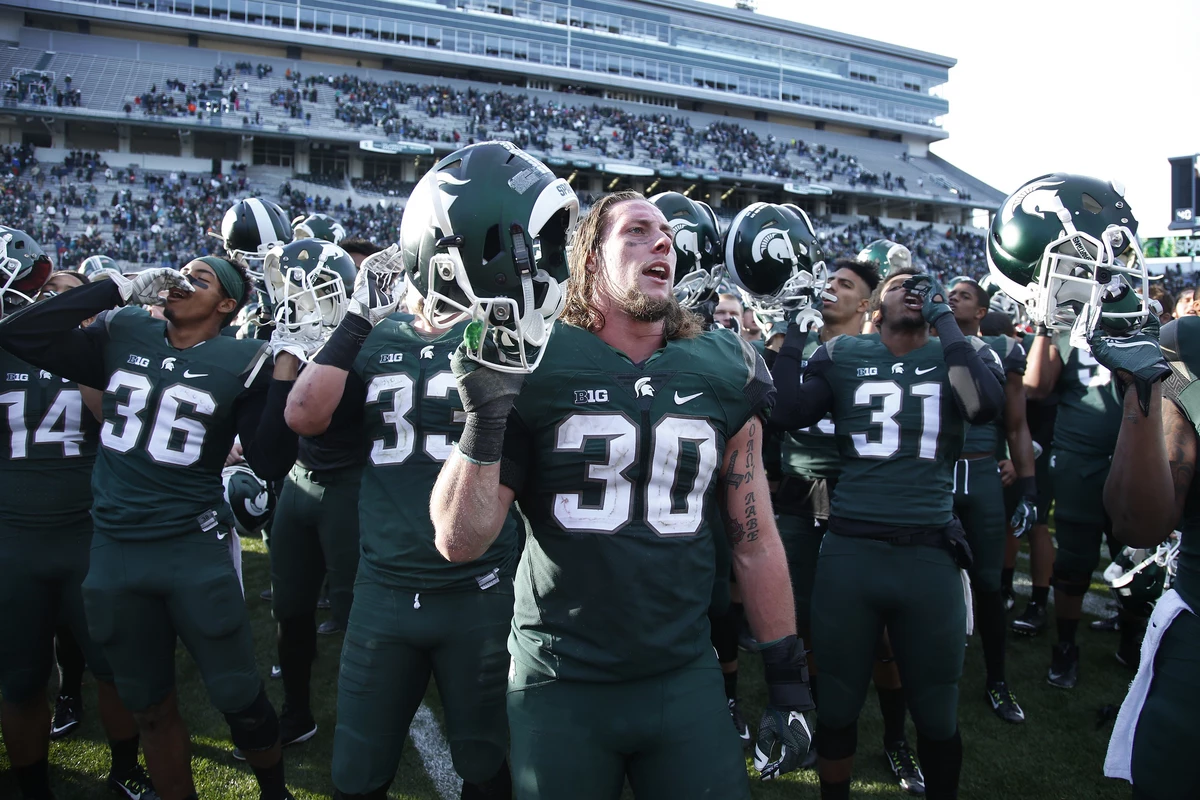
The Spartans are set to surprise some people in the Big Ten
The widening financial divide in Division I athletics
The NCAA’s most recent financial release shows just how top‑heavy the economics of college sports have become. Out of roughly 370 Division I athletic departments, only a small minority, most Big Ten and SEC members finished with a surplus in the most recent complete fiscal year. That means more than ninety percent of Division I programs operated at a loss, even as media rights revenue reached historic highs.
The schools that did not lose money overwhelmingly came from the power conferences, and almost all were driven by football brands with massive donor support, strong ticket sales, and large alumni bases. As the 2025 landscape takes shape, the winners and losers across the power conferences look more defined than ever.
Big Ten programs that finished in the black
The Big Ten remains the most financially stable league in college sports. According to NCAA data, the following Big Ten schools posted surpluses:
Ohio State
Michigan
Penn State
Iowa
Nebraska
Wisconsin
Purdue
These programs benefited from the conference’s enormous media rights deal and consistently strong football performance.
SEC programs that did not lose money
The SEC continues to operate near the top of the financial pyramid. The following SEC schools reported surpluses:
The SEC’s combination of football dominance, donor investment, and brand power keeps its top tier profitable even as expenses rise.
ACC programs that finished with a surplus
Only two ACC schools reported generated‑revenue surpluses:
Clemson
Florida State Showed a $3.7 million dollar surplus – Of note FSU is operating at a large scale with $208M expenses and is carrying $437M in athletics-related debt (mostly for stadium renovations and a new football operations center), so the small surplus does not mean the program is “profitable” in the way a business usually uses the term.
Sports-by-sport breakdown (FY25) Football: +$5.19M (excess of revenue over expenses) Men’s basketball: −$0.48M Women’s basketball: −$3.97M Other sports: −$15.30M Non‑Program Specific: +$18.33M Total excess:+$3.76M
Bottom line: Florida State reported a small revenue surplus in FY25 (about $3.8M) but I must clarify that this is not a true net operating profit due to how NCAA accounting excludes depreciation, amortization, and capital costs.
The rest of the league continues to struggle under a long‑term media rights deal that lags behind the SEC and Big Ten.
Big 12 programs that stayed in the black
The Big 12 produced only one athletic department that closed the most recent complete fiscal year with a final surplus (after all contributions and investment income): Kansas State.
According to NCAA MFRS‑derived data for FY25, Kansas State reported:
Operating revenue: $74.3M
Operating expenses: $103.7M
Operating loss: ≈ $29.4M
Final surplus (after contributions, endowment & investment income): + $12.6M
*BYU states that its athletic department doesn’t receive any tithing or tax dollars and operates to “spend within its means” rather than make a profit. This suggests a break-even budget with a small surplus, though it can’t be verified beyond an estimated $10 million.
That means Kansas State was not profitable on an operating basis; its year‑end surplus came almost entirely from donor support and investment returns, not from generated athletics revenue alone. This is consistent with K‑State’s long‑standing model as one of the few DI programs that operates with no direct university/student/state funding and has posted balanced budgets across multiple years through strong booster support.
The rest of the Big 12—despite being competitive on the field—recorded operating deficits, and none posted a final surplus in the most recent NCAA dataset. The league as a whole faces significant financial pressure as expenses rise faster than media‑rights allocations for most members.
National picture: only a small minority in the black
Across all of Division I, only a small handful of athletic departments finished with more generated revenue than expenses. Nearly all came from the power conferences, and the vast majority of them relied heavily on football to stay afloat. The 2025 season underscores the same reality: the financial divide is not shrinking. It is accelerating.