
Politics
‘Save the Garden’ turns to embattled lawyer as petition effort falters
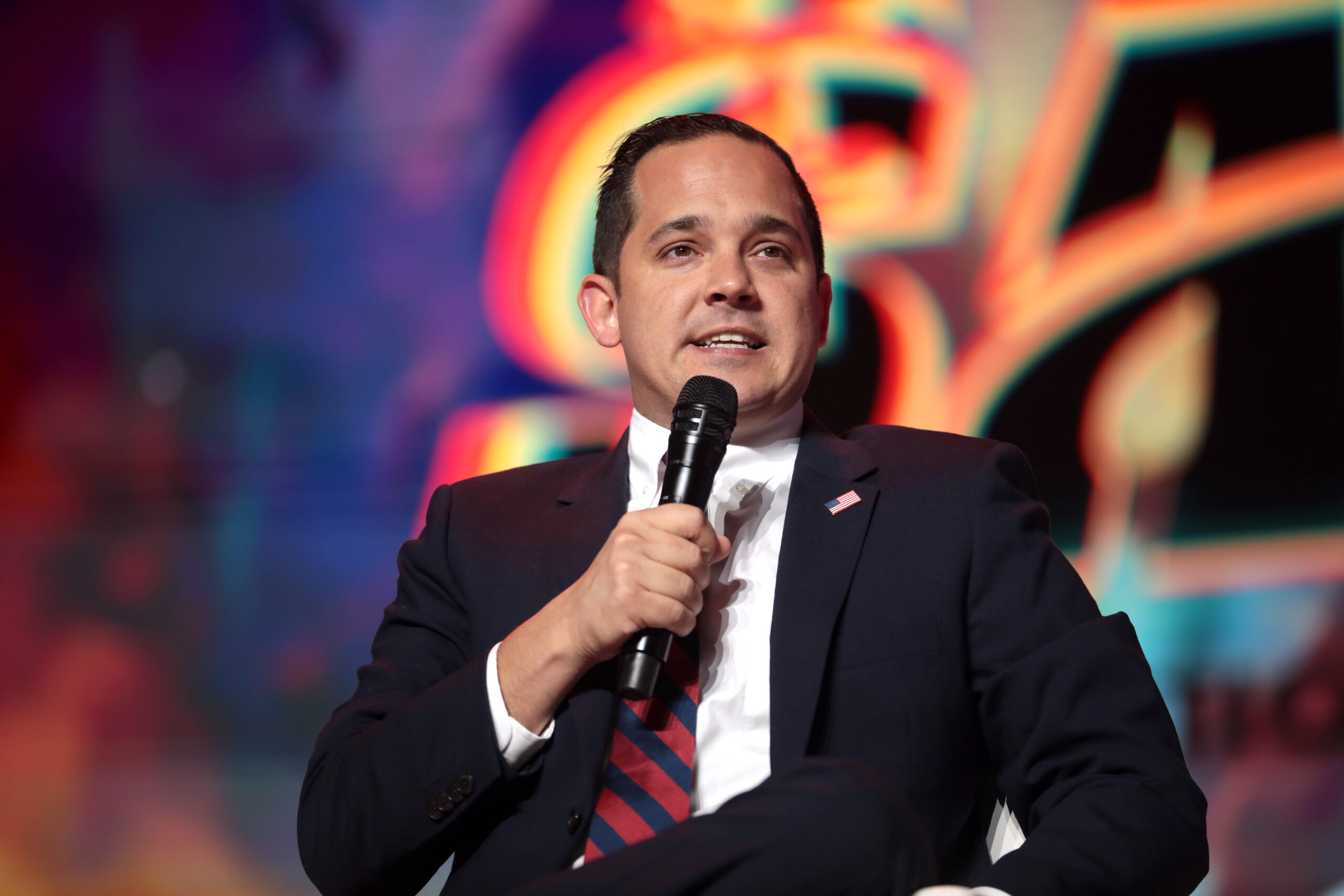
The group pushing for a charter amendment in the city of Clearwater has hired an attorney to aid in its fight despite numerous past controversies and a track record of failures.
Save the Garden, a group formed last year after the Church of Scientology sought a right-of-way transfer from the city for a project it had been planning, hired Anthony Sabatini to help fight a city decision invalidating petition signatures to get its measure on the ballot.
What the group may not know is that Sabatini is something of an outcast in Florida politics, having faced a number of controversies over the years, including once dressing in Black face and plagiarizing a college thesis using Wikipedia. Meanwhile, he has also faced a number of failures as a lawyer, including being fired from one municipality and rejected by another.
At issue is a petition drive to place a referendum on the Clearwater ballot asking voters whether their approval should be required before the city can transfer ownership of any of its downtown public roads. The matter came up after the Church of Scientology sought a right-of-way transfer of a portion of Garden Avenue in downtown as part of a project it had been planning.
To get the initiative on the ballot, the group must submit 7,067 valid petition signatures, a number that is 10% of the city’s 70,675 voters. Save the Garden recently submitted 8,000 petition signatures, but only 2,702 were deemed valid.
More than 4,000 of the signatures were invalidated because they were collected before the Save the Garden group had the requisite number of eligible members of a committee to undergo petition gathering.
One of the members who was part of the initial committee was not a registered Clearwater voter. The member, Jessica Andujar, cured the defect in October, but the Clearwater City Clerk determined any petitions gathered before her registration was cured were invalid because the group hadn’t met its statutory requirements before then.
Another more than 1,000 signatures were invalidated because the signatories were not registered Clearwater voters, as required by city charter.
Save the Garden has until Friday to secure at least 4,365 more valid signatures in order to get the referendum on the ballot.
Enter Sabatini, an embattled former state Representative who has a knack for stirring up controversy wherever he goes. In an email to the City Clerk and other city leaders, Sabatini called the issue surrounding Andujar’s voter registration “a good-faith, promptly cured technical defect that does not invalidate the petition.”

Sabatini described the city’s decision to invalidate signatures gathered before the defect was cured as “precisely the type of curable, non-fraudulent clerical error that Florida courts have repeatedly held does not defeat a citizen initiative.”
The city has not reversed course despite Sabatini’s threat of legal action.
Robert Eschenfelder, a board-certified lawyer in city, county and local government law and a partner at Trask Daigneault, doesn’t believe any legal action taken by Sabatini would be successful.
“Motive doesn’t really matter,” he said of Sabatini’s argument that a defect Sabatini described as a “technicality” was cured in good faith and therefore should not invalidate petitions.
Eschenfelder explained that the City Clerk’s role is administrative, meaning the Clerk must apply terms of the city charter to any decision related to petition gathering.
“The Clerk shouldn’t say, ‘I don’t like the substance of this petition so therefore I’m not going to process this petition.’ But what he glosses over is that part of that duty is to ensure that the process is properly done. It’s within the scope of (the Clerk’s) duty to say ‘Look, I’m invalidating these because they were not properly gathered under a five-person committee,’” Eschenfelder said.
As the deadline for petitions nears, it’s important to also note that the validity of signatures gathered is not the only problem Save the Garden has faced. In fact, the group’s petition process was flawed from the start.
The group initially attempted to use digital petitions, but the City Clerk rejected doing so because the city charter requires signatures to be printed in ink.
Kelly Myer, a representative from Save the Garden, inquired last June as to whether it was “possible to do a digital petition,” arguing that “handwriting is often illegible” and that “an electronic list would assist in verifying the signers.” City Clerk Rosemarie Call responded that doing so was not allowed under the city charter due to its ink or indelible pencil requirement.
Brooks Gibbs, Save the Garden’s founder, also inquired in June as to whether the group could use “printed names/addresses/dates” combined with ink signatures.
City Attorney David Margolis responded that there was no precedent for preprinted forms, arguing that because the charter was written well before “citizens had easy access to pre-populating software,” the original authors of the charter “likely envisioned handwritten addresses and nothing else.”
He further argued that “requiring citizens to write out their address provides a more significant handwriting sample for signature authentication” and that “taking the time to physically write one’s address instills a sense of responsibility, allowing for moments of reflection for citizens to consider the depth of their support for the initiative.”
There are also potential “serious constitutional issues” with the proposed city ordinance petition gatherers are seeking to place on the ballot, according to Eschenfelder.
Some of the problems are steeped in complicated legalese. But put simply, the proposed language potentially violates both the equal protection and due process clauses of the Constitution. The proposed ordinance would apply only to private or religious entities, which Eschenfelder argues violates equal protection, and it would apply to right-of-way vacations that “restricts public access in practice.”
“I would challenge anyone to understand what it means by ‘restrict the public access in practice,’” Eschenfelder said, arguing such vague language violates the due process clause.
But the problems don’t stop there. In September, Sabatini was dismissed from his role as City Attorney for Treasure Island, citing tardiness, absenteeism, unprofessionalism and poor legal advice.
And in late February, the Lake County Republican Executive Committee, for which Sabatini once led, voted to reject his membership application. The group’s rejection followed years of conflict with the sitting Lake County Commissioner and current county GOP Chair, Taylor Yarkosky.
A commentary in the Florida Phoenix once described Sabatini as “an over-stimulated chihuahua at a crowded party, yapping for attention and never getting enough.” The Orlando Sentinel in 2020 described Sabatini as “the worst person in the Legislature,” arguing his advocacy against wearing face masks during the COVID pandemic came at the expense of fighting for things that would actually help constituents, such as addressing unemployment issues at the time.
In 2023, the Daily Beast reported Sabatini had plagiarized his honors thesis, using what it described as “an astonishing amount of content verbatim from other sources,” including “passages from Wikipedia,” all while presenting “them without the required quotation marks or any clear attribution whatsoever.” In areas where Sabatini did cite his content, “those references themselves frequently appear to be incorrect.” A plagiarism expert speaking to the outlet said in some cases, the citations were “entirely made up.”
This isn’t the first time Sabatini has inserted himself into a petition dispute. He is currently representing Marcus Carter, a long-shot Republican challenging incumbent Democratic U.S. Rep. Darren Soto in Florida’s 9th Congressional District, in a fight challenging an administrative change meant to keep a cannabis legalization measure off the ballot that is also affecting candidates attempting to qualify for the ballot by petition.
The administrative change requires signatures from voters deemed inactive — those who have not voted in two consecutive federal elections — to be invalid.
In any case, the Save the Garden group appears to have aligned itself with, at best, a controversial figure and, at worst, an embattled lawyer who seems to have a black cloud constantly following him.
And even if Sabatini follows through on his threat to challenge the City Clerk’s decision to invalidate thousands of petitions, Eschenfelder doesn’t believe he would have a case.
“They should have just started all over with a newly constituted committee and then go from there to start gathering petitions,” he said. “Because that didn’t happen, you now have a situation where a bunch of petitions were gathered by a committee that was not valid.”