
Politics
Tampa Bay Rays stadium talks hit scrutiny as Hillsborough County flags risk, funding gaps
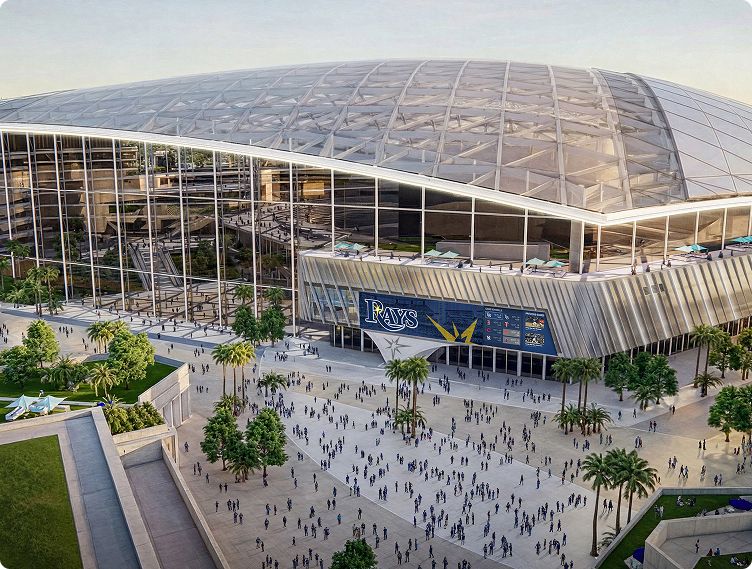
Hillsborough County Commissioners dug into the financial and legal framework behind a proposed Tampa Bay Rays stadium deal, and some officials are raising concerns about taxpayer risk, long-term obligations and key pieces of the agreement that remain unresolved.
The workshop marked the board’s first detailed public discussion of how a potential funding package could be structured and what safeguards might be needed before moving forward with a deal that could exceed $1 billion in public funding from the county and city of Tampa.
County staff outlined a financing strategy built largely around Community Investment Tax (CIT) and Tourist Development Tax (TDT) funding, alongside county reserves and other potential resources.
“We do not yet have an agreement that is ready to bring before this board,” County Administrator Bonnie Wise said during Thursday’s workshop.
“We recently received a draft memorandum of understanding for consideration from the team. This MOU has not been agreed upon by county staff, and several significant issues remain unresolved. … The financial request from the team is substantial, over $1 billion, and would exceed any comparable request for a professional sports facility by a local government that we are aware of. That reality requires careful scrutiny and disciplined evaluation.”
The discussion comes as county revenue from the CIT — a half-percent sales tax renewed by voters last year — has been lower than projected. Staff noted that the elimination of the state sales tax on commercial leases has already reduced expected revenues by roughly 8%, and caution about a slow economic outlook as well.
The proposal also includes issuing long-term bonds backed by the TDT’s “sixth cent,” along with approximately $40 million in available tourism tax reserves. However, those funds are already partially committed to existing priorities, including tourism marketing and cultural programs.
Even with those funding sources accounted for, the county still needs to find other sources to fully pay for its share of the project. Staff identified about $132 million in county reserves that could be repurposed for the effort, but warned that maintaining reserves is best practice and that tapping those funds could limit the county’s flexibility to respond to future economic downturns or emergencies.
“When we evaluated the CIT assumptions, and we realized that the revenues were going to drop far below the $600 million that the Rays were expecting, we did go back to the drawing board and we basically looked in the couch cushions to see where we could find some revenue,” Chief Financial Administrator Tom Fesler said.
“We started evaluating our unrestricted reserves. We have unrestricted reserves in our budget to provide budget flexibility and be able to address annual needs, potential opportunities that come up, as well as revenue shortfalls.”

District 3 Commissioner Gwen Myers said the county and the team may need to compromise to make a deal work.
“I want the deal to work, but we are short on funding,” Myers said. “The two parties, Rays and county, need to come together to see how we can make a deal work for the best for the county and for the Rays, and that our constituents would be promised and have what we said we would do with the CIT tax.”
While no final funding package has been agreed upon, the workshop highlighted how much of the deal remains in flux. Key issues like long-term ownership of the stadium, responsibility for long-term maintenance costs, parking revenue allocation and verification of the Rays ownership group’s financial capacity have not yet been finalized.
“One key issue is the request for substantial upfront funding during the construction period,” Wise said.
“This creates challenges in identifying viable and responsible revenue sources. The financing strategies that will be presented today are just that, they are options. They are not recommendations and they require further analysis and vetting. Importantly, the team has not agreed to the financing concepts being presented today, nor to several of the county’s core requirements. Those discussions are ongoing.”
The legal framework for using CIT dollars also drew attention during the workshop. County staff, citing a legal analysis from bond counsel, said the tax can be used to fund a publicly owned stadium under state law, even if the facility is leased to a professional sports team. Still, doing so would require the County Commission to amend its previously approved project list through a public hearing.
District 7 Commissioner Joshua Wostal argued the CIT extension in 2024 was marketed to voters with indication that funds would not be used for new professional sports facilities.
County Attorney Julia Mandell said her office would ensure an outside lawyer working on the bond issue considered any possible communications from county staff or officials that could be construed as misleading to voters, which could leave the county vulnerable to potential lawsuit over the use of CIT funds for the development.
Wise addressed the matter with her opening remarks during Thursday’s workshop, although her comments preceded Wostal’s questioning with regard to messaging during the lead up to the election.
“There are several categories that we outlined in 2024, they include transportation and public works, public safety, public facilities and public utilities,” Wise said.
She indicated the ballpark proposal would fall under the public facilities category; specifically, a subset of $545 million in funding specifically meant for community facilities that could be tapped for the Rays’ ballpark.
Other eligible facilities include Raymond James Stadium, Benchmark International Arena (which was called Amelie Arena at the time), Steinbrenner Field, tournament sports facilities, and other such facilities.
“It’s important to note that only the total funding amount for this category was approved,” Wise said.
“Eligibility within this category does not constitute a determination of priority or appropriateness for funding. No specific allocations were designated for any individual project or entity. While internal estimates were developed at the time, those figures were preliminary, not part of any formal approval, and were not promised or guaranteed to any group. These are taxpayer dollars, and only this board has the authority to allocate them.”
Wise added that the city has made significant contributions to existing sports arenas often without the use of CIT funds, insinuating that the city could dedicate a significant sum to the Rays ballpark and still support the needs of the county’s other sports teams from other funding sources if necessary.
The discussion point comes as the Tampa Bay Buccaneers are expected to pursue renovation plans for Raymond James Stadium — located down the road from the Rays’ proposed ballpark district — that could cost upward of $1 billion itself overall.
“The board has made significant additional investments in several of these community assets without the need to rely on these CIT funds, including most recently $18 million for Steinbrenner Field and $250 million for Benchmark International Arena. This was done because we recognized the strong partnerships we have with these teams, including the Tampa Bay Buccaneers,” Wise said.
“We also recognize that these are county-owned facilities, and that they allow for a multitude of events to be held — which provide tremendous impact to our community. That continued support is warranted.”
Wostal said the board should address unresolved issues before a deal is signed, especially verifying whether Rays ownership has its share of funds. He noted that, as proposed, the deal largely would use public funds to kick off the first phase of development. Although he has been the deal’s most vocal critic, Wostal pitched an alternative rebate program for funding that he believes could be more taxpayer friendly and make the stadium deal work.
“I would move to approve that deal immediately, to be clear, to provide the Tampa Bay Rays almost three-quarters of $1 billion of our local tourist development taxes from the sixth cent on some type of rebate program. That’s gross numbers. They supply their money, we supply our money — which is a partnership, which is what we proposed a public-private partnership.”
District 1 Commissioner Harry Cohen, who represents the area where the ballpark district could be built, called for deliberate effort to involve existing community groups and businesses, and to find answers to real concerns about traffic that will be generated from the development.
Other Commissioners acknowledged those concerns, but said the economic and cultural impact of the Rays’ ballpark and district outweighs past promises — especially after counsel determined there are no legal constraints. According to an analysis presented during the workshop, the proposed development could generate billions in economic activity over several decades if the Rays’ vision is fully realized — especially if you account for other potential revenue generators like concerts or hosting high-profile sports events.
“Do we want to host a Taylor Swift? A women’s final four? Or NCAA Frozen Four? College national championship? There are many concerts and events held at our facilities beyond the sports teams, and I think at times people lose track of that. That not only improves our resident’s quality of life, but generates significant revenue,” Chair Ken Hagan said.
Hagan added that Benchmark International Arena hosted 140 events last year alone.
“I’ll give you another example,” Hagan said. “There’s a band called BTS. I’ve never even heard of them. Apparently they are a big deal. We’re having three concerts at Raymond James Stadium. What I’m told is the economic impact of this band is going to be bigger than Taylor Swift — which netted the county close to, I believe, $1.8 million in tax revenue.”
The timeline to make a final decision remains tight. The county and Tampa need to act by June to keep pace with the Rays’ target of opening a new ballpark by 2029, after the team’s current lease at Tropicana Field is set to expire. If the deadline is missed, the team would likely need to negotiate an extension with St. Petersburg city officials, or find another place to play ball until the new ballpark is complete.
Commissioners are expected to continue negotiations in the coming weeks as they weigh whether to advance a formal deal — and under what terms.
“The Rays have made it very clear that, for many reasons, there is a sense of urgency — either reach an agreement or cut bait,” Hagan said. “That’s my term, not theirs.”