
Politics
Haiti TPS — National Guard — Cubans — seafood — Parkinson’s
Haiti reprieve
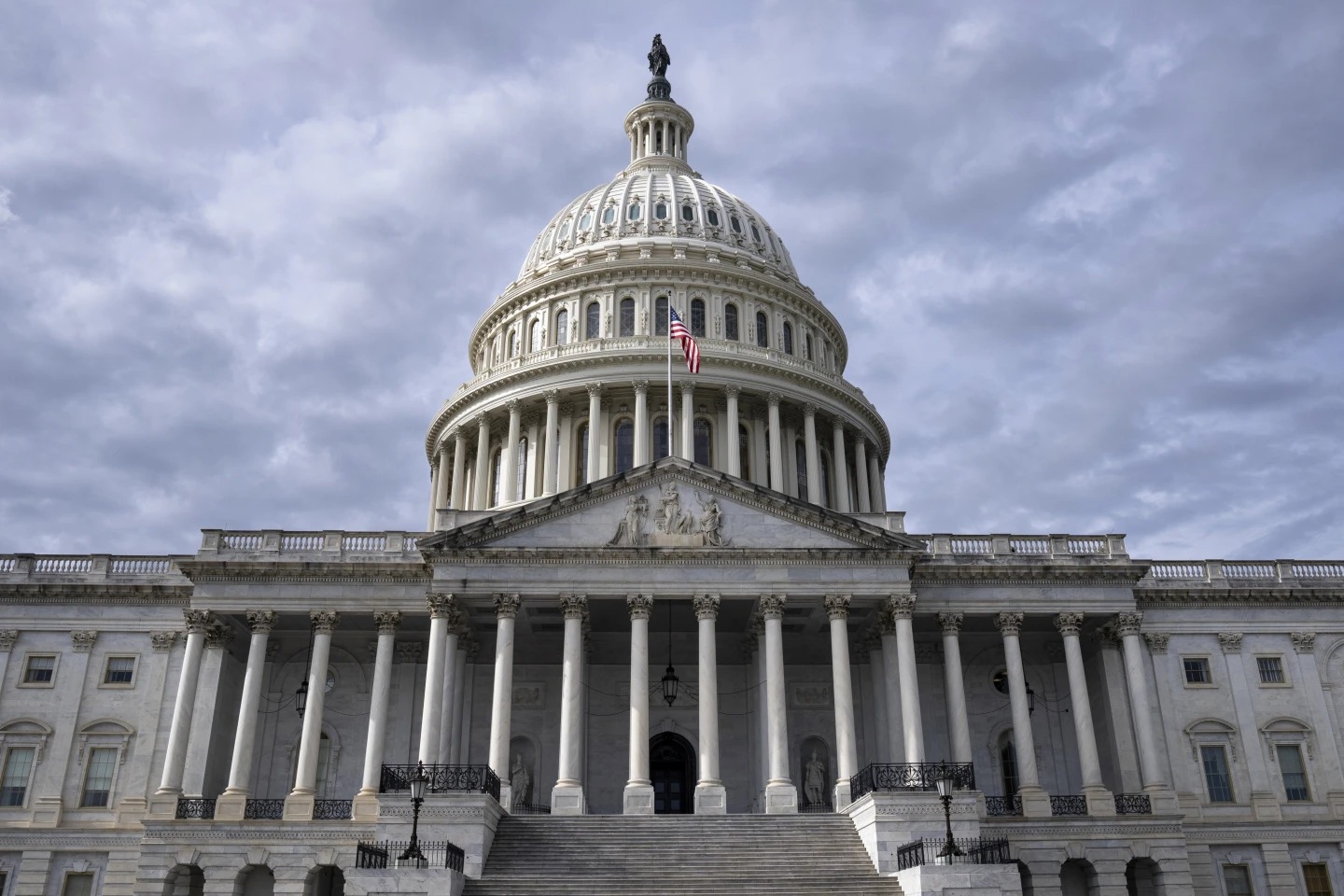
Over the objection of Republican leadership, the House advanced legislation to restore temporary protected status (TPS) for Haitian refugees for three years. That marks a rare rebuke within the GOP-controlled Congress of President Donald Trump’s immigration policies and could impact Florida more than any other state.
About 49% of Haitians living in the U.S. reside in Florida, according to the Migration Policy Institute; consequently, three Sunshine State Republicans — Miami-Dade Reps. Mario Díaz-Balart, Carlos Giménez and María Elvira Salazar — were among 10 GOP Representatives to join all Democrats and pass the bill (HR 1689).
“Haiti continues to face severe instability driven by natural disasters, corruption, and widespread violence, making it extraordinarily difficult for its people to live safely,” said Díaz-Balart, a Hialeah Republican.
“As my record shows, I have supported Temporary Protected Status for Haitians during times of crisis as a form of humanitarian protection, while remaining committed to enforcing our immigration laws. I am proud to once again support extending these protections for Haitians in the United States.”
The bill held special resonance for Rep. Sheila Cherfilus-McCormick, a Miramar Democrat and the only Haitian American currently serving in Congress. She gave a speech on the House floor saying deporting thousands of refugees would not only be dangerous to those individuals but devastating to Florida’s economy.
“If we kick them out willy-nilly, just everybody goes out in one day, how are we going to sustain the economy in South Florida, in a state that everybody loves to visit?” Cherfilus-McCormick said.
“What I’m asking for is cool minds to actually come together and think about how we can actually have a transition process that will protect the American people, help our economy, but not rushing toward this mass exodus.”
Still, nine Republicans in Florida’s delegation voted against the bill. Rep. Greg Steube, a Sarasota Republican, took a shot at Cherfilus-McCormick for speaking on the bill just days ahead of a House Ethics Committee vote on her potential expulsion from Congress.
“It’s fitting that Congresswoman (Cherfilus-McCormick) is spending her final days in Congress fighting to extend protections for Haitians through (Joe) Biden’s weaponized TPS program,” he said. “After all, she received over $800k in illegal campaign contributions from foreign Haitian interests. We need to expel Sheila from Congress and deport her fellow criminals who have taken advantage of our country for far too long.”
Rep. Randy Fine suggested Florida knows too well the consequences of thousands of noncitizens living in the community. He said Floridians have lost their lives because of Haitians who should not be in the state.
“In 2022, Terry and Brenda Aultman were riding their bikes home when a Haitian in this country on TPS, which, by the way, is temporary, temporary, were killed, their necks slashed by someone who never should have been in this country. When do we care about their deaths? And just a few weeks ago, Yasmin Easmin, who was murdered again by a Haitian here on TPS.”
But Rep. Maxwell Frost, an Orlando Democrat who helped rally votes for the bill, cheered its passage and said it was important to thousands in the state.
“We got Democrats and Republicans together to say it is immoral; it is unjust, it is not right to expel 350,000 of our Haitian brothers, sisters and siblings who live in this nation to Haiti right now,” he said.
The bill now heads to the Senate.
Stationed in D.C.
Florida National Guardsmen this week were welcomed to Washington by Sen. Ashley Moody. The troops were in town as part of Trump’s order to station in the nation’s capital city and improve public safety.

“It was an honor to welcome Florida National Guardsmen to my office and thank them for their service to our state and nation. These brave men and women play a critical role in our efforts to keep our communities safe, and I’m proud to support them and the President’s mission to strengthen public safety,” the Plant City Republican said.
Days later, Moody also met with dozens of constituents and business leaders visiting Washington from Florida.
“It was great to welcome more than 50 Floridians from across a wide range of industries to another wonderful Mornings with Moody,” she said. “These conversations are an important opportunity to hear directly from Floridians about the issues that matter most to them, and I’m grateful for their time, insight, and commitment to keeping our state strong.”

Upping the pressure
With the release of Cuban political prisoners in poor condition, Sen. Rick Scott urged Trump to step up the pressure to remove the current regime.
“Your administration’s record on Cuba has been exceptional,” Scott wrote in a letter to Trump. He specifically praised a Jan. 29 executive order to address threats posed by the nation 90 miles from Florida’s coast.
But the Naples Republican respectfully asked for the administration to do more to drive out the government controlled by Cuban President Miguel Díaz-Canel and the family of the late Fidel Castro.

Florida’s senior Senator said the U.S. should put a stop to “Cuba’s coercive medical missions program” and to GAESA, “the military conglomerate that serves as the regime’s financial backbone.”
He also urged the administration to impose secondary tariffs on any countries facilitating medical missions to Cuba, ban visas for any government officials responsible for administering those efforts, and suspend foreign aid to countries with partnerships with Cuba.
He also wants to bar any U.S. entity from doing business with GAESA or any of its subsidiaries.
“Thanks to your continued pressure, the illegitimate Castro-Díaz-Canel regime is financially fragile,” Scott wrote.
“Your Jan. 29 Executive Order built a bold framework to cut off the regime’s illicit profits; now is the time to extend it to every revenue stream keeping the dictatorship alive. Medical mission proceeds and GAESA infrastructure deals are the next front. I stand ready to support any complementary legislative action your administration requires.
Spotlight on seafood
Rep. Kat Cammack stood alongside Agriculture Secretary Brooke Rollins as the U.S. Department of Agriculture (USDA) opened its first Office of Seafood.
The Gainesville Republican said the step was an important one in advancing aquaculture as a major industry in the U.S.

“Food security is national security, which means prioritizing domestic production and strengthening our food supply here at home,” Cammack said. “From our Florida coasts to communities across the country, we’re cutting red tape, backing our fishermen, and ensuring American seafood competes — and wins — on the world stage.”
Cammack’s office noted that fish farming creates thousands of jobs in her North Central Florida district. The Congresswoman said it remains vital to the U.S. food supply chain that American fisheries exist to feed the country.
Rollins also said the office recognized the value of seafood in domestic livestock.
“With the launch of the USDA Office of Seafood, we are honoring decades of hard work on the water and opening the door to new opportunities, stronger support, and a brighter future for the seafood industry,” she said.

Parkinson’s awareness
For the second year in a row, Rep. Gus Bilirakis, a Palm Harbor Republican, introduced a resolution in the House recognizing April as Parkinson’s Awareness Month.
“Parkinson’s disease is not just a diagnosis — it is a life-altering condition that impacts entire families and communities,” Bilirakis said.

“For too many Americans, the emotional and financial toll is overwhelming. This resolution ensures we elevate awareness, encourage early diagnosis, and reaffirm our commitment to advancing research and care. Congress must continue working in a bipartisan manner to confront the challenges posed by Parkinson’s disease. Together, we can improve quality of life for those affected today while driving progress toward a cure for tomorrow.”
He filed the bill with Rep. Wesley Bell, a Missouri Democrat. The legislation has the support of multiple advocacy groups.
“As we mark Parkinson’s Awareness Month, we remain focused on accelerating the pace of discovery and ensuring broader access to high-quality care,” said Dan Feehan, Chief Policy and Government Affairs Officer at The Michael J. Fox Foundation for Parkinson’s Research.
“That means sustaining and increasing federal investment in Parkinson’s research, advancing efforts to better understand environmental contributors to disease, and fully implementing the National Parkinson’s Project to keep driving progress. We’ve seen remarkable advances in Parkinson’s research, and by working together, we can reach a cure even faster for the fastest-growing neurological disease in the U.S. and around the world.”
Recovering stolen culture
This week, Trump signed the Holocaust Expropriated Art Recovery (HEAR) Act (S 1884), a bill sponsored in the House by Rep. Laurel Lee. The legislation allows Holocaust survivors and their families to recover and seek damages for stolen art and cultural property taken during the Third Reich regime.

“I am grateful to President Trump for signing my legislation into law, reaffirming our nation’s commitment to ensuring Holocaust survivors and their families have the opportunity to recover what is rightfully theirs,” Lee said.
“This law advances justice and affirms a simple principle: these cases should be decided based on truth, not technicalities, and we will continue to stand with those seeking to reclaim what was taken from them.”
Building on prior U.S. laws, the bill requires claims to recover art to be evaluated on the merits and not dismissed on technical legal grounds.

Employer options
Tax season often brings confusion about tax law. But a decision last year that appeared to change rules for a single employer has lawmakers pushing for clarity.
In 2024, the IRS issued a letter to a single employer allowing them to implement a flexible benefits program that allocates contributions to employee retirement accounts, Health Savings Accounts, Health Reimbursement Accounts and educational assistance programs. Steube said the same flexibility should be available to other bosses as well.

He filed the bipartisan Optimizing Participant Tax Incentives through Optional Noncash Selections (OPTIONS) Act with Rep. Suzan Delbene, a Washington Democrat. Both lawmakers serve on the House Ways and Means Committee.
“American workers deserve more freedom and true financial security when it comes to their benefits,” Steube said. “Unfortunately, ongoing confusion and inconsistencies with IRS rules governing employer contributions to benefit plans have shortchanged millions of Americans of potential savings. That is why I am introducing the OPTIONS Act to ensure workers have more choices and better benefits at the workplace.”
Employers have called for Congress to pass the legislation.
“American workers don’t all face the same financial challenges, so their benefits shouldn’t be one-size-fits-all,” said American Retirement Association CEO Brian Graff, who endorsed the bill. “The OPTIONS Act is a smart, forward-looking solution that empowers employees to direct employer contributions where they need them most, whether that’s retirement savings, health care, or paying down student debt.”
Post regime?
A bill pushing for a transition to democracy in Venezuela moved forward in the House.
Rep. Jared Moskowitz, a Parkland Democrat, introduced the Venezuela Democratic Transition Strategy Act (HR 7674) in February with Rep. Don Bacon, a Nebraska Republican. It cleared the House Foreign Affairs Committee this week.
“In South Florida and across the country, we know the cost of authoritarian rule in Venezuela,” Moskowitz said.

“The Venezuelan people deserve a serious U.S. strategy to support democratic transition and push back against foreign authoritarian influence. This bipartisan bill ensures Congress plays an active role in overseeing that effort and standing firmly with the Venezuelan people.”
The bill was put in the hopper after the U.S. arrested and deposed Venezuelan President Nicolás Maduro in January, but Vice President Delcy Rodriguez has remained in power since. Many lawmakers have called for free and fair elections in the South American nation.

TPS court fight
While legislation that could extend TPS moved to the Senate, Rep. Debbie Wasserman Schultz has rallied support for the legal argument against the Trump administration’s rescission of the protections in the first place.
The Weston Democrat was among four congressional Democrats leading an amicus brief in the U.S. Supreme Court in the Miot v. Trump case. That challenges the administration’s decision last year to terminate protections for those living legally in the U.S. after fleeing Haiti and Syria.

“Haiti is overrun by criminal gangs, who kidnap women and girls, extort residents for protection money, and kill with impunity. We must preserve their TPS and protect their lives and safety,” Wasserman Schultz said.
“As a descendant of immigrants who fled repression and antisemitism, I’ll always fight for law-abiding immigrant families who fled desperate circumstances and who work hard, pay taxes, pass criminal background checks, and contribute to our economy and communities.”
At this point, 26 Senators and 157 Representatives have signed onto the brief. That includes every Democrat in Florida’s congressional delegation.

Dignity at work
Salazar led a roundtable in the House over her Dignity for Immigrants while Guarding our Nation to Ignite and Deliver the American Dream (DIGNIDAD) Act (HR 4393). One of the nation’s top employers joined the Coral Gables Republican to promote the legislation.
“We have more work than people available to do it. We have more than 400,000 open jobs on our shop floors — and if we do not act, that number will grow to nearly 2 million by 2033,” said Jay Timmons, President and CEO of the National Association of Manufacturers.

“This is a fundamental economic need. This is not about ideology. Manufacturers don’t have time for ideology. We have factories to run, investments to make and facilities to expand.”
The critical show of support from the organization comes as an increasing number of conservative members criticize the bill and as Salazar builds a bipartisan coalition. While critics on the right have called the bill “amnesty.” Salazar has said it can restore order to immigration by creating a road to legal residency for noncriminals, but not citizenship.
“Manufacturers keep America building, innovating, and competing, and they are telling us clearly that our current immigration system is broken,” Salazar said.
“The DIGNITY Act empowers U.S. manufacturing, brings stability to our workforce, and accountability to our system to ensure our industries can grow and create jobs here at home. With the support of the nation’s leading manufacturers, we are moving past the rhetoric and delivering a serious, bipartisan solution for American workers and businesses.”

Defunding the Archdiocese
The Office of Refugee Resettlement stripped all funding from the Archdiocese of Miami’s Residential Services for Unaccompanied Children. Now, Giménez and Salazar are demanding that the administration reverse that decision.
“South Florida is on the front lines of humanitarian migration in our hemisphere, and now is not the time to weaken the very programs that have protected vulnerable children for decades,” Giménez said.

“With crises intensifying in Cuba and Haiti, we know what comes next — an increase in unaccompanied minors seeking safety in our community. Catholic Charities of the Archdiocese of Miami has the experience, infrastructure, and compassion to respond effectively. Cutting the Residential Services for Unaccompanied Children program is a strategic mistake that will cost more, delay response times, and put children at greater risk.”
Salazar said the program has facilitated the arrival of political refugees in South Florida for decades.
“South Florida has always been the first to respond when a crisis hits our hemisphere,” Salazar said. “From Operation Pedro Pan to past surges of unaccompanied minors at our border, Catholic Charities’ Children’s Village has been a pillar of compassion and expertise. Preserving this capacity is essential so we are prepared to respond effectively if the next crisis arises.”

On this day
April 17, 1961 — “The Bay of Pigs invasion begins” via History.com — The Bay of Pigs invasion begins when a CIA-financed and -trained group of Cuban refugees lands in Cuba and attempts to topple the communist government of Castro. The attack was an utter failure. Though many of President John Kennedy’s military advisers indicated an amphibious assault on Cuba by a group of lightly armed exiles had little chance for success, Kennedy gave the go-ahead for the attack. Around 1,200 exiles, armed with American weapons and using American landing craft, waded ashore in Cuba. The hope was that the exile force would serve as a rallying point for the Cuban citizenry, who would rise up and overthrow Castro’s government.
April 17, 1970 — “Splashdown of Apollo 13 Command Module” via NASA — A perilous space mission comes to a smooth ending with the safe splashdown of the Apollo 13 Command Module in the South Pacific, only four miles from the prime recovery ship. The spacecraft, with astronauts James Lovell Jr., John Swigert Jr. and Fred Haise Jr. aboard, splashed down, concluding the problem-plagued flight safely. The crew members were transported by helicopter from the immediate recovery area to the USS Iwo Jima, the prime recovery vessel. Note the capsule and its parachutes just visible against a gap in the dark clouds.
___
Peter Schorsch publishes Delegation, compiled by Jacob Ogles, edited and assembled by Phil Ammann and Ryan Nicol.