Connect with us

Business

Gen Zers and millennials flock to so-called analogs islands

Published

on


As technology distracts, polarizes and automates, people are still finding refuge on analog islands in the digital sea.

The holdouts span the generation gaps, uniting elderly and middle-aged enclaves born in the pre-internet times with the digital natives raised in the era of online ubiquity.

They are setting down their devices to paint, color, knit and play board games. Others carve out time to mail birthday cards and salutations written in their own hand. Some drive cars with manual transmissions while surrounded by automobiles increasingly able to drive themselves. And a widening audience is turning to vinyl albums, resuscitating an analog format that was on its deathbed 20 years ago.

The analog havens provide a nostalgic escape from tumultuous times for generations born from 1946 through 1980, says Martin Bispels, 57, a former QVC executive who recently started Retroactv, a company that sells rock music merchandise dating to the 1960s and 1970s.

“The past gives comfort. The past is knowable,” Bispels says. “And you can define it because you can remember it the way you want.”

But analog escapes also beckon to the members of the millennials and Generation Z, those born from 1981 through 2012 — younger people immersed in a digital culture that has put instant information and entertainment at their fingertips.

Despite that convenience and instant gratification, even younger people growing up on technology’s cutting edge are yearning for more tactile, deliberate and personal activities that don’t evaporate in the digital ephemera, says Pamela Paul, author of “100 Things We’ve Lost To The Internet.”

“Younger generations have an almost longing wistfulness because because so little of their life feels tangible,” Paul says. “They are starting to recognize how the internet has changed their lives, and they are trying to revive these in-person, low-tech environments that older generations took for granted.”

Here are some glimpses into how the old ways are new again.

Keeping those cards coming

People have been exchanging cards for centuries. It’s a ritual in danger of being obliterated by the tsunami of texting and social media posts. Besides being quicker and more convenient, digital communication has become more economical as the cost of a first-class U.S. postage stamp has soared from 33 to 78 cents during the past 25 years.

But tradition is hanging on thanks to people like Megan Evans, who started the Facebook group called “Random Acts of Cardness” a decade ago when she was just 21 in hopes of fostering and maintaining more human connections in an increasingly impersonal world.

“Anybody can send a text message that says ‘Happy Birthday!’ But sending a card is a much more intentional way of telling somebody that you care,” says Evans, who lives in Wickliff, Ohio. “It’s something that the sender has touched with their own hand, and that you are going to hold in your own hand.”

More than 15,000 people are now part of Evans’ Facebook group, including Billy-Jo Dieter, who sends at least 100 cards per month commemorating birthdays, holidays and other milestones. “A dying art,” she calls it.

“My goal has been to try to make at least one person smile each day,” says Dieter, 48, who lives in Ellsworth, Maine. “When you sit down and you put the pen to the paper, it becomes something that’s even more just for that person.”

The singularity of a stick shift

Before technology futurist Ray Kurzweil came up with a concept that he dubbed the “Singularity” to describe his vision of computers melding with humanity, the roads were crammed with stick-shift cars working in concert with people.

But automobiles with manual transmission appear to be on a road to oblivion as technology transforms cars into computers on wheels. Fewer than 1% of the new vehicles sold in the U.S. have manual transmission, down from 35% in 1980, according to an analysis by the U.S. Environmental Protection Agency.

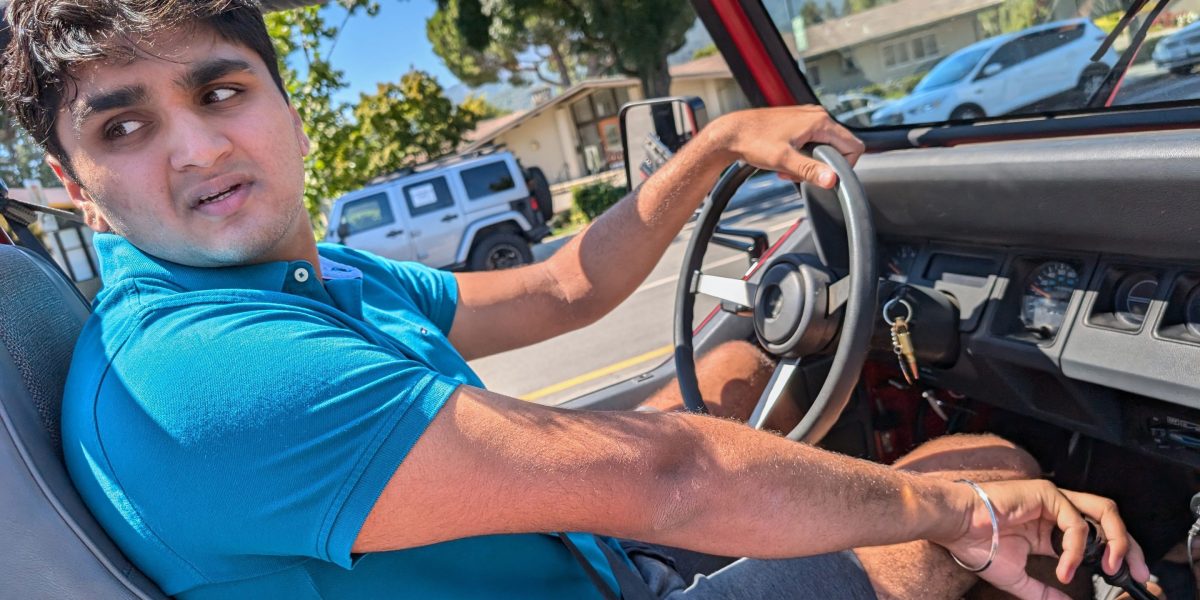
But there remain stick-shift diehards like Prabh and Divjeev Sohi, brothers who drive cars with manual transmissions to their classes at San Jose State University along Silicon Valley roads clogged with Teslas. They became enamored with stick shifts while virtually driving cars in video games as kids and riding in manual transmission vehicles operated by their father and grandfather.

So when they were old enough to drive, Prabh, 22, and Divjeev, 19, were determined to learn a skill few people their age even bother to attempt: mastering the nuances of a clutch that controls a manual transmission, a process that resulted in their 1994 Jeep Wrangler coming to a complete stop while frustrated drivers got stuck behind them.

“He stalled like five times his first time on the road,” Prabh recalls.

Even though the experience still causes Divjeev to shudder, he feels it led him to a better place.

“You are more in the moment when you are driving a car with a stick. Basically you are just there to drive and you aren’t doing anything else,” Divjeev says. “You understand the car, and if you don’t handle it correctly, that car isn’t going to move.”

Rediscovering vinyl’s virtues

Vinyl’s obsolescence seemed inevitable in the 1980s when compact discs emerged. That introduction triggered an evisceration of analog recordings that hit bottom in 2006 when 900,000 vinyl albums were sold, according to the Recording Industry Association of America. That was a death rattle for a format that peaked in 1977, when 344 million vinyl albums were sold.

But the slump unexpectedly reversed, and vinyl albums are now a growth niche. In each of the past two years, about 43 million vinyl albums have been sold, despite the widespread popularity of music streaming services that make it possible to play virtually any song by any artist at any time.

Baby boomers expanding upon their decades-old album collections aren’t the only catalyst. Younger generations are embracing the lusher sound of vinyl, too.

“I really love listening to an album on vinyl from start to finish. It feels like I am sitting with the artist,” says 24-year-old Carson Bispels. “Vinyl just adds this permanence that makes the music feel more genuine. It’s just you and the music, the way it should be.”

Carson is the son of Martin Bispels, the former QVC executive. A few years ago, Martin gave a few of his vinyl records to Carson, including Bob Marley’s “Taklin’ Blues,” an album already played so much that it sometimes cracks and pops with the scratches in it.

“I still listen to it because every time I do, I think of my dad,” says Carson, who lives in Nashville, Tennessee.

After starting off with about 10 vinyl albums from his dad, Carson now has about 100 and plans to keep expanding.

“The current digital age of music is fantastic, too, but there’s nothing like the personal aspect of going into the record store and thumbing through a bunch of albums while making small talk with some of the other patrons to find out what they’re listening to,” Carson says.

Paul, the author of the book about analog activities that have been devoured by the internet, says the vinyl music’s comeback story has her mulling a potential sequel. “A return to humanity,” she says, “could turn out to be another book.”


Source link

Continue Reading

Business

How to win your money resolutions in 2026: From emergency funds to savings goals

Published

on


The start of a new year usually brings new motivation to achieve goals like eating healthier or finally cleaning your basement. Many resolutions also focus on financial goals, such as paying off credit card debt, saving for a new house, or simply getting more educated about money.

“New Year’s is a really good time to review and realign your financial goals overall,” said Erica Grundza, certified financial planner at Betterment, an investing and savings app.

When building your goals for 2026, Grundza recommends focusing less on the past and more on an optimistic, yet realistic, vision for the future. She recommends that you focus on reestablishing the “why” behind your approach to money and how you want to make it work for your life. This can be as simple as saving $10 each week in a savings account, or a bigger goal like saving to buy a house in the coming years. It’s all about your own journey.

The Associated Press spoke with people who are making financial resolutions for 2026. Here’s a look at what they’re planning and how you can draw inspiration for your own resolutions:

Making achievable plans

Resolutions can easily turn into unattainable goals that feel more like a dream, said MarieYolaine Toms, a coach and founder of Focused Fire, a financial coaching company. To avoid setting unrealistic expectations, Toms follows a “no resolutions” mindset and instead focuses on making an actionable plan.

“What I say every year is that I am not making resolutions, I’m making plans that can be tracked forward, traced back, and tweaked until completion,” Toms said.

Recently, Toms encouraged her clients to check their credit report with the three credit bureaus and, based on their credit reports, make an attainable plan to start a savings account. For example, adding $25 to their savings account every week.

Whether you’re trying to pay off debt or save for a vacation abroad, the first step towards making a plan can be creating a budget. When making a budget, it’s best to find a technique that works for you, whether it’s the classic 50/30/20 plan or another budgeting style.

If you’re building a budget for the first time, you can find some expert recommendations here.

Paying off debt

After losing her job as a magazine editor in September, Rachel Pelovitz, 33, had to take a closer look at her finances. Having acquired a significant amount of debt over the last few years due to her husband’s year-and-a-half-long unemployment, Pelovitz explored several options to pay it off. Ultimately, Pelovitz and her husband chose to sell their house and work with a debt consolidation organization.

“Rather than rely on getting more debt, we are currently selling our house,” Pelovitz said.

Pelovitz’s main goal for 2026 is to pay off half of her credit card debt. And, with some of the money from selling the house, start investing moderately.

If you’ve also experienced a layoff, you can read expert recommendations to help you take care of your finances and your mental health here.

Building a savings account

For Jenni Lee, 27, this is going to be the year when she gets strict about building her savings account. While Lee considers herself generally good with money, over the last six months she has overspent and wants to rein it in. The long-term goal for her savings journey is for Lee to buy a house.

“I’m now in my late 20s, I’m starting to really think about where I pinch now so it won’t hurt later when I finally decide to purchase and own a place,” said Lee, a tech worker and lifestyle TikTok creator based in Chicago.

As she saves for her future home and possibly a trip to South Korea, Lee wants to cut unnecessary spending on clothing items and eating out.

Social media microtrends are a common influence on people’s shopping decisions, and this can lead to overspending. If you’re looking to avoid spending money on microtrends, you can find experts’ recommendations here.

Building an emergency fund

If you are in a position to do so, having multiple financial goals you’re working towards at the same time can be a great way to speed up your progress. For Worcester resident Melanie Duarte, 23, her New Year’s money goals include paying off her student loans and credit card debt while building an emergency fund.

“I made sure to include it in my budget, even if it’s something as small as like $50. I just want to make sure I still put something in (my emergency fund) so that it eventually multiplies,” said Duarte, who owns a marketing agency.

Duarte’s family didn’t speak openly about finances when she was growing up. But, since she opened her own business, Duarte has been slowly working on rewriting her relationship with money.

If you’re looking to start an emergency fund or create better habits while you save, you can read some experts’ recommendations here.

Finding balance

Finding a balance between saving for your long-term goals while also making sure you enjoy your money is important, but it can also be challenging. After the death of her grandfather just a few years after retirement, Tiana Stewart, 26, felt that he didn’t get to enjoy the fruits of his labor. So, this past year, Stewart decided to enjoy her life and travel.

“I do understand saving for retirement is important, but I also want to enjoy my life and the money that I work for at this time, especially being in my 20s,” said Stewart, who lives in Maryland.

But now, as she reflects on her financial future, Stewart wants to focus on paying off debt, saving, and investing. Having a healthy balance between enjoying life and saving for the future is what she wants to work toward.

For some, participating in budgeting challenges such as the no-buy yearcan be a great way to set boundaries on your spending and set aside money towards your financial goals. Many people start such challenges at the beginning of the year and commit to keep going until the end, but others start with a no-buy month.

This story was originally featured on Fortune.com


Source link

Continue Reading

Business

Gen Z can skip college, and still earn big: Here are the top 15 highest-paying jobs that don’t require a degree

Published

on


Gen Z has been taking a harder look at the American Dream of pursuing a four-year degree as tuition costs have skyrocketed and AI takes over white-collar jobs. Luckily, they have an out—there are many careers that don’t require a bachelor’s and still pay six-figure salaries. 

The top high-wage job that doesn’t require a four-year degree and shows strong job growth may be unexpected: elevator and escalator installers and repairers. The role has a median annual salary of $106,580, only requiring a high school diploma, apprenticeship completion, and a state certification, according to a new report from Resume Genius analyzing U.S. Bureau of Labor Statistics data. 

The study placed transportation, storage, and distribution managers in second; by pursuing an entry-level role in logistics, new hires can put themselves on track to earn $102,010 per year. Flight attendants, chefs, athletes, and criminal investigators also made the list. 

Young people have been told that going to college is necessary for success, but Gen Zers wanting to skip costly degrees don’t have to sacrifice their careers. The report shows they have a litany of choices, from six-figure blue collar jobs to cushy office roles.

Resume Genius career expert Eva Chan told CNBC that “there’s no one way to get a high-paying job,” adding that all the ranked roles “have some degree of training, some have schooling, but they’re all very attainable without a degree.”

The top 15 high-paying jobs that don’t require four-year degrees

The top 15 highest-paying jobs that earn above the U.S. median, have positive projected job growth, and don’t require a four-year degree to apply, according to Resume Genius.

  1. Elevator and escalator installer and repairer (Median annual salary: $106,580)
  2. Transportation, storage, and distribution manager (Median annual salary: $102,010)
  3. Electrical power-line installer and repairer (Median annual salary: $92,560)
  4. Aircraft and avionics equipment mechanic and technician (Median annual salary: $79,140)
  5. Detective and criminal investigator (Median annual salary: $77,270)
  6. Locomotive engineer (Median annual salary: $75,680)
  7. Wholesale and manufacturing sales representative (Median annual salary: $74,100)
  8. Flight attendant (Median annual salary: $67,130)
  9. Property, real estate, and community association manager (Median annual salary: $66,700)
  10. Water transportation worker (Median annual salary: $66,490)
  11. Food service manager (Median annual salary: $65,310)
  12. Heavy vehicle and mobile equipment service technician (Median annual salary: $62,740)
  13. Athlete and sports competitor (Median annual salary: $62,360)
  14. Chef and head cook (Median annual salary: $60,990)
  15. Insurance sales agent (Median annual salary: $60,370)
Join us at the Fortune Workplace Innovation Summit May 19–20, 2026, in Atlanta. The next era of workplace innovation is here—and the old playbook is being rewritten. At this exclusive, high-energy event, the world’s most innovative leaders will convene to explore how AI, humanity, and strategy converge to redefine, again, the future of work. Register now.


Source link

Continue Reading

Business

OpenAI is hiring a head of preparedness, who will earn $555,000

Published

on


OpenAI is looking for a new employee to help address the growing dangers of AI, and the tech company is willing to spend more than half a million dollars to fill the role.

OpenAI is hiring a “head of preparedness” to reduce harms associated with the technology, like user mental health and cybersecurity, CEO Sam Altman wrote in an X post on Saturday. The position will pay $555,000 per year, plus equity, according to the job listing.

“This will be a stressful job and you’ll jump into the deep end pretty much immediately,” Altman said.

OpenAI’s push to hire a safety executive comes amid companies’ growing concerns about AI risks on operations and reputations. A November analysis of annual Securities and Exchange Commission filings by financial data and analytics company AlphaSense found that in the first 11 months of the year, 418 companies worth at least $1 billion cited reputational harm associated with AI risk factors. These reputation-threatening risks include AI datasets that show biased information or jeopardize security. Reports of AI-related reputational harm increased 46% from 2024, according to the analysis.

“Models are improving quickly and are now capable of many great things, but they are also starting to present some real challenges,” Altman said in the social media post.

“If you want to help the world figure out how to enable cybersecurity defenders with cutting edge capabilities while ensuring attackers can’t use them for harm, ideally by making all systems more secure, and similarly for how we release biological capabilities and even gain confidence in the safety of running systems that can self-improve, please consider applying,” he added.

OpenAI’s previous head of preparedness Aleksander Madry was reassigned last year to a role related to AI reasoning, with AI safety a related part of the job. 

OpenAI’s efforts to address AI dangers

Founded in 2015 as a nonprofit with the intention to use AI to improve and benefit humanity, OpenAI has, in the eyes of some of its former leaders, struggled to prioritize its commitment to safe technology development. The company’s former vice president of research, Dario Amodei, along with his sister Daniela Amodei and several other researchers, left OpenAI in 2020, in part because of concerns the company was prioritizing commercial success over safety. Amodei founded Anthropic the following year.

OpenAI has faced multiple wrongful death lawsuits this year, alleging ChatGPT encouraged users’ delusions, and claiming conversations with the bot were linked to some users’ suicides. A New York Times investigation published in November found nearly 50 cases of ChatGPT users having mental health crises while in conversation with the bot. 

OpenAI said in August its safety features could “degrade” following long conversations between users and ChatGPT, but the company has made changes to improve how its models interact with users. It created an eight-person council earlier this year to advise the company on guardrails to support users’ wellbeing and has updated ChatGPT to better respond in sensitive conversations and increase access to crisis hotlines. At the beginning of the month, the company announced grants to fund research about the intersection of AI and mental health.

The tech company has also conceded to needing improved safety measures, saying in a blog post this month some of its upcoming models could present a “high” cybersecurity risk as AI rapidly advances. The company is taking measures—such as training models to not respond to requests compromising cybersecurity and refining monitoring systems—to mitigate those risks.

“We have a strong foundation of measuring growing capabilities,” Altman wrote on Saturday. “But we are entering a world where we need more nuanced understanding and measurement of how those capabilities could be abused, and how we can limit those downsides both in our products and in the world, in a way that lets us all enjoy the tremendous benefits.”


Source link

Continue Reading

Trending

Copyright © Miami Select.