Connect with us

Business

Gen Zers and millennials flock to so-called analogs islands

Published

on


As technology distracts, polarizes and automates, people are still finding refuge on analog islands in the digital sea.

The holdouts span the generation gaps, uniting elderly and middle-aged enclaves born in the pre-internet times with the digital natives raised in the era of online ubiquity.

They are setting down their devices to paint, color, knit and play board games. Others carve out time to mail birthday cards and salutations written in their own hand. Some drive cars with manual transmissions while surrounded by automobiles increasingly able to drive themselves. And a widening audience is turning to vinyl albums, resuscitating an analog format that was on its deathbed 20 years ago.

The analog havens provide a nostalgic escape from tumultuous times for generations born from 1946 through 1980, says Martin Bispels, 57, a former QVC executive who recently started Retroactv, a company that sells rock music merchandise dating to the 1960s and 1970s.

“The past gives comfort. The past is knowable,” Bispels says. “And you can define it because you can remember it the way you want.”

But analog escapes also beckon to the members of the millennials and Generation Z, those born from 1981 through 2012 — younger people immersed in a digital culture that has put instant information and entertainment at their fingertips.

Despite that convenience and instant gratification, even younger people growing up on technology’s cutting edge are yearning for more tactile, deliberate and personal activities that don’t evaporate in the digital ephemera, says Pamela Paul, author of “100 Things We’ve Lost To The Internet.”

“Younger generations have an almost longing wistfulness because because so little of their life feels tangible,” Paul says. “They are starting to recognize how the internet has changed their lives, and they are trying to revive these in-person, low-tech environments that older generations took for granted.”

Here are some glimpses into how the old ways are new again.

Keeping those cards coming

People have been exchanging cards for centuries. It’s a ritual in danger of being obliterated by the tsunami of texting and social media posts. Besides being quicker and more convenient, digital communication has become more economical as the cost of a first-class U.S. postage stamp has soared from 33 to 78 cents during the past 25 years.

But tradition is hanging on thanks to people like Megan Evans, who started the Facebook group called “Random Acts of Cardness” a decade ago when she was just 21 in hopes of fostering and maintaining more human connections in an increasingly impersonal world.

“Anybody can send a text message that says ‘Happy Birthday!’ But sending a card is a much more intentional way of telling somebody that you care,” says Evans, who lives in Wickliff, Ohio. “It’s something that the sender has touched with their own hand, and that you are going to hold in your own hand.”

More than 15,000 people are now part of Evans’ Facebook group, including Billy-Jo Dieter, who sends at least 100 cards per month commemorating birthdays, holidays and other milestones. “A dying art,” she calls it.

“My goal has been to try to make at least one person smile each day,” says Dieter, 48, who lives in Ellsworth, Maine. “When you sit down and you put the pen to the paper, it becomes something that’s even more just for that person.”

The singularity of a stick shift

Before technology futurist Ray Kurzweil came up with a concept that he dubbed the “Singularity” to describe his vision of computers melding with humanity, the roads were crammed with stick-shift cars working in concert with people.

But automobiles with manual transmission appear to be on a road to oblivion as technology transforms cars into computers on wheels. Fewer than 1% of the new vehicles sold in the U.S. have manual transmission, down from 35% in 1980, according to an analysis by the U.S. Environmental Protection Agency.

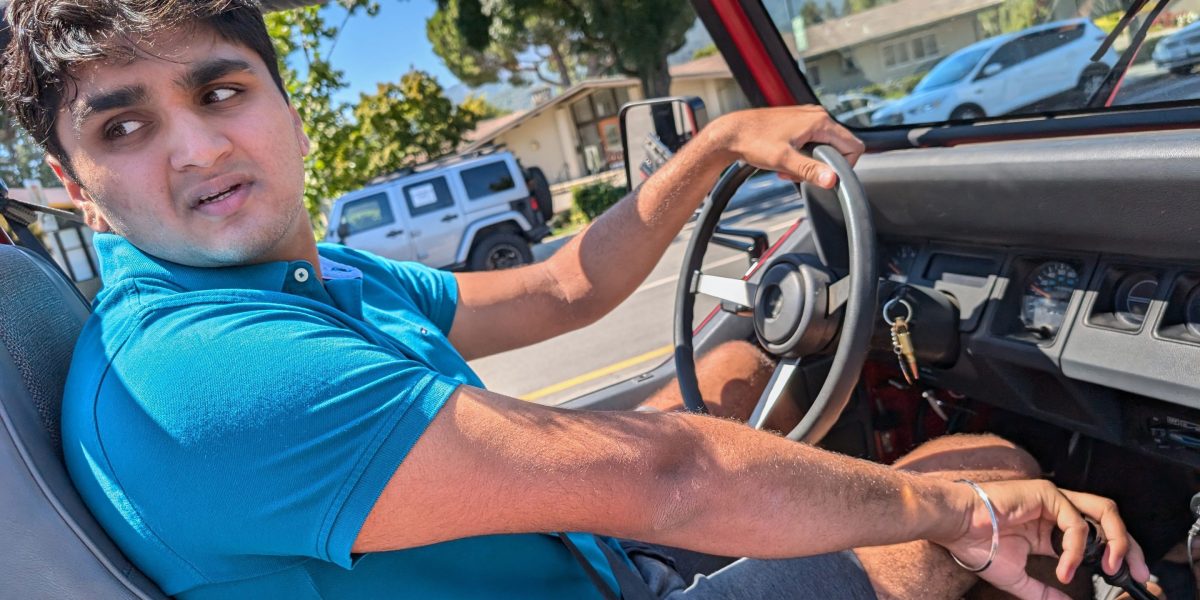
But there remain stick-shift diehards like Prabh and Divjeev Sohi, brothers who drive cars with manual transmissions to their classes at San Jose State University along Silicon Valley roads clogged with Teslas. They became enamored with stick shifts while virtually driving cars in video games as kids and riding in manual transmission vehicles operated by their father and grandfather.

So when they were old enough to drive, Prabh, 22, and Divjeev, 19, were determined to learn a skill few people their age even bother to attempt: mastering the nuances of a clutch that controls a manual transmission, a process that resulted in their 1994 Jeep Wrangler coming to a complete stop while frustrated drivers got stuck behind them.

“He stalled like five times his first time on the road,” Prabh recalls.

Even though the experience still causes Divjeev to shudder, he feels it led him to a better place.

“You are more in the moment when you are driving a car with a stick. Basically you are just there to drive and you aren’t doing anything else,” Divjeev says. “You understand the car, and if you don’t handle it correctly, that car isn’t going to move.”

Rediscovering vinyl’s virtues

Vinyl’s obsolescence seemed inevitable in the 1980s when compact discs emerged. That introduction triggered an evisceration of analog recordings that hit bottom in 2006 when 900,000 vinyl albums were sold, according to the Recording Industry Association of America. That was a death rattle for a format that peaked in 1977, when 344 million vinyl albums were sold.

But the slump unexpectedly reversed, and vinyl albums are now a growth niche. In each of the past two years, about 43 million vinyl albums have been sold, despite the widespread popularity of music streaming services that make it possible to play virtually any song by any artist at any time.

Baby boomers expanding upon their decades-old album collections aren’t the only catalyst. Younger generations are embracing the lusher sound of vinyl, too.

“I really love listening to an album on vinyl from start to finish. It feels like I am sitting with the artist,” says 24-year-old Carson Bispels. “Vinyl just adds this permanence that makes the music feel more genuine. It’s just you and the music, the way it should be.”

Carson is the son of Martin Bispels, the former QVC executive. A few years ago, Martin gave a few of his vinyl records to Carson, including Bob Marley’s “Taklin’ Blues,” an album already played so much that it sometimes cracks and pops with the scratches in it.

“I still listen to it because every time I do, I think of my dad,” says Carson, who lives in Nashville, Tennessee.

After starting off with about 10 vinyl albums from his dad, Carson now has about 100 and plans to keep expanding.

“The current digital age of music is fantastic, too, but there’s nothing like the personal aspect of going into the record store and thumbing through a bunch of albums while making small talk with some of the other patrons to find out what they’re listening to,” Carson says.

Paul, the author of the book about analog activities that have been devoured by the internet, says the vinyl music’s comeback story has her mulling a potential sequel. “A return to humanity,” she says, “could turn out to be another book.”



Source link

Continue Reading

Business

The Netflix-Paramount saga caps a 2025 turning point, S&P says: Cable TV is in the ‘decline stage,’ with a long, slow bleedout ahead

Published

on


The American media landscape has officially crossed the Rubicon, according to S&P Global Market Intelligence’s annual Economics of Basic Cable report from its Kagan research unit. It’s a grim read.

The U.S. cable network industry has formally entered the “decline stage of its life cycle,” a transition defined by falling revenues, shrinking viewership, and an unprecedented restructuring of legacy assets. While the sector faces a tough financial trajectory, the defining event is the high-stakes bidding war for Warner Bros. Discovery (WBD), where streaming giant Netflix. and traditional powerhouse Paramount Skydance present two starkly different paths for the future of cable television.

The inflection point identified in the 2025 report is not a sudden crash, but rather a structural dismantling of the cable bundle that dominated entertainment for decades. The WBD negotiations encapsulate this shift. While Paramount Skydance aims to acquire the company in its entirety, Netflix is bidding solely for WBD’s film studio and streaming assets. Should Netflix prevail, WBD’s cable assets would be split off, effectively stranding the linear networks as the industry leader cannibalizes the content engine for its digital platform.

“These decisions signify a shift in the media industry as companies abandon cable networks in favor of streaming services,” wrote S&P’s Scott Robson, who also noted that the “burgeoning free ad-supported television (FAST) industry also continues to evolve as owners of library video content increasingly look for monetization outlets outside of basic cable syndication.”

Since the “cord-cutting” movement ushered in by Netflix gathered steam, Robson noted that linear network TV has been under pressure—subscriptions peaked all the way back in 2012. Looking back at 2025 now, he concluded, there’s no comeback in sight.

Mapping out the decline ahead

This potential fracturing of WBD mirrors broader industry movements. Comcast is set to finalize the spinoff of its cable networks—excluding Bravo—into a standalone entity named “Versant” on January 2, 2026. These strategic exits signal that major media conglomerates are now willing to “abandon cable networks in favor of streaming services,” a trend accelerated by the August 2025 launches of the ESPN Unlimited and FOX One streaming platforms, according to S&P.

The financial data underpinning this migration is stark. In 2024, gross advertising revenue for cable networks fell 5.9% to $20.2 billion, the lowest level recorded since 2007. Robson’s team also estimated that affiliate fee revenue, or what TV operators pay to carry cable operators, fell nearly 3% to roughly $38.7 billion. Perhaps most telling is the subscriber metric: the average cable network saw its subscriber base erode by 7.1% to 31.4 million homes.

However, S&P emphasized that this “decline stage” forecasts a long, slow bleedout rather than a precipitous fall. “After digesting all the major events that took place in 2025, it is clear that the industry has reached a turning point,” Robson wrote. “That being said, our outlook does not call for a major collapse but rather a continued slow decline as the transition to streaming develops.”

S&P noted that despite the overarching downward trend, the rate of pay TV subscription decline appeared to slow in 2025, with the industry actually registering slight subscriber growth in the third quarter.

Operators are attempting to manage this descent by clinging to the industry’s last reliable life raft: live sports. The year 2026 looms large, featuring both the Winter Olympics and the FIFA World Cup. Comcast has even relaunched NBCSN, packaging it into a sports-centric bundle on YouTube TV to capture viewers who haven’t yet migrated to its Peacock streaming service.

A separate S&P analysis concluded that sports may no longer be a moat for the declining linear TV business. “Live sports may not be the anchor that once kept consumers from cutting the video cord,” S&P’s Keith Nissen wrote.

Nissen cited an S&P survey that found 90% of households dropping traditional pay TV for sports over the past year were sports fans, and nearly two-thirds of them spent five or more hours per week watching sports. “This serves as evidence that access to live sports is no longer a differentiator between traditional and virtual multichannel services.”

Robson warned that the friction between rising costs and falling value has intensified, with 2025 marred by carriage disputes, including blackouts of Walt Disney and TelevisaUnivision networks on YouTube TV, as distributors pushed back against rising rates for diminishing audiences.

As 2026 approaches, the industry outlook is one where underperforming networks face relegation to expensive tiers or outright closure.

The situation is akin to an estate sale for a once-grand mansion. The owners (media conglomerates) are systematically selling off the furniture (cable networks) and moving the most valuable heirlooms (premium content and sports rights) into a modern apartment across town (streaming), leaving the old house to slowly empty out, room by room.

Editor’s note: The author worked for Netflix from June 2024 through July 2025.

This story was originally featured on Fortune.com


Source link

Continue Reading

Business

The world’s wealthiest families attribute these 7 key habits for success, according to JPMorgan

Published

on


If you have dreams of joining the billionaire’s club one day, the best place to start might not be business school—it might be your local book club.

Reading is the most commonly cited habit tied to the success of some of the world’s wealthiest families, according to a new JPMorgan report that surveyed more than 100 billionaire principals whose collective net worth exceeds $500 billion.

The wealth management firm found that exercise, consistency, and waking up early are also top contributors to long-term success. But across interviews, one theme dominated: extreme intentionality about how time is spent. 

“The currency of life is time,” wrote one anonymous billionaire family leader in the report. “It is not money. You think carefully about how you spend one dollar. You should think just as carefully as how you spend one hour.”

Forget an MBA—dust off a book if you want to become a billionaire

In a technology-driven era where tools like ChatGPT can summarize hundreds of pages in seconds, sitting down with a book may feel inefficient. But many of the world’s most successful business leaders have long argued the opposite: deep reading remains one of the fastest ways to build durable knowledge.

Microsoft cofounder Bill Gates has credited reading as the backbone of his learning routine. At one point, Gates said he read about 50 books a year to stay intellectually sharp.

“It is one of the chief ways that I learn, and has been since I was a kid,” Gates told The New York Times in 2016. “These days, I also get to visit interesting places, meet with scientists and watch a lot of lectures online. But reading is still the main way that I both learn new things and test my understanding.”

The best book he had ever read at the time was Business Adventures by John Brooks, the first book Warren Buffett ever recommended to him after they met.

Buffett, for his part, is also an avid reader. 

“I just read and read and read,” Buffett said when asked how he keeps up with what’s going on in the world. “I probably read five to six hours a day. I don’t read as fast now as when I was younger, but I read five daily newspapers, I read a fair number of magazines, I read 10Ks, I read annual reports, and I read a lot of other things.”

His advice for aspiring business leaders is ambitious: read 500 pages each day. 

“That’s how knowledge works. It builds up, like compound interest. All of you can do it, but I guarantee not many of you will do it.”

The top 7 habits attributing to success of the world’s wealthiest families

  1. Reading
  2. Exercise
  3. Consistency
  4. Waking up early
  5. Prioritizing tasks
  6. Goal setting
  7. Deep thinking time

According to JPMorgan’s latest Principal Discussions report.

How the ultra-wealthy spend their free time

Even though reading is cited as a major driver of long-term success, it isn’t how most ultra-wealthy families prefer to spend all their downtime. 

In the JPMorgan report, reading ranked No. 7 among hobbits and interests principals said they were most passionate about—trailing outdoor activities, time with family and friends, and even work itself.

The top 10 hobbies or interests wealthy families are passionate about

  1. Outdoors and nature
  2. Work
  3. Time with family and friends
  4. Tennis
  5. Snow sports
  6. Golf
  7. Reading
  8. Gym and working out
  9. Fishing
  10. Cycling and biking

That gap highlights a key distinction: while reading may not be the top pastime, its value means it’s treated as a strategic discipline—a pattern that’s likely to become even more notable as AI reshapes how information is consumed.

AI use is already widespread among the ultra-wealthy. Nearly 8 in 10 principals said they use AI in their personal lives, and 69% reported using it in business. In a world where information is easier than ever to access, being intentional about how you learn—and how you spend your time—may matter more than ever.

JPMorgan’s own 2026 book list “to inspire big thinking and bold exploration” reflects that focus. Recommendations include Bobbi Brown’s memoir, Still Bobbi, Andrew Ross Sorkin’s history of the 1929 Wall Street crash, and Air Jordan, a look at Michael Jordan’s successes in the business world.


Source link

Continue Reading

Business

Former Russian tycoon says Instagram post cost him $9 billion: His bank was sold for 3% of its value

Published

on


Former Russian banking tycoon Oleg Tinkov says a single Instagram post condemning the war in Ukraine cost him nearly $9 billion, after he was forced to sell his stake in his bank for a fraction of its real value. He described the episode as a “hostage” situation that shows how dissenting billionaires are brought to heel in Vladimir Putin’s Russia.

Tinkov, the founder of Tinkoff Bank, was once celebrated as one of Russia’s wealthiest bankers. That status changed dramatically in April 2022, when he used Instagram to denounce the war as “insane” and to criticize Russia’s military as poorly prepared and riddled with corruption. As CNBC reported at the time, Tinkov claimed 90% of Russians opposed the war, and the remaining 10% were “morons.” He urged an immediate and “face-saving” end to the war.​

Tinkov told the BBC recently that within a day of that post, senior executives at his bank received a call from officials linked to the Kremlin, delivering a stark ultimatum. Either Tinkov’s stake would be sold and his name scrubbed from the brand, or the bank—then one of Russia’s largest lenders—would be nationalized.

A forced fire sale

Tinkov said that what followed was not a negotiation but coercion under threat. He claimed he was told to accept whatever price was offered for his roughly 35% stake in TCS Group, the owner of Tinkoff Bank, or risk losing everything. “I couldn’t negotiate the price. I was like a hostage,” he told The New York Times. He ultimately sold the stake in April 2022, shortly after his Instagram post.​

Within a week of this conversation, Tinkov said, a firm linked to metals magnate Vladimir Potanin, one of Russia’s richest men and a key supplier of nickel used in military hardware, stepped in to buy the stake. Tinkov told the BBC that the deal valued his holding at just about 3% of its true market worth, wiping out almost $9 billion of the wealth he had built over decades in business.​

Exile and erasure

After the sale, Tinkov left Russia, eventually renouncing his Russian citizenship and becoming one of the few high-profile businessmen to publicly break with the Kremlin over the war. He alleged that the campaign against him extended beyond the balance sheet, including pressure to remove his name from the bank brand and efforts to erase his role in building the institution that once carried it.

In his telling, the episode shows how quickly loyalty is enforced when oligarchs step out of line. Public criticism of the invasion, even from a figure whose bank helped power Russia’s consumer boom, was treated as a direct challenge to the state in wartime. There are numerous examples from the recent past, including the erstwhile oil tycoon Mikhail Khodorkovsky, formerly Russia’s richest man, who spent 10 years in jail after launching a pro-democracy organization in 2001.​ Like Tinkov, he has since become an exile, residing in London.

For his part, Tinkov has taken a few years to retrench and is newly visible in 2025, recently emerging as a backer of Plata, a Mexican fintech led by former Tinkoff Bank executives.

But the former oligarch’s experience sits within a wider pattern described by analysts who say the Kremlin now relies on a mix of fear and opportunity to keep Russia’s wealthy elite compliant. Sanctions, war-time controls and the threat of asset seizures have made fortunes inside Russia highly contingent on political loyalty, while the departure of Western firms has opened up bargain acquisitions for trusted allies.

The war in Ukraine, meanwhile, has rumbled on, with President Trump holding meetings and calls with both Putin and Ukrainian President Volodymyr Zelensky. After the 2025 Christmas holiday, Trump met with Zelensky at his Mar-A-Lago resort in Florida while fielding phone calls with Putin, claiming a peace deal is “closer than ever,” more than three years after Tinkov made his fateful Instagram post.


Source link

Continue Reading

Trending

Copyright © Miami Select.