Connect with us

Business

Every year, a billionaire CEO doles out $1,000 checks to local college grads—with a catch: They have to give half the money to charity

Published

on


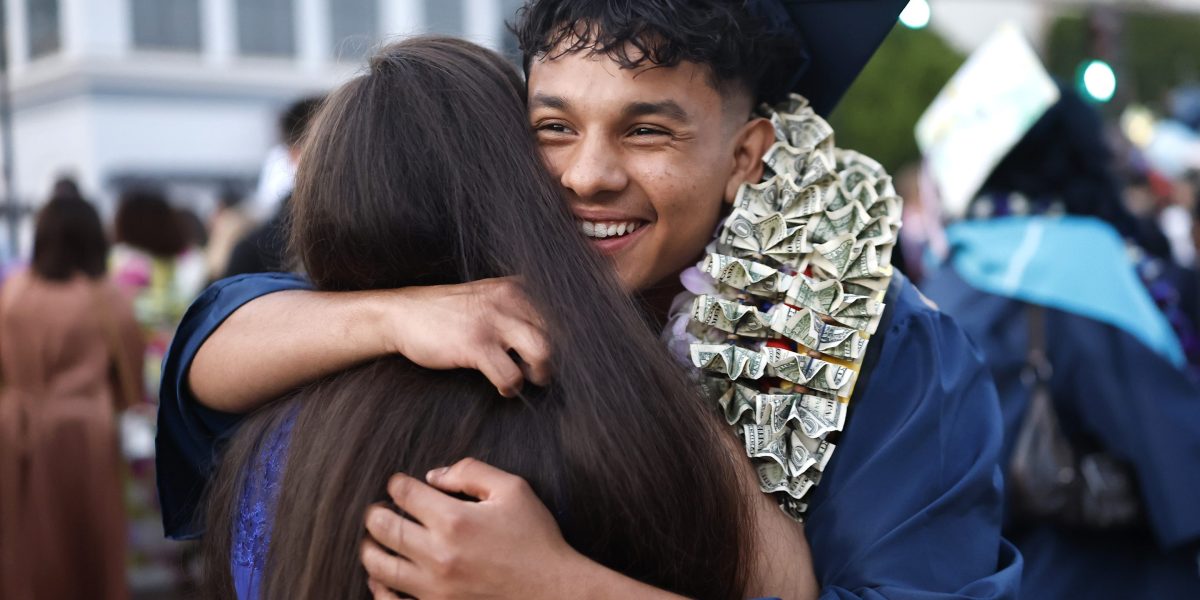
One of the best gifts you can give a recent college grad is cold, hard cash. It can serve as a launching pad for establishing themselves as an adult, equipping them to get their first apartment, start paying off those sky-high student loans, and maybe enough to get them some well-earned drinks at their favorite local watering hole. 

And one billionaire makes that wish come true each year: Rob Hale, founder and CEO of telecommunications company Granite Communications, annually doles out $1,000 checks to local recent college graduates in Massachusetts. He’s worth about $6 billion and helms the $1.8 billion company that provides voice, data, internet, mobile, and video services for businesses and government clients. 

But these college graduates don’t just get to take the money and run. They have to pledge they’ll give at least half of it away to charity. 

“The turmoil in our country has increased the need for caring, sharing and compassion,” Hale said during a commencement address at Bridgewater State University in May. “Our community needs—needs—your help, your leadership and your empathy more than ever.”

Hale started this annual tradition in 2021, so he’s been able to see how some of his beneficiaries used their gift. His ritual began at Quincy College in 2021, and he’s also donated to students at Roxbury Community College, UMass Boston, and UMass Dartmouth. 

“These are students who are busting their butts to earn a diploma, and I am so proud to be able to support them,” Hale told Leaders Magazine in October.

One beneficiary, now 24, donated half of her cash to Northeast Arc, an organization helping individuals with disabilities.

“There were some pretty significant federal funding cuts right around the time of my graduation,” Gene Symonds told local news publication WBUR. “A lot of the people they serve, they rely on that federal funding. I really wanted to contribute to that.” Others gave back to local schools and youth organizations.

And while students can spend their remaining $500 how they choose, many use it toward paying off student loans. The cost of higher education is rapidly increasing and the average student loan balance amounts to $28,775 (public school) and $42,449 (private school), according to the Education Data Initiative. So being able to make a dent in those can be beneficial for recent grads. 

Why Hale is instilling a philanthropic habit

Hale’s motive isn’t just to get these students to donate to charities once and forget about it. Instead, he told Leaders Magazine he hopes to pass on the spirit of philanthropy.

“When you look at the backdrop of who these kids are, many of them have most likely not had the chance to do this before,” he said. 

And there’s evidence that starting to donate to charity early in one’s career can be habit-forming. A 2013 study by Jonathan Meer at Texas A&M University shows how people who give small, frequent gifts when they’re young make them more likely to keep giving—and giving more—later in life, regardless of gift size.

Connie Collingsworth, former COO and chief legal officer of the Gates Foundation, also said during Fortune’s Most Powerful Women conference in Washington, D.C. this fall role-modeling is important in instilling habits of charitable giving and financial planning.

“[If] we show [our daughters], and we talk to them about these issues, I think they will have a sea change,” Collingsworth said. “They want to listen. They want to be like the women that have independence and the power that comes from knowing what your plans are. The key to all of this really is intentional.”

Storied billionaire philanthropist MacKenzie Scott—who donated billions to charity this year alone—also said she was inspired by her college years to donate the vast majority of her wealth. Her college roommate loaned her $1,000 so she wouldn’t have to drop out, which she says inspired her pattern of philanthropic giving.

“It is these ripple effects that make imagining the power of any of our own acts of kindness impossible,” Scott wrote of giving in an Oct. 15 essay published to her Yield Giving site. “Whose generosity did I think of every time I made every one of the thousands of gifts I’ve been able to give?

“It was the local dentist who offered me free dental work when he saw me securing a broken tooth with denture glue in college. It was the college roommate who found me crying, and acted on her urge to loan me a thousand dollars to keep me from having to drop out in my sophomore year.”



Source link

Continue Reading

Business

Gen Z can skip college, and still earn big: Here are the top 15 highest-paying jobs that don’t require a degree

Published

on


Gen Z has been taking a harder look at the American Dream of pursuing a four-year degree as tuition costs have skyrocketed and AI takes over white-collar jobs. Luckily, they have an out—there are many careers that don’t require a bachelor’s and still pay six-figure salaries. 

The top high-wage job that doesn’t require a four-year degree and shows strong job growth may be unexpected: elevator and escalator installers and repairers. The role has a median annual salary of $106,580, only requiring a high school diploma, apprenticeship completion, and a state certification, according to a new report from Resume Genius analyzing U.S. Bureau of Labor Statistics data. 

The study placed transportation, storage, and distribution managers in second; by pursuing an entry-level role in logistics, new hires can put themselves on track to earn $102,010 per year. Flight attendants, chefs, athletes, and criminal investigators also made the list. 

Young people have been told that going to college is necessary for success, but Gen Zers wanting to skip costly degrees don’t have to sacrifice their careers. The report shows they have a litany of choices, from six-figure blue collar jobs to cushy office roles.

Resume Genius career expert Eva Chan told CNBC that “there’s no one way to get a high-paying job,” adding that all the ranked roles “have some degree of training, some have schooling, but they’re all very attainable without a degree.”

The top 15 high-paying jobs that don’t require four-year degrees

The top 15 highest-paying jobs that earn above the U.S. median, have positive projected job growth, and don’t require a four-year degree to apply, according to Resume Genius.

  1. Elevator and escalator installer and repairer (Median annual salary: $106,580)
  2. Transportation, storage, and distribution manager (Median annual salary: $102,010)
  3. Electrical power-line installer and repairer (Median annual salary: $92,560)
  4. Aircraft and avionics equipment mechanic and technician (Median annual salary: $79,140)
  5. Detective and criminal investigator (Median annual salary: $77,270)
  6. Locomotive engineer (Median annual salary: $75,680)
  7. Wholesale and manufacturing sales representative (Median annual salary: $74,100)
  8. Flight attendant (Median annual salary: $67,130)
  9. Property, real estate, and community association manager (Median annual salary: $66,700)
  10. Water transportation worker (Median annual salary: $66,490)
  11. Food service manager (Median annual salary: $65,310)
  12. Heavy vehicle and mobile equipment service technician (Median annual salary: $62,740)
  13. Athlete and sports competitor (Median annual salary: $62,360)
  14. Chef and head cook (Median annual salary: $60,990)
  15. Insurance sales agent (Median annual salary: $60,370)
Join us at the Fortune Workplace Innovation Summit May 19–20, 2026, in Atlanta. The next era of workplace innovation is here—and the old playbook is being rewritten. At this exclusive, high-energy event, the world’s most innovative leaders will convene to explore how AI, humanity, and strategy converge to redefine, again, the future of work. Register now.


Source link

Continue Reading

Business

OpenAI is hiring a head of preparedness, who will earn $555,000

Published

on


OpenAI is looking for a new employee to help address the growing dangers of AI, and the tech company is willing to spend more than half a million dollars to fill the role.

OpenAI is hiring a “head of preparedness” to reduce harms associated with the technology, like user mental health and cybersecurity, CEO Sam Altman wrote in an X post on Saturday. The position will pay $555,000 per year, plus equity, according to the job listing.

“This will be a stressful job and you’ll jump into the deep end pretty much immediately,” Altman said.

OpenAI’s push to hire a safety executive comes amid companies’ growing concerns about AI risks on operations and reputations. A November analysis of annual Securities and Exchange Commission filings by financial data and analytics company AlphaSense found that in the first 11 months of the year, 418 companies worth at least $1 billion cited reputational harm associated with AI risk factors. These reputation-threatening risks include AI datasets that show biased information or jeopardize security. Reports of AI-related reputational harm increased 46% from 2024, according to the analysis.

“Models are improving quickly and are now capable of many great things, but they are also starting to present some real challenges,” Altman said in the social media post.

“If you want to help the world figure out how to enable cybersecurity defenders with cutting edge capabilities while ensuring attackers can’t use them for harm, ideally by making all systems more secure, and similarly for how we release biological capabilities and even gain confidence in the safety of running systems that can self-improve, please consider applying,” he added.

OpenAI’s previous head of preparedness Aleksander Madry was reassigned last year to a role related to AI reasoning, with AI safety a related part of the job. 

OpenAI’s efforts to address AI dangers

Founded in 2015 as a nonprofit with the intention to use AI to improve and benefit humanity, OpenAI has, in the eyes of some of its former leaders, struggled to prioritize its commitment to safe technology development. The company’s former vice president of research, Dario Amodei, along with his sister Daniela Amodei and several other researchers, left OpenAI in 2020, in part because of concerns the company was prioritizing commercial success over safety. Amodei founded Anthropic the following year.

OpenAI has faced multiple wrongful death lawsuits this year, alleging ChatGPT encouraged users’ delusions, and claiming conversations with the bot were linked to some users’ suicides. A New York Times investigation published in November found nearly 50 cases of ChatGPT users having mental health crises while in conversation with the bot. 

OpenAI said in August its safety features could “degrade” following long conversations between users and ChatGPT, but the company has made changes to improve how its models interact with users. It created an eight-person council earlier this year to advise the company on guardrails to support users’ wellbeing and has updated ChatGPT to better respond in sensitive conversations and increase access to crisis hotlines. At the beginning of the month, the company announced grants to fund research about the intersection of AI and mental health.

The tech company has also conceded to needing improved safety measures, saying in a blog post this month some of its upcoming models could present a “high” cybersecurity risk as AI rapidly advances. The company is taking measures—such as training models to not respond to requests compromising cybersecurity and refining monitoring systems—to mitigate those risks.

“We have a strong foundation of measuring growing capabilities,” Altman wrote on Saturday. “But we are entering a world where we need more nuanced understanding and measurement of how those capabilities could be abused, and how we can limit those downsides both in our products and in the world, in a way that lets us all enjoy the tremendous benefits.”


Source link

Continue Reading

Business

YouTube’s cofounder and former tech boss doesn’t want his kids to watch short videos

Published

on


  • YouTube cofounder Steve Chen is one of the latest tech trailblazers to warn against social media’s impact on kids. Chen warned in a talk short-form video “equates to shorter attention spans” and said he wouldn’t want his own kids to exclusively consume this type of content. Companies that distribute short-form video (which includes the company he cofounded, YouTube) should add safeguards for younger users, he added.

A YouTube cofounder who helped pave the way for our modern, content-obsessed world is the latest tech whiz to come out against short-form videos because of their effects on kids. 

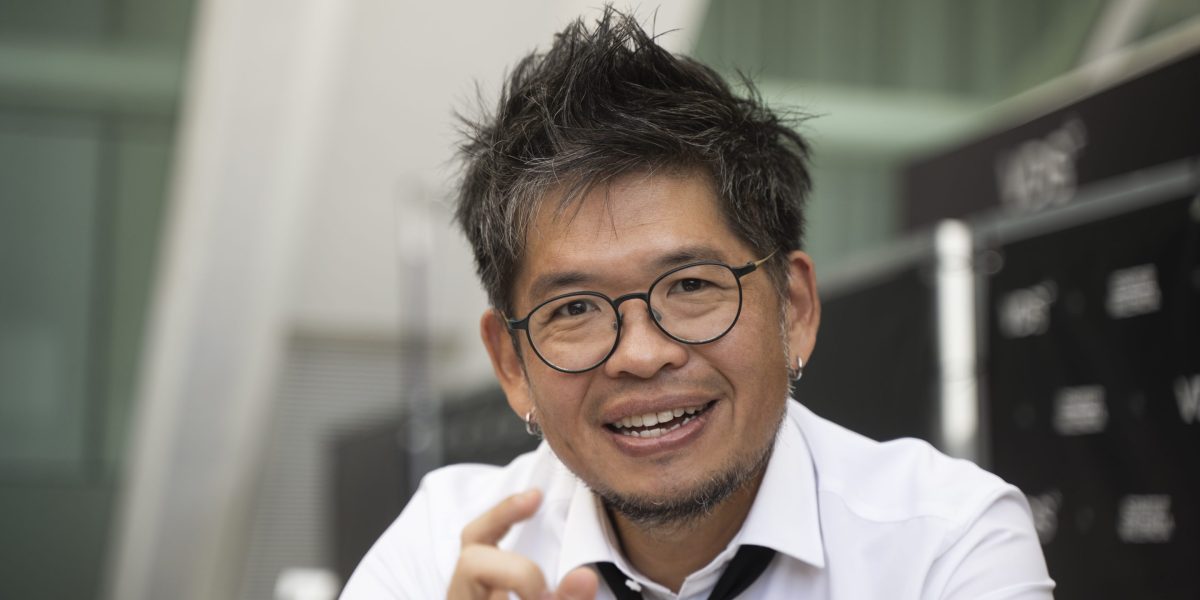
Steve Chen, who served as YouTube’s former chief technology officer before it was acquired by Google in 2006, railed against the TikTok-ification of online life in a talk earlier this year at Stanford Graduate School of Business.

“I think TikTok is entertainment, but it’s purely entertainment,” Chen said during the talk, which was published on YouTube Friday. “It’s just for that moment. Just shorter-form content equates to shorter attention spans.”

Chen, who has two children with wife, Jamie Chen, said he wouldn’t want his kids only consuming short-form content, and then not be able to watch something longer than 15 minutes. He said he knows of other parents who force their kids to watch longer videos without the eye-catching colors and gimmicks that hook especially younger users. This strategy works well, he claims.

“If they don’t get exposure to the short-form content right away, then they’re still happy with that other type of content that they’re watching,” he said. 

Many companies have had to rush to offer short-form content after the rise of TikTok, he said, but these companies now have to balance their motivations for monetization and attracting users’ attention with content that’s “actually useful.” 

Companies that distribute short-form video, which includes his former company YouTube, could face problems with addictiveness. These companies should add safeguards for kids on short-form content, such as age restrictions for apps and limits on the amount of time some users can use them, he said. 

Chen joins fellow tech trailblazers Sam Altman of OpenAI and Elon Musk in sounding the alarm about social media’s impact on children. In a podcast interview, Altman specifically called out social media scrolling and the “dopamine hit” of short-form video for “probably messing with kids’ brain development in a super deep way.”

Musk, who owns the social network X (née Twitter), said in 2023 he doesn’t have any restrictions on social-media use for his children, but added this “might have been a mistake,” and encouraged parents to take a more active role in their kids’ social-media habits.

“I think, probably, I would limit social media a bit more than I have in the past and just take note of what they’re watching, because I think at this point they’re being programmed by some social media algorithms, which you may or may not agree with,” Musk said.

A version of this story originally published on Fortune.com on July 29, 2025.

Join us at the Fortune Workplace Innovation Summit May 19–20, 2026, in Atlanta. The next era of workplace innovation is here—and the old playbook is being rewritten. At this exclusive, high-energy event, the world’s most innovative leaders will convene to explore how AI, humanity, and strategy converge to redefine, again, the future of work. Register now.


Source link

Continue Reading

Trending

Copyright © Miami Select.