Connect with us

Business

Down Arrow Button Icon

Published

on


If the current frenzy over artificial intelligence feels familiar to Peter Cappelli, the George W. Taylor professor of management at the Wharton School, it’s because he’s seen this movie before. He points to the period between 2015 and 2017, when major consultancies and the World Economic Forum confidently predicted that driverless trucks would eliminate truck drivers within a few years.

“You didn’t have to think very long to realize that just wasn’t going to make sense in practice,” Cappelli told Fortune on Zoom from his home in Philadelphia.

“You didn’t have to think very long about driverless trucks to think about, okay, what happens when they need gas? You know? Or what happens if they have to stop and make a delivery? And if they have to have an employee sitting with them, of course it defeats the purpose, right?”

Cappelli, who recently partnered with Accenture on a series of podcasts to get to the bottom of what AI is actually doing to jobs, warned against listening too closely to the companies that are talking their book, or trying to sell you on their new products.

“If you’re listening to the people who make the technology, they’re telling you what’s possible, and they’re not thinking about what is practical.”

Over the course of a wide-ranging conversation with Fortune, Cappelli tackled what AI is really doing to work, much like he talked to Fortune previously about how remote work is, actually, quite bad for most organizations.

“I mean, people say I’m a contrarian,” Cappelli said, “but I don’t think so, so much as I just am skeptical about stuff, you know?”

When pointed out this was an inherently contrarian position, Cappelli laughed, before returning to the main point. “I just get nervous with hype.”

He talked to Fortune about how his research fits into the wider picture that defined the back half of 2025, after the influential MIT study that caught the eye on 95% of generative AI pilots failing to generate any meaningful return. His favorite example was a particular case study on a company that actually made AI work, both cutting headcount and boosting productivity. It still didn’t fit neatly with predictions (say, from Elon Musk or Anthropic’s Dario Amodei, that work will soon be optional, or even a hobby). “It’s hugely expensive to do this,” Cappelli said about his findings. “And this was a success.”

Three times the cost

Cappelli detailed the findings of a case study that he participated in, published in the Harvard Business Review, on Ricoh, an insurance claims processor: the exact type of low-level administrative work that AI is supposed to automate easily. The reality of adoption, however, was a financial shock. While the company eventually achieved three times the performance, the transition was anything but cheap. The firm spent a year with a team of six, three of whom were expensive outside consultants, just to get the system running.

“The first thing they discovered,” Capelli said, “is large language models could do this pretty well — at three times the cost of their employees doing it [manually]. Okay, so that’s not going to work.” Cappelli pointed out that the costs included Ricoh paying roughly $500,000 in fees to outside consultants.

Even after optimizing the process, Ricoh was still spending about $200,000 a month on AI fees—more than their total payroll for the task had been. They were able to cut their headcount from 44 to 39, he added, showing just how far from being a massive job killer AI is in practice. His explanation recalls his self-driving truck example.

“The reason they still need employees is that lots of problems have to be chased down, and they’re harder to chase down if they come off of AI,” he said. The good news, he added, is that this Ricoh division will ultimately be three times as productive.

“So that’s the payoff, but it’s not cheap [and] it took a hell of a long time to do.”

Ashok Shenoy, VP of Ricoh USA, told Fortune that, after starting to use AI for “very routine, repetitive, high-volume tasks,” work for humans didn’t disappear, but “shifted toward areas where human judgment and experience add the most value.” In the year or so since the case study was conducted, he noted that Ricoh has successfully applied AI to mid-level, repetitive, time-consuming tasks at scale, and expects to use AI agents to achieve partial or full workflow automation within the next six to 12 months, “with a human-in-the-loop to resolve missing or unclear information and ensure quality.”

While acknowledging the big-ticket costs highlighted by Cappelli, Shenoy noted that this project reached break-even in less than a year, and it’s $200,000 monthly costs are less expensive than the previous operating model. “The shift to AI delivered an estimated 15% total cost reduction, even though it did not rely on significant labor cuts.” Regarding headcount, he said “this exercise was not driven by cost or headcount reduction,” and AI implementation requires creating new roles, redesigning existing ones, and repurposing team members toward higher-value work. He said there haven’t been further job cuts, either, with staffing levels largely stabilizing as productivity increased and volumes grew. “The bigger change was in how people spent their time. They are doing less repetitive work and are more focused on resolving exceptions, maintaining quality and serving customers.”

Performative AI shame in the boardroom

Cappelli said he found similar dynamics in his partnership with Accenture, which looked at Mastercard, Royal Bank of Scotland, and Jabil. “These are all success stories,” he said, and in the long run, they will see productivity will go up. Companies will be able to do more with fewer people but “it’ll take a long while to get there.” He argued that something crucial is being underestimated. “The key thing, though, is just how much work is involved in doing it.”

Also, regarding headcount reductions, Cappelli said that at least in the areas that he researched, which were specific units within each company, he didn’t see any job cuts whatsoever. When contacted for comment by Fortune, Accenture said it largely agrees with Cappelli’s conclusions, and referred back to CEO Julie Sweet’s recent interview with Fortune Editor-in-Chief Alyson Shontell.

According to Cappelli, so much of the noise around AI—and the distance between what’s possible and what’s practical—is driven by what other commentators have called “AI shame.”

Cappelli wasn’t familiar with the “AI shame” phrase, but told Fortune it was “absolutely right” in describing what he’s seen. “They’re pretending so they can say they’re doing something, right?” he said. “So the pressure is just enormous on them to try to make this stuff work, because the investors love the idea.”

The professor cited the Harris Poll’s finding in early 2025 that 74% of CEOs globally felt they’d lose their job in two years if they couldn’t demonstrate AI success, and roughly a third said they were performatively adopting AI without really understanding what it would entail. As The Harris Poll put it: “CEOs estimate that over a third (35%) of their AI initiatives amount to mere ‘AI washing’ for optics and reputation, but offering little to no real business value at all.”

Cappelli described how markets typically celebrate news of layoffs, and even cited research that “phantom layoffs” get announced by companies that never actually occur, because companies are arbitraging the positive stock-market reaction to the news of a potential layoff.

Cappelli predicted a “slow learning curve” will take place, in which CFOs will start realizing “this is super-expensive stuff to put in place.” The problem, according to Cappelli, is that U.S. management has become “spoiled” and increasingly averse to the hard work of organizational change.

“[Employers] think it should be free. It should be cheap. You should just be able to hang a shingle out, and the right people will just show up,” he says. Real AI success, in his opinion, will require “old-fashioned human resources” work: mapping workflows, breaking down jobs into tasks, and having employees work alongside AI “agents” to refine prompts.

“You can’t do it over the top of employees, because the employees really do know how their job is done,” Cappelli said. The professor was withering about what he sees happening in most C-suites, saying they are largely “ducking” the problem of really grappling with this technology.

“They’re not seeing it as an organization change problem and a big one,” he said. “They’re just stressing everybody out and, you know, hoping that it somehow works itself out.”




Source link

Continue Reading

Business

Rethinking affordability: policy has to start with how households experience shocks

Published

on


Public debate often treats economic disruptions as short-lived problems—sharp swings in prices, employment, or growth that settle once the broader economy finds its footing again. Early November’s election results suggest voters may see things somewhat differently. Candidates who focused squarely on affordability did well because households may be responding, at least in part, to something far more persistent: years of declining economic well-being that do not roll back once the headlines move on. 

For decades, policy conversations have too often accepted a simple assumption: that it is only rational to tolerate short-run turmoil in exchange for long-run stability. In this model, policymakers adjust course—sometimes modestly, sometimes not at all—while workers, small-business owners, jobseekers, and caregivers are expected to weather the turbulence. In theory, these shocks are supposed to fade, and the greater good is served by merely bandaging the complaints of lower-income groups until the headline metrics herald an apparent return to normalcy. In practice, however, households experience these shocks—and their aftermath—very differently. And while some economic turbulence is truly inevitable, appreciating the disconnect between the picture painted by the aggregate indicators and the ripple effects households feel is a necessary step towards identifying policies that can improve affordability. 

Everyday Americans certainly feel the effects of economic shocks that are captured in the headline statistics, but there are many reasons why an improvement in those headline numbers doesn’t map to an improvement in a household’s financial situation. For example, most people don’t budget for the 80,000 goods and services tracked by the Consumer Price Index (CPI). They manage a much smaller set of expenses, e.g. rent, groceries, childcare, utilities, insurance premiums, and a few others. If the weekly grocery bill jumps by $40, that often becomes the new number they have to live with.

Even when market forces eventually push prices down, the clock is rarely fully wound back and wages often fail to keep pace with the new cost realities. A rent increase does not automatically reverse when inflation cools. Childcare prices do not necessarily fall just because CPI moderates. Shocks to essentials are rarely one-time disturbances that disappear when the crisis fades, even if the price increases only once—more often, they become lasting additions to the cost of living, raising the baseline from which working Americans make every subsequent financial decision.  

Recent price surges underscore how rare true reversals are. The CPI for food shows prices decelerating but not reversing from their 2022 spike, a frustration grocery shoppers have experienced firsthand. Milk prices, for example, fell briefly from $4.20 per gallon in January 2023 to $3.86 by May 2024, only to stabilize around $4.00 by August. By November 2025, consumers were paying 25% more for the same purchases than they had in 2019. Egg prices tell a similar story: despite easing from their most serious spikes in January 2023 and March 2025, they remained roughly double their pre-inflation level as of September 2025.  

Housing offers little reassurance. The Zillow Observed Rent Index (ZORI) shows rents jumping more than 15% in 2021. The increases slowed down between 2022 and 2025, but rents did not plunge back to their 2019 level; instead, they resumed climbing at roughly their pre-pandemic pace from a much higher baseline. The end of the inflation shock does not mean a return to affordability—it means the return to typical price movement. For many working households, that means a continuation of the faster-than-CPI-U accumulation that characterized the cost of necessities for the previous two decades. 

Even if a one-time shock dissipates, the damage households sustained in the interim can slow their progress for years. A temporary hit to purchasing power may force a household to take on additional debt or postpone savings for college or retirement—effects that do not show up clearly in present-day headline indicators. From that perspective, a one-time shock at the macro level can easily become a permanent shift in a household’s financial position.  

This distinction explains, in part, why voters responded so strongly to affordability-focused campaigns. They may not be rejecting long-run thinking entirely; rather, they are likely reacting not just to today’s “sticker shock,” but to the reality that the long run they have been living is defined by accumulated, irreversible shocks—none of which appear clearly in top-line indicators. 

For policymakers, the implication is straightforward: there is often no such thing as a one-time effect for households. A shock might disappear from the inflation tables or unemployment charts, but everyday Americans continue to feel its consequences long after the data normalizes. Further, even when a shock resolves at the national level, local communities may continue to struggle if critical employers have downsized or if reduced spending within the community has resulted in a more permanent slowdown. 

From a macroeconomic perspective, shocks do often look temporary. The unemployment rate eventually fell after the 2008 financial crisis. Gross Domestic Product (GDP) rebounded after the 2020 lockdowns. The CPI surge in 2022 slowed as supply chains recovered. From that vantage point, the economy appears to move past each disruption in turn, reinforcing the idea that these are temporary events. 

But this “recovery” story breaks down at the household level much more than policy leaders take into account. In 2021, households reported surviving the initial COVID slowdown by postponing their progress towards financial goals: either by drawing on savings set aside for something else, by taking on additional debt or putting off bills, or making plans to delay retirement. But by 2023, when the slowdown was replaced by inflation, consumers once again leaned on the savings to cover the rising costs of groceries—with nearly one in five relying on funds they had not intended to use for everyday purchases. 

Aggregate indicators do not show how much financial well-being households lost during those periods, how long it will take them to rebuild, or whether they ever will. This is a critical blind spot: the metrics policymakers rely on were never designed to measure the compounding, non-reversible nature of household-level shocks.  

Research from my colleagues at the Ludwig Institute for Shared Economic Prosperity (LISEP) and others shows just how large this gap has become. When inflation rose in 2021, much of the debate framed price increases as a temporary concern overshadowed by the risk of recession. But for many, the pressure had been building for years. Essential expenses had outpaced median wages over the past two decades. For a family of four, between 2001 and 2023: 

  • Rent: 40th percentile rents rose 125%. 
  • Healthcare: Annual health-insurance premiums borne by middle-income workers more than tripled. 
  • Childcare: The average price of center-based childcare doubled. 
  • Wages: Median wages for typical workers rose by only 92% in nominal terms, resulting in a 4% decline in purchasing power for families whose budgets are dominated by necessities. 

These aren’t short-term fluctuations. They are structural and cumulative increases in the cost of essentials, compounded by wage growth that lagged behind. That combination steadily eroded families’ room to maneuver. So, when inflation in groceries and consumer goods spiked in 2021—even for a relatively brief period—low- and middle-income Americans had precious little slack left to absorb it. 

This is why focusing on headline inflation misses the larger, persistent threat. Rising unavoidable expenses have been pushing up the household cost structure for decades. CPI understates the rise in many essentials, and labor-market metrics often overstate the prevalence of living-wage jobs. Add in higher barriers to homeownership and education, and the financial path forward becomes even steeper. Consumer behavior reflects this reality. New tariffs introduced in 2025 were described as temporary “trade adjustments,” yet analysis from the Budget Lab at Yale University estimates they will raise consumer prices by roughly 1.7% and cost the average household $2,300 this year alone. Even if those increases eventually unwind, the impact will fall on households that have already been squeezed for decades, and many households are no longer assuming prices will fall back—they’ve been burned too often. 

In a recent survey, 44% believe tariffs have already increased the price of goods and services, and a quarter reported switching to generic or private-label goods in response. These are not the behaviors of households expecting a quick return to pre-shock conditions. 

Against this backdrop, new shocks—whether from AI-driven disruptions, federal layoffs, or additional trade-policy changes—may well land on households that are already stretched thin. Even well-intentioned policies can have unintended consequences if they are not evaluated through the lens of a household balance sheet. Focusing only on short-term affordability or only on long-term reform which may never come misses the point; both matter, because families must make both short- and long-run decisions at the same time. 

After more than two decades of declining well-being for most middle- and low-income households, it is clear that structural reforms are needed to bring costs back in line with wages. Short-term fixes alone are unlikely to address the root causes of affordability and, if misguided, could even prove counterproductive. Effective leaders should recognize that working-class households need both immediate breathing room and policies that make long-term stability possible. 

Ultimately, policy must be judged not only by aggregate performance of the economy as a whole or political resonance but by its ability to strengthen household financial resilience of all income groups—helping families make progress in good times and avoid lasting setbacks in bad. Until our measurement tools capture these realities directly, policymakers will continue to rely on short-termism, intuition, and ideological prejudices rather than evidence. 

And while intuition and such prejudices may shape elections, and too often do, effective policy and the country’s well-being require something more precise: an economic framework that recognizes that very few shocks are ever truly “one-time” for the households who have to bear them. 

The opinions expressed in Fortune.com commentary pieces are solely the views of their authors and do not necessarily reflect the opinions and beliefs of Fortune.


Source link

Continue Reading

Business

Trump vows to protect Venezuela and tells Cuba to ‘make a deal, BEFORE IT IS TOO LATE’

Published

on


Cuba, a major beneficiary of Venezuelan oil, has now been cut off from those shipments as U.S. forces continue to seize tankers in an effort to control the production, refining and global distribution of the country’s oil products.

Trump said on social media that Cuba long lived off Venezuelan oil and money and had offered security in return, “BUT NOT ANYMORE!”

“THERE WILL BE NO MORE OIL OR MONEY GOING TO CUBA – ZERO!” Trump said in the post as he spent the weekend at his home in southern Florida. “I strongly suggest they make a deal, BEFORE IT IS TOO LATE.” He did not explain what kind of deal.

The Cuban government said 32 of its military personnel were killed during the American operation last weekend that captured Maduro. The personnel from Cuba’s two main security agencies were in Caracas, the Venezuelan capital, as part of an agreement between Cuba and Venezuela.

“Venezuela doesn’t need protection anymore from the thugs and extortionists who held them hostage for so many years,” Trump said Sunday. “Venezuela now has the United States of America, the most powerful military in the World (by far!), to protect them, and protect them we will.”

Trump also responded to another account’s social media post predicting that his secretary of state, Marco Rubio, will be president of Cuba: “Sounds good to me!” Trump said.

Trump and top administration officials have taken an increasingly aggressive tone toward Cuba, which had been kept economically afloat by Venezuela. Long before Maduro’s capture, severe blackouts were sidelining life in Cuba, where people endured long lines at gas stations and supermarkets amid the island’s worst economic crisis in decades.

Trump has said previously that the Cuban economy, battered by years of a U.S. embargo, would slide further with the ouster of Maduro.

“It’s going down,” Trump said of Cuba. “It’s going down for the count.”


Source link

Continue Reading

Business

Walmart teams with Alphabet for AI-assisted shopping on Gemini

Published

on


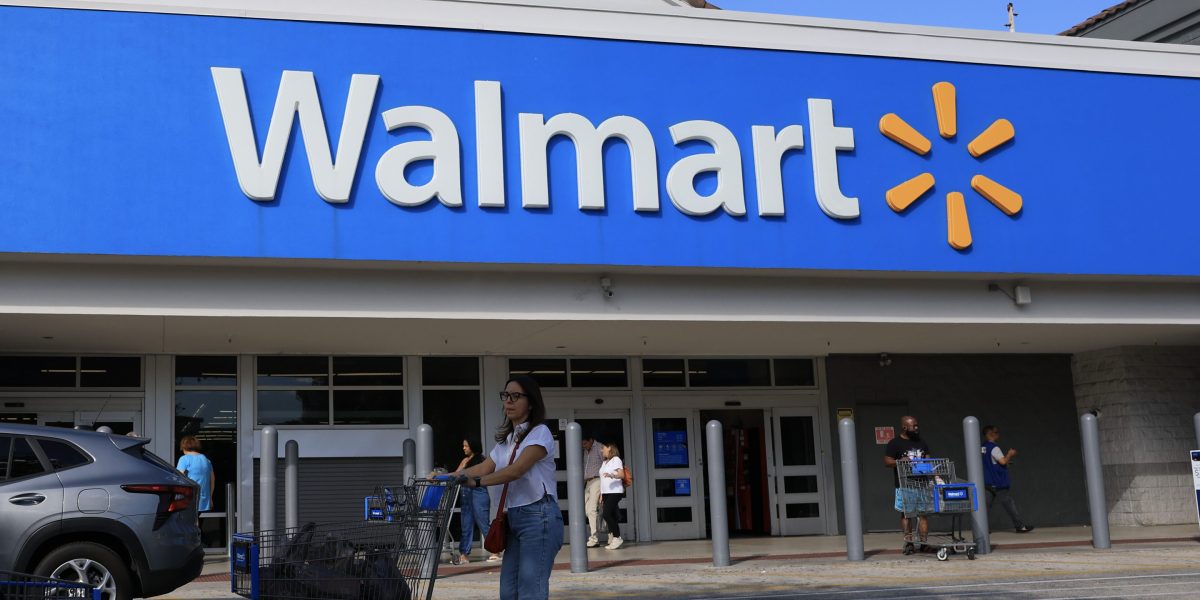
Walmart Inc. is partnering with Alphabet Inc. to offer AI-enhanced shopping on Google’s Gemini platform — part of the retailer’s race to apply the technology across its operations. 

Customers will be able to purchase items on Gemini’s browser or mobile app in the coming months, David Guggina, chief e-commerce officer of Walmart US, said in an interview. The selection will include apparel, consumables, entertainment and food products that are currently available at Walmart and Sam’s Club, he said. Customers can build a basket and purchase the items directly on Gemini, with Walmart handling orders. 

“We are moving past the era of the search bar,” Guggina said. “We aren’t just meeting people where they shop, we’re anticipating how they live.”  

Customers will be able to ask Gemini for tips and suggestions — such as which running shoes are the most recommended. Gemini will respond with items, including those sold at Walmart and Sam’s Club if relevant, which they can purchase directly.

Queries that aren’t tied to shopping could also include item recommendations. Gemini will assess people’s purchasing intent — for example an inquiry about removing a wine stain out of a rug could lead to links for related products sold at Walmart.

Fresh, frozen and marketplace items won’t be included in the initial offering, although the assortment will expand with time. 

AI is making inroads into consumers’ shopping habits, with people increasingly using the technology to research items or compare deals. Brands and retailers are creating new partnerships in order to capitalize — Walmart is also working with OpenAI

That deal, which lets shoppers buy items through ChatGPT, is in “very early days,” Guggina said. He added the retailer is aiming to make shopping experiences simpler, more personalized and anticipatory through AI.  

Other retailers are forging their own partnerships. Target Corp. is working with OpenAI to enhance shopping and help employees, with a goal of “weaving AI throughout the business.” 

The Bentonville, Arkansas-based company gained market share last year and has benefited from its scale as consumers hunt for deals. It’s pushing to incorporate AI into everything from supply-chain management to the shopping experience. 


Source link

Continue Reading

Trending

Copyright © Miami Select.