Connect with us

Business

Customer survey overload: Why companies are inundating us with endless feedback requests

Published

on


One week last autumn, I hit my customer feedback limit.

I had seen my doctor and done some online shopping. Then I went on a vacation to Europe that involved three airlines and three hotel stays. At every turn, I was bombarded with dozens of requests for feedback, often multiple times from the same company, for two or more aspects of the same interaction.

“How did we do?” “How was registration?” “Rate your doctor!” “Tell us about your flight!” “What did you think of our meal offerings in the Terminal 4 lounge?” “How was check-in at your hotel?” And this doesn’t include the little four-facial-expression thingamajigs in airport restrooms that ask you to rank cleanliness by touching them. ENOUGH!!!

Americans have long been bombarded by customer experience surveys. But if you feel that it has gotten worse—much worse—in recent years, it’s not your imagination.

Last month, Qualtrics, a software company that helps organizations collect feedback, said the total number of customer and employee interactions processed on its platform has doubled since 2023, and that it now captures and analyzes more than 3.5 billion conversations and interactions annually. That includes surveys, but also call center conversations, chat logs, survey responses, social media posts, and product reviews. According to research firm IBIS World, U.S. firms will have spent $36.4 billion this year on market research, an expense that has been rising almost 4% a year.

“Survey fatigue is real,” says Brad Anderson, President of Product and Engineering at Qualtrics. He acknowledged that many emailed survey requests have devolved into spam, making people feel overwhelmed. “It’s things like, the same brand is bombarding an individual over and over again.”

And even as the common consumer becomes increasingly exasperated by the endless stream of feedback request emails, marketing experts say they don’t even work particularly well. “If only all of this email besiegement was leading to meaningful insights,” says Peter Fader, a professor at the Wharton School of Business and an expert in customer analytics. “But it rarely does.”

For one thing, surveys tend to over-index for rants and raves: People are so exasperated with their interaction or with the persistent, nagging emails that they might answer in an angry way. And when a consumer is happy with their product or service, he or she is much likelier to want to fill out a survey to give credit where due. But the large swath of views between those strong opinions are much harder to capture.

“You’re getting a very biased view, simply because there’s survey overload,” says New York University marketing professor Priya Raghubir.

A short history of “customer obsession”

Asking customers what they like and dislike after a transaction is nothing new of course. In the first half of last century, as businesses grew in scale in the wake of the Industrial Revolution, they would send standardized questionnaires by mail in massive numbers, refining the research tools to glean insights.

Then by mid-century, focus groups, pioneered by sociologist Robert K. Merton, and a more rigorous analysis of survey results, both qualitative and quantitative, allowed for much more sophisticated research. Many of the early adopters were in the consumer packaged goods sectors.

By the turn of the 21st century, the sector saw the emergence of the Net Promoter Score (NPS), pioneered by Bain & Co consultant Fred Reichheld as a top metric—one that many marketing chiefs still swear by. It measured consumer sentiment by asking one simple question: whether someone would recommend a brand to others. It has become the gold standard, rising just as Amazon then-CEO Jeff Bezos’s mantra—“We’re not competitor obsessed, we’re customer obsessed”—was becoming conventional business wisdom.  

The NPS was the first time customer feedback became a tool closely followed in the C-suite. Still today, executives love to trot out their NPS scores on calls with Wall Street analysts.

But in the age of e-commerce—in which you seem to have to give your email address and create an account with any entity in order to make the simplest transaction, from your neighborhood coffee shop and your favorite museum’s ticketing system to gigantic retailers and food delivery companies—the consumer feedback apparatus has gone into overdrive.

Brands know where to find you at all times, and every interaction seems to lead to a “How are we doing?” email—all in the name of the hallowed “deeper engagement” that supposedly builds customer loyalty.

Watch what customers do, not what they say

Practitioners and consultants say there are ways to reduce the oppressive volume of emails people get without losing any of the valuable insights. Fader, of Wharton, says brands should pay closer attention to what consumers do, and less to what they say.

“Actions speak louder than words,” says Fader. So instead of asking a busy traveler whether they enjoyed an airport lounge, the airline can examine whether they returned to it on future flights. Corporations have enormous amounts of data from all their interactions with customers that in theory allow should allow them to understand their behavior on a granular level. It’s a key factor in why companies push loyalty programs so hard.  

There’s also a risk with asking customers what they really think: They might actually tell you. NYU’s Raghubir offered a personal example of how that can backfire. A million-mile flier of a major airline, Raghubir says she is considering ditching the carrier after her detailed, if pointed, feedback in surveys has been consistently ignored. “I have raved and ranted—and there was radio silence on the other side,” she griped.

In this age of technological responsiveness, she said, surveys should have a feature to detect a customer’s extreme displeasure and alert a human on the consumer experience team.

Don’t just ask for feedback; act upon it

Indeed, a big part of making customers feel heard is actually addressing their concerns—doing something with the feedback gleaned from these ubiquitous surveys.

But many surveys take a one-size-fits-all approach, says Qualtrics’ Anderson. If a survey doesn’t zero in on a customer’s particular experience or reflect whether the customer has been surveyed before, “Why should they take the time to fill the survey?” Anderson said.

This is where AI could make a difference, said Anderson. He sees a future in which surveys allow for more qualitative opinions, and redirect feedback that is irrelevant or minor. For instance, if an airline customer wants to rant about the Transportation Security Administration screening process, Qualtrics’ tech can have the digital survey explain that airline security is out of its control, and link to the TSA’s feedback page.

Generative AI could also allow a survey to automatically add a few questions if the respondent has strong feelings about something. So if a traveler hates an airport lounge, the survey could drill down to find specific reasons, such as not enough vegetarian options, or a messy buffet. Qualtrics’ research shows that often people are happy to answer more questions—if they feel someone is paying attention and acting on their feedback.

AI already allows brands to integrate insights from calls, chats, reviews, and social media to find trends. Given this treasure trove of data and insights that companies already have, says Columbia Business School professor Vicki Morwitz, the surveys companies send to consumers look increasingly outdated.

“They could answer their questions,” she says, “without having to ask us.”


Source link

Continue Reading

Business

Florida congresswoman accused of stealing $5 million in COVID funds insists she’s innocent

Published

on


U.S. Rep. Sheila Cherfilus-McCormick reiterated her innocence Monday outside a Miami federal courthouse, where she faces charges of conspiring to steal $5 million in federal COVID-19 disaster funds.

Cherfilus-McCormick was scheduled to be arraigned, but her attorney requested the proceeding be rescheduled to Jan. 20 so that she could finalize her legal team. Prosecutors didn’t object, and Judge Lisette Reid agreed to the new date. The hearing lasted less than five minutes.

“I just want to make it very clear that I am innocent,” Cherfilus-McCormick said immediately after leaving court. “In no way did I steal any kind of funds. I’m committed to the people of Florida and my district.”

Cherfilus-McCormick, a Democrat, has pleaded not guilty. She is facing 15 federal counts that accuse her of stealing funds that had been overpaid to her family’s health care company, Trinity Healthcare Services, in 2021. The company had a contract to register people for COVID-19 vaccinations.

Cherfilus-McCormick’s attorney, David Oscar Markus, said the case involves mistakes that generally aren’t even misdemeanors, let alone felonies. He said he believes the case is politically motivated.

Cherfilus-McCormick was arrested in November and then freed on a $60,000 bond. In addition to bail, the judge said Cherfilus-McCormick must surrender her personal passport, and is allowed to travel only between Florida, Washington, D.C., Maryland and the Eastern District of Virginia.

She has been allowed to retain her congressional passport so she can perform certain duties for her job.

According to the federal indictment, prosecutors said that within two months of receiving the funds in 2021, more than $100,000 had been spent on a 3-carat yellow diamond ring for the congresswoman.

The health care company owned by Cherfilus-McCormick’s family had received payments through a COVID-19 vaccination staffing contract, the indictment said. Her brother, Edwin Cherfilus, requested $50,000, but they mistakenly received $5 million and didn’t return the difference.

Prosecutors said the funds received by Trinity Healthcare were distributed to various accounts, including to friends and relatives who then donated to Cherfilus-McCormick’s campaign for Congress.

Cherfilus-McCormick won a special election in January 2022 to represent Florida’s 20th District, which includes parts of Broward and Palm Beach counties, after Rep. Alcee Hastings died in 2021.

The charges she faces include theft of government funds; making and receiving straw donor contributions; aiding and assisting a false and fraudulent statement on a tax return; money laundering, as well as conspiracy charges associated with each of those counts.

According to a previous statement provided by Cherfilus-McCormick’s chief of staff, she doesn’t plan to resign from office. She said she has cooperated with “every lawful request” and will continue to do so until the matter is resolved.


Source link

Continue Reading

Business

Trump says he still might fire Powell as Fed chair pick looms

Published

on


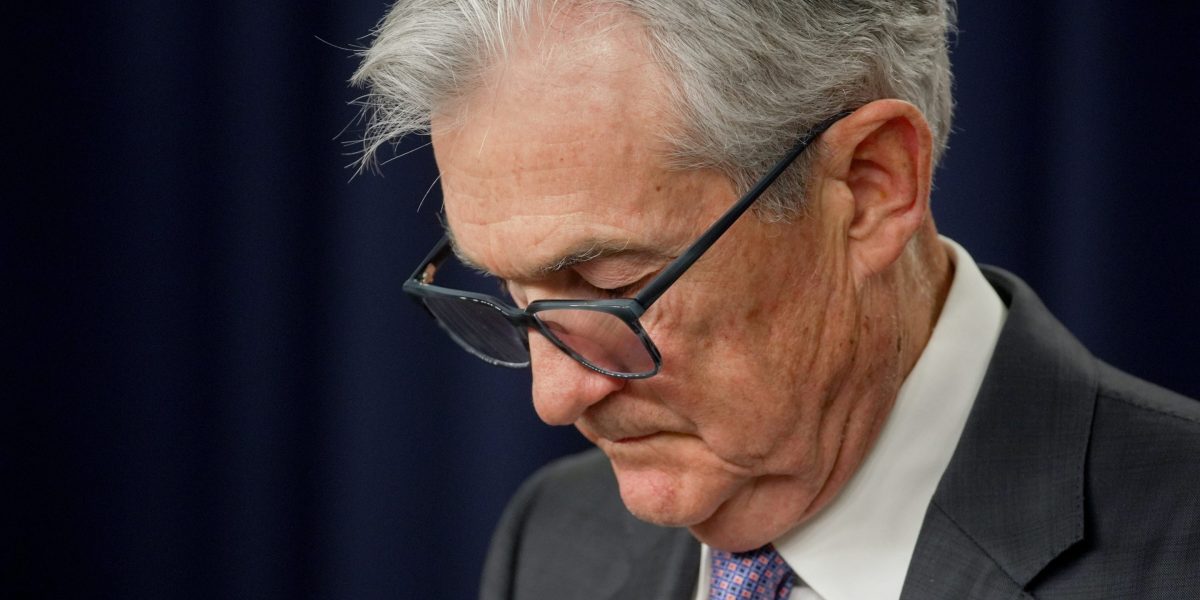
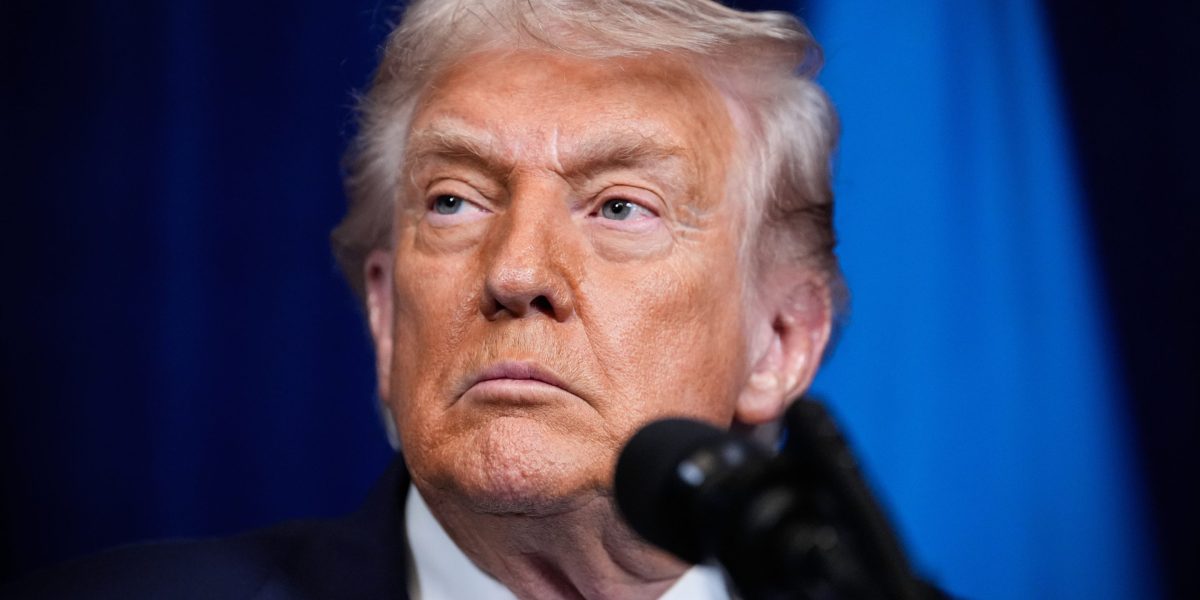
President Donald Trump teased that he has a preferred candidate to be the next chair of the Federal Reserve, but is in no hurry to make an announcement — while also musing that he might fire the central bank’s current leader, Jerome Powell.

“I do, still do — hasn’t changed,” Trump said at a press conference Monday, when asked if he has a favorite candidate. “I’ll announce him at the right time. There’s plenty of time.”

Trump added the Powell should resign and that he’d “love to fire him.”

“Maybe I still might,” Trump told reporters at his Mar-a-Lago resort in Florida.

Trump did not specify who is his leading chair candidate and said an announcement would be made in “January sometime.” 

National Economic Council Director Kevin Hassett has been seen as the frontrunner, though Trump has also expressed interest in former Fed governor Kevin Warsh. Other finalists in the process have included current Fed governors Christopher Waller and Michelle Bowman and BlackRock’s Rick Rieder. 

Earlier: Bessent Sees Room for a Future Revamp of the Fed’s 2% Target

Trump has made numerous cryptic — and sometimes contradictory — remarks about his decision-making process regarding the new central bank chief. The president earlier in December said he’d narrowed the pool of contenders down to one, but subsequently said he was considering multiple candidates and has heaped praise on several of the names on the short list.

Trump has long been a critic of Powell, who he picked to lead the central bank during his first term. The president has indicated he wants the next chair to more aggressively cut interest rates as the White House looks to lower mortgage costs.

He said Monday he was considering a “gross incompetence” lawsuit against Powell related to an ongoing renovation project at the Fed. Powell’s term as chair is set to end in May of 2026, but his term on the Fed’s Board of Governors doesn’t expire until 2028.

Join us at the Fortune Workplace Innovation Summit May 19–20, 2026, in Atlanta. The next era of workplace innovation is here—and the old playbook is being rewritten. At this exclusive, high-energy event, the world’s most innovative leaders will convene to explore how AI, humanity, and strategy converge to redefine, again, the future of work. Register now.


Source link

Continue Reading

Business

Trump claims victory in drug-smuggling crackdown, but key details remain a mystery

Published

on


President Donald Trump has indicated that the U.S. has “hit” a dock facility along a shore as he wages a pressure campaign on Venezuela, but the U.S. offered few details.

Trump initially seemed to confirm a strike in what appeared to be an impromptu radio interview Friday, and when questioned Monday by reporters about “an explosion in Venezuela,” he said the U.S. struck a facility where boats accused of carrying drugs “load up.”

“There was a major explosion in the dock area where they load the boats up with drugs,” Trump said as he met in Florida with Israeli Prime Minister Benjamin Netanyahu. “They load the boats up with drugs, so we hit all the boats and now we hit the area. It’s the implementation area. There’s where they implement. And that is no longer around.”

It is part of an escalating effort to target what the Trump administration says are boats smuggling drugs bound for the United States. It moves closer to shore strikes that so far have been carried out by the military in international waters in the Caribbean Sea and eastern Pacific Ocean.

Trump declined to say if the U.S. military or the CIA carried out the latest strike or where it occurred. He did not confirm it happened in Venezuela.

“I know exactly who it was, but I don’t want to say who it was. But you know it was along the shore,” Trump said.

Trump first referenced the strike on Friday, when he called radio host John Catsimatidis during a program on WABC radio and discussed the U.S. strikes on alleged drug-carrying boats. The attacks have killed at least 105 people in 29 known strikes since early September.

“I don’t know if you read or saw, they have a big plant or a big facility where they send the, you know, where the ships come from,” Trump said. “Two nights ago, we knocked that out. So, we hit them very hard.”

Trump did not offer any additional details in the interview.

Defense Secretary Pete Hegseth or one of the U.S. military’s social media accounts has in the past typically announced every boat strike in a post on X, but there has been no post of any strike on a facility.

The Pentagon on Monday referred questions to the White House, which did not immediately respond to a message seeking more details. The press office of Venezuela’s government did not immediately respond to a request for comment on Trump’s statement.

Trump for months has suggested he may conduct land strikes in South America, in Venezuela or possibly another country, and in recent weeks has been saying the U.S. would move beyond striking boats and would strike on land “soon.”

In October, Trump confirmed he had authorized the CIA to conduct covert operations in Venezuela. The agency did not immediately respond to a message seeking comment Monday.

Along with the strikes, the U.S. has sent warships, built up military forces in the region, seized two oil tankers and pursued a third.

The Trump administration has said it is in “armed conflict” with drug cartels and seeking to stop the flow of narcotics into the United States.

Venezuelan President Nicolás Maduro has insisted the real purpose of the U.S. military operations is to force him from power.

White House chief of staff Susie Wiles said in an interview with Vanity Fairpublished this month that Trump “wants to keep on blowing boats up until Maduro ‘cries uncle.’”


Source link

Continue Reading

Trending

Copyright © Miami Select.