Connect with us

Business

Buffett-backed wildlife center estimates not having old newspapers would cost over $10,000 a year

Published

on


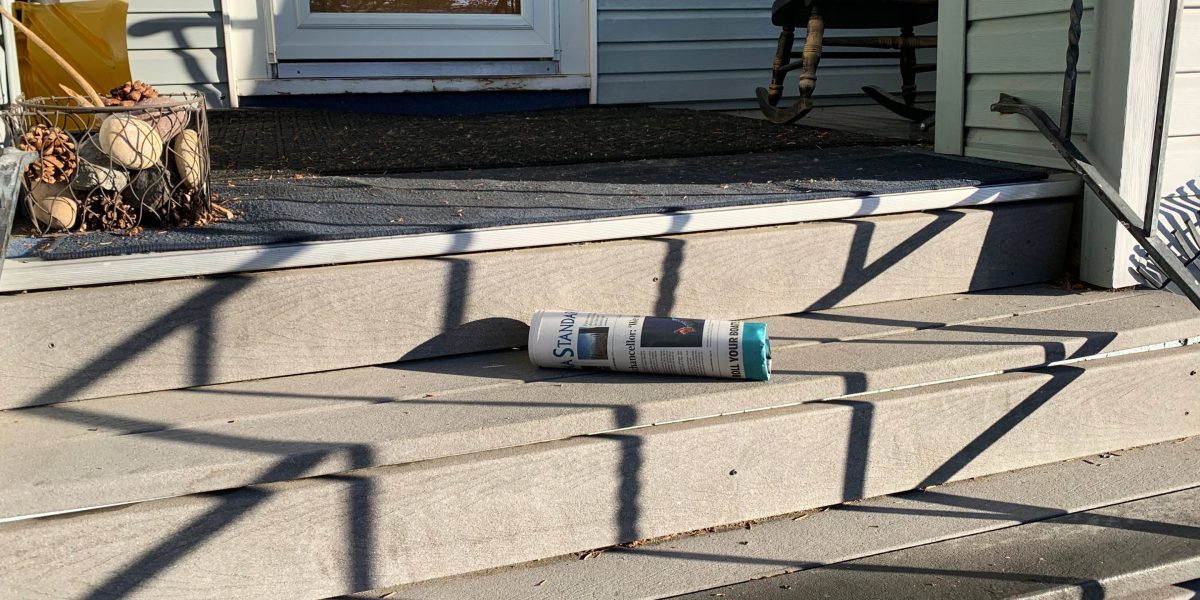
The sun would rise over the Rockies, and Robin Gammons would run to the front porch to grab the morning paper before school.

She wanted the comics and her dad wanted sports, but the Montana Standard meant more than their daily race to grab “Calvin and Hobbes” or baseball scores. When one of the three kids made honor roll, won a basketball game or dressed a freshly slain bison for the History Club, appearing in the Standard’s pages made the achievement feel more real. Robin became an artist with a one-woman show at a downtown gallery and the front-page article went on the fridge, too. Five years later, the yellowing article is still there.

The Montana Standard slashed print circulation to three days a week two years ago, cutting back the expense of printing like 1,200 U.S. newspapers over the past two decades. About 3,500 papers closed over the same time. An average of two a week have shut this year.

That slow fade, it turns out, means more than changing news habits. It speaks directly to the newspaper’s presence in our lives — not just in terms of the information printed upon it, but in its identity as a physical object with many other uses.

“You can pass it on. You can keep it. And then, of course, there’s all the fun things,” says Diane DeBlois, one of the founders of the Ephemera Society of America, a group of scholars, researchers, dealers and collectors who focus on what they call “precious primary source information.”

“Newspapers wrapped fish. They washed windows. They appeared in outhouses,” she says. “And — free toilet paper.”

The downward lurch in the media business has changed American democracy over the last two decades — some think for better, many for worse. What’s indisputable: The gradual dwindling of the printed paper — the item that so many millions read to inform themselves and then repurposed into household workflows — has quietly altered the texture of daily life.

American democracy and pet cages

People used to catch up on the world, then save their precious memories, protect their floors and furniture, wrap gifts, line pet cages and light fires. In Butte, in San Antonio, Texas, in much of New Jersey and worldwide, lives without the printed paper are just a tiny bit different.

For newspaper publishers, the expense of printing is just too high in an industry that’s under strain in an online society. For ordinary people, the physical paper is joining the pay phone, the cassette tape, the answering machine, the bank check, the sound of the internal combustion engine and the ivory-white pair of women’s gloves as objects whose disappearance marks the passage of time.

“Very hard to see it while it’s happening, much easier to see things like that in even modest retrospect,” says Marilyn Nissenson, co-author of “Going Going Gone: Vanishing Americana.” “Young women were going to work and they wore them for a while and then one day they looked at them and thought, ‘This is ludicrous.’ That was a small but telling icon for a much larger social change.”

Nick Mathews thinks a lot about newspapers. Both of his parents worked at the Pekin (Illinois) Daily Times. He went on to become sports editor of the Houston Chronicle and, now, an assistant professor at the University of Missouri’s School of Journalism.

“I have fond memories of my parents using newspapers to wrap presents,” he says. “In my family, you always knew that the gift was from my parents because of what it was wrapped in.”

In Houston, he recently recalled, the Chronicle reliably sold out when the Astros, Rockets or Texas won a championship because so many people wanted the paper as a keepsake.

Four years ago, Mathews interviewed 19 people in Caroline County, Virginia, about the 2018 shuttering of the Caroline Progress, a 99-year-old weekly paper that was shuttered months before its 100th anniversary.

In “Print Imprint: The Connection Between the Physical Newspaper and the Self,” published in the Journal of Communication Inquiry, wistful Virginians remember their senior high school portrait and their daughter’s picture in a wedding dress appearing in the Progress. Plus, one told Mathews, “My fingers are too clean now. I feel sad without ink smudges.”

The many and varied uses

Flush with cash from Omahans who invested years ago with local boy Warren Buffett, Nebraska Wildlife Rehab is a well-equipped center for migratory waterfowl, wading birds, reptiles, foxes, bobcats, coyotes, mink and beaver.

“We get over 8,000 animals every year and we use that newspaper for almost all of those animals,” Executive Director Laura Stastny says.

Getting old newspapers has never been a problem in this neighborly Midwestern city. Yet Stastny frets about the electronic future.

“We do pretty well now,” she says. “If we lost that source and had to use something else or had to purchase something, that, with the available options that we have now, would cost us more than $10,000 a year easily.”

That would be nearly 1% of the budget, Stastny says, but “I’ve never been in a position to be without them, so I might be shocked with a higher dollar figure.”

Until 1974, the Omaha World-Herald printed a morning edition and two afternoon ones, including a late-afternoon Wall Street Edition with closing prices.

“Afternoon major-league baseball was still standard then, so I got to gorge on both baseball and stock market facts,” an 85-year-old Buffett told the World-Herald in 2013, By then, he had become the world’s most famous investor and the paper’s owner.

The World-Herald ended its second afternoon edition in 2016 and Buffett left the newspaper business five years ago. Fewer than 60,000 households take the paper today, according to Northwestern University’s Medill School of Journalism, down from nearly more than 190,000 in 2005, or about one per household.

Time marches on

Few places symbolize the move from print to digital more than Akalla, a district of Stockholm where the ST01 data center sits at a site once occupied by the factory that prints Sweden main newspaper, Kaun says.

“They have less and less machines, and instead the building is taken over more and more by this co-location data center,” she says.

Data centers use huge amounts of energy, of course, and the environmental benefit of using less printing paper is also offset by the enormous popularity of online shopping.

“You will see a decline in printed papers, but there is a huge increase in packaging,” says Cecilia Alcoreza, manager, of forest sector transformation for the World Wildlife Fund.

The Atlanta Journal-Constitution announced in August that it would stop providing a print edition at year’s end and go completely digital, making Atlanta the largest U.S. metro area without a printed daily newspaper.

The habit of following the news — of being informed about the world — can’t be divorced from the existence of print, says Anne Kaun, professor of media and communication studies at Södertörn University in Stockholm.

Children who grew up in homes with printed newspapers and magazines randomly came across news and socialized into a news-reading habit, Kaun observed. With cell phones, that doesn’t happen.

“I do think it meaningfully changes how we relate to each other, how we relate to things like the news. It is reshaping attention spans and communications,” says Sarah Wasserman, a cultural critic and assistant dean at Dartmouth College in New Hampshire who specializes in changing forms of communication.

“These things will always continue to exist in certain spheres and certain pockets and certain class niches,” she says. “But I do think they’re fading.”


Source link

Continue Reading

Business

The weakest labor market since 2011 has BofA asking, ‘Dude, where’s my job?’

Published

on


The weakest job market since 2011 is increasingly being framed not as a glitch, but as the new normal—one where growth roars and jobs barely move, leaving a generation asking, “Dude, where’s my job?”

Bank of America Research’s “Situation Room” note warned in mid-December that markets are priced for a robust 2026 even as hiring stalls and unemployment rises and recalled a now 25-year-old cult classic stoner comedy starring Ashton Kutcher and Seann William Scott to make its point.

The entry-level worker would be forgiven, in other words, for feeling about the job search the way Kutcher and Scott feel about their stolen wheels. (The screenwriter feels similarly about the show-business labor market, telling The Hollywood Reporter several weeks ago that he’d quit to become a therapist.)

​”The job market has been weak this year,” wrote BofA’s Yuri Seliger and Sohyun Marie Lee, commenting on the double payrolls report showing weak job growth in October and November. “A lack of recovery in the jobs market and a slower U.S. economy are key risks to watch for 2026.”

Seliger and Lee flagged what it called the weakest U.S. job market since at least 2011 (with the notable exception of the mass layoff wave from Covid), with monthly payrolls averaging just 17,000 over the past six months—by far the slowest pace of job creation since the global financial crisis. Private payrolls are only modestly stronger at 44,000 on a six‑month average basis, still at their weakest level in well over a decade, while broader U‑6 underemployment has climbed to 8.7% and job openings per unemployed worker have slumped to 1.0, both the softest since 2017.

​Yet the Situation Room team also noted that credit spreads remain near cyclical tights and stocks near record highs, signaling that investors are still betting on a strong expansion in 2026. “A strong U.S. economy is likely not compatible with the absence of job growth,” they caution, warning that the lack of a labor‑market recovery is now one of the central risks to that bullish market narrative. The surprisingly strong GDP number​ for the third quarter, revealed after the BofA note was written, added new fuel to the fires of this argument.

K‑shaped growth with missing jobs

The headline growth number was eye‑catching: in the third quarter, U.S. GDP grew at a 4.3% annual rate, powered by a consumer spending surge and a $166 billion jump in corporate profits. But real disposable income was flat—literally 0% growth—meaning households did not gain purchasing power and instead relied on savings, credit, and cost‑cutting to keep spending, especially on unavoidable items like healthcare and childcare.

KPMG Chief Economist Diane Swonk previously described this to Fortune as a fully matured K‑shaped economy, where affluent households ride surging equity markets, elevated home values, and AI‑boosted corporate earnings, while lower‑ and middle‑income families are squeezed by affordability pressures and stagnant real income.

Businesses, she argued, have learned how to grow without hiring, squeezing more output from lean teams rather than expanding payrolls to meet demand—a pattern that aligns with BofA’s evidence of historically weak payroll gains in an otherwise solid macro backdrop. “We are seeing most of the productivity gains we’re seeing right now as really just the residual of companies being hesitant to hire and doing more with less,” Swonk told Fortune. “Not necessarily AI yet.”

Her analysis aligned with what BofA’s Savita Subramanian told Fortune in August about a “sea change” in worker productivity, as companies replaced people with process. Companies had learned how to “to do more with fewer people” after the inflation that followed the pandemic, and she predicted this will be a positive for stocks: “A process is almost free and it’s replicable for eternity.”

Goldman’s ‘jobless growth’ and Gen Z

More darkly, Goldman Sachs economists warned about the prospect of “jobless growth.” In an October note, Goldman economists David Mericle and Pierfrancesco Mei found that outside of healthcare, net job creation turned weak, zero, or negative in many sectors even as output keeps rising, with executives increasingly focused on using AI to reduce labor costs—a “potentially long‑lasting headwind to labor demand.” ​

They argued that the modest job gains alongside robust GDP seen recently are “likely to be normal to some degree in the years ahead,” with most growth coming from productivity—especially AI—while aging demographics and lower immigration limit labor‑supply contributions.

Apollo’s Torsten Slok pointed out in a December note that demographic change is now becoming visible: the number of families with children under 18 peaked at around 37 million in 2007 and has declined to approximately 33 million as of 2024, reflecting lower birth rates and an aging population, despite overall population growth continuing.

A fragile equilibrium

Both BofA and Goldman stop short of predicting mass unemployment, but neither sees an easy path back to the old playbook where strong GDP reliably meant plentiful new jobs. Still, Goldman sees a larger shakeout for the economy: “History also suggests that the full consequences of AI for the labor market might not become apparent until a recession hits,” Mericle and Mei wrote in October.​

In the meantime, the mid‑2020s labor market may remain defined less by layoffs than by scarcity of opportunity—especially for Gen Z—an era of job hugging at the top and job hunting in vain at the bottom. Seen in light of the GDP figures and the prospect of jobless growth over the horizon, BofA’s glib, throwback question may only become more pressing in the new year: where are the jobs?



Source link

Continue Reading

Business

Down Arrow Button Icon

Published

on


Robinhood is known for propogating memestock mania, making its founders billionaires, and changing how Americans invest. But a model of corporate governance and succession planning? Well, add it to the list. The company’s carefully planned CFO transition that underscores how far the company has come—from a scrappy startup navigating hypergrowth and market turbulence to an S&P 500 firm focused on durable, disciplined execution. 

The Menlo Park, Calif.-based fintech and trading platform, which offers traditional asset and cryptocurrency trading, announced in November that CFO Jason Warnick is retiring. He will move into an advisory role in the first quarter of 2026 and remain with the company until Sept. 1, 2026, as Shiv Verma, SVP of finance and strategy and treasurer, steps into the top finance job.​ Fortune recently sat down with the duo at Robinhood’s Washington, D.C., office to delve into how they orchestrated the handoff—and what they learned along the way. 

Today Robinhood has a fully built-out finance organization and a place in the S&P 500. In 2024, the company earned $2.95 billion in total net revenues and annual net income of $1.41 billion. This marked Robinhood’s first year of GAAP profitability year since going public in 2021. Robinhood is growing fast—its revenue is already approaching half the size of mid-tier financial firms like T. Rowe Price and Broadridge.

But when Warnick joined the company in late 2018 after two decades at Amazon, the finance function was barely a dozen people. Verma had been hired as treasurer weeks earlier, plus there were a handful of accountants, and one finance contractor.

In talking with Warnick and Verma, both based on the West Coast, they conveyed a startup-like vibe at the company: informal, not at all stuffy, and open to ideas and debate, and at times, laughter. “I actually told him it’s not too late if he wants to change his mind,” Verma quipped of Warnick’s pending retirement. “I’ll miss him as friend.”

Verma considers himself as super analytical. “I’m a math guy; a former bond trader,” he said. But what he learned from Warnick is the ability to delegate. Otherwise, you can “start at six in the morning and go till midnight,” he said. “And I have a three month old at home.”

“His wife is certainly upset with me, right?” Warnick quipped. “She loves Jason; she’s not such a fan of the timing,” Verma parried back. “Although, she is genuinely happy for both of us,” he added.

The camaraderie between Warnick and Verma began as members of a team, led by Robinhood CEO Vladimir Tenev, that navigated the company through some rough waters. In March 2020, Robinhood suffered a major app outage on one of the biggest up days in market history, leaving users unable to trade as the Dow surged, Warnick recalled. 

“We weren’t engineers, and you can feel kind of helpless,” he said. But he and Verma quickly concluded that their role was not to fix code but to triage stakeholders. That meant calling bankers, investors, and board members in real time and being as transparent as possible, Warnick said. That groundwork, he believes, helped Robinhood raise billions of dollars in early 2021, when meme-stock volatility and surging volumes again stressed the platform. The capital raise was aimed at strengthening the company’s financial position and supporting its rapid growth at the time, Warnick said.

Building a successor by design

This transition was years in the making, something you might expect at a 100 year old Fortune 500 firm but not necessarily a nimble disruptor. “We’ve been joined at the hip for seven years,” Verma quips. But over those seven years, Warnick steadily expanded Verma’s remit—from treasury to finance, then investor relations, corporate development, benchmarking and customer strategy, and partnerships. Along the way, Verma hired a dedicated treasurer and a VP of finance, often at Warnick’s urging, to allow him to step back and concentrate on higher-leverage decisions.​

That deliberate scope expansion mirrored Warnick’s own progression at Amazon, where his responsibilities grew, eventually culminating in oversight of a 500-person finance organization and a role as chief of staff to the CFO. At Robinhood, the same model meant that by the time the transition was announced, Verma was already managing more than half the finance organization and acting as a central node across the business. He has attended every board meeting since Robinhood went public, co-presented earnings, and regularly joined audit and risk committee sessions.

Verma describes the last seven years as a compressed Silicon Valley lifecycle: early buildout, pandemic-era hypergrowth, the GameStop frenzy and IPO, followed by a sharp selloff. In 2022, Robinhood cut roughly 30% of its workforce and shifted to a general manager model. “We’ve come a long way,” Verma said, “to a very skilled public company.”

The most important skill of a CFO

Today CFOs are expected to own the numbers, but also act as core strategist, digital leader, and enterprise change agent. Earlier in his career, Warnick said he was once asked by a mentor, What do you think is the most important aspect of a CFO’s job? He answered, capital allocation. 

“That’s important; that’s what drives future returns for the company,” he recalls his mentor telling him. “But you don’t get to allocate the capital yourself.” The most important skill a CFO has, Warnick said, is influencing the ultimate decision-maker—the CEO. “So our job is to bring data and finance into the discussion and influence the outcome,” he said. “And I think that that is one area where Shiv just shines.”

Verma spends a lot of time with Tenev, the board, and cross-functional leaders in engineering, legal, compliance, and risk, focusing on the decisions that matter most for Robinhood’s long-term trajectory, he said.

For the finance leaders, what looks like succession planning was arguably really the foundation of a solid mentorship. “He’s still my first call when I’m struggling with something,” Verma said of Warnick. 

As for Warnick’s retirement plans, they are still being fleshed out, but will include travel with his wife, as they are now empty nesters. One thing’s for sure: if Verma wants some advice, he’s only a phone call away.


Source link

Continue Reading

Business

Down Arrow Button Icon

Published

on


With Trump 2.0, markets and the media knew they would get their fair share of double-takes. For me, the image that springs to mind the most was the moment in July when the President of the United States showed up on the doorstep of the Fed, literally. Armed with a disputed list of costs for Fed building renovations, President Trump said that “generally” speaking he would fire a project manager who had gone over budget. The Fed’s Powell, looking visibly uncomfortable, had already provided a breakdown explaining that the project was on track, and he highlighted that Trump had included in his costings a building which was already complete. The Chairman of the Federal Reserve and the president stood stiffly, side-by-side, in matching hard hats, bickering on a building site, for all the world to see.

Trump’s visit to the Fed was only the fourth in U.S. history—the tradition is that the credibility of the central bank and the White House are both strengthened if neither attempts to interfere with the other.

The image summed up the conversations (off the record and, in recent months, increasingly nervously) I regularly have with sources—either within the Fed or at agencies working closely with the financial institution. In my catch-ups with these 10 or so people since January, their mood has shifted. Early on, there was optimism that the focus of politicians would pass (as it so often does). But as the months rolled by, they mentally battened down their hatches against an onslaught of insults, scrutiny, and unprecedented criticism. 

In the run-up to the election, Trump claimed Powell acted politically by lowering interest rates to help President Biden (an insult, given the legally mandated autonomy of the organization). Vice president JD Vance lobbied for more political control over the base interest rate.

While some economists later echoed Trump in saying the Federal Open Market Committee (FOMC) should cut rates, the public outpouring of Trump’s fury was extraordinary: Trump called him “Too Late Powell,” a “stubborn mule,” a “major loser,” and a “stupid person.” 

Wall Street grew uncomfortable with the attacks. Even if it wanted to see rate cuts, it didn’t want to see the central bank’s independence threatened. When Trump pulled back on the notion of firing Powell, he instead focused on other members of the FOMC. In September, he attempted to oust Fed Governor Lisa Cook via social media, alleging she made false statements on a mortgage application. She denies that and has taken her case to the Supreme Court. Hearings begin in January.

Other autonomous agencies got the message: If Trump is willing to take on the Fed, they might be next.

“How much can truly change under a single administration?” I asked one source. “Three years is a long time yet,” was the response. 

The January question

Since January, many federal employees inside and outside the Fed have quietly decided that discretion is the better part of valor. To the relief of Wall Street, the Fed’s most prominent figures haven’t gone to ground entirely.

Outside of monetary policy leaders have publicly stuck to the script when it comes to political questions. Time and again, Powell insisted that base rate decisions are made exclusively and entirely on data pertaining to the economy. On the elephant in the room that is January’s court hearings over the firing of Cook, Powell said it would be “inappropriate” to comment. 

While the temperature has dropped for now, sources say, they’re preparing for the mercury to start rising again early next year. The reasoning that an independent Fed leads to better economic outcomes is widely accepted. But if Trump succeeds in ousting Cook, then the Fed’s autonomy looks less secure—potentially leading to inflationary sentiment.

Analysts’ concerns over the Fed’s independence don’t descend as low as comparisons to President Nixon and Arthur Burns however, when an alignment on monetary policy between the White House and the Fed plunged the economy into a crisis.

Economists more widely believe that there are too many defenders of independence—and too much scrutiny from the markets—to allow politicians to attempt to fundamentally alter the trajectory of the Fed, especially if Jerome Powell sticks around as a governor.

Selective silence is a tactic on which it seems everyone, at last, can agree. Critics argue that the Federal Open Market Committee (FOMC)—with its mysterious dot-plots and the breadcrumbs its members occasionally drop into speeches—engages the attention of Wall Street a little too much. Treasury Secretary Scott Bessent has been lobbying for a “backseat” Federal Reserve, something insiders will be only too happy to oblige. 

On the other hand, the Federal Reserve system is mandated to answer to Congress and, by extension, the American public. In an era of economic volatility, with business leaders and consumers alike unsure of the path forward, a void of insight from key decision-makers could be damaging and frustrating. 

There’s also been a delicate balance to strike between pushing back on claims about bias within the Fed and reminding the public that the Fed is focused mainly on, and is guided by, its mandate. 

The next Fed chairman

Another awkward question is who’s actually in charge. Secretary Bessent has made it clear that in the search for a new Federal Reserve leader, he wants to appoint a “shadow chair”, someone to be the true power at the Fed while Powell is increasingly overlooked as he nears the end of his term in May.

It was not a popular idea, but the White House has proceeded with a very public recruitment process ever since. Potentially impacted parties are keeping an eye on frontrunners, they said, without becoming overly invested in outcomes that may never come to pass. 

One concern is that the broadcast nature of the selection process means pressure is already piling onto the shoulders of the would-be nominee, who must wrangle expectations without having accumulated much real influence within the central bank. 

Wall Street is also preparing for some early hiccups. Until the past few meetings, Powell’s run had been one of steady consensus. As UBS’s Paul Donovan said in a note to clients this week: “What is perhaps more interesting today is the extent of division within the Federal Reserve. This is potentially storing up trouble for Powell’s successor as Fed Chair. A Fed that is prepared to dissent under Powell may be more inclined to dissent under a Fed chair who commands less respect in the institution, and the wider financial markets.”

Whatever the creases that will need to be ironed out under a new Federal regime, Trump’s cabinet seems keen for it to happen behind closed doors. For federal staffers who want to crack on without the weight of the White House breathing down their necks, the diversion of that attention can’t come soon enough.


Source link

Continue Reading

Trending

Copyright © Miami Select.