
Sports
Big Ten will set the stage for possible expansion
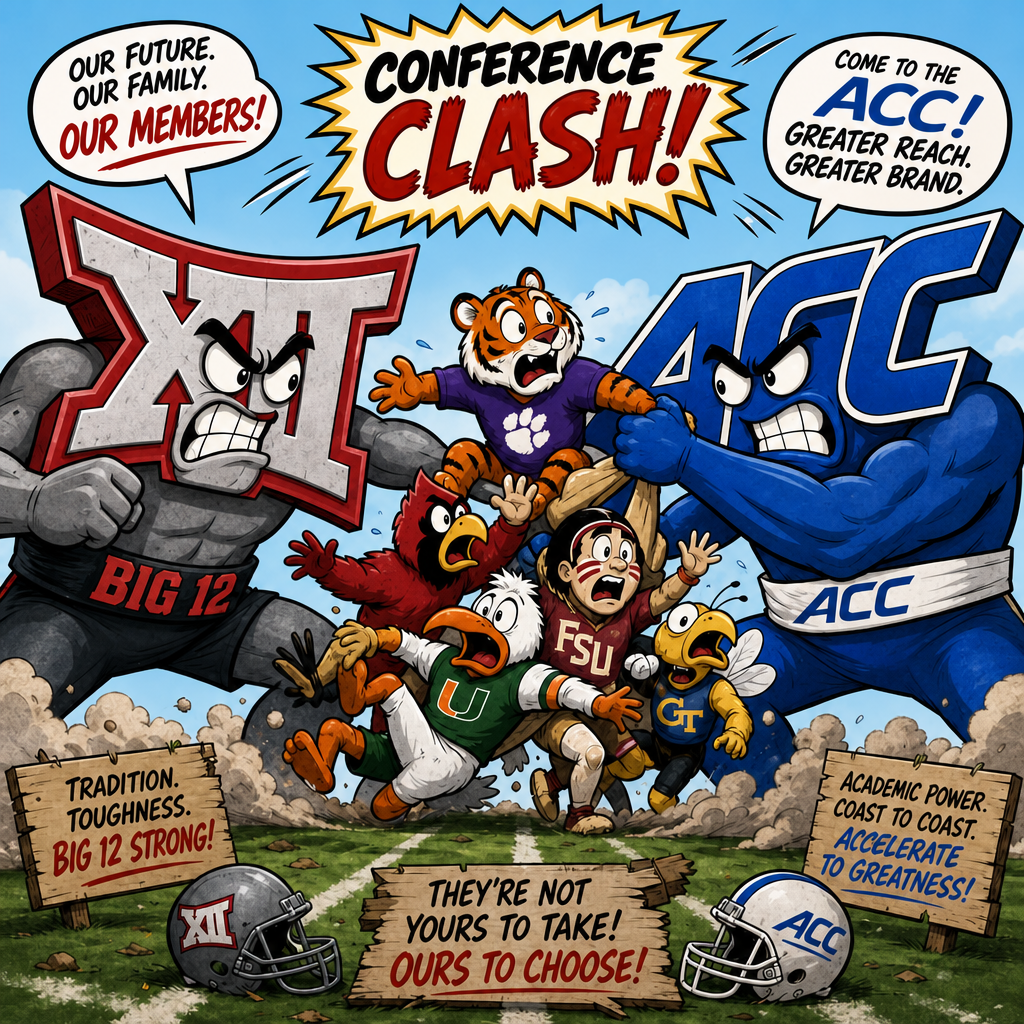

The Big Ten’s fork-in-the-road choice before its next mega deal
As of July 2026, the Big Ten will have to decide whether to add one or more of the top ACC brands—Florida State, North Carolina, Clemson, Miami, or Virginia—before it locks in its next mega deal. The question is not whether the Big Ten can get top dollar; it is whether it wants to build a new deal around a larger, more national conference or play safe and stand pat with its current footprint. Either path would likely command top-dollar media rights, but the choice will shape the entire 2030–31 landscape.
If the Big Ten goes for top ACC brands, it sets a new floor for the market that the SEC and Big 12 must try to match. If the Big Ten stays put, it signals that it believes its current model is already strong enough to maximize value, which gives the SEC and Big 12 more freedom to test their own expansion strategies without immediately chasing a Big Ten price war.
A Big Ten expansion move could force the SEC to expand faster
The SEC’s deal with ESPN runs through 2034, so it is not on the same renegotiation clock as the Big Ten. That means the SEC does not have to act immediately, but a Big Ten move to add top ACC brands could force the SEC to expand sooner than it wants. If the Big Ten adds Clemson, Florida State, or Miami, the SEC could feel pressure to add its own East Coast or Mid-Atlantic targets to protect recruiting, brand presence, and regional coverage.
The SEC’s long-term strategy is still centered on the Southeast, but a Big Ten-led raid on the ACC could make the SEC reconsider whether it needs to race for one or two high-profile East Coast schools to keep its national footprint balanced. The SEC would have to weigh that against the risk of paying exit fees, disrupting its current balance, and betting on a 2034–35 deal that has not been priced yet.
Why the ACC–Notre Dame deal is hard to replace
The ACC–Notre Dame relationship is deeply entrenched, uniquely structured, and gives ND a clear power position and consistency that a Big 12 deal would struggle to match. Notre Dame has a flexible, long-standing arrangement that includes partial football membership, a guaranteed list of annual opponents, and a revenue model that is tied to ESPN’s national platform rather than a rigid conference split. That structure gives ND both autonomy and a steady, high-value revenue stream without the constraints of full conference membership.
A Big 12 deal would almost require Notre Dame to commit more fully, with heavier scheduling obligations, a different revenue split, and more exposure to the conference’s internal politics and brand volatility. For a school that has built its identity on independence and national scheduling freedom, that is a much heavier trade than staying with the ACC’s special arrangement.
ESPN and Notre Dame: the single school that could change the entire equation
Notre Dame is the single program that could genuinely change the power balance of the Big 12. If the Irish fully commit to the Big 12 for football and possibly basketball, the conference would instantly gain a national brand, a massive alumni network, and a ratings anchor that the ACC has protected for decades. The Big 12 knows this, and the ACC knows that losing Notre Dame would be catastrophic for its long-term identity with ESPN.
ESPN’s calculus is clear. The ACC Network has become a money maker that helps anchor ESPN College Football inventory and provides a steady cadence of marquee weekend games. If Notre Dame moves, ESPN would face a direct hit to the value of that network and its attachment to the ACC. The most likely outcome is that ESPN would use its financial leverage, scheduling power, and branding to keep Notre Dame in the ACC orbit or at least ensure partial access, rather than accept a clean break that fractures the network.
For the ACC, Notre Dame is also its most symbolic crown jewel. Losing Notre Dame would make it harder to argue that the ACC is still a “Power Four” brand and would weaken its negotiating position with ESPN and other partners. ESPN’s desire to keep Notre Dame in the ACC is therefore not just a brand issue; it is a structural issue that protects the value of the entire 2036 deal.
Why ESPN’s alliance with the ACC makes any raid harder
The ACC and ESPN have worked closely on expansion decisions for years and did so explicitly in the Cal/Stanford/SMU move. The ESPN deal that runs through 2036 includes a pro-rata clause that increases the value of the contract with each new ACC member, and ESPN also benefits from regaining rights it did not fully control (SMU via the AAC, Cal/Stanford via the Pac‑12). ESPN has also publicly said it does not “control” realignment decisions, but it does provide market guidance and heavily influences the economics of any expansion.
From a business standpoint, ESPN wants the ACC’s core members—Duke, NC State, Pitt, Boston College, Syracuse, SMU, Georgia Tech, Virginia, Virginia Tech, Louisville, and ideally Clemson, Florida State, UNC, Miami, and Notre Dame—to stay together under the 2036 grant of rights. That preserves:
- The ACC Network as a stable, profitable asset
- A predictable slate of marquee football and basketball games
- A long-term exclusive window that avoids bidding wars with other partners
If the Big Ten or Big 12 successfully poaches ACC members, especially more than one, ESPN would face a weaker ACC product, a more powerful competitor that ESPN must share with Fox, and potentially a future where the Big 12 or Big Ten can demand a higher share of revenue. Given that the SEC is tied to 2034 and the ACC to 2036, the Big Ten’s 2029–30 window is the first real chance to reset the market. If the Big Ten adds top ACC brands, the Big 12 would likely follow with mid-tier ACC targets to stay relevant. That would directly undercut ESPN’s ACC strategy.
The most realistic Big 12 ACC targets: Virginia Tech, Louisville, and possibly UConn
The Big 12 is in a 2030–31 cycle and can theoretically move faster than the SEC, but it still lacks the national TV reach of the Big Ten. The realistic targets for the Big 12 are not the top ACC brands but mid-tier ACC schools that provide regional markets, credible football, and a foothold in the East Coast and Mid-Atlantic.
The most likely Big 12 ACC targets are:
- Virginia Tech (strong football brand, solid recruiting footprint in the South and Mid-Atlantic, and a large alumni network)
- Louisville (high-level football and basketball, major market presence in Kentucky, and a brand that adds credibility in the Southeast)
- Possibly UConn (Northeast media market, basketball credibility, and a bridge into the Northeast)
These schools are more affordable in terms of exit fees and brand risk than FSU, Clemson, UNC, or Miami, and they give the Big 12 a more balanced geographic profile without the same level of legal and financial resistance.
The Big 12 and ACC would compete for the same Group of Six pool
The Big 12 is more likely to go G6 hunting than to try to steal top ACC brands. The conference has already shown it can add multiple G6 and Pac-2–style schools to build depth and markets. That model fits with a strategy that:
- Adds a mid-tier ACC school like Virginia Tech or Louisville
- Adds a mix of G6 schools such as USF, Tulane, UConn (if available), Rice, San Diego State, and other targets that expand into Florida, the Northeast, Texas, and the West Coast
The ACC could adopt a similar strategy, adding six high-quality Group of Six teams that, as a pack, bring comparable value to the Big 12. A realistic six-team target list for the ACC could include:
- USF (Florida footprint and recruiting base)
- Tulane (New Orleans and a rising football brand)
- UConn (Northeast media market and alumni reach)
- Rice (Texas metro market and academic brand)
- San Diego State (West Coast and California recruiting)
- Two additional brands that complement the ACC’s current map
If both conferences go after this same pool, the Big 12 and ACC could end up competing directly for the same G6 schools, which would reshape the 2030–31 market and force ESPN, Fox, CBS, and the streamers to rethink how they value each package.
How networks and streamers will judge any conference movement
Fox, ESPN, CBS, NBC, TNT, and the streamers are all watching how the Big Ten, SEC, and Big 12 position themselves in the 2030–31 window. Their goal is to figure out what makes the most sense in a hybrid model that mixes OTA networks, direct-to-consumer apps, and bundled streaming packages. Any movement of members—whether the Big Ten adds top ACC brands, the SEC expands east, or the Big 12 grabs a mid-tier ACC school like Virginia Tech or Louisville plus G6 targets—will change the value of each conference package and the overall streaming strategy.
The Big Ten Network, ACC Network, and SEC Network are still raking in the bucks, but they are increasingly part of a broader ecosystem that includes national broadcast windows, streaming exclusives, and conference-specific apps. Network and streamer executives will measure any conference movement by how it affects their ability to sell a unified package that includes both national marquee games and local/regional depth.
The ACC’s strategic option: expand with Group of Six to match the Big 12’s value
Even the most valuable ACC members—Florida State, Clemson, North Carolina, and Virginia—do not carry the same national brand weight, alumni network scale, or recruiting footprint as Texas and Oklahoma. That reality changes the math for any ACC school thinking it can jump to the Big Ten or SEC and instantly replace the value of the Big Ten’s current model.
The Big 12 has shown that it can build value not by stealing one or two marquee brands, but by adding a mix of Group of Six schools that bring regional markets, fan bases, and TV coverage. The ACC could adopt a similar strategy: instead of trying to replace Texas or Oklahoma, it could add six high-quality Group of Six teams that, as a pack, bring comparable value to the Big 12.
If the ACC adds this type of group, it could create a package that is more balanced and regionally diverse than the current model, while still maintaining its core identity with ESPN. The ACC could use this strategy to:
- Keep its core members intact through 2036
- Add regional depth in Florida, Texas, the Northeast, and the West Coast
- Build a media package that can compete with the Big 12 in the 2030–31 cycle
- Maintain a strong relationship with ESPN while still expanding its market reach
In this scenario, the ACC does not need to find a single Texas-sized brand. It can build a value package that is just as strong by adding a group of high-quality Group of Six schools that, together, match the Big 12’s footprint and give ESPN a more balanced, regional, and national product.
The ACC’s future: protect the 2036 deal or take a more aggressive path
As the current deals start to run out, the ACC will be asked to bid on a new Big 12-style package along with Fox, CBS, TNT, and the streamers. The Big 12 could use that as a chance to offer a more aggressive package, but the ACC’s primary goal will be to protect its long-term ACC deal and keep its core members intact. The ACC will have to balance the risk of losing a mid-tier member like Virginia Tech or Louisville to the Big 12 with the need to keep the conference strong enough to justify its own media rights value.
The ACC’s 2036 ESPN deal is its biggest shield, but it is not a guarantee that the league will stay exactly the same. The ACC will have to decide whether to play a defensive game, using the 2036 date and the exit fee to keep members from leaving, or to take a more aggressive stance and try to add its own G6 or Pac-2–style schools to build depth and market reach. The final outcome will depend on how the Big Ten sets the tone in 2029–30, how the SEC and Big 12 respond in the 2030–31 window, and whether ESPN can keep Notre Dame and the ACC’s core together through 2036.