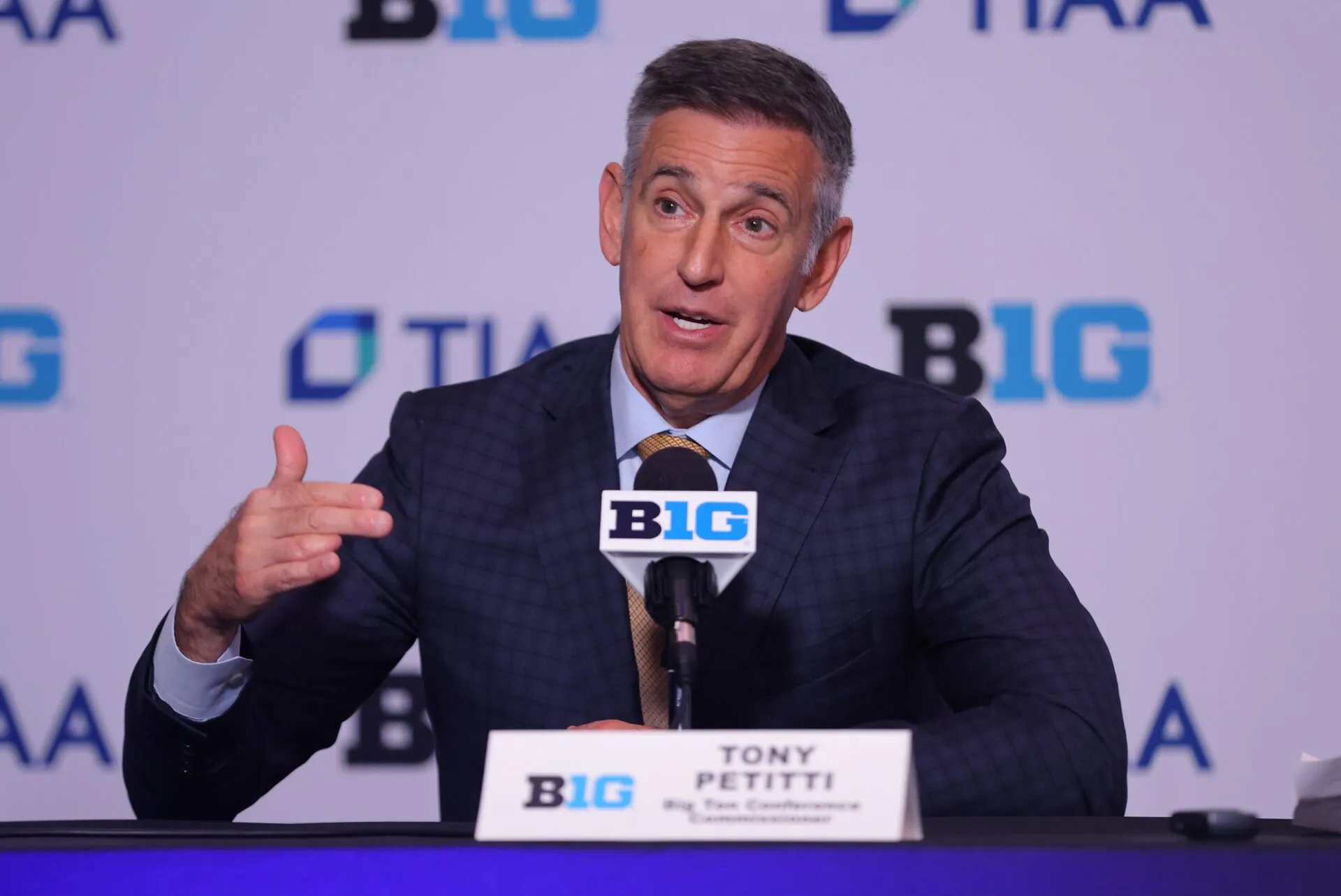
The 2026 college‑football landscape is frozen in place. Every conference, every school, and every media partner is waiting for one pivotal moment: the unveiling of Tony Pettite’s next Big Ten media deal. Until that contract sets the new market ceiling, no league can confidently expand, rebuild, or negotiate long‑term strategy.
The ACC sits at the center of this uncertainty. With Miami, Florida State, Clemson, and North Carolina preparing to leave for richer conferences, the league faces a crossroads. Yet even with urgent decisions ahead, the ACC cannot move until the Big Ten’s media structure defines what ESPN, Fox, Amazon, and Apple can realistically afford.
And no program’s future is more directly tied to that outcome than South Florida.
The ACC’s Rebuild Strategy Depends on the Big Ten’s Timing
The ACC’s most realistic path forward involves rebuilding with strong Group‑of‑Five programs rather than chasing expensive Power‑conference brands. The potential additions include:
- South Florida
- Tulane
- Memphis
- UConn
- San Diego State
- UNLV
- Army (football‑only)
- Navy (football‑only)
This lineup preserves the ACC’s coastal‑to‑coastal footprint, maintains NCAA tournament strength, and avoids bidding wars the league cannot win. But none of these moves can be finalized until Pettite’s Big Ten deal reveals how much media money remains in circulation.
The ACC’s strategy is sound. The timing is out of its hands.
Why Group‑of‑Five Additions Strengthen the ACC’s Playoff Path
Critics argue that adding Group‑of‑Five programs weakens the ACC. In reality, the opposite is true under the new playoff format.
Once Miami, Florida State, Clemson, and UNC depart, the ACC loses its national‑title ceiling. The league becomes a three‑team race featuring Louisville, SMU, and NC State. Adding programs like USF, Tulane, and Memphis creates a competitive environment where mid‑tier ACC schools have a clearer path to the conference championship and playoff access.
This structure benefits:
- Louisville
- SMU
- NC State
- Georgia Tech
- Pitt
- Virginia Tech
- Duke
- Virginia
These schools gain a realistic route to postseason success rather than battling deeper, stronger Big 12 rosters.
But again, the ACC cannot finalize this model until the Big Ten’s media deal sets the financial boundaries.
Why the Big 12 Cannot Expand Until Pettite’s Deal Drops
The Big 12 is stable and competitive, but its media partners are financially stretched.
Fox has already committed between 900 million and 1.2 billion annually to the Big Ten beginning in 2030. ESPN must prepare for a massive SEC renegotiation in 2034 while already paying:
- 300 million annually for the SEC
- 1.3 billion annually for the College Football Playoff
- 380 million annually for the Big 12
This leaves little room for expansion spending. Adding ACC schools would require reducing current Big 12 payouts, something member schools will not accept.
The Big 12’s expansion ceiling is not a competitive issue. It is a budget issue. And that budget depends on the Big Ten’s next media contract.
Why Many ACC Schools Should Stay Put
For several ACC programs, remaining in a rebuilt ACC offers more stability and opportunity than jumping to the Big 12. The schools best positioned to stay include:
- Louisville
- SMU
- NC State
- Georgia Tech
- Pitt
- Virginia Tech
- Duke
- Virginia
These programs benefit from:
- a weakened competitive field
- a clearer playoff path
- strong basketball value
- a national‑market footprint attractive to streaming platforms
Their long‑term decisions hinge on whether Pettite’s Big Ten deal triggers another realignment wave or stabilizes the landscape.
The Bottom Line: The Future of USF and the ACC Waits for Tony Pettite
The next era of college football depends on one event: the release of Tony Pettite’s Big Ten media deal. Until that contract is finalized, the ACC cannot rebuild, the Big 12 cannot expand, and schools like USF cannot secure their long‑awaited Power‑conference future.
Once the Big Ten moves, the rest of the sport will finally be able to move with it.