
Politics
Delegation for 10.6.26: Battleground — offshore drilling — college sports — AI guardrails — pipelines
Swing state spotlight
Less than a month from Election Day, Florida may once again find itself in the spotlight.
While the post-COVID era saw Florida lose the purple-state prestige it held through most of the 21st century, a high concentration of competitive congressional contests and growing speculation about the closeness of statewide races mean the Sunshine State is getting more attention.
The Florida Democratic Party last month edged out Republicans in new voter registrations for the first time since 2021. The Democratic Congressional Campaign Committee (DCCC) has nine targeted races in Florida under its Frontline and Districts in Play ratings and teases it may add another.

And Decision Desk, a national elections prognosticator, shifted the Governor’s race between Rep. Byron Donalds, the Republican nominee, and former Rep. David Jolly, the Democratic nominee, to “Toss Up” status in September, though it moved the race back to “Lean Republican” on Tuesday.
The potential for any statewide race to be a battleground is an interesting development, as Florida is President Donald Trump’s non-Washington home. That means the commander-in-chief’s influence will be tested in his own backyard.
None of that changes the fundamental advantages Republicans enjoy, including cash advantages with the state parties and a 1.55 million-voter edge in statewide registrations. But polls predict Republicans could underperform at historic levels in November, with Real Clear Polling’s Generic Average showing Democrats with an 8.3 percentage-point advantage nationwide.
It won’t be clear until after polls close Tuesday evening what that means for the makeup of Florida’s congressional delegation in the new Congress. But two years after Sen. Rick Scott won re-election by 12 points in the first early-evening call of his political career, some polls show Republican Sen. Ashley Moody in a neck-and-neck race with Democratic challenger Angie Nixon.
Republicans, for their part, remain confident they can force Democrats on the defensive this year thanks to a new congressional map in which Democrats won just four of Florida’s 28 House seats in the 2024 Presidential Election. Roll Call last week listed Rep. Darren Soto, a Kissimmee Democrat, as the most vulnerable Democrat seeking re-election to Congress this year, and Republicans are also eyeing Democratic Reps. Kathy Castor and Jared Moskowitz.
But Democrats also feel bullish, particularly about chances to unseat Republican Reps. María Elvira Salazar of Coral Gables and Anna Paulina Luna of Pinellas County, and flip a seat currently held by Republican Rep. Cory Mills.
The DCCC added a fourth Florida campaign to its Red to Blue Program, which now includes Bale Dalton, Pia Dandiya, Leela Gray and Eliott Rodriguez. That matches up against the National Republican Congressional Committee’s four MAGA Majority effort, which is boosting Casey Askar, Mike Beltran, Dan Green and Scott Singer. Notably, only one race is represented on both lists: the contest in Florida’s 22nd Congressional District between Askar and Dandiya.
All this shows Florida as a competition ground, not necessarily home to a Democratic resurgence just yet. But that means that, more than a quarter century after the late Tim Russert wrote the words “Florida, Florida, Florida” on a dry-erase board just ahead of the 2000 presidential recount, several races critical to Congress’ makeup could go either way.

Gulf war
Florida’s Senate delegation has joined forces to preserve military testing operations in the Gulf and stop offshore oil drilling.
Sens. Moody and Scott just introduced the Protecting Florida’s Offshore Military Readiness Act, legislation that would preserve the Eglin Gulf Test and Training Range. That’s an area off the shore of Panhandle military installations that the Department of the Interior identified for potential oil leases or sales.
“The federal government’s first priority is to keep the American people safe. That means our military needs the irreplaceable value that the Eglin Gulf Test and Training Range provides to our warfighters,” said Scott, a Naples Republican.

The Senators note the area remains off-limits thanks to a 10-year moratorium Trump announced in his first term.
“Protecting the range means protecting America’s military readiness,” Scott said. “I am glad to have Sen. Moody’s support on this bill, and I look forward to working with President Trump and his administration to use every tool we have to deliver more abundant, cheap energy while ensuring our military remains the most lethal fighting force on earth.”
But in his second term, Trump moved to open more U.S. waters to drilling, though documents released last year exempted Florida from expansion. Since then, military leaders have raised concerns about drilling’s impact on regional operations.
Moody said Congress needs to act on those concerns and protect the Eglin training ranges.
“The Eglin Gulf Test and Training Range is a national military asset that can’t be replicated anywhere else in the world, and the work done there directly shapes the lethality of our future military,” the Plant City Republican said. “I’m proud to join Sen. Scott on the Protecting Florida’s Offshore Military Readiness Act to keep the range as exactly what it was intended to be — a testing ground. Protecting Eglin is about our national security, and it’s about preserving the Gulf Coast Floridians love.”

Fraud frustration
When the Senate left Washington last week for the campaign trail, Moody said Democrats also blocked a bill she filed to fight fraud. She filed the National Fraud Enforcement Division Act a day after the House passed it on a 352-72 bipartisan vote.
“Democrats shockingly continue to side with fraudsters and against hardworking Americans. Combating fraud should be a 100-0 issue,” she said. “Acting as good stewards of taxpayer dollars is the most foundational aspect of being a public servant, yet we continue to battle a party that seemingly wants to protect institutional grift.”

The bill was placed on a legislative calendar and hasn’t gone through Committee. It takes only one Senator to oppose a measure brought for passage through unanimous consent. Democrats blocked its passage in that way.
The bill would create a National Fraud Enforcement Division within the Justice Department dedicated to combating fraud.
FBI overreach?
A report of FBI activities surveilling Florida political operatives sparked outrage among some members of Florida’s delegation.
The New York Post reported that former Attorney General Merrick Garland authorized monitoring of Susie Wiles’ phone conversations with Trump’s legal team during the 2024 presidential campaign. Wiles, now White House Chief of Staff, managed Trump’s presidential campaign. Before that, though, the Jacksonville-based consultant managed campaigns for Florida politicians, including Scott.
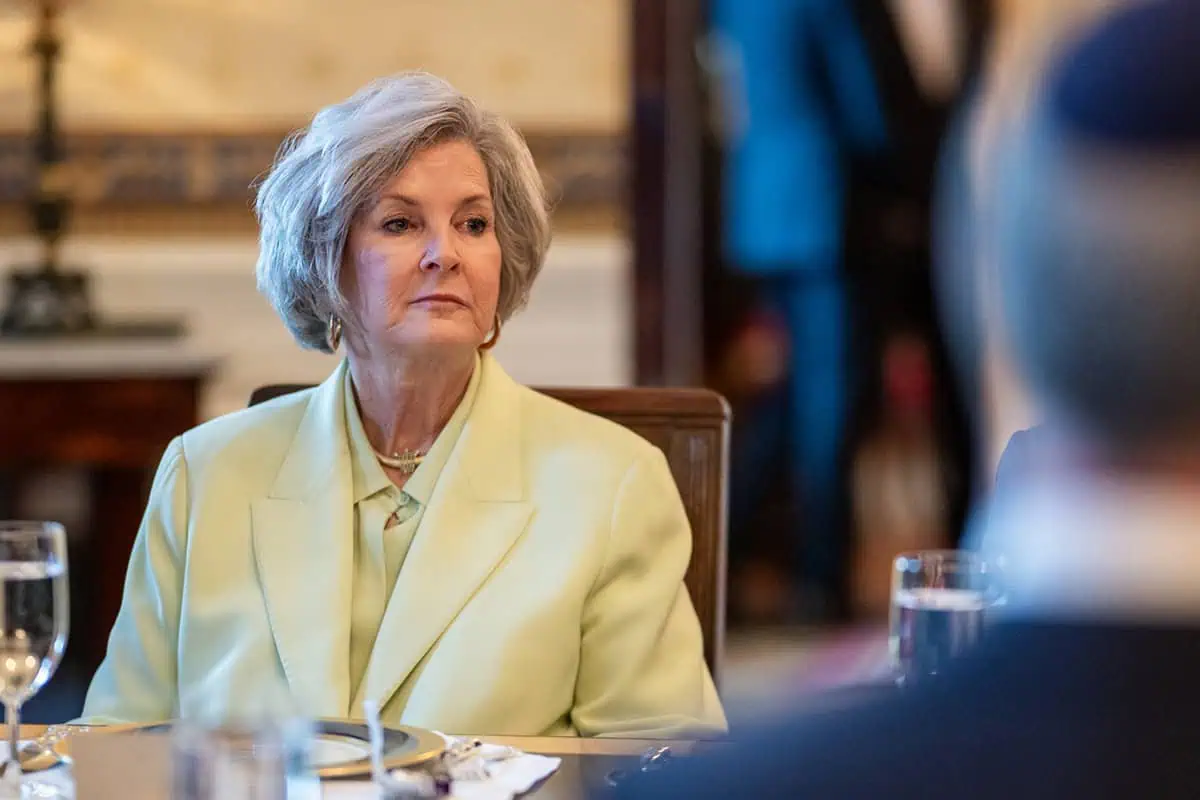
“Democrats weaponized the DOJ to spy on Republicans — including me, my colleagues, and now, we learn, my good friend Susie Wiles,” Scott posted, referencing revelations last year that Scott’s cellphone records were secured as part of Special Counsel Jack Smith’s investigation of Trump.
Rep. Jimmy Patronis also criticized the new report. “You can’t convince me there wasn’t a predatory witch hunt against the President at the highest levels of the autopen DOJ,” the Fort Walton Beach Republican said. “TDS (Trump Derangement Syndrome) was running rampant.” He called it a “despicable abuse of our justice system.”
House plays ball
The Protect College Sports Act, which would change how college sports are regulated nationwide, divided Florida’s Senators but passed the Senate 77-22. Now, a pair of Florida Representatives want the House to make substantial changes before clearing it in the lower chamber.
Reps. Neal Dunn, a Panama City Republican, and Mario Díaz-Balart, a Hialeah Republican, led a letter to House GOP leadership highlighting the still-problematic language. For example, even with Moody successfully raising the Power Four conference cap to 20 schools, Florida schools could still be left out. The letter states that any school changing conferences would have to be independent for three years, which makes the proposal especially troubling.

“College athletics need clear national standards, and there is much in this bill that I support,” said Dunn, whose District includes Florida State University. “But Congress should not decide how many schools can belong to a conference or make a university spend three years as an independent before it can join another. Universities and conferences need the flexibility to make those decisions in the best interests of their student-athletes.”
The letter is co-signed by 19 other House Republicans, including 11 from Florida.
AI outrage
As whistleblowers sound public alarms about the risks of artificial intelligence, Rep. Maxwell Frost said it’s time for Congress to get serious about policy proposals.
At a town hall event in Winter Park, he said tech workers and executives both discussed the policy arena in private conversations in Silicon Valley. That convinced him the U.S. needs “common sense guardrail regulation now on many fronts to protect people and their jobs to ensure that the development is responsible, to ensure that we’re not ending the world which is what many people who work at these companies said.

“I went to San Francisco, and I did a closed-door meeting with 10 whistleblowers who work at all the leading AI companies — OpenAI, Anthropic, etc.,” he said.
“And the stuff they told us about how worried they are, and every day they go to work and they have no idea what the technology is going to be able to do from the moment they clock in to the moment they go to lunch, is very concerning.”
But notably, Speaker Mike Johnson has already said he doesn’t want to rush any regulation before the current Congress concludes. A new Congress will be sworn in on Jan. 3, after the 2026 Midterms.
Pipeline pressure
If the U.S. wants to harness energy resources, the answer may be to speed up pipeline approvals, according to Rep. Laurel Lee. The Thonotosassa Republican made the case for the Mountain Valley Pipeline in an op-ed in the Washington Examiner.
“America does not have an energy shortage. We have an infrastructure problem. The United States is the world’s largest producer of natural gas, with abundant reserves, American workers ready to build, and the technology to power our homes, businesses, and industries for generations,” she wrote.

“But producing energy does little good if we cannot build the infrastructure necessary to move it where it is needed. Increasingly, the obstacle is a legal system that can turn federal approval into the beginning of years of litigation.”
She said lawsuits have stopped the Mountain Valley Pipeline, which should have opened in 2018, prompting Congress to get involved. She noted an $8 billion Atlantic Coast Pipeline project that has not advanced that far, leaving Duke Energy with $1.6 billion on an ultimately canceled project.
Now, Lee is stumping for her Unleash American Pipelines Act, which would limit litigation without eliminating judicial review.
“America has built the interstate highway system, the transcontinental railroad, and pipelines across some of the most difficult terrain on the continent. We remain capable of building great things,” she wrote. “Our laws should ensure rigorous review and protect Americans genuinely harmed by government decisions, but they should not allow delay itself to become the objective. America has the energy, workers, and technology to meet the next generation of demand. We need a legal system that allows us to build.”
Trusting science?
With trust in science at a low, Rep. Scott Franklin said Congress needs to do something to restore integrity in the field.
The Lakeland Republican just introduced the Establishing Gold Standard Science Act, which he said would codify Trump’s “Restoring Gold Standard Science” executive order.

“Americans should be able to trust that science informing federal policy is based on sound research, not politics or predetermined outcomes,” Franklin posted on X. “Today, I introduced the Establishing Gold Standard Science Act to codify key provisions of President Trump’s Gold Standard Science agenda and strengthen transparency, accountability and scientific integrity at EPA (Environmental Protection Agency).”
Surveys have shown political divides in trust in science.
A 2023 Pew Research Center survey found this divide grew since the COVID-19 pandemic. The number of Americans who said they have a “great deal” of trust in scientists dropped from 39% in early 2020 to around 23% as of 2023. Meanwhile, 38% of Republicans said they had “not too much” or “no confidence at all” in scientists.
The same poll showed only 47% of Republicans felt science has had a mostly positive impact on society, compared to 69% of Democrats.
Mental health assistance
Federal funding is on its way to support suicide prevention in South Florida. Rep. Lois Frankel announced that $750,000 had been awarded to No Fallen Heroes Foundation.
“I’m pleased that No Fallen Heroes has been awarded $750,000 in federal funding to support South Florida communities, including right here in Palm Beach County,” the West Palm Beach Democrat posted on X.
“This investment will expand access to critical mental health and suicide prevention resources for veterans who are not connected to VA care.”
Documents from the Veterans Affairs Administration show the money will be used in Palm Beach, Monroe, Miami-Dade, and Broward counties. Funding comes from the Staff Sergeant Parker Gordon Fox Suicide Prevention Grant Program, named for a Georgia Army sniper who died by suicide in 2020.

Medicos
A bipartisan resolution introduced by Reps. María Elvira Salazar, a Coral Gables Republican, and Raul Ruiz, a California Democrat, would recognize the first day of October as National Latino Physician Day.
Salazar stressed the importance of a medical community serving Hispanic communities in the U.S.

“Trust in medical care is essential. Physicians who understand their community and are a reflection of it are critical when building and establishing that trust,” Salazar said. “As our nation faces a healthcare workforce shortage, I am proud to co-lead this resolution that supports Latino and Latina physicians, who are helping to close gaps in care and serve as a trustworthy pillar of their community.”
Professional organizations like the Association of American Medical Colleges and National Hispanic Medical Association both stressed the same message while endorsing the bill.
“We need more Latino physicians serving our communities,” said Dr. Gilbert Burgos, president of the National Hispanic Medical Association.
“This day not only highlights the significant underrepresentation of Latinos in the physician workforce but also recognizes the tremendous work Latino physicians do every day to care for patients and communities across our nation. We are proud to support this resolution and its recognition of the Latino physicians who serve our country.”
On this day
Oct. 6, 1949 — “Harry Truman signs Mutual Defense Assistance Act” via the State Department Office of the Historian — The sums agreed to by Congress were those ultimately enacted: $1 billion for the North Atlantic Treaty states; $211 million for Greece and Turkey; $27.6 million for Iran, Korea and the Philippines; and $75 million for the general area of China. The total authorized amount was thus $1.314 billion. The Senate passed the measure on Sept. 22 by a vote of 55 to 24. House conferees accepted the Senate figures. President Truman signed the Act.
Oct. 6, 1996 — “Bill Clinton debates Bob Dole” via History.com — The debate, held in Hartford, Connecticut, and moderated by Jim Lehrer of PBS, gave the candidates a chance to present their views on education, the economy, Medicare, and tax cuts. Clinton took credit for improving the economy and slashing the budget deficit he inherited from George H.W. Bush when he took office in 1992. Dole challenged Clinton’s “ad hoc” approach to foreign affairs, challenged his record on crime and spending, and proposed a whopping tax cut of more than $550 billion. The debate was civil and devoid of personal attacks except about recreational drug use.
___
Peter Schorsch publishes Delegation, compiled by Jacob Ogles, edited and assembled by Phil Ammann and Ryan Nicol, with contributions by Gabrielle Russon.
The post Delegation for 10.6.26: Battleground — offshore drilling — college sports — AI guardrails — pipelines appeared first on Florida Politics – Campaigns & Elections. Lobbying & Government..