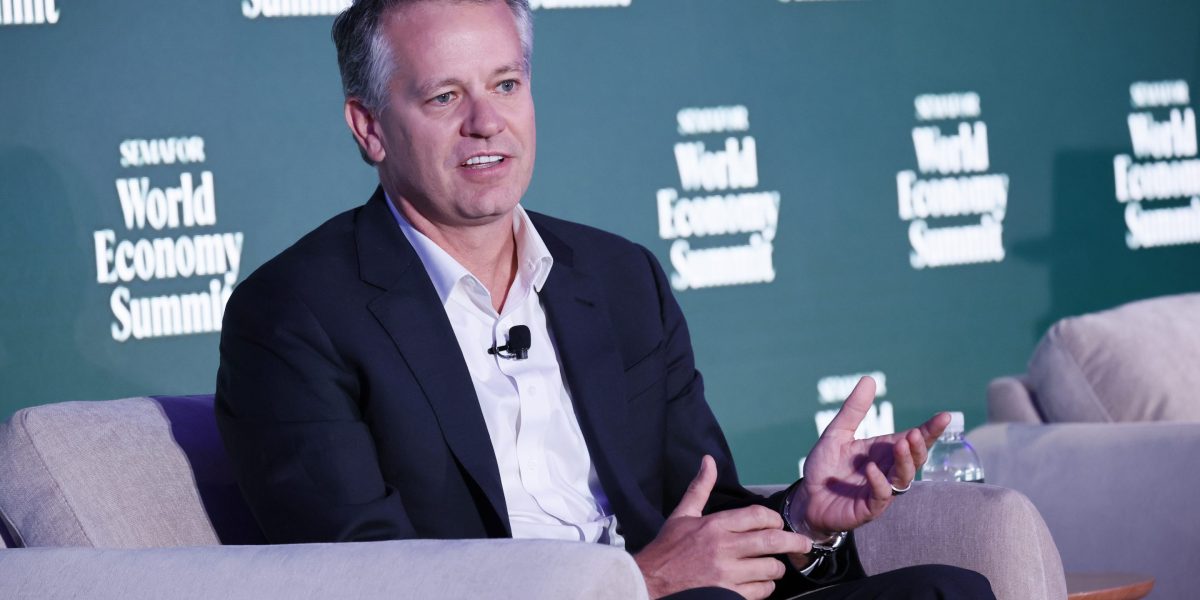
“As long as I’ve been in retail—it’s officially 33 years—it’s always been changing,” Furner said in a recent interview with Fast Company. “Getting comfortable with change in a world that continues to change, I think is a really great trait for any leader.”
It’s a lesson Furner learned firsthand over more than three decades at Walmart.
The Arkansas native started out at Walmart in 1993 as a part-time hourly associate in the company’s garden center, where he likely stacked bags of mulch, watered the seasonal flowers, and worked the cash register
He began steadily climbing the ranks after graduating from the University of Arkansas in 1996 with a marketing management degree—from store manager to district manager, to corporate head office. By 2017, he was named CEO of Sam’s Club, before becoming CEO of Walmart U.S. in 2019. Earlier this year, Furner took the reins of the broader retail giant.
But the job of the top person isn’t just being quick to adapt to change—but also to communicate it with the rest of the workforce.
“With any people that you are leading—or that have allowed you to become their leader—it’s important to listen, meet them where they are,” Furner added. “Explain, talk about the purpose and why we’re doing things, talk about how this relates to the bigger picture.”
For executives, change is the mandate for success
At a moment when AI is reshaping business from top to bottom, Furner’s mindset might be more true now than ever—and it’s guiding Walmart through its own transformation. The more than 60-year-old retailer is leaning heavily into new technology, including Sparky, its AI-powered shopping assistant, while also investing in its brick-and-mortar footprint. Among Walmart’s more than 10,800 stores, roughly 650 are being remodeled this year in efforts to adapt to shifting consumer expectations, Furner said.
The inevitability of change—and the costs of resisting it—is a view increasingly shared across corporate America, where executives say adaptability has become a prerequisite for growth—and survival.
At Macy’s, for example, embracing change has been core to its mission to turn the 168-year retailer around after years of sluggish performance.
“Innovation needs to either solve a customer issue or unlock a customer opportunity or unlock better effectiveness,” Max Magni, Macy’s chief customer and digital officer, recently told Fortune. Since launching its AI-powered “Ask Macy’s” shopping assistant in March, shoppers who use the feature spend nearly five times more per session on Macy’s website than those who don’t.
Other leaders have framed today’s challenges even more starkly. According to workplace technology company Xerox CEO Steve Bandrowczak, leaders today don’t need to have all the answers—they need the resilience to ask better questions and the willingness to embrace disruption rather than fear it.
“Today is the slowest that change will ever be in our life, and you can either be fearful of change or be excited about change,” Bandrowczak told Fortune in 2025.
That message extends beyond the C-suite. For young workers navigating an increasingly unpredictable labor market, adaptability may be just as critical. Informatica CEO Amit Walia offered a similar message in a Fortune essay last year:
“Don’t fear change—embrace it,” Walia wrote. “Disruption creates opportunities to innovate, learn, and add value in unexpected ways.”