Connect with us

Business

Gen Zers and millennials flock to so-called analogs islands

Published

on


As technology distracts, polarizes and automates, people are still finding refuge on analog islands in the digital sea.

The holdouts span the generation gaps, uniting elderly and middle-aged enclaves born in the pre-internet times with the digital natives raised in the era of online ubiquity.

They are setting down their devices to paint, color, knit and play board games. Others carve out time to mail birthday cards and salutations written in their own hand. Some drive cars with manual transmissions while surrounded by automobiles increasingly able to drive themselves. And a widening audience is turning to vinyl albums, resuscitating an analog format that was on its deathbed 20 years ago.

The analog havens provide a nostalgic escape from tumultuous times for generations born from 1946 through 1980, says Martin Bispels, 57, a former QVC executive who recently started Retroactv, a company that sells rock music merchandise dating to the 1960s and 1970s.

“The past gives comfort. The past is knowable,” Bispels says. “And you can define it because you can remember it the way you want.”

But analog escapes also beckon to the members of the millennials and Generation Z, those born from 1981 through 2012 — younger people immersed in a digital culture that has put instant information and entertainment at their fingertips.

Despite that convenience and instant gratification, even younger people growing up on technology’s cutting edge are yearning for more tactile, deliberate and personal activities that don’t evaporate in the digital ephemera, says Pamela Paul, author of “100 Things We’ve Lost To The Internet.”

“Younger generations have an almost longing wistfulness because because so little of their life feels tangible,” Paul says. “They are starting to recognize how the internet has changed their lives, and they are trying to revive these in-person, low-tech environments that older generations took for granted.”

Here are some glimpses into how the old ways are new again.

Keeping those cards coming

People have been exchanging cards for centuries. It’s a ritual in danger of being obliterated by the tsunami of texting and social media posts. Besides being quicker and more convenient, digital communication has become more economical as the cost of a first-class U.S. postage stamp has soared from 33 to 78 cents during the past 25 years.

But tradition is hanging on thanks to people like Megan Evans, who started the Facebook group called “Random Acts of Cardness” a decade ago when she was just 21 in hopes of fostering and maintaining more human connections in an increasingly impersonal world.

“Anybody can send a text message that says ‘Happy Birthday!’ But sending a card is a much more intentional way of telling somebody that you care,” says Evans, who lives in Wickliff, Ohio. “It’s something that the sender has touched with their own hand, and that you are going to hold in your own hand.”

More than 15,000 people are now part of Evans’ Facebook group, including Billy-Jo Dieter, who sends at least 100 cards per month commemorating birthdays, holidays and other milestones. “A dying art,” she calls it.

“My goal has been to try to make at least one person smile each day,” says Dieter, 48, who lives in Ellsworth, Maine. “When you sit down and you put the pen to the paper, it becomes something that’s even more just for that person.”

The singularity of a stick shift

Before technology futurist Ray Kurzweil came up with a concept that he dubbed the “Singularity” to describe his vision of computers melding with humanity, the roads were crammed with stick-shift cars working in concert with people.

But automobiles with manual transmission appear to be on a road to oblivion as technology transforms cars into computers on wheels. Fewer than 1% of the new vehicles sold in the U.S. have manual transmission, down from 35% in 1980, according to an analysis by the U.S. Environmental Protection Agency.

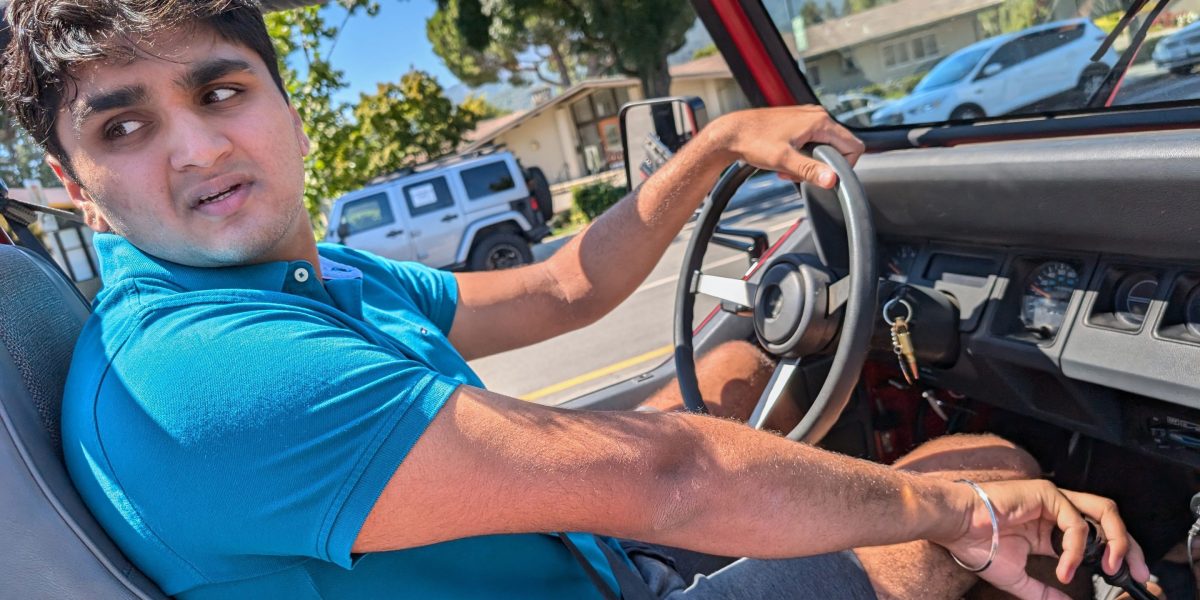
But there remain stick-shift diehards like Prabh and Divjeev Sohi, brothers who drive cars with manual transmissions to their classes at San Jose State University along Silicon Valley roads clogged with Teslas. They became enamored with stick shifts while virtually driving cars in video games as kids and riding in manual transmission vehicles operated by their father and grandfather.

So when they were old enough to drive, Prabh, 22, and Divjeev, 19, were determined to learn a skill few people their age even bother to attempt: mastering the nuances of a clutch that controls a manual transmission, a process that resulted in their 1994 Jeep Wrangler coming to a complete stop while frustrated drivers got stuck behind them.

“He stalled like five times his first time on the road,” Prabh recalls.

Even though the experience still causes Divjeev to shudder, he feels it led him to a better place.

“You are more in the moment when you are driving a car with a stick. Basically you are just there to drive and you aren’t doing anything else,” Divjeev says. “You understand the car, and if you don’t handle it correctly, that car isn’t going to move.”

Rediscovering vinyl’s virtues

Vinyl’s obsolescence seemed inevitable in the 1980s when compact discs emerged. That introduction triggered an evisceration of analog recordings that hit bottom in 2006 when 900,000 vinyl albums were sold, according to the Recording Industry Association of America. That was a death rattle for a format that peaked in 1977, when 344 million vinyl albums were sold.

But the slump unexpectedly reversed, and vinyl albums are now a growth niche. In each of the past two years, about 43 million vinyl albums have been sold, despite the widespread popularity of music streaming services that make it possible to play virtually any song by any artist at any time.

Baby boomers expanding upon their decades-old album collections aren’t the only catalyst. Younger generations are embracing the lusher sound of vinyl, too.

“I really love listening to an album on vinyl from start to finish. It feels like I am sitting with the artist,” says 24-year-old Carson Bispels. “Vinyl just adds this permanence that makes the music feel more genuine. It’s just you and the music, the way it should be.”

Carson is the son of Martin Bispels, the former QVC executive. A few years ago, Martin gave a few of his vinyl records to Carson, including Bob Marley’s “Taklin’ Blues,” an album already played so much that it sometimes cracks and pops with the scratches in it.

“I still listen to it because every time I do, I think of my dad,” says Carson, who lives in Nashville, Tennessee.

After starting off with about 10 vinyl albums from his dad, Carson now has about 100 and plans to keep expanding.

“The current digital age of music is fantastic, too, but there’s nothing like the personal aspect of going into the record store and thumbing through a bunch of albums while making small talk with some of the other patrons to find out what they’re listening to,” Carson says.

Paul, the author of the book about analog activities that have been devoured by the internet, says the vinyl music’s comeback story has her mulling a potential sequel. “A return to humanity,” she says, “could turn out to be another book.”


Source link

Continue Reading

Business

OpenAI is hiring a head of preparedness, who will earn $555,000

Published

on


OpenAI is looking for a new employee to help address the growing dangers of AI, and the tech company is willing to spend more than half a million dollars to fill the role.

OpenAI is hiring a “head of preparedness” to reduce harms associated with the technology, like user mental health and cybersecurity, CEO Sam Altman wrote in an X post on Saturday. The position will pay $555,000 per year, plus equity, according to the job listing.

“This will be a stressful job and you’ll jump into the deep end pretty much immediately,” Altman said.

OpenAI’s push to hire a safety executive comes amid companies’ growing concerns about AI risks on operations and reputations. A November analysis of annual Securities and Exchange Commission filings by financial data and analytics company AlphaSense found that in the first 11 months of the year, 418 companies worth at least $1 billion cited reputational harm associated with AI risk factors. These reputation-threatening risks include AI datasets that show biased information or jeopardize security. Reports of AI-related reputational harm increased 46% from 2024, according to the analysis.

“Models are improving quickly and are now capable of many great things, but they are also starting to present some real challenges,” Altman said in the social media post.

“If you want to help the world figure out how to enable cybersecurity defenders with cutting edge capabilities while ensuring attackers can’t use them for harm, ideally by making all systems more secure, and similarly for how we release biological capabilities and even gain confidence in the safety of running systems that can self-improve, please consider applying,” he added.

OpenAI’s previous head of preparedness Aleksander Madry was reassigned last year to a role related to AI reasoning, with AI safety a related part of the job. 

OpenAI’s efforts to address AI dangers

Founded in 2015 as a nonprofit with the intention to use AI to improve and benefit humanity, OpenAI has, in the eyes of some of its former leaders, struggled to prioritize its commitment to safe technology development. The company’s former vice president of research, Dario Amodei, along with his sister Daniela Amodei and several other researchers, left OpenAI in 2020, in part because of concerns the company was prioritizing commercial success over safety. Amodei founded Anthropic the following year.

OpenAI has faced multiple wrongful death lawsuits this year, alleging ChatGPT encouraged users’ delusions, and claiming conversations with the bot were linked to some users’ suicides. A New York Times investigation published in November found nearly 50 cases of ChatGPT users having mental health crises while in conversation with the bot. 

OpenAI said in August its safety features could “degrade” following long conversations between users and ChatGPT, but the company has made changes to improve how its models interact with users. It created an eight-person council earlier this year to advise the company on guardrails to support users’ wellbeing and has updated ChatGPT to better respond in sensitive conversations and increase access to crisis hotlines. At the beginning of the month, the company announced grants to fund research about the intersection of AI and mental health.

The tech company has also conceded to needing improved safety measures, saying in a blog post this month some of its upcoming models could present a “high” cybersecurity risk as AI rapidly advances. The company is taking measures—such as training models to not respond to requests compromising cybersecurity and refining monitoring systems—to mitigate those risks.

“We have a strong foundation of measuring growing capabilities,” Altman wrote on Saturday. “But we are entering a world where we need more nuanced understanding and measurement of how those capabilities could be abused, and how we can limit those downsides both in our products and in the world, in a way that lets us all enjoy the tremendous benefits.”


Source link

Continue Reading

Business

YouTube’s cofounder and former tech boss doesn’t want his kids to watch short videos

Published

on


  • YouTube cofounder Steve Chen is one of the latest tech trailblazers to warn against social media’s impact on kids. Chen warned in a talk short-form video “equates to shorter attention spans” and said he wouldn’t want his own kids to exclusively consume this type of content. Companies that distribute short-form video (which includes the company he cofounded, YouTube) should add safeguards for younger users, he added.

A YouTube cofounder who helped pave the way for our modern, content-obsessed world is the latest tech whiz to come out against short-form videos because of their effects on kids. 

Steve Chen, who served as YouTube’s former chief technology officer before it was acquired by Google in 2006, railed against the TikTok-ification of online life in a talk earlier this year at Stanford Graduate School of Business.

“I think TikTok is entertainment, but it’s purely entertainment,” Chen said during the talk, which was published on YouTube Friday. “It’s just for that moment. Just shorter-form content equates to shorter attention spans.”

Chen, who has two children with wife, Jamie Chen, said he wouldn’t want his kids only consuming short-form content, and then not be able to watch something longer than 15 minutes. He said he knows of other parents who force their kids to watch longer videos without the eye-catching colors and gimmicks that hook especially younger users. This strategy works well, he claims.

“If they don’t get exposure to the short-form content right away, then they’re still happy with that other type of content that they’re watching,” he said. 

Many companies have had to rush to offer short-form content after the rise of TikTok, he said, but these companies now have to balance their motivations for monetization and attracting users’ attention with content that’s “actually useful.” 

Companies that distribute short-form video, which includes his former company YouTube, could face problems with addictiveness. These companies should add safeguards for kids on short-form content, such as age restrictions for apps and limits on the amount of time some users can use them, he said. 

Chen joins fellow tech trailblazers Sam Altman of OpenAI and Elon Musk in sounding the alarm about social media’s impact on children. In a podcast interview, Altman specifically called out social media scrolling and the “dopamine hit” of short-form video for “probably messing with kids’ brain development in a super deep way.”

Musk, who owns the social network X (née Twitter), said in 2023 he doesn’t have any restrictions on social-media use for his children, but added this “might have been a mistake,” and encouraged parents to take a more active role in their kids’ social-media habits.

“I think, probably, I would limit social media a bit more than I have in the past and just take note of what they’re watching, because I think at this point they’re being programmed by some social media algorithms, which you may or may not agree with,” Musk said.

A version of this story originally published on Fortune.com on July 29, 2025.

Join us at the Fortune Workplace Innovation Summit May 19–20, 2026, in Atlanta. The next era of workplace innovation is here—and the old playbook is being rewritten. At this exclusive, high-energy event, the world’s most innovative leaders will convene to explore how AI, humanity, and strategy converge to redefine, again, the future of work. Register now.


Source link

Continue Reading

Business

$25,000 per month: the cost of Trump tariffs on small business importers, revealed

Published

on


A stark new economic analysis reveals the Trump administration’s trade policies are extracting a heavy toll from Main Street, with small-business importers paying approximately $25,000 more per month in tariff costs since April 2025. The report, published Dec. 17 by the Center for American Progress (CAP), a left-wing think tank, details how a “chaotic approach” to trade and the elimination of key import exceptions have created a financial crisis for entrepreneurs during the critical holiday season.

According to the analysis by Michael Negron and Mimla Wardak, the administration’s “Liberation Day” tariff announcement triggered a sharp increase in duties collected from American businesses. From April through September 2025, CAP estimated, the roughly 236,000 small-business importers in the U.S. paid an average of more than $151,000 in additional tariffs compared to the same period in 2024. (CAP cited the centrist Chamber of Commerce’s research on the small-business importer sector of the economy.)

“The Trump administration’s broad, costly, and frequently shifting policies threaten to undermine one of the strongest engines of the American economy,” Negron said in a statement to Fortune. “A season of opportunity for small businesses has turned into one of uncertainty.”

The burden is not limited to larger enterprises. The report found “mom-and-pop” businesses—those with fewer than 50 employees—paid, on average, over $86,000 more per business during this six-month window than they did the previous year. The outlook for the immediate future is equally grim: CAP projects that if current monthly costs persist, the typical small business will face a tariff bill exceeding $500,000 in 2026, potentially resulting in additional layoffs, bankruptcies, and delayed investments. For the holidays, CAP concludes the tariffs are a “costly lump of coal” in American small business’ collective, proverbial Christmas stocking.

Administrative red tape stifles growth

Beyond direct financial costs, small business owners are struggling with a sudden increase in bureaucratic red tape. The administration eliminated the de minimis exception, which previously allowed low-value shipments to enter the U.S. without duties or extensive paperwork. This policy change has forced businesses to prepay new tariff rates and complete complex customs forms for millions of shipments that were formerly exempt.

Jyoti Jaiswal, founder of OMSutra, a small business selling sustainable fashion and home goods, told CAP the changes have forced her to consolidate shipments and block more capital upfront. Jaiswal noted her company now spends 10 to 15 hours on tariff-related administrative work per shipment, up from eight to 10 hours previously, preventing her from passing costs on to consumers without losing competitiveness.

Similarly, Legrand Lindor, CEO of LMI Textiles, told CAP his medical supply company went from spending zero time on tariff paperwork to spending four to five hours per transaction. Facing a 20% increase in product costs—roughly $80,000 in additional spending—Lindor was forced to scrap plans to open a new warehouse in 2025.

The rising costs appear to be cooling the labor market for small firms. Data from payroll provider ADP shows that businesses with fewer than 50 employees laid off 120,000 workers in November 2025, the highest number of small-business layoffs in five years.

While the administration claimed foreign nations would pay these costs, the report emphasizes tariffs are taxes paid by American importers. Goldman Sachs calculated that of August 2025, businesses had absorbed 51% of the cost of tariffs, though they had passed 37% onto consumers through higher prices. A survey by Small Business Majority from late 2025 indicated 74% of small-business owners are now worried about their business surviving the next 12 months.

Compounding financial pressures

The tariff crisis coincides with other financial headwinds. The report highlights the expiration of enhanced Affordable Care Act premium tax credits in 2026 threatens to double premiums for millions of entrepreneurs and small-business employees.

With the holiday season typically accounting for at least one-quarter of annual revenue for retailers, the convergence of high tariffs and administrative confusion has delivered what the report describes as “a decidedly unhappy holiday season” for the nation’s 236,000 small-business importers. Without a change in policy, these businesses face the prospect of escalating costs and reduced investment heading into the new year.

For this story, Fortune journalists used generative AI as a research tool. An editor verified the accuracy of the information before publishing.

This story was originally featured on Fortune.com


Source link

Continue Reading

Trending

Copyright © Miami Select.