
Fashion
WOW expands Spain’s retail scene with Dimas Gimeno’s “phygital” vision

Translated by
Nazia BIBI KEENOO
Published
October 31, 2025
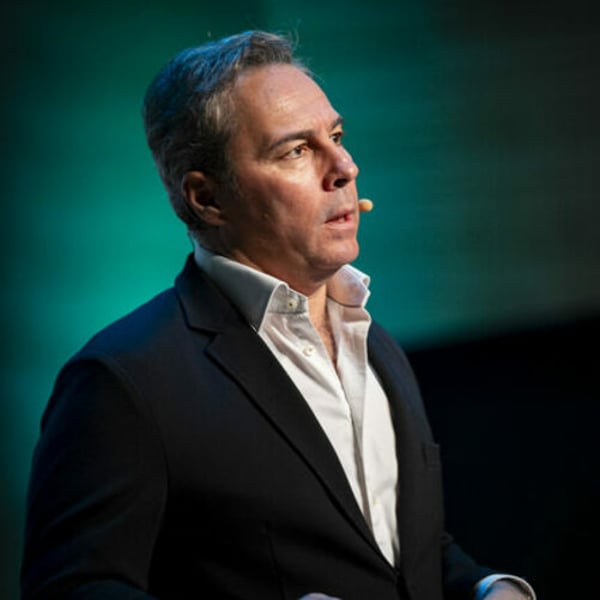
WOW opened its doors on Madrid’s Gran Vía in 2022, introducing a new department store concept to the heart of the Spanish capital. In 2023, it launched a second location on Calle Serrano and, by 2025, the company aims to reach €30 million ($32 million) in sales, with long-awaited profitability expected between 2026 and early 2027. Its founder, Dimas Gimeno—former president of El Corte Inglés—spoke on Oct. 30 at the 4th Aragonese Congress on Commerce and Innovation, held in Zaragoza and organized by the Government of Aragon. FashionNetwork.com spoke with Gimeno about his vision for the retail sector, the key challenges it faces, and the evolution of the WOW platform.
FashionNetwork.com: You mentioned at the beginning of your talk that retail defines a city’s identity. How can that identity be maintained in a world where commerce is increasingly uniform?
Dimas Gimeno: By focusing on the local. It’s essential to recognize that a city—and its retail scene—should showcase local products. Spain is particularly privileged because it offers extraordinary craftsmanship and gastronomy. We are also manufacturers and home to thriving brands—that’s what tourists are looking for.
FNW: You maintain that omnichannel hasn’t worked, despite being the major focus of many brands, and that we must move toward the “phygital” model. Why?
D. G.: Omnichannel was a logical idea at the time, but poorly executed. The mistake was trying to digitize the physical world instead of starting from a fully digital mindset. Businesses attempted to adapt new tools to an old model rather than redesigning their approach entirely. It’s not about digitizing the physical—it’s about thinking 100% digitally and, from there, building the physical presence. Some call this “unified commerce”; I call it “phygital.”
The key is understanding that channels no longer exist. We must stop separating “physical” and “digital.” Today’s customer moves fluidly, interacting with your brand across multiple touchpoints.
FNW: Do customers no longer make that distinction between channels?
D. G.: If you ask them, they likely don’t care. A customer might discover a brand on social media, purchase through e-commerce, and then visit the physical store. The store is where loyalty forms and brand relationships deepen—conversion rates are also higher as a result.
Think of the online shopping cart: the ideal would be for the same cart to be accessible both online and in-store. Omnichannel fails when it simply digitizes a physical process. The first step toward true unification is making your entire range available online—a goal many brands still struggle with.
FNW: How can small businesses face this challenge, given that they define cities’ identities?
D. G.: By staying authentic and unique. Small businesses excel in this area because they offer a unique personality, a sense of legacy, and genuine relationships with customers. Their main obstacle is technology: they often can’t invest in digital tools. The solution lies in collaborative platforms that bring small retailers together to create shared online marketplaces. Public funding should help support the development of these initiatives.

FNW: Why do you believe physical stores represent the future of retail?
D. G.: Because I’m a shopkeeper at heart—and a former salesperson. I’ve seen firsthand how a well-executed store can inspire customers to buy everything. That’s something digital alone can’t achieve. Add a distinctive product range and motivated, well-trained sales staff equipped with the right tools, and you create something unbeatable. That’s how you compete with major platforms—by offering what they can’t.
FNW: Customer experience has been a buzzword in recent years. What does it really mean for retailers?
D. G.: The experience is everything. You can have a beautiful store, but if the salesperson doesn’t treat the customer well, it fails. It’s about creating an environment that feels welcoming, where staff connect with shoppers on a personal level. When a customer plans to buy one thing and ends up buying seven, that’s customer experience. It’s about knowing your customer, anticipating their needs, and giving them reasons to return.
FNW: You emphasize sales staff. Is it difficult to find those profiles in retail today, as in hospitality?
D. G.: It is. The service industry is often not viewed as a prestigious career path, which makes hiring challenging. At WOW, we attract talented young salespeople by providing solid training, motivation, and clear career growth opportunities. If companies hire people for a year and then replace them without offering opportunities for advancement, no one will stay. Retail needs to value sales as a long-term profession.
FNW: Speaking of WOW, what’s the company’s current status?
D. G.: We’ve been operating for three and a half years. Our vision hasn’t changed, but we’ve learned how to translate innovation into profitability. You can have an original concept, but you also need a business model that works. We’re not profitable yet, but we can see it on the horizon—expected by next year or early the following year.
Our growth strategy centers on physical retail. Barcelona is the next obvious step, but our digital channel is our biggest opportunity. Online expansion enables us to reach new markets faster and with reduced risk. Ultimately, growth only matters if it’s profitable.
FNW: What share does online currently represent in your sales?
D. G.: Less than a year ago, we migrated our e-commerce operations to Shopify, which meant resetting the digital system. Online sales are now growing fast, and by 2026, we expect them to account for over 15% of total business—and eventually, much more.
FNW: Is your platform available outside Spain?
D. G.: Yes, though for now we only ship within the European Union. By 2026, we plan to expand into new markets.
FNW: Which store performs better—Gran Vía or Serrano?
D. G.: Serrano performs better overall because it’s larger and more consistent, but Gran Vía continues to surprise us. It’s visually striking and benefits from Madrid’s bustling retail corridor. Serrano attracts repeat customers, while Gran Vía gains strong visibility from tourists.
FNW: You talk about curating the assortment. What does that mean?
D. G.: Curation was WOW’s starting point—it’s about building a distinctive product selection. But we’re not just a showcase of brands; we’re a commercial platform. We initially carried high-end luxury and semi-luxury labels but shifted toward a more profitable model. It’s not about expensive versus affordable—it’s about offering originality and innovation. We aim to feature brands that are not typically found in most physical stores. That’s the essence of WOW’s value proposition.
This article is an automatic translation.
Click here to read the original article.
Copyright © 2025 FashionNetwork.com All rights reserved.

Published
January 20, 2026
With fashion weeks having kicked off in earnest this month, the world’s top buyers are gathering their thoughts about what they expect affluent shoppers to snap up come AW26 collections arriving in-store and Simon Longland, director of fashion buying at London’s Harrods, is among them.
Just back from the Milan menswear shows, he highlighted the importance of timeless fashion.
“Milan menswear has always lived between two opposing forces: Fashion with a capital ‘F’, and quiet luxury rooted in sartorial tradition and timelessness,” he explained.
“This season, more than ever, the balance of the schedule leaned firmly towards the latter. The result was a Milan season defined by quality, cut, cloth and craft. There was a palpable sense that product integrity and the final customer were front and centre. Less noise, fewer theatrics—but a stronger, more coherent message around what modern luxury menswear looks like today: thoughtful, considered, and built to last.”
He hailed big names including Polo’s Purple Label, Zegna, Prada, Brioni and Dunhill both for the impact of the shows or presentations and the looks they included.

“This season, the strongest ‘shows’ were the ones that felt complete: a clear point of view, real product conviction, and a wardrobe that moves the customer forward,” he said. “Ralph Lauren’s return to Milan brought scale and theatre, but crucially it was backed by wearable, elevated classics that translate beautifully across Polo through Purple Label.
“Zegna delivered that modern luxury sweet spot—quiet confidence, investment dressing, and a proposition built on longevity and wardrobe building rather than novelty.
“And Prada was Prada in the best way: intellectually sharp, slightly disruptive, and refreshingly anti-‘power uniform’—a collection that challenged the idea of what contemporary menswear authority looks like.
Longland thought the best presentation was Brioni “because it understood the moment: craftsmanship, ease, and a sense of journey—luxury that doesn’t shout, it lasts”.
But he also liked Dunhill, calling it “a masterclass in mood and restraint—an incredibly precise take on British elegance, with the kind of tonal sophistication that customers immediately understand”.

As for the season’s top trends so far. In tailoring, he noted “a confident split: either slouchy, relaxed tailoring (softened shoulders, easier proportions), or clean, slim, sharply tailored lines for the customer who wants refinement without volume. Prada and the broader conversation around modern tailoring really underlined this shift”.
He also thought co-ords and tonal dressing were significant with “head-to-toe dressing in shades of one colour now a key styling language—particularly in neutrals and ‘quiet’ hues. It reads modern, premium, and effortless”.
Colour-wise, Longland called out the colours of nature: greens, greys, browns—earthy, mineral, and outdoors-referenced tones “that feel calm, grounded, and timeless”.
And as for materials, leather nd suede were crucial and could be found “everywhere in a more refined register—often softer, more tactile, and less overtly aggressive. It’s about texture, depth and longevity rather than statement”.
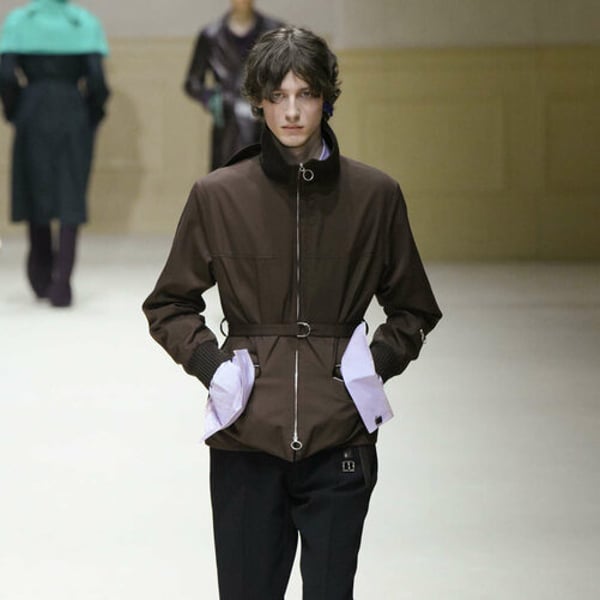
On the key item front, Longland’s backing bomber jackets that have “continued to evolve—less ‘street’, more luxury wardrobe essential: cleaner finishes, elevated fabrics, and styling that works over tailoring as easily as with casual trousers”.
And he sees a jacket or coat in “beautifully supple suede, ideally in chocolate brown or charcoal” as a “must-have” for the season. Why? “It perfectly encapsulates the season’s mood—luxurious yet understated, timeless yet modern, and endlessly versatile within a contemporary wardrobe”.
Copyright © 2026 FashionNetwork.com All rights reserved.


Valentine’s Day Gift Ideas For All The Clueless Guys

New tariffs will hit UK small clothing firms hard – report

Matalan’s Q3 and Christmas update shows return to sales growth
-

 Politics8 years ago
Congress rolls out ‘Better Deal,’ new economic agenda
-
Entertainment9 years ago
New Season 8 Walking Dead trailer flashes forward in time
-
Politics9 years ago
Poll: Virginia governor’s race in dead heat
-
Politics8 years ago
Illinois’ financial crisis could bring the state to a halt
-
Entertainment8 years ago
The final 6 ‘Game of Thrones’ episodes might feel like a full season
-
Entertainment9 years ago
Meet Superman’s grandfather in new trailer for Krypton
-
Business9 years ago
6 Stunning new co-working spaces around the globe
-
Tech8 years ago
Hulu hires Google marketing veteran Kelly Campbell as CMO