
Fashion
WOW expands Spain’s retail scene with Dimas Gimeno’s “phygital” vision

Translated by
Nazia BIBI KEENOO
Published
October 31, 2025
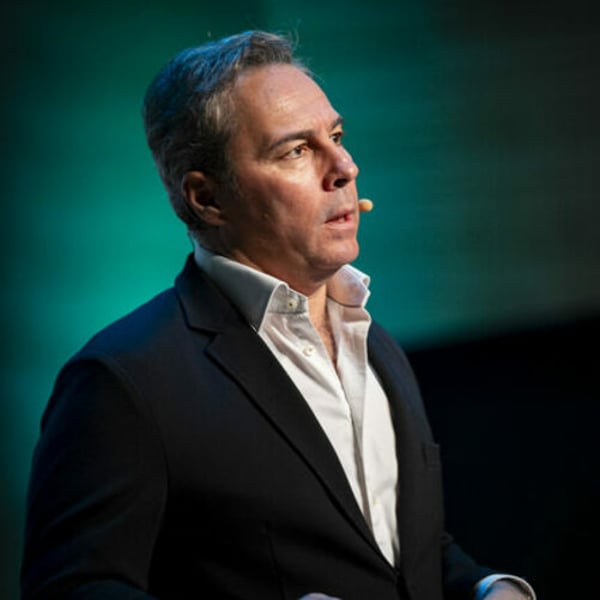
WOW opened its doors on Madrid’s Gran Vía in 2022, introducing a new department store concept to the heart of the Spanish capital. In 2023, it launched a second location on Calle Serrano and, by 2025, the company aims to reach €30 million ($32 million) in sales, with long-awaited profitability expected between 2026 and early 2027. Its founder, Dimas Gimeno—former president of El Corte Inglés—spoke on Oct. 30 at the 4th Aragonese Congress on Commerce and Innovation, held in Zaragoza and organized by the Government of Aragon. FashionNetwork.com spoke with Gimeno about his vision for the retail sector, the key challenges it faces, and the evolution of the WOW platform.
FashionNetwork.com: You mentioned at the beginning of your talk that retail defines a city’s identity. How can that identity be maintained in a world where commerce is increasingly uniform?
Dimas Gimeno: By focusing on the local. It’s essential to recognize that a city—and its retail scene—should showcase local products. Spain is particularly privileged because it offers extraordinary craftsmanship and gastronomy. We are also manufacturers and home to thriving brands—that’s what tourists are looking for.
FNW: You maintain that omnichannel hasn’t worked, despite being the major focus of many brands, and that we must move toward the “phygital” model. Why?
D. G.: Omnichannel was a logical idea at the time, but poorly executed. The mistake was trying to digitize the physical world instead of starting from a fully digital mindset. Businesses attempted to adapt new tools to an old model rather than redesigning their approach entirely. It’s not about digitizing the physical—it’s about thinking 100% digitally and, from there, building the physical presence. Some call this “unified commerce”; I call it “phygital.”
The key is understanding that channels no longer exist. We must stop separating “physical” and “digital.” Today’s customer moves fluidly, interacting with your brand across multiple touchpoints.
FNW: Do customers no longer make that distinction between channels?
D. G.: If you ask them, they likely don’t care. A customer might discover a brand on social media, purchase through e-commerce, and then visit the physical store. The store is where loyalty forms and brand relationships deepen—conversion rates are also higher as a result.
Think of the online shopping cart: the ideal would be for the same cart to be accessible both online and in-store. Omnichannel fails when it simply digitizes a physical process. The first step toward true unification is making your entire range available online—a goal many brands still struggle with.
FNW: How can small businesses face this challenge, given that they define cities’ identities?
D. G.: By staying authentic and unique. Small businesses excel in this area because they offer a unique personality, a sense of legacy, and genuine relationships with customers. Their main obstacle is technology: they often can’t invest in digital tools. The solution lies in collaborative platforms that bring small retailers together to create shared online marketplaces. Public funding should help support the development of these initiatives.

FNW: Why do you believe physical stores represent the future of retail?
D. G.: Because I’m a shopkeeper at heart—and a former salesperson. I’ve seen firsthand how a well-executed store can inspire customers to buy everything. That’s something digital alone can’t achieve. Add a distinctive product range and motivated, well-trained sales staff equipped with the right tools, and you create something unbeatable. That’s how you compete with major platforms—by offering what they can’t.
FNW: Customer experience has been a buzzword in recent years. What does it really mean for retailers?
D. G.: The experience is everything. You can have a beautiful store, but if the salesperson doesn’t treat the customer well, it fails. It’s about creating an environment that feels welcoming, where staff connect with shoppers on a personal level. When a customer plans to buy one thing and ends up buying seven, that’s customer experience. It’s about knowing your customer, anticipating their needs, and giving them reasons to return.
FNW: You emphasize sales staff. Is it difficult to find those profiles in retail today, as in hospitality?
D. G.: It is. The service industry is often not viewed as a prestigious career path, which makes hiring challenging. At WOW, we attract talented young salespeople by providing solid training, motivation, and clear career growth opportunities. If companies hire people for a year and then replace them without offering opportunities for advancement, no one will stay. Retail needs to value sales as a long-term profession.
FNW: Speaking of WOW, what’s the company’s current status?
D. G.: We’ve been operating for three and a half years. Our vision hasn’t changed, but we’ve learned how to translate innovation into profitability. You can have an original concept, but you also need a business model that works. We’re not profitable yet, but we can see it on the horizon—expected by next year or early the following year.
Our growth strategy centers on physical retail. Barcelona is the next obvious step, but our digital channel is our biggest opportunity. Online expansion enables us to reach new markets faster and with reduced risk. Ultimately, growth only matters if it’s profitable.
FNW: What share does online currently represent in your sales?
D. G.: Less than a year ago, we migrated our e-commerce operations to Shopify, which meant resetting the digital system. Online sales are now growing fast, and by 2026, we expect them to account for over 15% of total business—and eventually, much more.
FNW: Is your platform available outside Spain?
D. G.: Yes, though for now we only ship within the European Union. By 2026, we plan to expand into new markets.
FNW: Which store performs better—Gran Vía or Serrano?
D. G.: Serrano performs better overall because it’s larger and more consistent, but Gran Vía continues to surprise us. It’s visually striking and benefits from Madrid’s bustling retail corridor. Serrano attracts repeat customers, while Gran Vía gains strong visibility from tourists.
FNW: You talk about curating the assortment. What does that mean?
D. G.: Curation was WOW’s starting point—it’s about building a distinctive product selection. But we’re not just a showcase of brands; we’re a commercial platform. We initially carried high-end luxury and semi-luxury labels but shifted toward a more profitable model. It’s not about expensive versus affordable—it’s about offering originality and innovation. We aim to feature brands that are not typically found in most physical stores. That’s the essence of WOW’s value proposition.
This article is an automatic translation.
Click here to read the original article.
Copyright © 2025 FashionNetwork.com All rights reserved.
Published
January 20, 2026
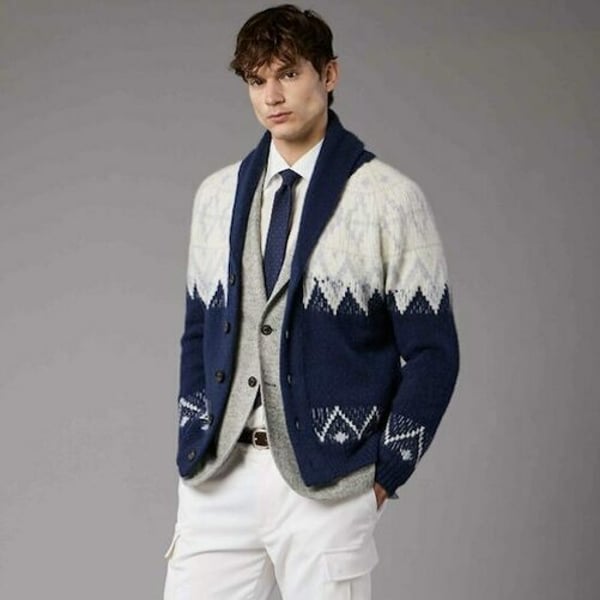
From its elegantly appointed 1,000-square-metre showroom at 11 Via Uberto Visconti di Modrone in Milan, which showcases the brand’s entire universe, high-end clothing and accessories label Eleventy presented its Autumn-Winter 2026/27 collection, marked by colours new to the house, an expanded assortment—especially in footwear—and the use of new raw materials such as vicuña, as revenue stabilises and new store openings are readied, starting in Chicago.
“It’s an important year for us, one in which we wanted to reinvent ourselves, because we believe it’s right to go back to being special,” Marco Baldassari, who continues to lead the brand he owns as CEO, tells FashionNetwork.com. “We had certainly spent many years operating in our comfort zone, with light colours, which by now are no longer distinctive. So we wanted to introduce new, more sophisticated, darker colours and silhouettes that are new to us, to differentiate ourselves once again from what the market offers.”
“The inspiration for the collection,” Eleventy’s CEO continues, “begins with an inner journey of reconnection with nature, which becomes our stage.”
Brown, therefore, assumes a central role in Eleventy’s wardrobe, as do very deep, almost black greys—like the winter sky—alongside forest greens and burgundy.
“This change has been noticed and, I must say, warmly received by buyers, also because I think it’s right to rekindle the desire of a consumer who perhaps had found the market a bit flat, lacking truly new propositions, where everything seems interchangeable,” the entrepreneur notes.
“It’s one of the contributing factors to this global downturn in fashion and luxury sales. More than tariffs, which in my view have somewhat distracted from the real issue—the strengthening of the euro, alongside the weakening of the yen and the dollar—pricing has certainly played a part, and in many cases the end consumer has not found it justified. With a very balanced price-to-quality proposition, Eleventy has not been particularly affected by this phenomenon. I hope this new collection of ours will reignite a great deal of desire, because we have completely reinvented ourselves, including in terms of fit and aesthetic.”

Eleventy, which in late 2025 opened its first flagship in Lisbon, will continue its programme of monobrand openings in 2026. The most significant will be in Chicago, in the United States.
“The U.S. is our most important market, thanks also to the mentality of the American consumer, who tends to spend more and is more inclined to purchase than the European customer,” Baldassari observes.
Eleventy currently employs 200 people and has 18 monobrand stores managed directly from headquarters, plus 22 with franchise partners, for a total of 40 monobrand stores. In the multibrand channel, the Milan-based label is carried in around 300 carefully selected doors worldwide.
“To be special, and thereby sell a quality product, you also have to be more selective in distribution, sometimes sacrificing opportunities in favour of a longer-term vision,” the CEO said.
The womenswear collection is growing within Eleventy’s business; today it accounts for 25 per cent of revenue, with turnover rising to 127 million euros from approximately 100 million in 2024 (it was 43 million euros in 2022 and 65 million in 2023, ed.), with 18 per cent generated in Italy and 82 per cent abroad. After the US comes the Middle East, Europe overall, and Asia, where Baldassari highlights South Korea and Japan as growth markets, while China remains to be defined.

The agreement between the European Union and Mercosur to further liberalise trade between them “is certainly a new opportunity that we will not fail to evaluate with great attention and interest,” said the founder, in the presence of Gianmarco Tamberi, who has officially become Eleventy’s new brand ambassador.
“The choice of Gianmarco Tamberi is due to two fundamental reasons. First, we are Italian and we want to bring Italy to the world, which an athlete like him represents excellently. Second, the alignment of our respective values: to achieve the results we have, we have made many sacrifices, with hard work, consistency, commitment and discipline. These are all elements that unite our paths,” the founder continued.
Since in recent years fashion has first seen the rise of tennis-inspired style and then that of skiing (preceded about fifteen years earlier by golfwear and polowear), can athleticwear be trendy in the coming years as well?
In other words, will athletics succeed in conveying its values to the general public, as it has almost never managed to do in the past? “Achieving results certainly helps to spur similar developments,” Tamberi replies.
“We were coming out of a period (from around 2000 to 2015) when athletics had a huge void of champions in Italy. Now something has shifted, especially since the Tokyo 2020 Olympics, after the famous five gold medals we managed to bring home. Results can allow the personalities who achieve them to emerge; otherwise it’s difficult to bring a movement to public attention. Today, many young people in athletics are coming through,” explains the high jumper, who in his discipline has won at least once everything there was to win, having been Olympic champion at the Tokyo 2020 Games, world champion in Budapest 2023, world indoor champion in Portland in 2016, and three-time European champion (2016, 2022, 2024), not to mention victories at the European Indoors and two Diamond League finals reached.

“The collaboration with Eleventy came about very naturally, as we share similar values,” confirms the Ancona-born athlete. “For a few years I had the honour of being a Giorgio Armani ambassador, whom I take this opportunity to thank and acknowledge. When that partnership ended, several companies came forward to have me as a testimonial, but I couldn’t find any that resonated with me and with what I want to represent and communicate. Then Marco Baldassari got in touch. And everything clicked into place naturally.”
Founded in Milan in 2007 by Marco Baldassari and Paolo Zuntini, joined in 2009 by Andrea Scuderi, and now majority controlled (65 per cent) by the Fashion Cube fund—a holding company composed of the VEI Capital fund and a Gulf financial group that controls all the sales networks of the high-end apparel and accessories company—Eleventy works exclusively with natural Italian materials and 100% made in Italy production. Present in more than 30 countries, it also has directly operated stores in cities such as Milan, New York, Paris, Tokyo, Seoul and Dubai.
This article is an automatic translation.
Click here to read the original article.
Copyright © 2026 FashionNetwork.com All rights reserved.
Published
January 20, 2026
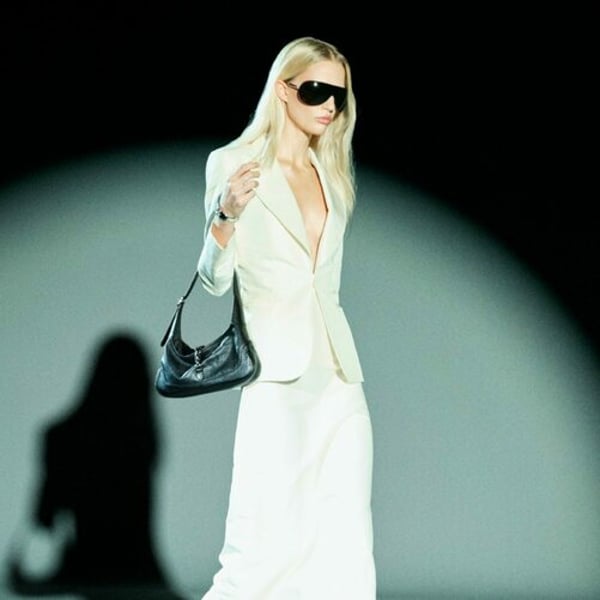
After a 2025 marked by confirmed trends, Luxurynsight and Heuritech unveil their 2026 trend calendar, revealing a fashion landscape centred on sustainability, textures, volumes and statement pieces.
Last year, several signals stood out: suede, boat shoes and the colour cinnamon far exceeded expectations, as did the Euro summer theme, which propelled buttermilk yellow alongside gingham and oversized polka dots. These latter trends recorded growth of between +17% and +87%, confirming their rapid adoption and long-term potential, while the “city boy” aesthetic—with its vertical stripes, raw denim and cylindrical “duffle” bags—left its mark on urban menswear, signalling an appetite for versatile, functional silhouettes inspired by major global metropolises.
For 2026, the calendar highlights month-by-month trends, each with its own growth forecast. January opened with fur detailing, turning fur into subtle accents on collars, hems and accessories, with visibility forecast to rise by +15% in the first quarter and over the next twelve months.
February spotlighted leather trousers, seen on red carpets and sports grounds, with growth forecast at +8% in the first quarter and +2% over the year, while animal prints and croc-embossed leather complement the masculine aesthetic.
March was dominated by raw denim, appearing in trousers, jackets and monochrome silhouettes, with growth of +11% in the first quarter and +9% over the year. In April, performance football trainers benefited from anticipation of the World Cup, with +12% forecast for the second quarter and +14% over twelve months, while pink trainers emerge as a distinct phenomenon at +19%.
May spotlighted loafers, reinterpreted in suede with playful details such as laces, forecast at +15% in the second quarter and +14% over the year, with suede continuing to gain ground across all categories of footwear. June saw the emergence of shades of green and yellow, “greenfinch” for men and “pickle green” for women, with growth of +15% and +7% respectively—versatile colours suited to sportswear and urban pieces—while tones such as aqua green are set to stand out.
July highlighted draping, celebrating volume, fluidity and sculptural forms across blouses, skirts and trousers, with +5% expected in the third quarter and +7% over the year, while draped tops and dresses reach +15% and +12%. August showcased irregular, tennis-inspired horizontal stripes, forecast at +10% in the third quarter and +5% over twelve months, creating a strong, modern motif.

September introduced structured bags, with +10% visibility in the third quarter and +18% over the year, adopted particularly by consumers seeking a minimalist yet sculptural style. October spotlighted flat-lock stitching details, bringing a technical and graphic finish to silhouettes, forecast at +19% in the fourth quarter and +1% over twelve months.
November confirmed the rise of large polka dots, an oversized and photogenic print, expected to grow by +147% in the fourth quarter and +43% over the year, driven by links with contemporary art and visibility at events such as Art Basel Paris.
Finally, December saw the return of tartan, with +16% for men and +12% for women over the year, incorporating coordinating pieces and varied silhouettes from accessories to over shirts, confirming the relevance of reworked classics in a unisex and sustainable winter wardrobe.
The use of artificial intelligence and machine learning algorithms enabled this study to detect emerging signals and anticipate consumer behaviour. The combination of quantitative precision and qualitative expertise ensures actionable forecasts, offering brands a strategic guide to meeting the expectations of a demanding audience attuned to the stylistic coherence and sustainability of their fashion choices.
This article is an automatic translation.
Click here to read the original article.
Copyright © 2026 FashionNetwork.com All rights reserved.



Indiana Hoosiers Win National Championship Over Miami Hurricanes

Eleventy: Revenue at €127 million, Chicago store opening imminent, push in the US and Asia

Don Lemon, ICE Protesters’ ‘Disgusting’ Church Stunt Backfired, Parishioner Says
-

 Politics8 years ago
Congress rolls out ‘Better Deal,’ new economic agenda
-
Entertainment9 years ago
New Season 8 Walking Dead trailer flashes forward in time
-
Politics9 years ago
Poll: Virginia governor’s race in dead heat
-
Politics8 years ago
Illinois’ financial crisis could bring the state to a halt
-
Entertainment8 years ago
The final 6 ‘Game of Thrones’ episodes might feel like a full season
-
Entertainment9 years ago
Meet Superman’s grandfather in new trailer for Krypton
-
Business9 years ago
6 Stunning new co-working spaces around the globe
-
Tech8 years ago
Hulu hires Google marketing veteran Kelly Campbell as CMO