
Sports
Why Sebring and Daytona Fans Watch Racing Differently
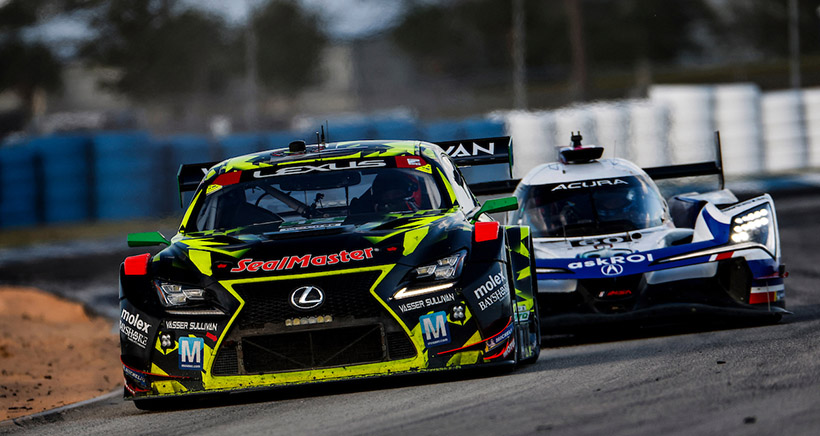
The sun’s been down for six hours and the infield at Sebring still smells like bratwurst and rubber. Somebody’s radio is tuned to the IMSA broadcast, somebody else has three different timing apps open on their phone, and nobody, not one person, is watching the race the way they’d watch a football game. There’s no fourth quarter here. There’s just hour eight, hour nine, hour ten, each one changing the story a little.
That’s the thing outsiders miss about endurance racing in Florida. The 12 Hours of Sebring and the 24 Hours of Daytona aren’t single events. They’re marathons that reward patience, punish assumptions, and turn casual fans into obsessive ones somewhere around the halfway mark. Attendance at Sebring alone hit a record 115,000 over the four-day weekend this year, and that’s not counting the people who never left their couches but stayed locked in for twelve straight hours anyway.
The Attention Span Problem That Isn’t a Problem
Here’s what a football fan doesn’t understand until they’ve sat through Sebring: there is no clock counting down to a finish. There’s just attrition. Cars break. Strategies collapse. A team running fourth at hour three can win at hour eleven because somebody else’s gearbox gave out in the dark.
Daytona’s 24-hour race takes that idea and stretches it further. Fans who show up Saturday afternoon are often still there Sunday morning, running on gas station coffee, tracking lap times on their phones because the in-car cameras only tell half the story. The Daytona 500 itself, the shorter stock car race that shares the same track, has sold out so consistently that Daytona International Speedway’s capacity and sellout streak has become a running storyline of its own in racing media.
What that builds, over years, is a fan who thinks in shifts instead of quarters. Somebody betting on a 12-hour race isn’t making one decision. They’re making six or seven, because the leaderboard at hour two means almost nothing by hour nine.
Why Endurance Racing Bettors Need Speed, Not Patience
This is where it gets interesting, because the betting behavior around Sebring and Daytona looks nothing like a Sunday NFL parlay. A bettor watching an NFL game places a wager and mostly waits. A bettor watching Sebring is recalculating constantly. Pit strategy shifts. A safety car bunches the field. A driver change puts a rookie behind the wheel of a car that was leading twenty minutes ago. None of that fits a betting model built around locking in a pick and walking away.
What these fans actually want is the ability to react the instant something changes on track, without their platform freezing them out mid-race over a document upload or a stalled verification email. That’s a real friction point. Plenty of bettors have missed a window because an account got flagged for review at the exact moment a Cadillac blew a tire in turn 17. It’s why a growing number of endurance racing fans have gravitated toward the best no KYC sportsbooks, platforms built for exactly this kind of mid-race, no-holds, act-now wagering that stick-and-ball sports rarely demand.
A quick note here: wagering carries real risk, and endurance racing’s unpredictability cuts both ways. Bet only what you’re prepared to lose, and if it stops feeling like fun, groups like BeGambleAware.org exist for a reason.
Pit Strategy Is the Real Star of the Broadcast
Ask a Daytona regular what they watch for and most won’t say the drivers. They’ll say the pit wall. Fuel windows, tire strategy, the gamble of staying out two extra laps hoping a caution never comes. That’s the actual drama of endurance racing, and it’s completely invisible if you’re used to sports where the coach calls a timeout and everyone waits for the whistle.
Sebring in particular rewards teams willing to take on fuel-only stops late in the race, skipping tires entirely to jump track position. It’s a gamble that’s blown up plenty of leaders in the race’s 74-year history. It’s also exactly the kind of moment that turns a quiet infield into a roar, because everyone watching understands the stakes of that decision in real time.
Compare that to a Marlins game, where the biggest strategic decision most fans notice is a pitching change. Endurance racing crowds are trained differently. They read timing sheets. They know what a “stack” pit stop means. They argue about tire degradation the way football fans argue about defensive coordinators.
The Data Behind the Growing Fan Base
This isn’t a niche shrinking into irrelevance either. Motorsport attendance across Florida’s two biggest endurance events has climbed steadily, and the broader betting population backing it has grown right alongside it. A 2026 Siena Research Institute survey found that 27% of Americans now hold an active online sports betting account, with a third having opened one at some point. Endurance racing fans, historically an older, more technical crowd built around Trans-Am and IMSA loyalty, are folding into that same wave.
That matters for how tracks and broadcasters think about the fan experience going forward. Daytona’s overnight stretch used to be a dead zone for TV ratings. Now it’s a peak engagement window, largely because bettors and die-hards alike are staying locked in through 3 a.m. Checking tire strategy and lap charts. The race hasn’t changed. The audience’s relationship to it has.
What Stick-and-Ball Fans Get Wrong About Endurance Racing
The most common complaint from a first-time Sebring attendee is boredom. Twelve hours sounds unbearable if you’re expecting a three-hour football broadcast with commercial breaks. But the ones who stick around usually can’t explain why they didn’t leave at hour four like they planned.
Part of it is physical. You’re standing in the Florida heat, watching cars scream past at 180 miles an hour a few feet away, and the sheer duration turns into an endurance test for the fans too. Part of it is strategic. Once you understand a fuel window, you can’t unsee it. You start watching every car’s stint length instead of just the leaderboard.
For Florida sports fans who already track Florida Gators baseball rankings or obsess over ACC football lines every October, endurance racing scratches a different itch. It’s less about the final score and more about the hundred small decisions that build toward it.
Sebring’s Culture Isn’t Going Anywhere
What’s happened at Sebring and Daytona over the past decade is less a boom and more a hardening. The fans who show up now aren’t casual. They know the paddock, they know the driver rotations, they’ve got opinions about which manufacturer’s hybrid system is more reliable at hour twenty. That kind of depth doesn’t happen with a three-hour sport.
It’s a strange thing to explain to someone who’s never sat trackside past midnight watching headlights cut through the Florida dark, engines still screaming at hour nineteen. But once it clicks, it clicks hard. And for a state that already treats ACC and college football rivalry weeks like religious holidays, it makes sense that endurance racing found its own devoted, slightly obsessive following here too.
Frequently Asked Questions
Why is the 12 Hours of Sebring considered harder on cars than shorter races? Sebring’s surface is famously rough, a mix of aging concrete slabs from its origins as a WWII airbase. Combined with twelve hours of continuous stress, it breaks gearboxes, suspensions, and brakes that would survive a two-hour sprint race without issue.
How many drivers typically share one car during Daytona’s 24-hour race? Most teams run three to four drivers per car, rotating every 60 to 90 minutes to manage fatigue. Longer stints happen late at night when track position matters more, but exhaustion becomes a real safety factor by hour eighteen.
Why do fans stay at Sebring overnight if the race runs during the day? Sebring actually starts in daylight and finishes after dark, so the atmosphere shifts dramatically as the sun sets. The infield party culture, combined with headlights weaving through turn 17, is part of what makes the back half of the race feel different from the first.
What makes pit strategy more important in endurance racing than in NASCAR? Endurance races involve fuel, tire, and driver-change decisions stacked together across a much longer window, so a single miscalculated stop can cost a team hours, not seconds. NASCAR’s shorter format leaves far less room for a strategy gamble to fully play out.
Is IMSA attendance actually growing or is it just Daytona and Sebring? Both flagship events have posted record numbers recently, and mid-season IMSA rounds at tracks like Road America and Watkins Glen have seen steady bumps too. The growth looks tied to broader motorsport interest following Formula 1’s US expansion.
Endurance racing was never built for a sport fan with a short attention span, and that’s exactly why it’s carved out such a loyal, slightly obsessive following in Florida. Sebring and Daytona reward the fans willing to sit through the boring stretches to catch the moments that actually matter, the blown gearbox at hour nine, the fuel gamble at hour twenty-two. That patience, paired with a hunger to react the second something shifts on track, is what separates this crowd from every other fan base in the state.