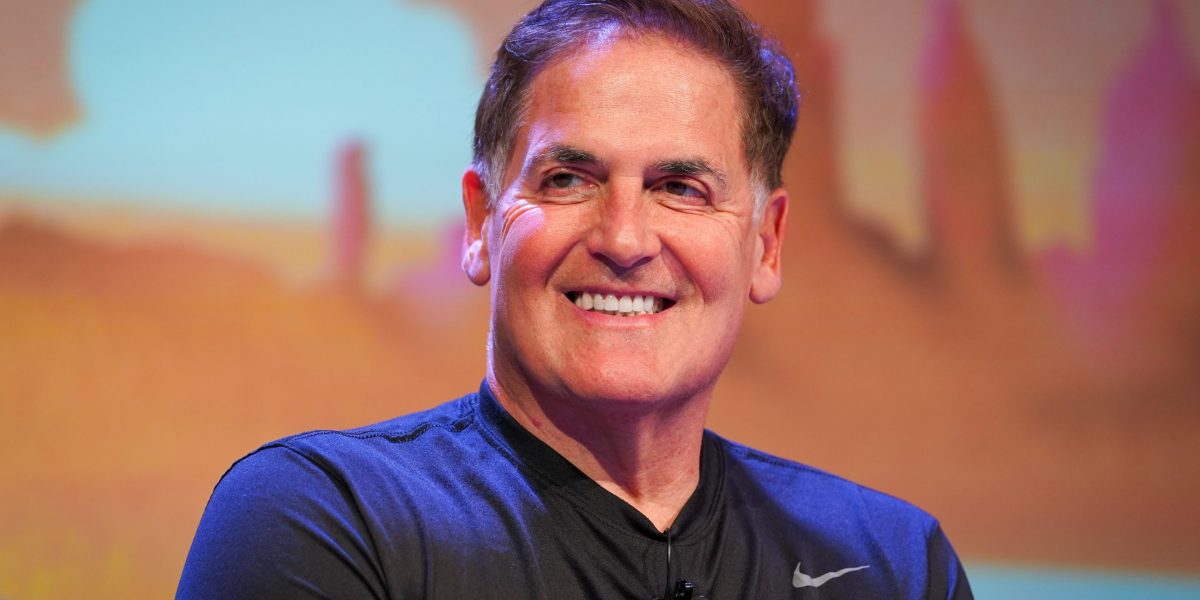
When Mark Cuban became a millionaire, his first move wasn’t to buy something luxurious. It was to get rid of something.
“The day I sold MicroSolutions, I took off my watch and I said, ‘I’m never going to wear a watch again because that means I’m working on somebody else’s time,’” Cuban said on a recent episode of The Diary of a CEO podcast with Steven Bartlett. He made about $2 million from selling that software company in 1990—a move that launched him on his path to major career success.
Cuban, 68, is now worth an estimated $10.6 billion, according to the Bloomberg Billionaires Index. But he told Bartlett that getting that rich was never really the goal.
“I just thought I hated being broke,” Cuban said. “I wanted to control my own destiny. That was a big thing, and I wanted to be able to control my own time.”
His parents never had that option, he said: “They always were obligated to somebody else. They had to show up at work.”
The former Shark Tank star has relaxed his watch rule now, sporting an Apple Watch these days for the data. But the idea behind the rule does still extend to how he dresses.
“Why I won’t wear a tie? Swag isn’t how you dress,” Cuban said. “Swag is being able to tell somebody else how they dress.”
Cuban, formerly the majority owner of the NBA Dallas Mavericks, also has more casual business practices. He prefers emails over phone calls, which he says gives him more time to put together a thoughtful response. And in a 2016 Q&A with behavior change tech company Thrive Global, he described his best life hack as skipping meetings and calls altogether unless someone is handing him a check. He said that habit saves him hours each day.
How Mark Cuban’s history shaped his habits
Cuban’s drive for success started well before he had billions on paper. He was raised by a working-class family outside Pittsburgh, and he told Bartlett he was the “fat kid” in school who would do almost anything for attention. He once wore a shirt to class with profanity on it, and another time ripped a pair of jeans from the hem up to his hip and stapled them back together.
Even with that attention-grabbing, most of his classmates didn’t remember him once he became famous. Someone even circled the wrong photo of him in his high school yearbook, he told Bartlett.
But that insecurity fueled him, he said, because he wanted to “prove people wrong. Enrolling at Indiana University felt like a fresh start for him—and that’s where he covered his junior-year costs by running a chain letter out of his dorm.
After graduating, Cuban moved to Dallas and sold software until his boss fired him. That pushed him to launch MicroSolutions, which he sold in 1990 for $6 million, but he didn’t reinvest the windfall.
“I did the exact opposite,” Cuban told Bartlett. He bought a lifetime pass on American Airlines, and he said his mission was to “get as f-cked up as possible with as many people as possible in as many countries as possible, and just enjoy.”
Even more money came later on after Cuban started Broadcast.com and sold it to Yahoo in 1999 for $5.7 billion in stock. That pushed Cuban’s net worth over the $1 billion mark.
That deal “changed everything,” Cuban said. “Because it meant instead of hustling and worrying about what came next, I got to do whatever the f-ck I wanted to do, and that was the beauty of the whole thing.”
That freedom let him buy the Dallas Mavericks in 2000 for $285 million.
“Never in a million years would have crossed my mind that I would own an NBA team,” Cuban said on the Diary of a CEO podcast. He later sold the majority stake in late 2023 in a deal with $3.5 billion. Today, Cuban is focused on Mark Cuban Cost Plus Drugs, which he started in 2022. The company sells generic and select brand-name prescriptions directly to consumers and health care providers, eliminating pharmacy benefit managers (PBMs) that tend to inflate retail drug prices.
While Cuban is sitting on a massive fortune, he said money only goes so far.
“If you’re miserable when you’re poor, good chance you’re gonna be miserable when you’re rich,” Cuban said. “Money can’t change who you are.”
Still, “I like being rich a whole lot more than I like being broke,” he added.