
Politics
Why is the Florida GOP afraid of a debate?
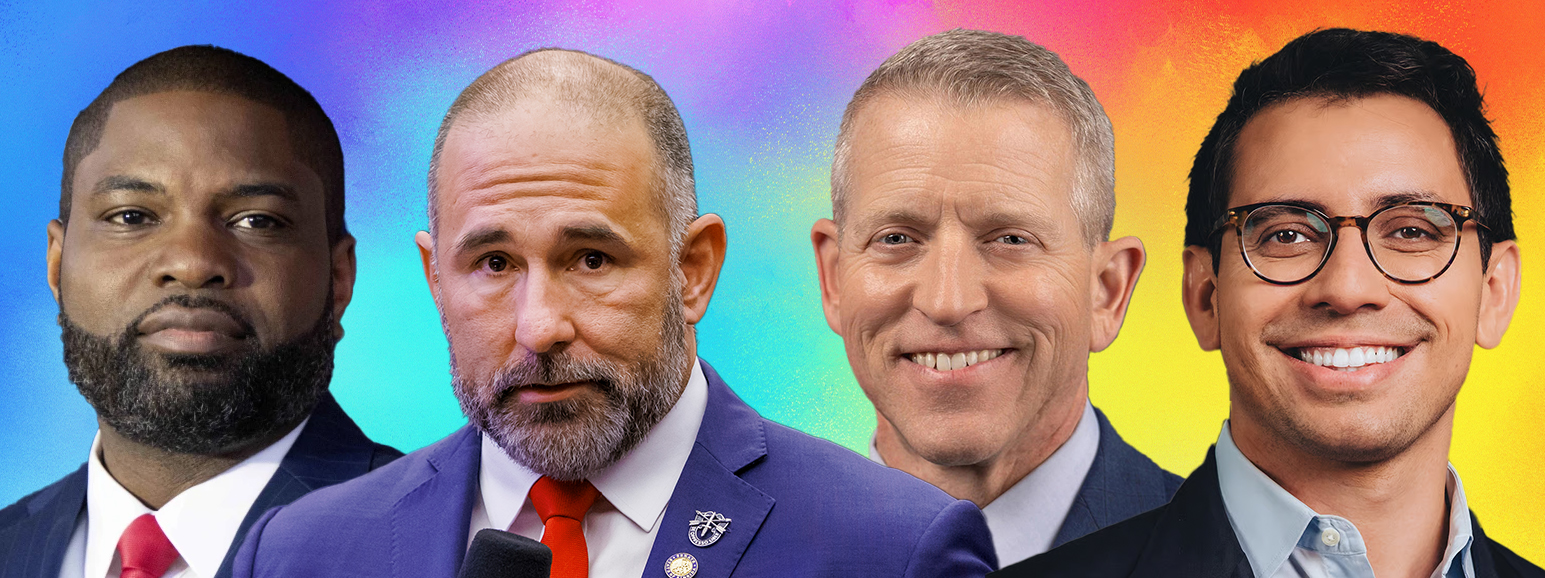
The Republican Party has spent years making a simple argument to the American people: Trust the voters.
Republicans trusted voters to reject COVID-era mandates. They trusted voters to choose school choice. They trusted voters to elect conservatives who would challenge the political establishment.
They even routinely criticize Democrats when that party’s leadership seems more interested in managing outcomes than allowing open competition.
That is why the Republican Party of Florida’s decision to cancel its planned gubernatorial Primary debate should concern every Republican, regardless of which candidate they support.
This is not really about Byron Donalds.

It is not even really about any of the candidates.
It is about whether political parties exist to facilitate elections or engineer them.
To be clear, Donalds is the front-runner, according to the polling. He has President Donald Trump’s endorsement. He has raised significant money and built a formidable campaign operation. No serious observer disputes that reality.
But being the front-runner and being shielded from a debate are two entirely different things.
The Florida GOP established debate qualification standards, notably without releasing them beforehand, requiring candidates to reach 10% in polling, raise $10 million and secure 10,000 unique donors. Only Donalds qualified. Under this metric, the result was predictable: no party debate and no opportunity for Republican voters to compare competing visions for Florida’s future.

The rationale behind canceling debates becomes even harder to understand when you look at the polling itself. Throughout the race, “undecided” has consistently been the strongest performer on the ballot, often polling higher than all candidates, including Donalds.
In other words, a substantial share of Republican voters have not yet made up their minds about who should be the next Governor of Florida, if they are even paying attention yet.
And what is one of the best ways to help undecided voters make an informed decision?
A debate.
Debates exist precisely because voters are still evaluating their options. They allow candidates to contrast their records, explain their vision, answer difficult questions and demonstrate how they perform under pressure. If a large portion of the Republican electorate remains undecided, that is not an argument for fewer debates. It is an argument for more of them.
In fact, the Florida GOP’s standards create a circular problem: Candidates need visibility to gain support, but they are denied one of the most effective forms of visibility because they do not already have enough support. And Donalds really only has “visibility” through the Trump endorsement. Most Florida voters do not know where he actually stands on issues. The candidates all need a debate to introduce themselves to voters; are the very candidates being excluded from one?
So why are Evan Power and the Florida GOP so interested in precluding a debate?
Supporters of the decision argue that debates should feature only “viable” candidates. But that argument misunderstands the purpose of debates, and polling does not dictate viability.
Debates are not rewards for candidates who have already succeeded. They are opportunities for voters to evaluate candidates before they vote. The debate is for the voters, not the candidates.
Imagine applying today’s standards to some of the Republican Party’s most successful leaders. How many rising stars would have been excluded from the stage before voters ever had the chance to hear them? How many future Governors, Senators and members of Congress would have been dismissed as non-serious because they had not yet raised enough money or achieved enough name recognition?
In fact, Gov. Ron DeSantis himself has noted that he would not have met these standards during the early stages of his 2018 gubernatorial campaign.
That should give Republicans pause.
The conservative movement has historically opposed gatekeepers. We criticized party bosses. We mocked smoke-filled rooms. We rejected the notion that political insiders should decide which candidates voters were allowed to take seriously.
We argued that voters should make those decisions themselves.
What has changed?
Increasingly, it appears that many Republicans are comfortable with insider management of elections, as long as their preferred candidate is in power.
That is a dangerous standard.
Political parties have an important role to play. They organize elections, recruit candidates and promote principles. But they should not become arbiters of which voices are worthy of being heard by voters. The moment the GOP moves from being a referee to being an active participant in selecting the outcome, it undermines the very republican principles it claims to defend.
The irony is especially striking given the Republican Party’s recent history.
For years, Republicans rallied around Trump and his calls for election integrity, transparency, accountability and public confidence in the process. Especially during the last several presidential elections, the broader principle resonated with millions of Americans: The process matters.
Republicans argued against Kamala Harris’ selection in 2024, rightly saying that voters deserved confidence that elections were fair, transparent and not manipulated by powerful institutions behind the scenes.
That principle should not disappear simply because now the institution in question happens to be our own party.
If Republicans believe it was wrong for elites, bureaucrats, media organizations or political insiders to influence outcomes in ways that diminish voter confidence, then we should be equally concerned when party structures appear designed to protect favored candidates from scrutiny or competition.
After all, wasn’t the argument in 2020 that voters deserved transparency, accountability and confidence in the process?
Why should Republican Primaries be any different?
Trump himself built a movement around the idea that political insiders should not be able to dictate outcomes. His rise was fueled by voters rejecting what party elites and consultants believed should happen. If Republican voters were trusted to reject the preferences of the establishment in 2016, why shouldn’t Florida Republican voters be trusted to hear from every gubernatorial candidate in 2026?
If the Republican Party begins canceling debates and structuring processes in ways that effectively predetermine outcomes whenever an endorsed candidate has a substantial lead, they risk becoming the very thing they have long criticized: a party more interested in managing elections than conducting them. Conservatives should be the first to defend open competition, transparent processes and informed voters, especially within our own ranks.
The strongest candidates should welcome debates, not avoid them. If Donalds is as strong as his supporters believe, then why wouldn’t a debate reinforce his position rather than threaten it?
Allowing voters to see candidates side by side, answer tough questions, interact with each other and defend their records is not a risk to the process.
It is the process.
___
Jenna Ellis is a senior policy adviser with AFA Action, national radio host of “Jenna Ellis in the Morning,” and a Florida resident. She previously served as a senior legal adviser to Trump during his first presidential term.