Connect with us

Business

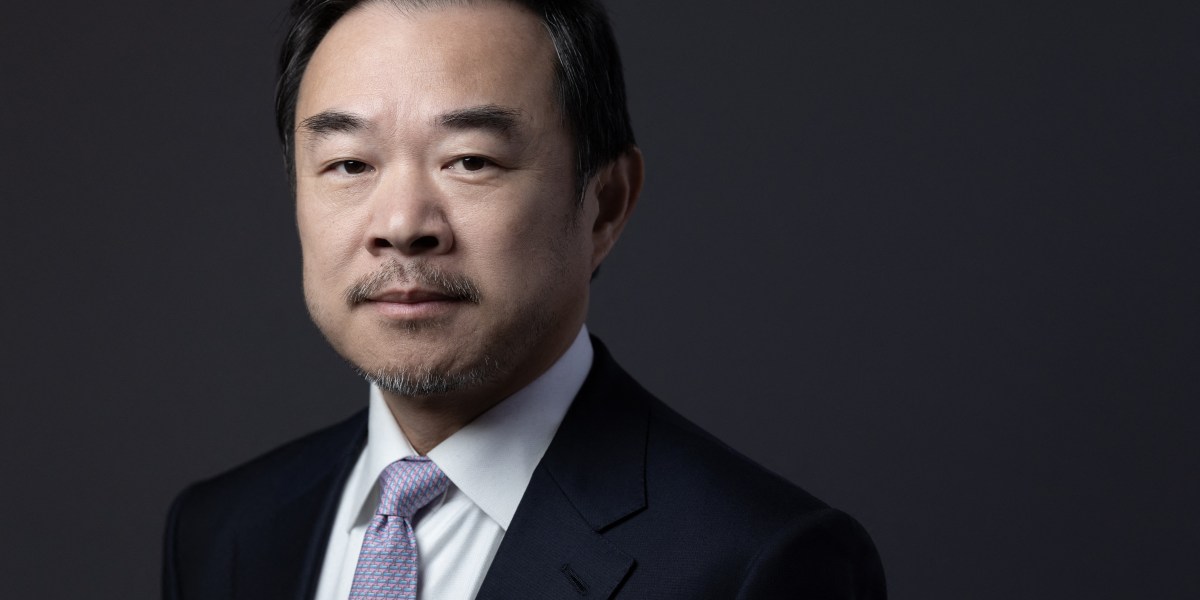
What Eric Xing’s Abu Dhabi project says about the next phase of AI power
Published

on


Hello and welcome to Eye on AI…In this edition: my chat with AI leader Eric Xing…Trump’s AI export plan…drama at the International Math Olympiad…Stargate update…transparency in reasoning.

I was excited and curious to meet Eric Xing last week in Vancouver, where I was attending the International Conference on Machine Learning—one of the top AI research gatherings of the year. Why? Xing, a longtime Carnegie Mellon professor who moved to Abu Dhabi in 2020 to lead the public, state-funded Mohamed bin Zayed University of Artificial Intelligence (MBZUAI), sits at the crossroads of nearly every big question in AI today: research, geopolitics, even philosophy.

The UAE, after all, has quietly become one of the most intriguing players in the global AI race. The tiny Gulf state is aligning itself with U.S.-style norms around intellectual freedom and open research—even as the AI rivalry between the U.S. and China becomes increasingly defined by closed ecosystems and strategic competition. The UAE isn’t trying to “win” the AI race, but it wants a seat at the table. Between MBZUAI and G42–its state-backed AI-focused conglomerate–the UAE is building AI infrastructure, investing in talent, and aggressively positioning itself as a go-to partner for American firms like OpenAI and Oracle. And Xing is at the heart of it. 

As it happened, Xing and I just missed each other—he arrived in Vancouver as I was heading home—so we connected on Zoom the following day. Our conversation ranged widely, from the hype around “world models” to how the UAE is using open-source AI research as a strategic lever to build soft power. Here are a few of the most compelling takeaways:

A ‘Bell Labs plus a university

MBZUAI is just five years old, but Xing says it’s already among the fastest-growing academic institutions in the world. The school, which is mostly a graduate program for AI researchers, aspires to compete with elite institutions like MIT and Carnegie Mellon while also taking on applied research challenges. Xing calls it a hybrid organization, similar to “Bell Labs plus a university,” referring to the legendary R&D arm of AT&T, founded in 1925 and responsible for foundational innovations that shaped modern computing, communications, and physics. 

The UAE as a soft-power AI ambassador

Xing sees MBZUAI not just as a university, but as part of the UAE’s broader effort to build soft power in AI. He describes the country as a “strong island” of U.S. alignment in the Middle East, and views the university as an “ambassador center” for American-style research norms: open source, intellectual freedom, and scientific transparency. “If the U.S. wants to project influence in AI, it needs institutions like this,” he told me. “Otherwise, other countries will step in and define the direction.”

The U.S. isn’t losing the AI race

While much of the public narrative around AI focuses on a U.S.-China race, Xing doesn’t buy the framing. “There is no AI war,” he said flatly. “The U.S. is way ahead in ideas, in people, and in the innovation environment.” In his view, China’s AI ecosystem is still constrained by censorship, hardware limitations, and a weaker bottom-up innovation culture. “Many top AI engineers in the U.S. may be of Chinese origin,” he said, “but they only became top engineers after studying and working in the U.S.”

Why open source matters 

For Xing, open source isn’t just a philosophical preference—it’s a strategic choice. At MBZUAI, he’s pushing for open research and open-source AI development as a way to democratize access to cutting-edge tools, especially for countries and researchers outside the U.S.-China power centers. “Open source applies pressure on closed systems,” he told me. “Without it, fewer people would be able to build with—or even understand—these technologies.” At a time when much of AI is becoming siloed behind corporate walls, Xing sees MBZUAI’s open approach as a way to foster global talent, advance scientific understanding, and build credibility for the UAE as a hub for responsible AI development.

On ‘world models’ and AI hype

Xing didn’t hold back when it came to one of the buzziest trends in AI right now: so-called “world models”—systems that aim to help AI agents learn by simulating how the world works. He’s skeptical of the hype. “Right now people are building pretty video generators and calling them world models,” he said. “That’s not reasoning. That’s not simulation.” In a recent paper he spent months writing himself—unusual for someone of his seniority—he argues that true world models should go beyond flashy visuals. They should help AI reason about cause and effect, not just predict the next frame of a video. In other words: AI needs to understand the world, not just mimic it.

With that, here’s the rest of the AI news—including that tomorrow the White House is set to release a sweeping new AI strategy aimed at boosting the global export of U.S. AI technologies while cracking down on state-level regulations that are seen as overly restrictive. I will be attending the D.C. event, which includes a keynote by President Trump, and will report back.

Sharon Goldman
sharon.goldman@fortune.com
@sharongoldman

AI IN THE NEWS

White House to unveil plan to push global export of U.S. AI and crack down on restrictions. According to a draft seen by Reuters, the White House is set to release a sweeping new AI strategy Wednesday aimed at boosting the global export of U.S. AI technologies while cracking down on state-level regulations seen as overly restrictive. The plan will bar federal AI funding from states with tough AI laws, promote open-source and open-weight AI development, and direct the Commerce Department to lead overseas data center and deployment efforts. It also tasks the FCC with reviewing potential conflicts between federal goals and local rules. Framed as a push to make “America the world capital in artificial intelligence,” the plan reflects President Trump’s January directive and will be unveiled during a “Winning the AI Race” event co-hosted by the All-In podcast and featuring White House AI czar David Sacks.

OpenAI and Google DeepMind sparked math drama. Over the past few days, both OpenAI and Google DeepMind claimed their AI models had achieved gold-medal-level performance on the 2025 International Mathematical Olympiad—successfully solving 5 out of 6 notoriously difficult problems. It was a milestone that many considered years away: a general reasoning LLM reaching that level of performance under the same time limits as humans, without tools. But the way they announced it sparked controversy. OpenAI released its results first, based on its own evaluation using IMO-style questions and human graders—before any official verification. That prompted criticism from prominent mathematicians, including Terence Tao, who questioned whether the problems had been altered or simplified. In contrast, Google entered the competition officially, waited for the IMO’s independent review, and only then declared its Gemini DeepThinker model had earned a gold medal—making it the first AI system to be formally recognized by the IMO as performing at that level. The drama laid bare the high stakes—and differing standards—for credibility in the AI race.

SoftBank and OpenAI are reportedly struggling to get $500 Billion Stargate AI Project off the ground. According to the Wall Street Journal, the $500 billion Stargate project—announced with fanfare at the White House six months ago by Masayoshi Son, Sam Altman, and President Trump—has hit major turbulence. Billed as a moonshot to supercharge U.S. AI infrastructure, the initiative has yet to break ground on a single data center, and internal disagreements between SoftBank and OpenAI over key terms like site location have delayed progress. Despite promises to invest $100 billion “immediately,” Stargate is now aiming for a scaled-down launch: a single, small facility, likely in Ohio, by year’s end. It’s a setback for Son, who recently committed a record-breaking $30 billion to OpenAI but is still scrambling to secure a meaningful foothold in the AI arms race. However, Bloomberg reported today that Oracle will provide OpenAI with 2 million new AI chips that will be part of a massive data center expansion that OpenAI labeled as part of its Stargate project. SoftBank, though, isn’t financing any of the new capacity—and it’s unclear what operator will be developing data centers to support the new capacity, and when they will be built.

EYE ON AI RESEARCH

Sounding the alarm on growing opacity of advanced AI reasoning models. Fortune reporter Beatrice Nolan reported this week on a group of 40 AI researchers, including contributors from OpenAI, Google DeepMind, Meta, and Anthropic, that are sounding the alarm on the growing opacity of advanced AI reasoning models. In a new paper, the authors urge developers to prioritize research into “chain-of-thought” (CoT) processes, which provide a rare window into how AI systems make decisions. They are warning that as models become more advanced, this visibility could vanish.

The “chain-of-thought” process, which is visible in reasoning models such as OpenAI’s o1 and DeepSeek’s R1, allows users and researchers to monitor an AI model’s “thinking” or “reasoning” process, illustrating how it decides on an action or answer and providing a certain transparency into the inner workings of advanced models.

The researchers said that allowing these AI systems to “‘think’ in human language offers a unique opportunity for AI safety,” as they can be monitored for the “intent to misbehave.” However, they warn that there is “no guarantee that the current degree of visibility will persist” as models continue to advance.

The paper highlights that experts don’t fully understand why these models use CoT or how long they’ll keep doing so. The authors urged AI developers to keep a closer watch on chain-of-thought reasoning, suggesting its traceability could eventually serve as a built-in safety mechanism.

FORTUNE ON AI

Mark Cuban says the AI war ‘will get ugly’ and intellectual property ‘is KING’ in the AI world —by Sydney Lake

$61.5 billion tech giant Anthropic has made a major hiring U-turn—now, it’s letting job applicants use AI months after banning it from the interview process —by Emma Burleigh

Experienced software developers assumed AI would save them a chunk of time. But in one experiment, their tasks took 20% longer —by Sasha Rogelberg

AI CALENDAR

July 26-28: World Artificial Intelligence Conference (WAIC), Shanghai. 

Sept. 8-10: Fortune Brainstorm Tech, Park City, Utah. Apply to attend here.

Oct. 6-10: World AI Week, Amsterdam

Oct. 21-22: TedAI San Francisco.

Dec. 2-7: NeurIPS, San Diego

Dec. 8-9: Fortune Brainstorm AI San Francisco. Apply to attend here.


Source link

Continue Reading

Business

A Thanksgiving dealmaking sprint helped Netflix win Warner Bros.

Published

on


The Netflix Inc. plans that clinched the deal for Warner Bros. Discovery Inc. started to shape up around Thanksgiving. 

deadline was looming: Warner Bros. had asked bidders, which also included Paramount Skydance Corp. and Comcast Corp., to have their latest proposals and contracts in by the Monday after the holiday, following a round about a week earlier. The suitors were told to put their best foot forward.

While most Americans were watching football and feasting on turkey, Netflix executives and advisers hunkered down to finalize a binding offer and a $59 billion bridge loan from banks, one of the biggest of its kind. That gave the streaming company the ammunition to make a mostly cash-and-stock bid that helped it prevail over Comcast and David Ellison’s Paramount, according to people familiar with the matter.

The resulting $72 billion deal, announced Friday, is set to bring about a seismic shift in the entertainment business — if it can survive intense regulatory scrutiny and a potential fight from Paramount. This account of Netflix’s surprise victory in the biggest M&A auction of the year is based on interviews with half a dozen people involved in negotiations. They asked not to be identified because the details are confidential.

The sales process had kicked off with several unsolicited bids from Paramount Skydance, itself a newly formed company after a merger this year orchestrated by Ellison. He’s now the studio’s chief executive officer and controlling shareholder, with backing from his father, Oracle Corp. billionaire Larry Ellison. 

Paramount’s early move gave it a head start in the bidding process weeks before other would-be buyers got access to information. But the post-Thanksgiving deadline for second-round bids became a turning point by giving Netflix time to catch up and assemble the documents it needed, some of the people said. And since the streaming giant was bred in the fast-paced ethos of Silicon Valley, it could move quickly. 

When the binding bids arrived that Monday, Netflix’s offer emerged as superior, the people said.

One issue was the Warner Bros. camp had doubts about how Paramount would pay for the company, which owns sprawling Hollywood studios, the HBO network and a vast film and TV library. Paramount’s offer included financing from Apollo Global Management Inc. and several Middle Eastern funds, and it had conveyed that its bid was fully backstopped by the Ellisons. Still, Warner Bros. executives were privately concerned about the certainty of the financing, people familiar with the matter said.

Representatives for Netflix and Warner Bros. declined to comment.

‘Noble’ vs ‘Prince’

In the weeks leading up to the finale, Warner Bros. advisers set up war rooms at various hotels in midtown Manhattan. A core group holed up at the Loews Regency, which has long been a convening spot for the city’s movers and shakers.

Inside Warner Bros., the situation was known as “Project Sterling.” The company called itself by the code name “Wonder.” The team referred to Netflix as “Noble,” while Paramount was “Prince” and Comcast was “Charm.”

At Netflix, Chief Financial Officer Spencer Neumann served as the point man while corporate development head Devorah Bertucci organized people day-to-day. Chief Legal Officer David Hyman and Spencer Wang, vice president of finance, investor relations and corporate development, also were key architects, with all of them reporting into co-CEOs Ted Sarandos and Greg Peters.

The contours of the deal were shaped in a way befitting of a tech company: mostly over video chat or phone rather than in person. Virtual war rooms were set up. While strategizing or discussing diligence on Zoom, participants would raise virtual hands or make suggestions over chat rather than unmuting and slowing down the meeting. Google Docs were used to review and edit documents together in real time.

Talks heated up this week, with Warner Bros. advisers in continuous dialogue with the bidders and negotiating contract language and value. Comcast said it would merge its NBCUniversal division with Warner Bros. Paramount offered to more than double its proposed breakup fee to $5 billion to sweeten its deal and outshine rivals. 

In the end, Warner Bros. determined Netflix had the best offer and the company was the most flexible on key terms. On Wednesday, Paramount lobbed an aggressively worded letter to Warner Bros. board saying the sales process was “tainted.” It also identified what it saw as regulatory risks in the Netflix proposal, one sign that a winning outcome was slipping away for Paramount. 

Netflix found out Thursday evening New York time that it had won. Executives and advisers were assembled on a video call when they got the official word, sparking a moment of jubilation before everyone snapped into action. By 10:25 p.m., Bloomberg News broke the news that a deal was imminent. 

Even Sarandos made it sound like the ending was a twist on a conference call with investors. “I know some of you are surprised that we’re making this acquisition, and I certainly understand why,” he said. “Over the years, we have been known to be builders, not buyers.”

Regardless of whether Paramount reemerges to try and top the bid, Netflix will have work ahead of it. It has agreed to pay a $5.8 billion breakup fee to Warner Bros. if the transaction fails on regulatory grounds. The company also has to digest its largest acquisition ever.

“It’s going to be a lot of hard work,” co-CEO Peters said on the conference call. “We’re not experts at doing large-scale M&A, but we’ve done a lot of things historically that we didn’t know how to do.”


Source link

Continue Reading

Business

‘Its own research shows they encourage addiction’: Highest court in Mass. hears case about Instagram, Facebook effect on kids

Published

on


Massachusetts’ highest court heard oral arguments Friday in the state’s lawsuit arguing that Meta designed features on Facebook and Instagram to make them addictive to young users.

The lawsuit, filed in 2024 by Attorney General Andrea Campbell, alleges that Meta did this to make a profit and that its actions affected hundreds of thousands of teenagers in Massachusetts who use the social media platforms.

“We are making claims based only on the tools that Meta has developed because its own research shows they encourage addiction to the platform in a variety of ways,” said State Solicitor David Kravitz, adding that the state’s claim has nothing to do the company’s algorithms or failure to moderate content.

Meta said Friday that it strongly disagrees with the allegations and is “confident the evidence will show our longstanding commitment to supporting young people.” Its attorney, Mark Mosier, argued in court that the lawsuit “would impose liabilities for performing traditional publishing functions” and that its actions are protected by the First Amendment.

“The Commonwealth would have a better chance of getting around the First Amendment if they alleged that the speech was false or fraudulent,” Mosier said. “But when they acknowledge that its truthful that brings it in the heart of the First Amendment.”

Several of the judges, though, seem to more concerned about Meta’s functions such as notifications than the content on its platforms.

“I didn’t understand the claims to be that Meta is relaying false information vis-a-vis the notifications but that it has created an algorithm of incessant notifications … designed so as to feed into the fear of missing out, fomo, that teenagers generally have,” Justice Dalila Wendland said. “That is the basis of the claim.”

Justice Scott Kafker challenged the notion that this was all about a choose to publish certain information by Meta.

“It’s not how to publish but how to attract you to the information,” he said. “It’s about how to attract the eyeballs. It’s indifferent the content, right. It doesn’t care if it’s Thomas Paine’s ‘Common Sense’ or nonsense. It’s totally focused on getting you to look at it.”

Meta is facing federal and state lawsuits claiming it knowingly designed features — such as constant notifications and the ability to scroll endlessly — that addict children.

In 2023, 33 states filed a joint lawsuit against the Menlo Park, California-based tech giant claiming that Meta routinely collects data on children under 13 without their parents’ consent, in violation of federal law. In addition, states including Massachusetts filed their own lawsuits in state courts over addictive features and other harms to children.

Newspaper reports, first by The Wall Street Journal in the fall of 2021, found that the company knew about the harms Instagram can cause teenagers — especially teen girls — when it comes to mental health and body image issues. One internal study cited 13.5% of teen girls saying Instagram makes thoughts of suicide worse and 17% of teen girls saying it makes eating disorders worse.

Critics say Meta hasn’t done enough to address concerns about teen safety and mental health on its platforms. A report from former employee and whistleblower Arturo Bejar and four nonprofit groups this year said Meta has chosen not to take “real steps” to address safety concerns, “opting instead for splashy headlines about new tools for parents and Instagram Teen Accounts for underage users.”

Meta said the report misrepresented its efforts on teen safety.

___

Associated Press reporter Barbara Ortutay in Oakland, California, contributed to this report.


Source link

Continue Reading

Business

Quant who said passive era is ‘worse than Marxism’ doubles down

Published

on


Inigo Fraser Jenkins once warned that passive investing was worse for society than Marxism. Now he says even that provocative framing may prove too generous.

In his latest note, the AllianceBernstein strategist argues that the trillions of dollars pouring into index funds aren’t just tracking markets — they are distorting them. Big Tech’s dominance, he says, has been amplified by passive flows that reward size over substance. Investors are funding incumbents by default, steering more capital to the biggest names simply because they already dominate benchmarks.

He calls it a “dystopian symbiosis”: a feedback loop between index funds and platform giants like Apple Inc., Microsoft Corp. and Nvidia Corp. that concentrates power, stifles competition, and gives the illusion of safety. Unlike earlier market cycles driven by fundamentals or active conviction, today’s flows are automatic, often indifferent to risk.

Fraser Jenkins is hardly alone in sounding the alarm. But his latest critique has reignited a debate that’s grown harder to ignore. Just 10 companies now account for more than a third of the S&P 500’s value, with tech names driving an outsize share of 2025’s gains.

“Platform companies and a lack of active capital allocation both imply a less effective form of capitalism with diminished competition,” he wrote in a Friday note. “A concentrated market and high proportion of flows into cap weighted ‘passive’ indices leads to greater risks should recent trends reverse.” 

While the emergence of behemoth companies might be reflective of more effective uses of technology, it could also be the result of failures of anti-trust policies, among other things, he argues. Artificial intelligence might intensify these issues and could lead to even greater concentrations of power among firms. 

His note, titled “The Dystopian Symbiosis: Passive Investing and Platform Capitalism,” is formatted as a fictional dialog between three people who debate the topic. One of the characters goes as far as to argue that the present situation requires an active policy intervention — drawing comparisons to the breakup of Standard Oil at the start of the 20th century — to restore competition.

data-srcyload

In a provocative note titled “The Silent Road to Serfdom: Why Passive Investing is Worse Than Marxism” and written nearly a decade ago, Fraser Jenkins argued that the rise of index-tracking investing would lead to greater stock correlations, which would impede “the efficient allocation of capital.” His employer, AllianceBernstein, has continued to launch ETFs since the famous research was published, though its launches have been actively managed. 

Other active managers have presented similar viewpoints — managers at Apollo Global Management last year said the hidden costs of the passive-investing juggernaut included higher volatility and lower liquidity. 

There have been strong rebuttals to the critique: a Goldman Sachs Group Inc. study showed the role of fundamentals remains an all-powerful driver for stock valuations; Citigroup Inc. found that active managers themselves exert a far bigger influence than their passive rivals on a stock’s performance relative to its industry.

“ETFs don’t ruin capitalism, they exemplify it,” said Eric Balchunas, Bloomberg Intelligence’s senior ETF analyst. “The competition and innovation are through the roof. That is capitalism in its finest form and the winner in that is the investor.”

Since Fraser Jenkins’s “Marxism” note, the passive juggernaut has only grown. Index-tracking ETFs, which have grown in popularity thanks to their ease of trading and relatively cheaper management fees, are often cited as one of the primary culprits in this debate. The segment has raked in $842 billion so far this year, compared with the $438 billion hauled in by actively managed funds, even as there are more active products than there are passive ones, data compiled by Bloomberg show. Of the more than $13 trillion that’s in ETFs overall, $11.8 trillion is parked in passive vehicles. The majority of ETF ownership is concentrated in low-cost index funds that have significantly reduced the cost for investors to access financial markets. 

In Fraser Jenkins’s new note, one of his fictitious characters ask another what the “dystopian symbiosis” implies for investors. 

“The passive index is riskier than it has been in the past,” the character answers. “The scale of the flows that have been disproportionately into passive cap-weighted funds with a high exposure to the mega cap companies implies the risk of a significant negative wealth effect if there is an upset to expectations for those large companies.”


Source link

Continue Reading

Trending

Copyright © Miami Select.