One of the world’s poorest countries is reeling from the impact of US President Donald Trump’s tariff regime, which has crippled its key textile industry and exacerbated already high unemployment.
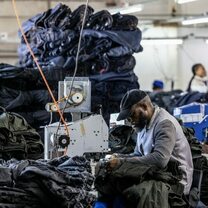
Lesotho produces large quantities of jeans for the global market – Photo: Roberta Ciuccio/AFP
That’s how the historic pivot in US trade policy is unfolding in Lesotho, the landlocked, southern African mountain kingdom whose denim manufacturing has been a rare economic bright spot. Trump initially put 50% levies on imports from Lesotho, the highest in the world. Despite a cut to 15% in August, those duties still outstrip those on competitors like Kenya, and some factories have eliminated jobs as orders dried up.
“We are still in negotiations with the US government on a further reduction, maybe to 10% or to zero- where we were before,” Prime Minister Sam Matekane said in an interview with Bloomberg Television’s Wall Street Week. “The introduction of the tariffs have put us in a disadvantaged position” because businesses can relocate to countries where levies are lower, he said.
Textiles is the biggest industry in Lesotho, a country of about 2.3 million people. Those businesses employ 12,000 people and indirectly support 40,000 jobs, supplying US retailers such as Walmart Inc., JC Penney and Levi Strauss & Co. Before the new tariffs, most of of the country’s exports to the US- its second-biggest trade partner- entered duty-free under the now-defunct African Growth and Opportunity Act.
Before Trump took office, Lesotho’s central bank forecast modest expansion this year and next for textile and clothing manufacturing. The new outlook: contractions of 9.9% and 13.3%. Trump’s tariffs are based on countries’ trade balance with the US, and Lesotho imported less than $3 million in goods from the US last year, compared with exports of more than $235 million.
Teboho Kobeli, the founder of Lesotho-based Afri-Expo Textiles, said the tariffs came as a major shock, comparable with the coronavirus pandemic. At the very least, Trump’s targeting of the country serves as a “wake-up call” and an opportunity to change the way the economy operates. Unemployment was 30% last year, the most recent data show, ranking among the world’s highest.
“I would say ‘Thank you, President Trump, for making Lesotho known,’” he said. “For the president of a powerful country like the US to mention Lesotho in his Congress is, you know, a powerful marketing tool.”
Birks announced on Friday a 16.2% uptick in half-year sales to $93.1 million, on the back of the Canadian jeweller’s acquisition of European Boutique, and a strong retail performance.
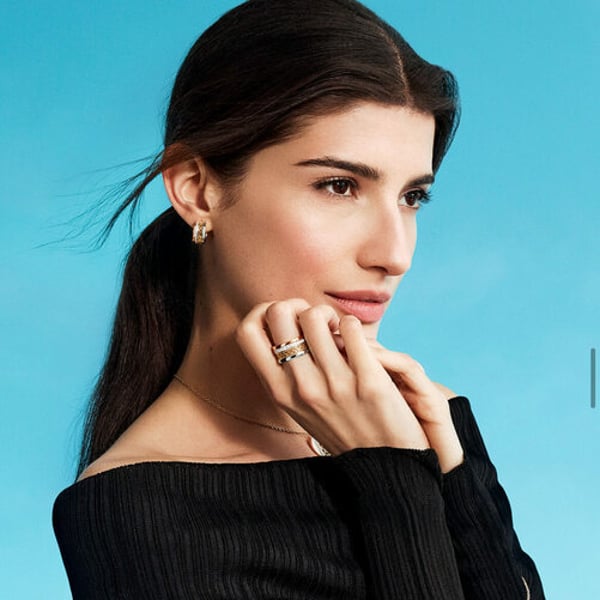
Birks
The Montreal-based company also logged an increase in third-party branded timepieces across multiple brands for the 26 weeks ending September 27, in addition to gains in sales of Birks branded jewelry and third-party branded jewelry.
Meanwhile, comparable store sales rose 6.3%, attributable to strong sales in all product categories, particularly in third-party branded timepieces, but also in Birks branded jewelry and third-party branded jewelry, the company added.
In light of the strong sales performance, Birks narrowed its earnings loss during the six months to an operating loss of $0.2 million, compared to a reported operating loss of $0.3 million in the prior-year period.
“Our net sales, gross profit and comparable store sales for the first half of Fiscal 2026 are higher than the corresponding period in Fiscal 2025 due in part to the acquisition of the European business but also due to our strong retail performance, which speaks to the strength of our product offerings, both in terms of our Birks branded products and our third-party branded watches and jewelry,” said Niccolò Rossi di Montelera, executive chairman of the board and interim CEO.
“I would like to thank our teams for their dedication and hard work. The growth achieved in the first half of Fiscal 2026 is a testament of our commitment to our customers and I am grateful for the unwavering efforts of all our employees which contributed to these results and the successful integration of the European stores.”
In July, Birks acquired the luxury watch and jewellery business of European Boutique from its founders, the Sutkiewicz family, for a purchase price of $9 million.
NYC-based footwear brand Koio is relaunching The Primo, the high-top sneaker that debuted the brand in 2015, in a limited-edition collaboration with leatherworker and YouTube creator Rose Anvil for its tenth anniversary.
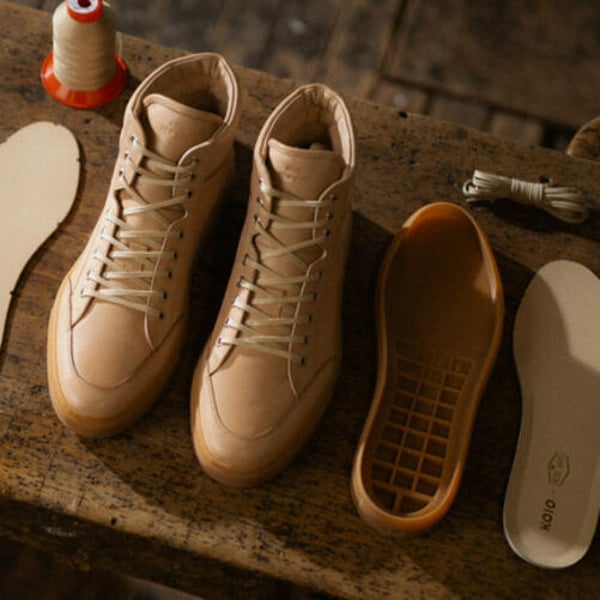
Koio relaunches the Primo with Rose Anvil. – Koio
The updated Primo maintains Koio’s original Italian build standards, with internal upgrades including a full leather Strobel board, leather toe cap and counter, and a gum outsole. The upper is crafted from vegetable-tanned, untreated Vachetta calf leather sourced from Italian tannery Conceria Annarita, allowing the sneaker to naturally darken and develop a unique patina with wear.
“Reintroducing the Primo for our ten-year anniversary is incredibly meaningful,” said Johannes Quodt, co-founder of Koio. “It was the shoe that launched the brand, so bringing it back with Rose Anvil’s technical rigor felt like the right way to honor its legacy. The Vachetta leather will age beautifully, making this one of the most personal and character-rich versions we’ve ever created.”
The Primo first debuted in February 2015 at Koio’s Bowery pop-up, created by the founders as their ideal high-top sneaker. The silhouette remained a core style for five years before the brand shifted focus as its range expanded. Koio continued to receive requests from collectors and longtime customers to bring back the original design, prompting the reissue as part of the brand’s tenth-anniversary celebrations.
“The Primo was already a well-built sneaker, but replacing every internal synthetic component with leather significantly elevates the craftsmanship,” said Weston Kay, Rose Anvil. “Using untreated Vachetta leather means the shoe doesn’t just look good out of the box but it continues to improve over time.”
Koio’s work with Rose Anvil follows the success of their first collaboration—the Koio x Rose Anvil Capri Triple White—which sold out in less than 24 hours.
The limited-edition Primo is priced at $325 and is now available exclusively online.
Victoria’s Secret & Co. on Friday reported better-than-expected sales in the third quarter, prompting the U.S. lingerie giant to raise its full year outlook.
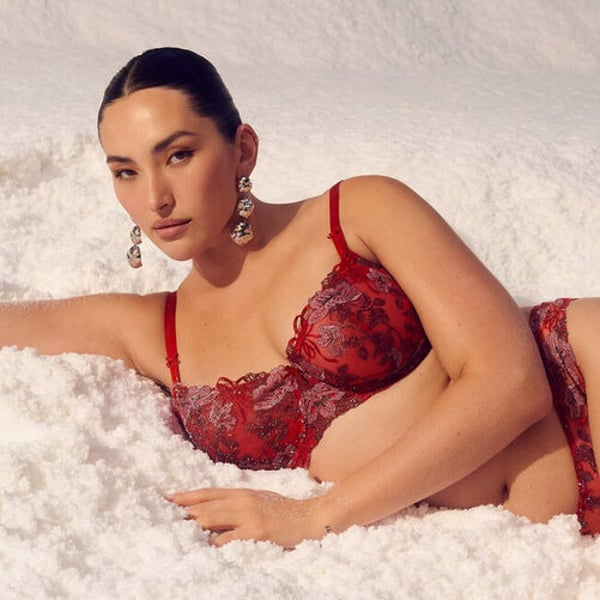
Victoria’s Secret raises full-year outlook on strong Q3. – Victoria’s Secret
The Ohio-based company said sales for the three months ending November 1 totalled $1.472 billion, up 9% from the third quarter of 2024 and above its previously communicated guidance range of $1.390 billion to $1.420 billion. Meanwhile, total comparable sales for the third quarter of 2025 increased 8%.
Victoria’s Secret recouped its earnings, reporting a net loss of $37 million, or $0.46 per diluted share, compared to net loss of $56 million, or $0.71 per diluted share, for the third quarter of 2024.
“With two iconic brands, Victoria’s Secret and Pink, a curated product assortment, high-emotion marketing and a relentless customer focus, we are reinforcing our leadership in global intimates and beauty,” said Victoria’s Secret & Co. CEO, Hillary Super.
“As we continue to advance our Path to Potential strategy, we are accelerating global growth, elevating brand distinctiveness, and unlocking greater value across our ecosystem to drive long-term profitable growth.”
Looking ahead, the company is now forecasting full-year net sales in the range of $6.450 billion to $6.480 billion, compared to prior guidance of $6.330 billion to $6.410 billion for the full year 2025. Adjusted net income per diluted share is estimated to be in the range of $2.40 to $2.65, compared to prior guidance of $1.80 to $2.20.
For the fourth quarter, the company is forecasting net sales to be in the range of $2.170 billion to $2.200 billion compared to last year’s fourth quarter net sales of $2.106 billion.