
Politics
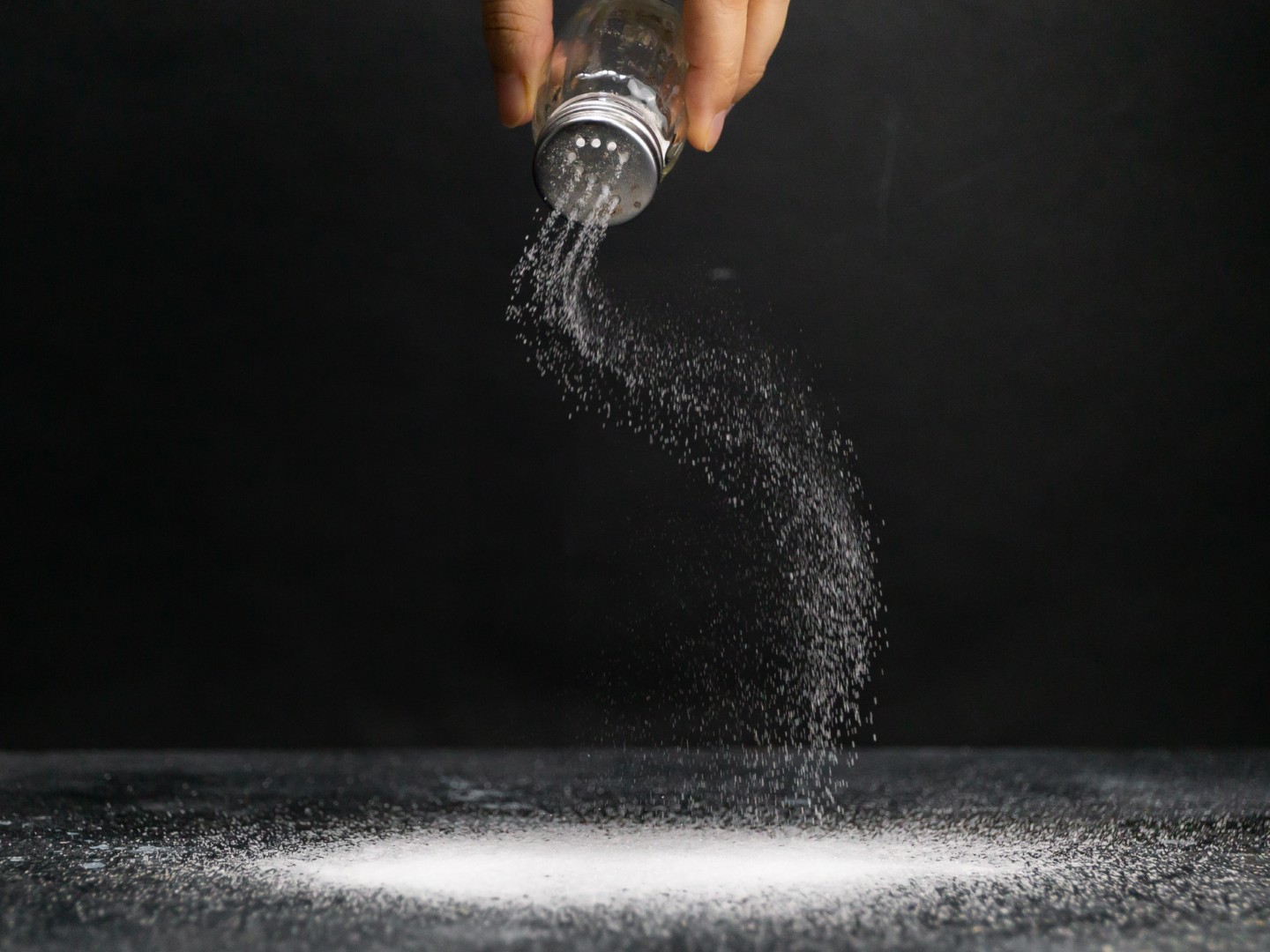
Salt shaking the MDW/EDGE Florida statewide poll
Every poll tells a story. The questions a careful reader must ask is: Who’s doing the storytelling and is the methodology sound?
The new statewide survey released by MDW Communications and EDGE Communications arrives with a compelling headline: Florida is competitive again, Democrats are surging, and Donald Trump is dragging the GOP into the deep end.
These findings are somewhat surprising but not shocking, especially after the recent Special Election results and the national trade winds we are seeing. Before Florida’s political class rushes to treat some of the findings as gospel, it deserves a closer look under the hood.
Let’s start where we always start: the sample.
The poll surveyed 1,834 likely Florida voters between March 27 and April 3. That’s a robust sample size — larger than most publicly released Florida surveys — and the eight-day field window is within acceptable range. A bigger sample means a smaller margin of error, and at n=1,834, the statewide margin is approximately plus or minus 2 points. That part checks out.
The weighting question
The poll was weighted to a turnout model of 44% Republican, 34% Democrat, and 22% no-party or third-party voters.
Undoubtedly, there will be the obligatory teeth-gnashing on both sides of the aisle. Some will say it is too Democrat-leaning while some might suggest it isn’t Democrat-leaning enough. The truth is, in off-year elections, pollsters try to anticipate what turnout will be like, but we simply cannot know until after the election has concluded. So yes, Yogi Berra was right, “It’s tough to make predictions, especially about the future.”
With that said, a +10 GOP model is not out-of-bounds and, frankly, throw another 2 points on the GOP side of the equation and go with a +12 GOP turnout model. Given the huge money advantage the GOP will have heading into November, our money is on something more akin to a +12 model. But to be clear, those 2 points would not change the poll’s overall conclusions.
The age weighting is where eyebrows should climb a wee bit. The model weights 65-and-older voters at 43% of the electorate. Florida does skew older, and seniors do vote at higher rates in off-year elections. But 43% may be a tad high. Independent research conducted by KFF (formerly Kaiser Family Foundation) put 65-plus turnout at 35% of the 2022 electorate, while the LeRoy Collins Institute has it closer to 40%.

Heavy overweighting of older voters typically advantages Republicans — suggesting the Democratic numbers in this poll could be slightly understated. But again, this is a slight difference that doesn’t impact the conclusions.
You can add a grain of salt here if you like, but even then, neither of these nits changes the poll’s bottom line.
The missing methodology clarified
The methodology section, notably, does not disclose the polling mode — phone, text-to-web, IVR, or online panel. That’s a meaningful omission. Mode effects are real. An outbound live-caller phone poll of likely voters from the voter file is considerably more reliable than an online opt-in panel.
Without knowing how these 1,834 respondents were reached, it is impossible for the casual reader to fully evaluate the randomness and representativeness of the sample. This information should have been disclosed plainly. This one does not.
With that said, we reached out to them and asked. It was, it turns out, a combination of text-to-web and email-to-web. This is a less costly way to poll and if matched/verified to the voter files (as it was) it is not a disqualifier by any means. So maybe a single grain of salt here. But, frankly, given that this poll is not an outlier to others we are seeing, we suggest only one grain.
Know your pollster
MDW Communications and EDGE Communications are both Democratic-aligned consulting firms. Christian Ulvert, quoted extensively in the poll memo, is one of the state’s most prominent Democratic strategists.
This does not automatically make the numbers wrong — partisan pollsters produce valid surveys regularly — but it does mean you apply a standard disclaimer: This poll was almost certainly conducted to generate a news cycle, attract donors and energize a base that has spent the better part of a decade absorbing bad news in Florida. But in this case, it should not discredit the top-line findings.
When polling becomes advocacy
The property tax section is where the poll’s advocacy function becomes most transparent. For example, presenting voters with a binary choice — eliminate property taxes or keep funding for police, fire and parks — is textbook push-polling. It is less of an attempt to measure opinion than it is an attempt to move it.
The 21-point swing the poll records after “informing” voters of the trade-offs tells us less about organic public sentiment than it does about the persuasive power of a well-constructed oppositional message.
That’s useful opposition research. It is not neutral public opinion data, though it must be noted that when a proposed referendum begins the journey below the mark (in this case, 60%) as the property tax one does, that is a flat-out bad sign for those wanting to pass the measure.
The bottom line
We’re taking the top lines as solid. Reputable pollster. Pretty solid methodology. Good-enough weighting. No grains of salt needed there. The advocacy questions, however, do deserve some well-deserved skepticism.
Florida’s political environment does appear to be shifting, as recent Special Election results and similar polls have shown. The no-party movement toward Democrats is real and consistent with other data points. Trump’s brand is under strain even in a state he carried twice. For Democrats, this should be seen as a good sign. For Republicans, it is certainly cause for concern.
Final note
Keep in mind that while polls have a predictive quality, they are not predictors of outcomes. There is a long road between now and Election Day. And as we have seen many times in years past, these numbers are likely to change. Anyone predicting a Democratic landslide (especially in Florida) should be doused in more than just a few grains of salt.