Connect with us

Fashion

Rec (Ecollant) to open its first polyamide recycling facility this spring
Published

on


Published


December 12, 2025

Auxerre-based Ecollant has developed a process that recycles 100% of the polyamide found in tights. As it prepares an industrial demonstrator for 2026, the Burgundy-based company is now extending its recycling capabilities to sportswear, lingerie, and swimwear. In line with this shift, it is adopting a new name: Rec.

Ecollant

Founded by Laurent Trognon and Frédéric Austrui, the company’s process recovers from textiles a nylon with properties identical to virgin polyamide. “There are plenty of people capable of recycling it. What sets us apart is our ability to achieve the level of purity required to produce robust yarns that can be used on an industrial scale,” said operations director Agathe Rouzaud.

On the strength of its process, Rec has now secured a 1,800 square-metre site in Joigny, where the initial phase will employ 17 people and produce 100 tonnes of nylon per year. A second site is already planned for around 2030, this time employing about 30 people and producing some 20,000 tonnes of material.

“We already have 100 tonnes of products to recycle in stock,” explains Frédéric Austrui, who notes that Rec has already secured its feedstock via collection specialists and hotel chains. The initial focus was tights, which are rich in polyamide. But the company is now broadening its collection scope, working on products composed of at least 70% nylon.

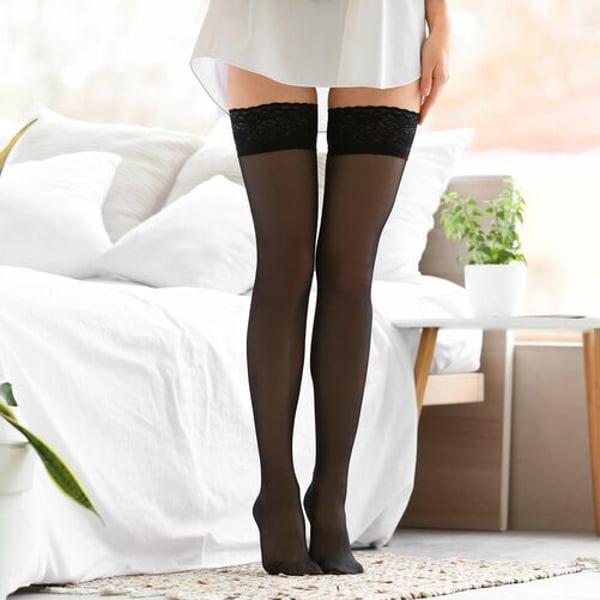
In tights, polyamide is often wound around elastane threads, giving the product its flexibility.
In tights, polyamide is often wound around elastane threads, giving the product its flexibility. – Ecollant

Some consumers have already come across materials recycled by Rec, which tested them through Divine, a brand of tights and stockings. Also via the Révélation brand of socks and parkas, notably sold at Galeries Lafayette and Printemps. The success, which surprised even its founders, quickly brought in around one million euros to finance an industrial project that now intends to focus solely on supplying manufacturers and brands, some of which have already committed to purchasing Rec’s recycled nylon.

In 2024, polyamide (or nylon) accounted for 5% of fibres produced worldwide, at around seven million tonnes, making it the second most-produced synthetic fibre, far behind polyester. That same year, only 2% of the nylon produced came from recycling, with long-standing technical obstacles hampering recovery.

“When we set out to recycle nylon, we were told it was impossible,” recalls Laurent Trognon, referring to a previous venture with Frédéric Austrui: Divine tights and stockings for mass retail. “We were confronted with the issue of the waste generated, while our yarn supplier was steadily increasing prices. So we decided to create our own industrial operation.”

Ecollant presentation film

Rec is not limiting itself to clothing. While polyamide is widely used in technical apparel and sport, the material is used mainly in the automotive industry, and also finds its way into electronics and industrial equipment. These are all areas in which the Burgundy-based company has already begun to secure outlets.

This article is an automatic translation.
Click here to read the original article.

Copyright © 2025 FashionNetwork.com All rights reserved.


Source link

Continue Reading

Fashion

“Holding Shein to account has proved difficult,” says Nelly Group’s Helena Karlinder-Östlundh

Published

on


Published


December 12, 2025

It’s a familiar David versus Goliath tale: the Nelly Group has filed a lawsuit against the Chinese giant Shein for copyright infringement. Earlier this month, the Swedish Patent and Market Court ruled that an Irish Shein subsidiary had used unauthorised copies of the Swedish online retailer’s images, but it acquitted two other subsidiaries of similar allegations. With the appeal, Nelly now wants to clarify how responsibility is apportioned within the Shein Group and examine the proportionality of the judgment. In an interview with FashionNetwork.com, CEO Helena Karlinder-Östlundh discusses her legal rationale and the boundaries of fair competition in e-commerce.

Continuing to take on Shein as CEO of the Nelly Group: Helena Karlinder-Östlundh. – Maverick Gutarra

FashionNetwork.com: Ms Karlinder-Östlundh, you’re the talk of the fashion industry because of Nelly Group’s copyright lawsuits against Shein. Have you ever regretted taking legal action?

Helena Karlinder-Östlundh: Not at all. Shein illegally used our copyrighted images and published them on its website as though they were its own. When we brought this to its attention, it disputed our ownership of the images and refused to give assurances that it would not happen again. The litigation has been both costly and time-consuming for us, but we believe it is important to pursue it. Holding Shein to account has proved difficult, and if non-European e-commerce providers can simply flout our laws like this, it undermines any sense of a level playing field in our market.

FNW: What has been your most important insight as CEO in this case so far?

HKÖ: Based on our experience to date, Shein appears to be doing everything it can to make accountability for its actions as difficult as possible. For instance, it has established a corporate structure with several companies responsible for different aspects of its operations in Sweden. As a result, we first had to invest significant time and resources to understand which company was responsible for which element, and therefore which aspects of the infringement each could be held liable for.

FNW: The other side showed little willingness to acknowledge wrongdoing, right?

HKÖ: Throughout the proceedings, Shein denied any wrongdoing- until shortly before the main hearing, when it changed its position and admitted the infringement, but claimed that only one of its companies was responsible. That gives me the impression that its multi-entity structure is a deliberate strategy to deter others from pursuing action over similar infringements.

FNW: How upset were you that the Swedish Patent and Market Court ordered you to pay Shein’s legal fees?

HKÖ: Owing to the way the judgment was worded, we were ordered to pay part of Shein’s legal fees- an amount that ultimately exceeded our own legal costs. To be honest, I was very surprised by this outcome. I had expected a clear verdict: either Shein violated our rights or not. The judgment explicitly states that all three of Shein’s legal entities contributed to the infringement and that it would not have been possible without the involvement of all three. Nevertheless, only one of these legal entities was held fully accountable and faced consequences. That did not- and still does not- make sense to me.

FNW: That does indeed sound like a contradiction in terms.

HKÖ: If such a judgment is possible at all, there is a structural flaw in the legal framework. This weakness must be remedied so that European retailers can be confident that non-European companies will also follow the same laws and face the same consequences in the event of infringements.

FNW: What is the next step in the case? What would you like to achieve by 2026? How do you think the whole thing should end?

HKÖ: We have filed an application for leave to appeal and are currently waiting for a decision before the appeal process can begin. We carefully weighed our options before deciding to appeal, fully aware that this could ultimately lead to additional costs for us. However, we firmly believe that this is an issue that European politicians and legislators need to take seriously. Current EU regulations, such as the Digital Services Act, focus primarily on consumer protection- which is important and should definitely be a top priority.

FNW: What do you think should be the next step?

HKÖ: To strengthen competition safeguards and ensure that all retailers operating in the European market follow the same rules, with a clear and effective procedure to restrict market access when those rules are not observed.

This article is an automatic translation.
Click here to read the original article.

Copyright © 2025 FashionNetwork.com All rights reserved.


Source link

Continue Reading

Fashion

The ‘Ralph Lauren Christmas’ trend is marketing gold

Published

on


By

Bloomberg

Published


December 12, 2025

If you’ve been scrolling through social media lately, you won’t have escaped the plaid trimmings, pine garlands, and rich red ribbons, all warmed by the glow of a roaring fire.

A Ralph Lauren festive store display – Ralph Lauren- Facebook

Welcome to “Ralph Lauren Christmas.” The aesthetic, which demonstrates how to create Ralph Lauren Corp.’s signature style for the holidays, has been trending recently, sending the brand’s visibility soaring.

This viral moment has been years in the making. Ralph Lauren has been polishing its image and honing its product range for the best part of a decade. And luck has been on its side, with the company squarely in the intersection of several fortunate trends.

Preppy style is having a major fashion moment and Ralph Lauren is the look, thanks to its traditional staples such as cable-knit sweaters, blazers, and rugby shirts. Even the quarter zip craze, which heralds a return to more sophisticated casual dressing, is contributing to the brand’s popularity, Laurent Vasilescu, analyst at BNP Paribas SA, wrote in a recent note.

Social media narratives take inspiration not just from how we dress but also how we feel. In uncertain times- particularly over the holidays- we often take comfort from the traditions of the past. Add in the old money vibe of quiet luxury, which might be in its final throes of popularity but refuses to disappear, and searches for “Ralph Lauren inspired Christmas” on Pinterest are up 3,000% in the four weeks to November 15 compared with the year earlier. 

So, how did the company position itself for this moment in the viral sun? Under chief executive officer Patrice Louvet, who took the reins in 2017- and of course its eponymous founder, who remains actively involved- Ralph Lauren has moved closer to the European luxury houses such as LVMH Moet Hennessy Louis Vuitton SE. It’s done so by taking its image upmarket and cutting back on selling through less chichi retailers. Even its outlet stores, which play an important but undisclosed role in the business, have undergone a glow up.

As part of this strategy, Ralph Lauren has invested in its core stores- where its particular holiday look is very much in evidence- and concentrated on the products it is best known for. The timing has been fortuitous: the brand is looking both luxe and accessible even as European rivals have aggressively increased prices.

The turnaround has been augmented by effective marketing, such as taking its Polo Bear from merchandise to the big screen, with the mascot’s first animated film. And through its cafes and restaurants, the brand has been at the forefront of luxury’s push into hospitality.

While Ralph Lauren Christmas grew organically, the company has encouraged an association with the season. This includes  holiday pop-ups in Seoul, Tokyo, Los Angeles, and London, where in Sloane Square visitors can sip hot chocolate, buy a holiday gift, make a seasonal floral display, or visit Santa’s grotto. 

The queues for selfies by the vintage red pick-up truck- with some sporting the signature Polo Bear sweater- underline Ralph Lauren’s marketing genius. The founder himself is Jewish, born Ralph Lifshitz in the Bronx. Yet his ability to draw people from all walks of life into his particular vision of the American dream has made his company as much a Christmas staple as eggnog and It’s a Wonderful Life. And it’s worth noting that he’s done so by embracing rather than ignoring the country’s diversity. For an example, look to the retailer’s 2022 collaboration with two historically Black colleges, which continued this year with a collection celebrating Oak Bluffs, a town on Martha’s Vineyard that is a summer haven for Black Americans.

Ralph Lauren isn’t the only one to benefit from the Christmas trend, according to retail intelligence company Edited. Styles featuring a palette of red, burgundy, and green, punctuated by hints of gold, as well as tartans and teddy bear motifs are appearing in chains on both sides of the Atlantic. Vans, for example, has gone big on plaid. Some social media posts show how to get the look for less at the likes of Amazon.com Inc. At the other end of the price spectrum, Hugo Boss AG has collaborated with teddy bear maker Steiff, while Burberry Group Plc has created a Gund bear as part of its tie-up with Macy’s Inc.’s Bloomingdale’s.

But given that the style is so intrinsically linked with Ralph Lauren, the company is likely to be the biggest winner. The holiday pop ups have so far generated about $6 million in value from social media posts, engagement and articles, according to Launchmetrics.

Revenue in the all important golden quarter looks to be benefiting as well. Based on Bloomberg Second Measure data for the third quarter to date, Ralph Lauren’s sales through its own US stores and website are tracking well ahead of consensus expectations for North American sales growth, according to Mary Ross Gilbert, an analyst at Bloomberg Intelligence.

The shares, which slipped after some investors were underwhelmed by the next stage of the turnaround outlined in September, hit a fresh high in late November.

Social media fads can quickly fade: Google and Pinterest data indicate that the Ralph Lauren holiday aesthetic may have already peaked. But the halo around the brand over the past couple of months should have helped it deepen its connection with shoppers.

The narrative has also highlighted Ralph Lauren’s home décor and hospitality offerings, reinforcing its broader lifestyle credentials, something the company is keen to develop.

And when the preppy look wanes, as it naturally will, Ralph Lauren should be able to adapt. It is one of the few luxury companies to retain distinct sub-brands, from its high-end Purple Label to the heritage workwear of Double RL, so it has a good chance of tapping into whatever fancy comes next. Its strategy of growing in womenswear, particularly handbags, is another way to make up any shortfall.

There is scope for Ralph Lauren to continue flexing its marketing muscles, too. It recently revealed the uniforms that the US Olympic and Paralympic teams will wear for the winter games opening and closing ceremonies in Milan in February, and will outfit athletes again for the Los Angeles summer games in 2028. Ralph Lauren should consider an LVMH-style takeover of the event on its home turf to keep its name at the forefront of consumers’ minds.

Ralph Lauren looks well positioned to adjust to changing seasons- and changing fashions. If so, the buzz around the brand should linger long after the pine needles have dropped and the tree trims have been packed away.


Source link

Continue Reading

Fashion

Online marketplaces key for all points of UK shoppers’ purchase journey – report

Published

on


Published


December 12, 2025

We’ve seen a dash by businesses to set up e-marketplaces in recent periods and that’s no surprise given that a new study shows that “online marketplaces dominate almost every stage of UK shoppers’ purchase journey”.

Photo: Akeneo

That’s according to product experience specialist and product information management solutions provider Akeneo. It said its data shows marketplaces are key from “discovery and comparison through to purchase, reviews and even returns”.

For “high-value purchases” (over £90) UK shoppers “lean more heavily on marketplaces than any other digital or physical touchpoint”. 

For instance, 24% most regularly use marketplaces for search and discovery; 26% for price and promotions comparisons; and 28% to compare or validate products.

Also, 26% use them most often to leave reviews while 21% get advice from other users via marketplaces (interestingly, they seek that advice via marketplaces more than they do social media).

And of course’s marketplaces are key for the actual purchase process. Some 30% of consumers most regularly use marketplaces to buy the product – ahead of stores and retailer sites — while 21% use marketplaces to initiate returns, second only to other routes (22%).

It’s particularly interesting that across the whole journey, “30% of UK consumers say they most often buy from online marketplaces, while just 6% most often buy from a brand’s own website”.

Amazon is perhaps the ‘ultimate’ marketplace with its business model having been founded on that concept. But other retailers have also cottoned on to their importance with big names such as Next, M&S and John Lewis having dived deep into marketplaces recently.

Boohoo/Debenhams Group is also embracing marketplaces for its basket of brands and the impressive recovery of the Debenhams business since Boohoo acquired it has been driven by a marketplace makeover.

“This peak season has confirmed what our research already shows; for UK shoppers, marketplaces are the default shop window, comparison engine, review hub and checkout,” said Romain Fouache, CEO at Akeneo. “If your product information and brand story do not show up clearly and consistently on marketplaces, you are invisible for a big share of high-value purchases. And in a world where AI agents and LLMs will increasingly replace search in guiding shoppers to the right products, being invisible on marketplaces means you may not exist at all for these new discovery engines.”

Copyright © 2025 FashionNetwork.com All rights reserved.


Source link

Continue Reading

Trending

Copyright © Miami Select.