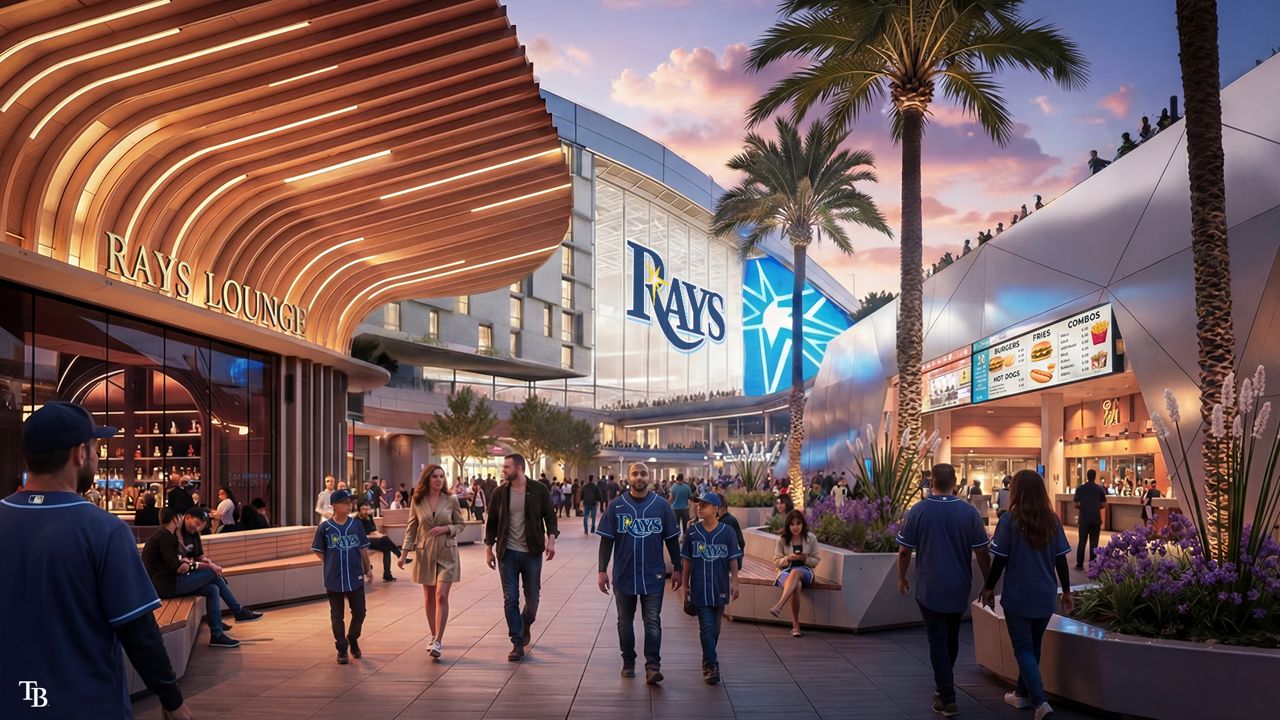
Why Ken Babby’s $1.27 Billion Plus Full Overruns Commitment Shatters NFL and MLB Financing Norms
It seems the Hillsborough County Commission and the city of Tampa may have overlooked a remarkable detail in Tampa Bay Rays’ proposed $2.3 billion stadium at Hillsborough Community College. In 2026, the ownership committed to covering 100% of any construction cost overruns while contributing $1.27 billion in private funding—one of the boldest private risk moves in modern pro sports stadium financing. Rays CEO Ken Babby and the new ownership group aren’t just paying their portion—they’re effectively writing a blank check for anything beyond the project’s estimates.
Under the Hillsborough County and Tampa City agreement approved in May 2026, the Rays responsibility includes $1.27 billion in private funding representing 57% of the total $2.3 billion project, all design and construction cost overruns with no ceiling or cap, long-term maintenance and operations for 30+ years, and full insurance and repair costs. Public funding covers approximately $1 billion—$750 million from Hillsborough County and $251 million from Tampa City—with zero responsibility for construction overruns, making this the most government-friendly stadium deal in recent memory, where the government pays a fixed amount and the team pays everything else, including overruns.
This Cost-Overrun Deal Is Exceptionally Rare in 2026
Search through stadium financing deals from the 2020s and you’ll find the Rays’ commitment is nearly unique. The Tennessee Titans’ $2.1 billion stadium under construction has the team covering remaining costs including any cost overruns beyond public funding, but this is structured as a remaining costs obligation rather than explicit full-overrun responsibility. The Buffalo Bills’ New Era Field at $1.1 billion has the NFL and Bills covering $550 million but doesn’t explicitly state full overrun responsibility. The Rays’ Tampa commitment is the most aggressive because it’s for a $2.3 billion total project that’s one of the largest in sports history, it covers ALL overruns with no cap creating unlimited liability, and it’s in the 2026 financing era when teams typically negotiate overruns down or split them rather than assume full responsibility.
Most recent NFL and MLB stadium deals from the 2020s split overruns or make public entities cover them rather than forcing teams to assume unlimited liability. Most NFL teams negotiate overruns as shared responsibility or capped at a specific percentage rather than all overruns, making the Rays’ unlimited overrun liability virtually unique in professional sports. American Airlines Field for the LA Chargers and Rams has public coverage of the majority with the team paying base cost only. Allegiant Stadium for the Las Vegas Raiders has public funding covering 75% with the team paying 25% and no overrun clause. SoFi Stadium for the Chargers and Rams is 100% privately funded eliminating the public overruns question entirely.
The St. Petersburg Deal That Killed This Same Commitment
The Rays’ cost-overrun obligation isn’t just a hypothetical issue—under the previous owner, they backed out of a stadium deal for the same reason. The 2025 St. Petersburg–Pinellas County proposal required them to cover all overruns beyond their $700 million share, which became a key factor in their decision to walk away when delays pushed completion to 2029 and rising costs made it unworkable. In the July 2024 St. Pete agreement, the Rays were still on the hook for any overruns, which made the deal impossible. That’s why the Tampa deal’s overrun commitment is so striking: ownership is taking on the same financial risk that sank their only other stadium attempt.
The Business Logic Behind Babby’s Blunt Check
Why would Ken Babby and ownership take on this risk when three previous stadium attempts show the danger? Three factors explain the gambit. The $2.3 billion includes a 113-acre mixed-use development with restaurants, retail, offices, and entertainment spaces potentially generating $1-2 billion in ancillary revenue that could offset overrun risks. Patrick Zalupski CEO of Dream Finders Homes Inc. and Bill Cosgrove CEO of Union Home Mortgage bring real estate and mortgage expertise to the ownership group that could further offset overrun risks through development profits. By assuming full overrun risk, ownership likely secured favorable lease terms, revenue rights, and operational control for 30+ years that would otherwise be negotiated away.
What This Means for Tampa Bay’s Public Investors
Hillsborough County and Tampa City get zero exposure to construction cost surprises with Hillsborough committing $750 million fixed and Tampa City committing $251 million fixed through the framework approved in May 2026. This is the most public-friendly stadium deal in recent memory where government pays a fixed amount and the team pays everything else plus overruns. Hillsborough County approved the MOU in May 2026 while Tampa City Council approved the framework also in May 2026, giving both jurisdictions complete certainty on their financial obligations regardless of what construction costs actually end up being.
The Bottom Line: One-of-a-Kind Risk in Sports Finance
The Rays’ Tampa Bay stadium commitment represents the most aggressive private cost-overrun assumption in contemporary stadium financing. While the Tennessee Titans have similar remaining costs obligations, the Rays’ explicit ALL overruns language with no cap on a $2.3 billion project is unprecedented in 2026. For sports finance analysts, stadium developers, and public officials, this is the deal that will be studied as the extreme example of private risk in public-private stadium partnerships. Ken Babby and ownership aren’t just betting on the Rays, they’re betting on their ability to control construction costs better than any stadium developer in history while capturing the mixed-use development revenue that could make unlimited overrun liability financially manageable.