Connect with us

Business

Ray Dalio on the $38 trillion national debt

Published

on


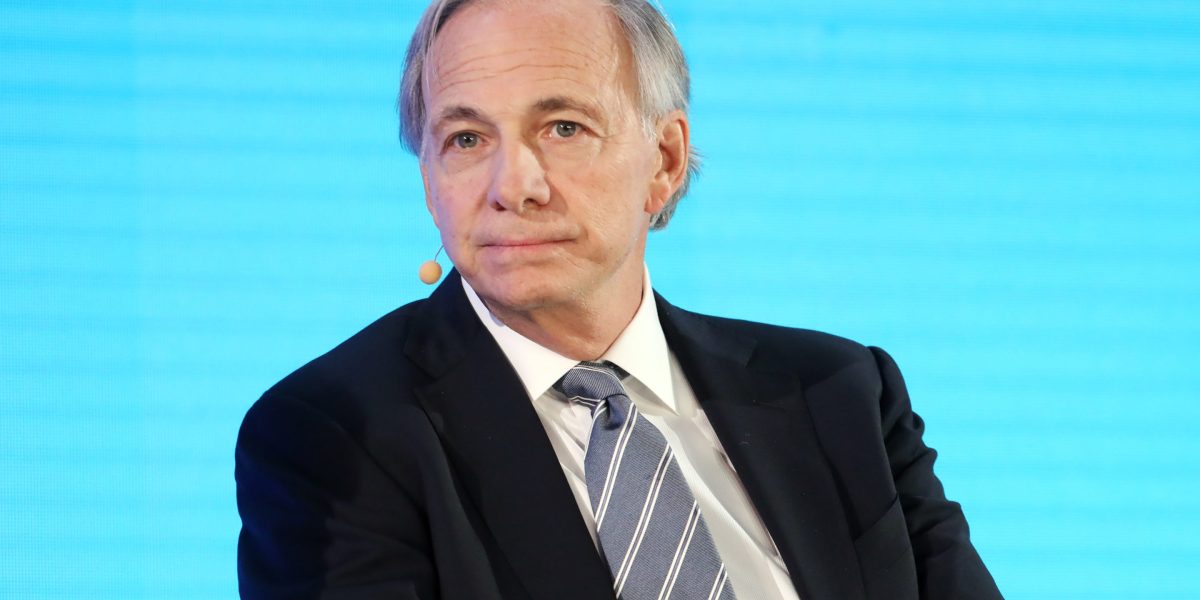
Ray Dalio, the billionaire founder of Bridgewater Associates, the world’s largest hedge fund, delivered a stark warning regarding the United States’ escalating national debt—and dollar devaluation—during a recent interview on the David Rubenstein Show. With the U.S. fiscal trajectory arguably unsustainable, Dalio predicted the burden will fall heavily on future descendants, stating: “My grandchildren and great grandchildren not yet born, are going to be paying off this debt in devalued dollars.”

A student of financial history, Dalio cited his voluminous studies of historical economic cycles. He argued when nations accumulate excessive debt—which has now grown in the U.S. to a staggering $38 trillion—they rarely resolve the issue through spending cuts or hard defaults. Instead, governments invariably turn to a “combination of devaluing the currency” and the “printing of money.”

“It’s always done when countries essentially go broke,” Dalio said. “They print money, devalue the currency, and create an artificially low interest rate, so that the person who’s holding the bonds is receiving an artificially low interest rate.” He explained this strategy punishes those who hold government bonds by offering them returns that fail to keep pace with real inflation.

Dalio drew a parallel to the economic shifts of the early 1970s, specifically the moment in 1971 when then-President Richard Nixon severed the U.S. dollar’s link to gold.

“The world used to have gold as money,” he said. That was the way.”

And people looked at things differently, he argued, calculating prices of things in terms of how much gold it would cost them. (He repeated his regular advice it’s “prudent” to have between 10% to 15% of your portfolio in gold.) Gold is skyrocketing in value now, he argued, because people liked gold for thousands of years “and people still seem to like gold.” In the age of fiat currencies, Dalio said, “80% of the world’s money has disappeared” since 1750—and the remainder has been greatly devalued.

“There’s a saying that gold is the only asset that you can have that’s not somebody else’s liability,” he said, explaining when you have gold in hand, you’re not at anyone’s mercy to validate what you have as money. Central banks around the world now are concerned what happened to, for example, Russia could happen to them, with all the sanctions in place since the Ukraine war.

The hedge fund billionaire added he sees the current economic environment moving toward a similar inflection point as the 1970s, driven by a global shift toward “war self-sufficiency” where nations can no longer rely on imports or foreign debt financing to fuel their economies. He didn’t mention these countries by name, but this could go some way toward explaining American aggression in Venezuela (for oil) and Greenland (for security and minerals wealth). In short, Dalio sees a devalued future—and many ramifications to go along with that.

Washington’s stalemate

When asked why the bond market has not yet revolted against this debt accumulation, Dalio described a paralysis in Washington. He noted policymakers assume the bond market will not collapse, while bond traders assume Congress will act before a crisis becomes irreversible. However, Dalio warned debt crises typically develop “slowly until it happens all at once,” paraphrasing the famous quote by Ernest Hemingway about how bankruptcy happens.

Dalio expressed skepticism that current legislative efforts, such as tariffs or “big beautiful bills,” will solve the core problem. While he acknowledged tariffs have historically been a valid source of government revenue and are necessary for building domestic manufacturing self-sufficiency, he maintained the debt issue will ultimately be managed through currency devaluation.

“Tariffs are not bad,” he said, noting how they once served as the U.S. government’s main source of revenue. “Any form of taxes has its cost,” he offered, philosophically.”

On navigating a stagflationary environment, Dalio urged investors to stop viewing their wealth in nominal terms (the dollar amount) and instead “look at the value of your portfolio in inflation adjusted terms.”

He identified two primary assets for protection:

1. Inflation-indexed bonds: He called Treasury Inflation-Protected Securities (TIPS) “the safest investment that you can get right now” because they guarantee a real return above inflation.

2. Gold: Dalio advised it is “prudent” to hold “10[%] or 15% of your portfolio in gold”. He described gold as “the only asset that you can have that’s not somebody else’s liability,” noting central banks are currently acquiring it as a hedge against sanctions and geopolitical risk.

Beyond specific assets, Dalio reiterated his career-long “mantra” of diversification. He suggests investors seek “15 good, uncorrelated return streams,” a strategy he claims can reduce portfolio risk by “about 80%” without sacrificing expected returns. He cautioned everyday savers against speculating in the markets, describing short-term trading as a “zero sum game” where the average person will “probably be the loser”.

Despite the grim monetary outlook, Dalio closed on a note of cautious optimism regarding the nation’s resilience. While acknowledging the severity of the financial cycle, he stated: “We will go through this and we will get to the other side,” emphasizing the outcome ultimately depends on “how we are with each other” as a society.


Source link

Continue Reading

Business

Wife of Renee Good, the Minnesota woman killed in ICE shooting: ‘We had whistles. They had guns’

Published

on


The wife of Renee Good, the woman shot and killed in her car by a federal immigration agent in Minneapolis, says the couple had stopped to support their neighbors on the day of the shooting and described the mother of three as leaving a legacy of kindness.

“We had whistles. They had guns,” Becca Good said in a written statement Friday that was provided to Minnesota Public Radio.

The statement was her first public comment about the death of Renee Good, 37, who was killed Wednesday after three Immigration and Customs Enforcement officers surrounded her Honda Pilot SUV on a snowy street a few blocks from the couple’s home. Video taken by bystanders show an officer approaching the SUV stopped across the middle of the road, demanding the driver open the door and grabbing the handle.

The vehicle begins to pull forward and a different ICE officer standing in front of it pulls his weapon and immediately fires at least two shots at close range, jumping back as the vehicle moves toward him.

Trump administration officials have painted Renee Good as a domestic terrorist who tried to run over an officer with her vehicle. State and local officials in Minneapolis, as well as protesters, have rejected that characterization.

Becca Good has not responded to calls and messages from The Associated Press. Her statement provided no further detail about the day of the shooting and instead focused on memorializing her wife.

The couple had only recently moved to Minneapolis and were raising Renee Good’s 6-year-old son from a previous marriage.

Becca said Renee was a Christian who “knew that all religions teach the same essential truth: we are here to love each other, care for each other, and keep each other safe and whole.”

She thanked the people all across America and the world who had reached out in support of their family.

“Renee sparkled. She literally sparkled,” Becca Good wrote. “I mean, she didn’t wear glitter but I swear she had sparkles coming out of her pores. All the time. You might think it was just my love talking but her family said the same thing. Renee was made of sunshine.”

Far from the worst-of-the-worst criminals President Donald Trump said his immigration crackdown would target, Good was a U.S. citizen born in Colorado who apparently was never charged with anything beyond a single traffic ticket.

In social media accounts, she described herself as a “poet and writer and wife and mom.” She said she was currently “experiencing Minneapolis,” displaying a pride emoji on her Instagram account. A profile picture posted to Pinterest shows her smiling and holding a young child against her cheek, along with posts about tattoos, hairstyles and home decorating.

Her ex-husband, who asked not to be named out of concern for the safety of the two now-teenage children he had with Renee Good while they were married, told the AP on Wednesday that he had never known her to participate in a protest of any kind.

Becca Good said the couple, who had previously lived in Kansas City, Missouri, had settled in Minneapolis after an “extended road trip.” She said people they encountered in the Twin Cities had provided a strong sense that “they were looking out for each other.”

“We were raising our son to believe that no matter where you come from or what you look like, all of us deserve compassion and kindness,” Becca wrote. “I am now left to raise our son and to continue teaching him, as Renee believed, that there are people building a better world for him. That the people who did this had fear and anger in their hearts, and we need to show them a better way.”


Source link

Continue Reading

Business

Bessent’s visit to Minnesota comes with more vows to crack down on fraud as tensions flare with state, Somalia government

Published

on


The Treasury Department is taking a closer look at financial transactions between Minnesotan residents and businesses and Somalia as the federal government ramps up its immigration crackdown in the state, Treasury Secretary Scott Bessent told reporters on Friday during a visit to the state.

Bessent said his agency has launched a series of actions to combat fraud in the state and has launched investigations into four businesses that people use to wire money to family members abroad to do more to scrutinize transactions. He did not name the businesses.

His visit to the state coincides with protests in Minneapolis after an Immigration and Customs Enforcement officer fatally shot a woman in a residential neighborhood south of downtown on Wednesday, leading to a clash between federal and local leaders.

President Donald Trump has targeted the Somali diaspora in the Democratic-led state with immigration enforcement actions and has made a series of disparaging comments about the community, directing Bessent to uncover more fraud. The Treasury first announced last month that it would begin targeting money service businesses, focusing on remittances to Somalia.

The department’s actions have been prompted in part by a series of fraud cases, including a nonprofit called Feeding Our Future accused of stealing coronavirus pandemic aid meant for school meals. Prosecutors have put the losses from that case at $300 million.

Gov. Tim Walz, before he ended his bid to serve a third term this week, said that fraud will not be tolerated in Minnesota and that his administration “will continue to work with federal partners to ensure fraud is stopped and fraudsters are caught.” Walz, who came under heavy criticism from Republicans who said his administration should have caught the Feeding Our Future fraud earlier, said he was “furious” with “criminals that preyed on the system that was meant to feed children.”

The founder of Feeding our Future, Aimee Bock, was charged with multiple counts involving conspiracy, wire fraud and bribery and was convicted in March while maintaining her innocence.

Bessent declined to comment on specific investigations but said he had met with several financial institutions on Friday to ask them to do more to prevent fraud. The department has not disclosed which institutions Bessent spoke with.

Key Treasury actions include Financial Crimes Enforcement Network investigations into Minnesota-based money services businesses, enhanced transaction reporting requirements for international transfers from Hennepin and Ramsey counties, and alerts to financial institutions on identifying fraud tied to child nutrition programs.

“Treasury will deploy all tools to bring an end to this egregious unchecked fraud and hold perpetrators to account,” Bessent told reporters on Friday.

Bessent’s announcement was met with some criticism. Nicholas Anthony, a policy analyst at the libertarian Cato Institute, said Bessent is “building a legacy of financial surveillance and control.”

“The announcement that he is stopping Americans from sending their money abroad and increasing surveillance under the Bank Secrecy Act should be condemned,” Anthony said.

Some Somali leaders said last month they had received anecdotal reports about community members being detained by federal agents but had no details. Those leaders and allies including Walz and Minneapolis Mayor Jacob Frey have vowed to protect the community.

During a speech on Thursday about the Republican Trump administration’s economic agenda at the Economic Club of Minnesota, Bessent referred to the alleged fraud, without mentioning the Somali community that his department is targeting.

“I am here this week to signal the U.S. Treasury’s unwavering commitment to recovering stolen funds, prosecuting fraudulent criminals, preventing scandals like this from ever happening again, and investigating similar schemes state by state,” Bessent said.


Source link

Continue Reading

Business

Telluride Ski Resort begins to reopen after striking ski patrollers accept a contract

Published

on


Telluride Ski Resort in southwestern Colorado began to reopen Friday after a vote by striking ski patrollers to accept a contract and return to work.

The resort shut down Dec. 27 after the Telluride Professional Ski Patrol Association rejected a company pay proposal. The resort remained closed except for beginner carpets and a lift serving two beginner runs that were staffed this week by managers and temporary ski patrollers.

With help from artificial snowmaking and a foot (30 centimeters) of recent snowfall, more lifts and runs will open starting this weekend, resort officials said in a statement.

“We are confident that this last offer represented a fair compromise,” resort representative Steve Swenson said in the statement.

Neither the resort nor the ski patrol union divulged details of the deal endorsed by the union with a Thursday vote. Negotiations had been ongoing since June.

The union sought pay increases from $21 to $28 an hour for new patrollers and from as little as $30 to almost $50 for the most experienced ones.

“While we are ultimately very disappointed to not address our broken wage structure, we are immensely proud of our efforts that have led to this financial movement. We are even prouder of the recognition and implementation of our supervisors into the unit,” read a union statement on social media Thursday.

Ski patrollers elsewhere in the Rocky Mountain region have been unionizing. Some argue for more pay on the grounds that the cost of living in ski towns is high and that they are responsible for safety.

Patroller duties include attending to injured skiers and the controlled release of avalanches with explosives when nobody is in range.

An almost two-week ski patrol strike a year ago closed many runs and caused long lift lines at Utah’s Park City Mountain Resort. That strike ended when Colorado-based Vail Resorts acceded to demands including a $2-an-hour base pay increase and raises for senior ski patrollers.

Join us at the Fortune Workplace Innovation Summit May 19–20, 2026, in Atlanta. The next era of workplace innovation is here—and the old playbook is being rewritten. At this exclusive, high-energy event, the world’s most innovative leaders will convene to explore how AI, humanity, and strategy converge to redefine, again, the future of work. Register now.


Source link

Continue Reading

Trending

Copyright © Miami Select.