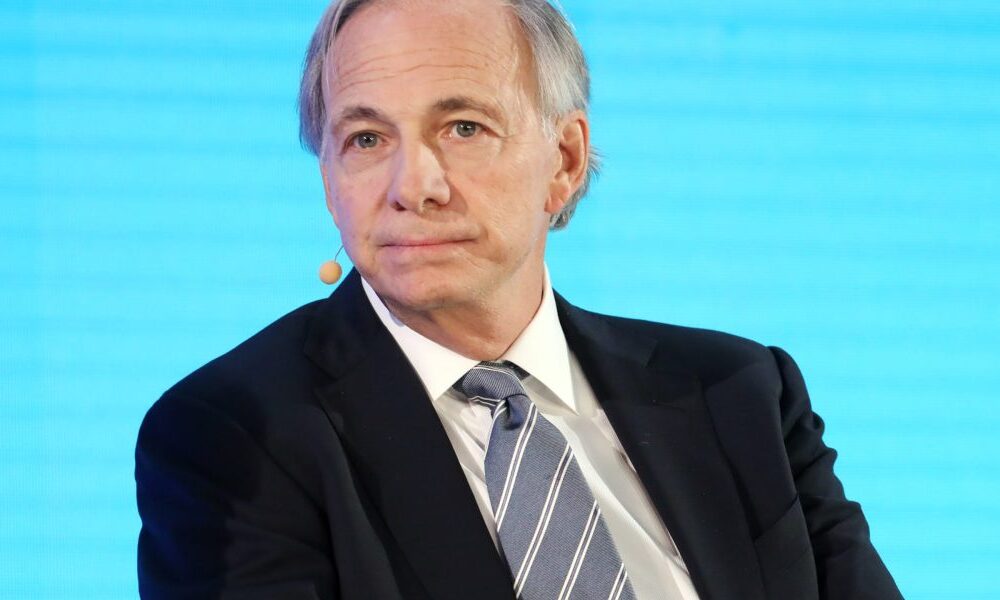
Ray Dalio, the billionaire founder of Bridgewater Associates, the world’s largest hedge fund, delivered a stark warning regarding the United States’ escalating national debt—and dollar devaluation—during a recent interview on the David Rubenstein Show. With the U.S. fiscal trajectory arguably unsustainable, Dalio predicted the burden will fall heavily on future descendants, stating: “My grandchildren and great grandchildren not yet born, are going to be paying off this debt in devalued dollars.”
A student of financial history, Dalio cited his voluminous studies of historical economic cycles. He argued when nations accumulate excessive debt—which has now grown in the U.S. to a staggering $38 trillion—they rarely resolve the issue through spending cuts or hard defaults. Instead, governments invariably turn to a “combination of devaluing the currency” and the “printing of money.”
“It’s always done when countries essentially go broke,” Dalio said. “They print money, devalue the currency, and create an artificially low interest rate, so that the person who’s holding the bonds is receiving an artificially low interest rate.” He explained this strategy punishes those who hold government bonds by offering them returns that fail to keep pace with real inflation.
Dalio drew a parallel to the economic shifts of the early 1970s, specifically the moment in 1971 when then-President Richard Nixon severed the U.S. dollar’s link to gold.
“The world used to have gold as money,” he said. That was the way.”
And people looked at things differently, he argued, calculating prices of things in terms of how much gold it would cost them. (He repeated his regular advice it’s “prudent” to have between 10% to 15% of your portfolio in gold.) Gold is skyrocketing in value now, he argued, because people liked gold for thousands of years “and people still seem to like gold.” In the age of fiat currencies, Dalio said, “80% of the world’s money has disappeared” since 1750—and the remainder has been greatly devalued.
“There’s a saying that gold is the only asset that you can have that’s not somebody else’s liability,” he said, explaining when you have gold in hand, you’re not at anyone’s mercy to validate what you have as money. Central banks around the world now are concerned what happened to, for example, Russia could happen to them, with all the sanctions in place since the Ukraine war.
The hedge fund billionaire added he sees the current economic environment moving toward a similar inflection point as the 1970s, driven by a global shift toward “war self-sufficiency” where nations can no longer rely on imports or foreign debt financing to fuel their economies. He didn’t mention these countries by name, but this could go some way toward explaining American aggression in Venezuela (for oil) and Greenland (for security and minerals wealth). In short, Dalio sees a devalued future—and many ramifications to go along with that.
Washington’s stalemate
When asked why the bond market has not yet revolted against this debt accumulation, Dalio described a paralysis in Washington. He noted policymakers assume the bond market will not collapse, while bond traders assume Congress will act before a crisis becomes irreversible. However, Dalio warned debt crises typically develop “slowly until it happens all at once,” paraphrasing the famous quote by Ernest Hemingway about how bankruptcy happens.
Dalio expressed skepticism that current legislative efforts, such as tariffs or “big beautiful bills,” will solve the core problem. While he acknowledged tariffs have historically been a valid source of government revenue and are necessary for building domestic manufacturing self-sufficiency, he maintained the debt issue will ultimately be managed through currency devaluation.
“Tariffs are not bad,” he said, noting how they once served as the U.S. government’s main source of revenue. “Any form of taxes has its cost,” he offered, philosophically.”
On navigating a stagflationary environment, Dalio urged investors to stop viewing their wealth in nominal terms (the dollar amount) and instead “look at the value of your portfolio in inflation adjusted terms.”
He identified two primary assets for protection:
1. Inflation-indexed bonds: He called Treasury Inflation-Protected Securities (TIPS) “the safest investment that you can get right now” because they guarantee a real return above inflation.
2. Gold: Dalio advised it is “prudent” to hold “10[%] or 15% of your portfolio in gold”. He described gold as “the only asset that you can have that’s not somebody else’s liability,” noting central banks are currently acquiring it as a hedge against sanctions and geopolitical risk.
Beyond specific assets, Dalio reiterated his career-long “mantra” of diversification. He suggests investors seek “15 good, uncorrelated return streams,” a strategy he claims can reduce portfolio risk by “about 80%” without sacrificing expected returns. He cautioned everyday savers against speculating in the markets, describing short-term trading as a “zero sum game” where the average person will “probably be the loser”.
Despite the grim monetary outlook, Dalio closed on a note of cautious optimism regarding the nation’s resilience. While acknowledging the severity of the financial cycle, he stated: “We will go through this and we will get to the other side,” emphasizing the outcome ultimately depends on “how we are with each other” as a society.