If Anta Sports Products Ltd. is hoping to cash in on Chinese consumers’ love of the outdoors, or their desire for fun, trendy products, then Puma SE is the wrong target.
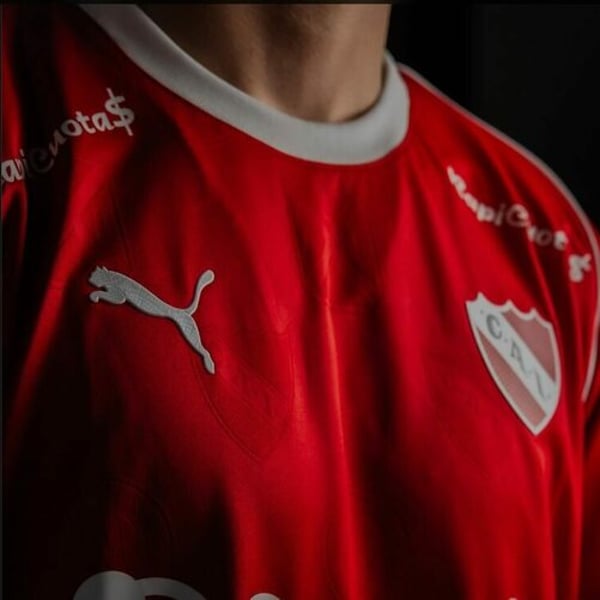
Puma sponsors several sports clubs – CAI
Puma does not have a strong enough position in shoes and clothing that enable the wearer to run faster or stretch more comfortably. And in the style stakes, where it has historically focused, it has lost out to Adidas AG. The upside for any potential bidder, though, is that it may be available at the right price.
Shares in Puma are up about 20% since Wednesday, lifted by a Bloomberg News report that the Chinese owner of Fila and Jack Wolfskin was exploring a takeover. It’s not hard to see why rivals might be running a slide rule over Puma: the shares have halved over the past year.
But there is a reason for the slump: new chief executive officer Arthur Hoeld slashed the company’s profit forecast in July, amid weaker sales in North America, Europe, and Greater China, and concern over tariffs. He promised a year of “reset” for the German sportswear brand.
Although Puma has a strong sporting history, outfitting Usain Bolt, Maradona, and Pele, and a decent product assortment, it has not capitalised enough on the world’s appetite for athletic footwear and apparel. Rivals, such as On Holdings AG, and Deckers Outdoor Corp.’s Hoka are benefiting from demand for running and comfortable walking shoes.
Puma generates only about 35% of sales from so-called “performance” products, compared with about 55% at Nike Inc. and Adidas, according to analysts at RBC Capital Markets. More fashion-oriented lines are the cornerstone of Puma’s business, and its thin-soled Speedcat should be in demand, given the vogue for low-rise, retro sneakers. But Bjorn Gulden, CEO of Adidas, and before that Puma, has conquered this market, with a succession of hot shoes, led by the Samba.
Hoeld has set out plans to establish Puma as one of the world’s top three sports brands, with a focus on football, running, and training. But he faces competition from Nike, where CEO Elliott Hill has also put athletic wear at the heart of his strategy. Gulden, meanwhile, wants to build on the buzz around Adidas’s fashion sneakers to sell more shoes and apparel that can be worn inside the gym.
Hong Kong-listed Anta may be able to make a difference. It is the biggest shareholder in Amer Sports Inc., whose brands Arc’teryx and Salomon are at the at the forefront of the “Gorpcore” aesthetic, which takes its name from the trail mix favoured by hikers, of wearing functional outdoor clothing everyday.
When it comes to sports-inspired outfits, Anta made Fila fashionable again, although some of the heat has waned lately. Even so, with Adidas’s dominance, and Hill’s plan to strengthen both the performance and style-led elements of Nike’s business, turning around Puma won’t be easy. But Puma does have one thing going for it: it may be available, and with a market value of about €3 billion, it is easily digestible for a rival or a private equity firm.
The Pinault family reached out to potential buyers in August, Bloomberg News reported. The billionaire clan, which controls Gucci-owner Kering SA, owns 29% of Puma through its Artemis holding company. Kering is seeking to cut debt, which stood at €9.5 billion at June 30, with the sale of its beauty division to L’Oreal SA for €4 billion, and delaying an option to buy the shares in Valentino SpA that it does not own. Artemis also has about €7 billion of debt, Bloomberg News reported in September. An injection of close to €1 billion at the current share price, from the sale of the Puma stake, would be useful.
But Artemis will likely be reluctant to sell at today’s depressed level. Given the extent of Puma’s decline, any potential bidder would have to pay at least a 50% premium. That would take the shares back to their level in March, before a cut to guidance and Donald Trump’s tariffs. But it would still be short of the price a year ago of about €47.
Given the challenges to a deal, Japan’s Asics Corp, owner of the popular Onitsuka Tiger sneakers, last week denied any interest in Puma. If Anta, or potentially a private equity firm, could overcome the hurdles, there may be scope for a reinvention. The company is at the foothills of its turnaround, and it does have a rich 77-year-old archive that could be mined for fresh kicks.
But the key to transforming Puma is turbocharging sales growth, and that will be a struggle. A takeover of Puma looks more like a long shot than a slam dunk.
Artificial intelligence (AI) continues its march to transform businesses’/consumers’ lives with customer advocacy platform Mention Me launching ‘AI Discovery IQ’, a free-to-use tool that “helps brands reach target consumers in the new age of generative AI search”.
Kirill KUDRYAVTSEV / AFP/Archives
It claims to allow brands to “instantly audit how discoverable they are within popular AI systems” such as ChatGPT, Claude, Gemini and Perplexity.
According to Mention Me, 62% of UK consumers now turn to generative AI tools for product recommendations, brand discovery and comparisons, “bypassing traditional search engines entirely [so] businesses are under pressure to respond to this behaviour change,” said the platform’s CEO Wojtek Kokoszka whose platform works with firms including Charlotte Tilbury, Huel and Puma, “helping marketing teams to boost consumer awareness and sales”.
With AI, it says the modern customer journey, powered by natural language prompts instead of outdated keyword strings, means consumers are 4.4 times more likely to convert if they find a brand through a large language model (LLM).
“The rise of ‘agent-mode’ assistants and AI-driven voice search has pushed brands into a new world of digital visibility. Despite this, most brands have little to no insight into how they appear in AI-generated answers”, said Kokoszka.
AI Discoverability IQ claims to give brands an overall LLM discoverability score, specific details on areas such as technical website elements, content and structured data, and actionable recommendations to improve their AI discoverability.
Its tool generates “measurable, trackable outputs” like AI Visibility Score, brands’ prompt-based results, and a side-by-side comparisons with their competitive set. This means brands “can react quickly to improve their discoverability scores” with Mention Me’s wider suite of products and unique first-party data.
It’s also “innovating and evolving” its platform to include more capabilities, such as the ability to benchmark against competitors, to drive further improvements for marketing leaders in the age of AI.
Mention Me CMO Neha Mantri said: “AI Discoverability is not yet a named practice within most marketing teams; the same way SEO wasn’t in the early 2000s. But when up to 31% of consumers say they’re more likely to trust responses from generative AI than traditional search results, this needs to change. Mention Me is naming the problem and providing a solution at just the right time.”
A host of celebrities and high-end brands have donating goods to ensure Savile Row’s latest annual ‘Pop-Up Crisis’ store will continue to support the Crisis charity event that has so far raised over £650,000 since 2018.
Image: Crisis charity
Across 8-13 December, the pop-up store at 18-19 Savile Row in London’s Mayfair will sell a curated selection of designer clothing, past stock and samples from luxury brands.
Celebs donating goods include Rosie Huntington-Whiteley, Naomie Harris, David Gandy, Jarvis Cocker, Louis Partridge, Jamie Redknapp and Emma Corrin, among others, for a week-long event and raffle with all proceeds going to help end homelessness across Britain.
Hosted by landlord The Pollen Estate, the temporary shop is also selling designer goods donated by Savile Row tailors including Mr Porter, Wales Bonner, Crockett & Jones and many other luxury brands from Barbour, Tod’s to Manolo Blahnik and Watches of Switzerland Group.
This year, celebrity model and fashion entrepreneur David Gandy will also be curating an exclusive online edit on shopfromcrisis.com, including donations from his own wardrobe as well as items from friends including Redknapp’s brand Sandbanks, Hackett and Aspinal of London.
Gandy said: “Having supported Crisis for a number of years, I’m delighted to have had the opportunity to curate my own online edit this year with the help of some of my close friends. It means a lot to know that donations from my own wardrobe are going towards such an important cause. Whether you’re looking for the perfect Christmas gift or to treat yourself, your purchase can help make a real difference to people facing homelessness this Christmas.”
Liz Choonara, executive director of Commerce and Enterprise at Crisis, added: “Pop-Up Crisis is such an iconic event in the Crisis calendar and one that we look forward to every year. We’re thrilled to be partnering with the team once again for another week celebrating the iconic craftsmanship and style of Savile Row – with all proceeds going towards our crucial work to end homelessness.”
Specialist outdoor clothing producer Dryrobe has won a trademark case against a smaller label. The win for the business, which produces waterproof towel-lined robes used by cold water swimmers, means the offending rival must now stop selling items under the D-Robe brand within a week.
Image: Dryrobe
A judge at the high court in London ruled the company was guilty of passing off its D-Robe changing robes and other goods as Dryrobe products and knew it was infringing its bigger rival’s trademark reports, The Guardian newspaper.
The company said it has rigorously defended its brand against being used generically by publications and makers of similar clothing and is expected to seek compensation from D-Robe’s owners for trademark infringement.
Dryrobe was created by the former financier Gideon Bright as an outdoor changing robe for surfers in 2010 and became the signature brand of the wild swimming craze.
Sales increased from £1.3 million in 2017 to £20.3 million in 2021 and it made profits of £8 million. However, by 2023 sales had fallen back to £18 million as the passion for outdoor sports waned and the brand faced more competition.
Bright told the newspaper the legal win was a “great result” for Dryrobe as there were “quite a lot of copycat products and [the owners] immediately try to refer to them using our brand name”.
He said the company was now expanding overseas and moving into a broader range of products, adding that sales were similar to 2023 as “a lot of competition has come in”.