If Anta Sports Products Ltd. is hoping to cash in on Chinese consumers’ love of the outdoors, or their desire for fun, trendy products, then Puma SE is the wrong target.
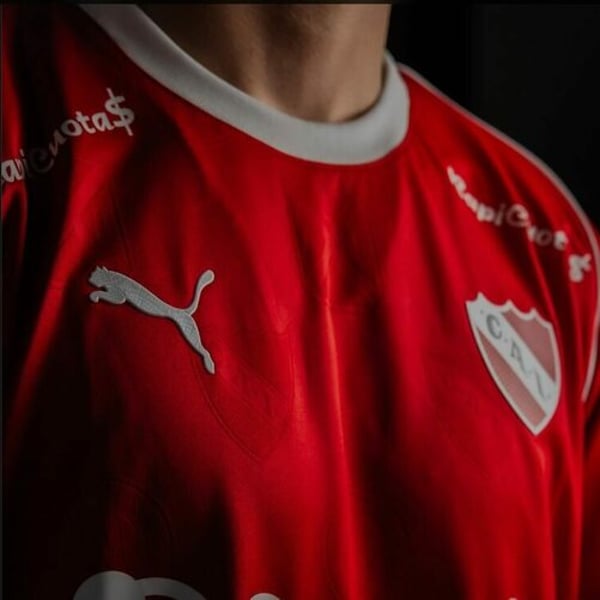
Puma sponsors several sports clubs – CAI
Puma does not have a strong enough position in shoes and clothing that enable the wearer to run faster or stretch more comfortably. And in the style stakes, where it has historically focused, it has lost out to Adidas AG. The upside for any potential bidder, though, is that it may be available at the right price.
Shares in Puma are up about 20% since Wednesday, lifted by a Bloomberg News report that the Chinese owner of Fila and Jack Wolfskin was exploring a takeover. It’s not hard to see why rivals might be running a slide rule over Puma: the shares have halved over the past year.
But there is a reason for the slump: new chief executive officer Arthur Hoeld slashed the company’s profit forecast in July, amid weaker sales in North America, Europe, and Greater China, and concern over tariffs. He promised a year of “reset” for the German sportswear brand.
Although Puma has a strong sporting history, outfitting Usain Bolt, Maradona, and Pele, and a decent product assortment, it has not capitalised enough on the world’s appetite for athletic footwear and apparel. Rivals, such as On Holdings AG, and Deckers Outdoor Corp.’s Hoka are benefiting from demand for running and comfortable walking shoes.
Puma generates only about 35% of sales from so-called “performance” products, compared with about 55% at Nike Inc. and Adidas, according to analysts at RBC Capital Markets. More fashion-oriented lines are the cornerstone of Puma’s business, and its thin-soled Speedcat should be in demand, given the vogue for low-rise, retro sneakers. But Bjorn Gulden, CEO of Adidas, and before that Puma, has conquered this market, with a succession of hot shoes, led by the Samba.
Hoeld has set out plans to establish Puma as one of the world’s top three sports brands, with a focus on football, running, and training. But he faces competition from Nike, where CEO Elliott Hill has also put athletic wear at the heart of his strategy. Gulden, meanwhile, wants to build on the buzz around Adidas’s fashion sneakers to sell more shoes and apparel that can be worn inside the gym.
Hong Kong-listed Anta may be able to make a difference. It is the biggest shareholder in Amer Sports Inc., whose brands Arc’teryx and Salomon are at the at the forefront of the “Gorpcore” aesthetic, which takes its name from the trail mix favoured by hikers, of wearing functional outdoor clothing everyday.
When it comes to sports-inspired outfits, Anta made Fila fashionable again, although some of the heat has waned lately. Even so, with Adidas’s dominance, and Hill’s plan to strengthen both the performance and style-led elements of Nike’s business, turning around Puma won’t be easy. But Puma does have one thing going for it: it may be available, and with a market value of about €3 billion, it is easily digestible for a rival or a private equity firm.
The Pinault family reached out to potential buyers in August, Bloomberg News reported. The billionaire clan, which controls Gucci-owner Kering SA, owns 29% of Puma through its Artemis holding company. Kering is seeking to cut debt, which stood at €9.5 billion at June 30, with the sale of its beauty division to L’Oreal SA for €4 billion, and delaying an option to buy the shares in Valentino SpA that it does not own. Artemis also has about €7 billion of debt, Bloomberg News reported in September. An injection of close to €1 billion at the current share price, from the sale of the Puma stake, would be useful.
But Artemis will likely be reluctant to sell at today’s depressed level. Given the extent of Puma’s decline, any potential bidder would have to pay at least a 50% premium. That would take the shares back to their level in March, before a cut to guidance and Donald Trump’s tariffs. But it would still be short of the price a year ago of about €47.
Given the challenges to a deal, Japan’s Asics Corp, owner of the popular Onitsuka Tiger sneakers, last week denied any interest in Puma. If Anta, or potentially a private equity firm, could overcome the hurdles, there may be scope for a reinvention. The company is at the foothills of its turnaround, and it does have a rich 77-year-old archive that could be mined for fresh kicks.
But the key to transforming Puma is turbocharging sales growth, and that will be a struggle. A takeover of Puma looks more like a long shot than a slam dunk.