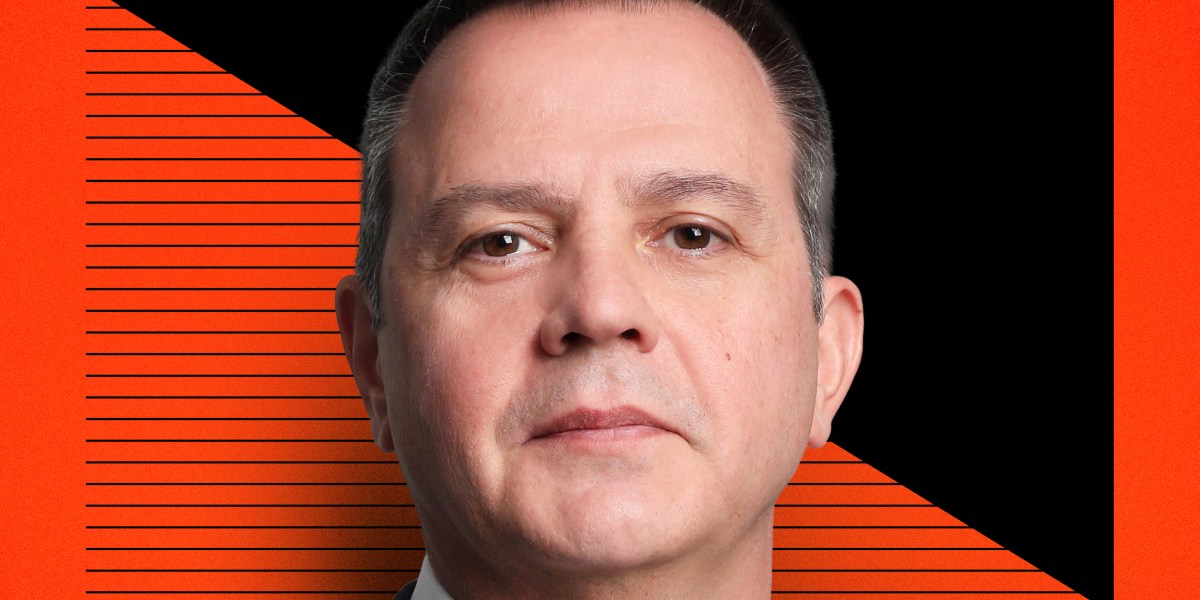
To engineer-turned-corporate executive Guillaume Lucci, there’s a straightforward solution to the Philippines’ ongoing energy emergency.
“What we need is more energy of all sorts, not only more renewable energy,” Lucci, the CEO of Filipino infrastructure firm Prime Infra, tells Fortune at the firm’s headquarters in Pasay City, Manila. “We don’t see energy reliability and affordability as being decoupled from decarbonization, but for now, we need a bit of everything.”
When the U.S.-Iran war broke out in February, shuttering the Strait of Hormuz and halting oil flows from the Gulf, there were few countries as hard hit as the Philippines. The archipelagic Southeast Asian country, which imports 98% of its oil from the Gulf, declared a nationwide energy emergency on March 24, which President Ferdinand Marcos Jr. said would remain in effect for a year.
Lucci’s pragmatic all-of-the-above approach cuts against some of the more purist energy transition narratives dominating Western capitals. In a country that imports almost all of its fuel from the Gulf, and had just 45 days of buffer supply during one point in the Iran crisis, he argues that reliability, affordability, and decarbonization can’t be sequenced neatly but must be pursued in parallel.
Prime Infra’s sprawling portfolio in the Philippines, from the Malampaya gas field to the Wawa hydropower dam and a nascent waste-to-energy business, is a test case for whether a diversified mix of assets can deliver resource security for a vulnerable emerging economy.
Lucci says that people often don’t understand how long it takes to build green infrastructure, adding that humanity needs stop-gap measures as they’re being constructed and scaled. (The Wawa dam, for example, was constructed between 2021 and 2025, and only began operations late last year.) “We’ve evolved and transitioned dramatically over the past 50 years, it’s just that infrastructure is so complex,” he says. “These projects take a long time to be built, mature and show returns. It’s a slow-moving process, but one that’s continuously in motion.”
Aside from energy, Prime Infra’s other focus areas—water and waste management—also reflect the Philippines’ most urgent national priorities. According to international non-profit Water.org, 59 million Filipinos, or 51% of the country’s population, lack access to safe drinking water, while 37% are unable to access clean toilets.
A young firm tackling age-old problems
Guillaume founded Prime Infra in 2017, with the backing of Filipino billionaire Enrique Razon Jr. The duo started the firm in the hopes of not just funding or building infrastructure, but having a continued stake in ensuring that they are operating effectively. (Guillaume initially served as the firm’s president and COO, before taking on the role of CEO in 2022.)
“The DNA of the company is to develop, invest and operate assets for a long time,” Lucci, an engineer by training, says. “It’s not about coming in, building assets, then going away. We intend to partner with and be embedded in local communities for decades to come.”
Guillaume’s passion for infrastructure was seeded during his childhood, which he largely spent across Morocco and Spain during the 1970s and 80s. “I spent most of my childhood in environments that are structurally deficient, so that shaped a lot of my views on how to address basic needs with infrastructure.”
Lucci trained as an engineer in France, Brazil and the U.S., before moving to the Philippines in 2014 to join Razon’s port management company, International Container Terminal Services, or ICTSI. (Both ICTSI and Prime Infra are listed on Fortune’s Southeast Asia 500 list, at No. 113 and No. 246, respectively.)
“ICTSI is a Filipino company that has a global footprint in emerging markets, and I really wanted to work in markets with significant barriers to entry,” Lucci explains. “ICTSI builds infrastructure in places like the Democratic Republic of Congo, Papua New Guinea, Iraq, Honduras and Mexico.”
In contrast to its sister firm, Prime Infra’s assets sit mostly within the Philippines, an emerging economy. “We are growing, urbanizing, industrializing, digitizing and electrifying, so all of that combined makes for a very exciting environment to build infrastructure,” Lucci says.
Yet, Lucci admits that the Philippines isn’t an easy market to build in. He cites heavy bureaucratic processes, social complications of tapping indigenous land, and the country’s inherent vulnerability to natural disasters as key challenges.
“When you build with climate resilience in mind, you find yourself in a situation where you’re designing for extremes rather than averages—and that actually makes infrastructure more expensive,” Lucci explains.
Construction of the company’s Wawa hydropower dam in Luzon, Philippines, for instance, started in 2021; it only began operations late last year. It cost a hefty 26.5 billion Philippine pesos, or roughly $500 million, to erect. Now complete, it serves as both a source of clean water for Metro Manila’s residents and a gravity-fueled battery for pumped-storage hydropower.
According to Lucci, the dam also acted as a defensive bulwark during last November’s Typhoon Uwan, capturing over 99% of rainfall and sparing the lives of many downstream communities.
Taking out the trash
Lucci and his team made their first venture into the waste management space in 2022, establishing Prime Integrated Waste Solutions, a wholly-owned subsidiary of Prime Infra which builds and operates modern waste recovery facilities. “In the Philippines, there was a very limited regulatory environment in support of waste management to industrialize it at scale,” he says. “It’s a challenging space because it’s so fragmented.”
At the moment, Prime Infra sorts, treats and sells waste to other industrial users. But Lucci has bigger plans: a waste-to-energy pipeline turning trash into power and heat, using systems like combustion, boilers and steam turbines. “We wanted to position ourselves to access the waste stream, because the feedstock is fundamental to sustainable fuels and can be tapped for energy production,” Lucci explains.
In 2023, oil and gas supermajor BP invested $10 million into WasteFuel Global, a sustainable fuels company backed by Prime Infra. (Prime Infra also owns WasteFuel Philippines, which is set to develop local biorefinery facilities converting municipal and agricultural waste into biomethanol.)
Still, Lucci says the waste-to-energy pipeline he envisioned for the firm has yet to become reality.
“The material recovery and municipal waste treatment facilities already exist, but infrastructure for the second part, where waste is turned into energy, has yet to be built,” he says. “We are ready to execute, but need a contract to finance it.” He acknowledges, too, that the global sustainable fuel sector is hamstrung by severe supply shortages, high production costs and shifting government support.
Lucci shrugs off the headwinds: “It’s like everything else… If it were easy, everybody would be doing it.”
Looking to further shores
After spending almost a decade building expertise in the Philippines, Lucci says Prime Infra is now looking for opportunities abroad.
“We will be ten years old next February,” Lucci says. “If you take into account the gestation periods of our projects, the first six to seven years were really about winning at home, and making sure that we were operating at a standard which allows us to compete internationally… Once we reached that turning point, we started looking outwards.”
Lucci declined to name specific markets that Prime Infra is likely to enter, but he admitted that he has a soft spot for Africa. “I grew up in Morocco at a time where everything had to be built, and now it’s a dominant force in renewable energy and has a lot of natural resources, metros and roadways,” he says. “I would say Africa has plenty of opportunities.”
Ultimately, even as Prime Infra continues to grow, Lucci hopes that it’ll retain its core aim of building infrastructure to address societal needs. “We’re striving for a good balance of strategic acquisitions and greenfield projects,” he concludes. “After all, the latter has been the defining trait of the business from the very beginning.”
In Fortune’s “Asia Agenda” column, released twice a month, we speak with Asia’s top business leaders about how they are building for the future and the lessons they’ve drawn from leading companies in one of the world’s fastest growing and most dynamic regions. Explore all of our profiles here.