Mulberry hails Q3 strength, shows turnaround plan is working
Published
January 14, 2026
With a brand that’s as loved as Mulberry has been for years in the UK, it’s been painful to watch it going into decline in recent years. Each new trading update can bring disappointment. But recent ones have held out some hope. So what did the latest update on Wednesday tell us? Well, there was not only hope but some tangible good news, showing that the turnaround plan put in place around a year ago is paying off.
Mulberry
The company said it saw a “strong festive trading period” underpinned by its full-price sales mix and newness. And there was “positive customer response” to its “right product, at the right price” strategy. You may remember that in November 2024, its still-new CEO Andrea Baldo said it was aiming to sell most of its luxury handbags for less than £1,095 (that is, less than the price of the star Bayswater) to broaden the brand’s appeal and boost sales.
For Q3 (the 13 weeks to 27 December) that translated into total group sales (that is, physical retail, e-tail and wholesale) rising 5.3% with retail and digital sales rising 11% on a like-for-like basis.
In the UK, those two figures were a positive 3.5% and 6.5%, respectively, while in the US they were an even bigger 12.7% and 12.6%. In Europe excluding the UK, the rises were 14.9% and an impressive 27.2%. In Asia Pacific, the total sales rise was just 0.8% (due to the continued right-sizing of its store estate as part of its simplification strategy) but on a like-for-like basis, sales rose 12.1%.
During the period, the group delivered revenue growth across all markets, with “a successful focus on full-price sales in the lead up to and during the festive period, against a highly promotional wider retail market”. This resulted in the previously mentioned group like-for-like sales rise in digital and e-commerce of 11%, with retail full-price sales up 19%.
The company said that the “strength of this performance reflects the group’s ongoing delivery of its new strategy – focused on simplifying the business, refreshing the brand, and more fully leveraging customer insights”.
Success at home and abroad
Part of its new strategy had been about refocusing on the UK market and customer, and this appeared to have been successful as sales in its home market rose. Full-price was the lynchpin, and it also delivered a larger proportion of the sales mix online than the prior year, “amid a backdrop of more challenging growth in the broader retail market”. This tells it that “the product is resonating positively with the UK consumer”.
As for the rest of the world, those figures for the US, Europe and Asia Pacific show that the strategy is working elsewhere too. The strength of the Apac like-for-like rise was a reflection of strong trading during the Double 11 shopping festival in November 2025.
The company added that it’s seen customers responding enthusiastically to its “differentiated product range, at a time when we have been realigning Mulberry’s identity as a British lifestyle brand, and reinvigorating its cultural relevance. Mulberry has successfully re-engaged their existing customer base as well engaging new shoppers across both retail and digital, reinforcing the core offering and signalling the Back to the Mulberry Spirit strategy is working”.
It’s something that’s also being seen at larger peer Burberry and in the case of both companies is a sign that focusing on Britishness and brand heritage doesn’t have to mean products and campaigns that are traditional, even boring.
In fact, both firms have been adding new products and reworking existing ones, using heritage materials, and promoting them via campaigns where creativity is to the fore.
CEO Andrea Baldo said that “there remains plenty more to be done” but the early results are “encouraging” and the business is also maintaining “disciplined cost control, while at the same time growing full-price sales by having products that resonate at the right price”.
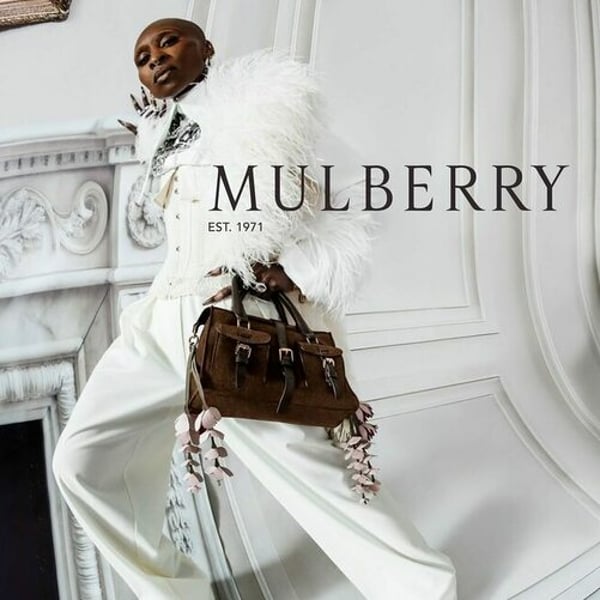
He also said the response to its Christmas campaign “has been in line with expectation, with particularly strong demand for the Roxanne, the Hackney and the continued resurgence of the Bayswater”.