
Politics
Mapped out — impeach — transfer student — NAS Pensacola — green policies
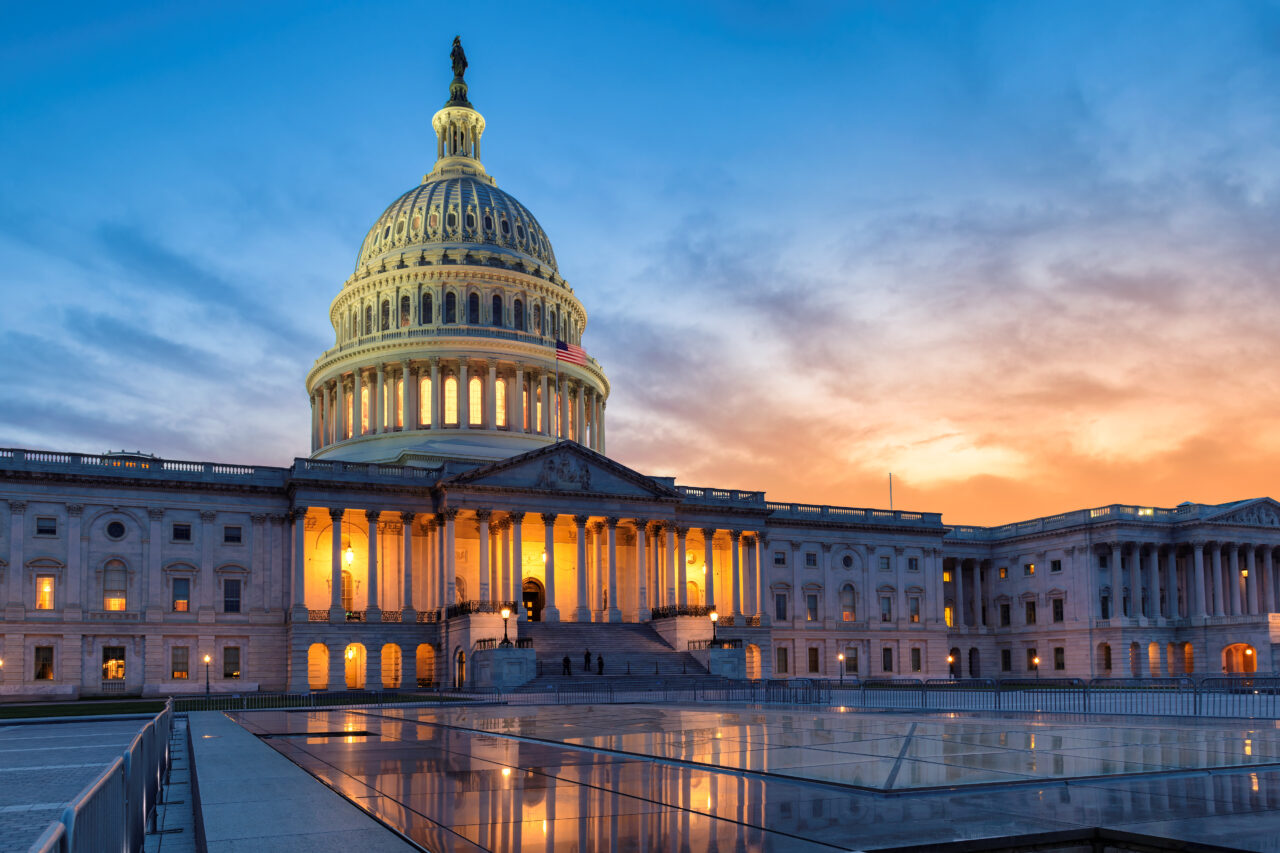
Final redistricting wars front?
After weeks of growing uncertainty about Florida’s congressional redistricting process, a Special Session should begin on Tuesday that will set the political boundaries for the Midterms.
But with no draft maps available to the public and wide dissent on the political and legal risks of a partisan gerrymander, criticism of the process remains as vivid as ever.
Republican Gov. Ron DeSantis, in a news conference, continued to list reapportionment among the goals of a Special Session, one widely seen now as the last front in the national redistricting wars.
A week ago, a Special Session was abruptly canceled and rescheduled after all Florida parties seemed to suggest they were waiting for others to draw maps. This week, Democratic wins and taunts from outside the state put fresh momentum behind the Florida push.
House Minority Leader Hakeem Jeffries, a day after Virginia voters approved an aggressive Democratic map, urged DeSantis to “F around and find out” what happens in Florida should the state redraw its map. Jeffries later announced his House Majority PAC would pump $20 million into Florida races to exploit a “DeSantis dummymander.”
But the steps appear to have strengthened DeSantis’ resolve to move ahead with the process. As one state lawmaker told Florida Politics, “DeSantis doesn’t back down. That’s kind of his thing. It always has been.”
But when will maps drop? Many in the Legislature expect them to publish this week. The big question remains whether they will try to erase the potential four-seat net Democrats appear poised to gain from Virginia’s new map. Some activists have posted maps online that, at least based on President Donald Trump’s 2024 performance in the state, would do so. But multiple GOP activists say that’s not possible in the 2026 Midterm environment, where Democrats appear poised to overperform nationwide.
An analysis released by the conservative Civic Data and Research Institute shows that an aggressive gerrymander could put as many as seven GOP-held seats at risk, while ironically shoring up the scant eight of 28 seats in Florida that Democrats now hold. That’s because of the map DeSantis’ office designed and pushed through the Legislature in 2022, which packed Democratic communities into the only districts that have gone blue since.
Of course, legal critics say there’s no way under Florida’s Constitution that DeSantis can legally move ahead with a partisan gerrymander at all, and that doing anything “in response” to Virginia would show an intent to violate provisions of the Fair Districts amendment.
But several longtime consultants of the Governor have suggested he may not care if the new maps hold after the Midterms, after which his second and final term as Governor will end regardless. They suggest that DeSantis always timed a Special Session late in the cycle, hoping to force the Purcell principle to kick in. That means courts could let the map stand in the Midterm even if it is ultimately thrown out, based on the idea that it would disrupt the electoral process.
And while multiple members of Florida’s congressional delegation, including GOP Reps. Mario Díaz-Balart, Greg Steube and Dan Webster, have warned against an aggressive redistricting process; it may be that DeSantis doesn’t care about thrusting them into competitive redistricting contests, particularly if the seats end up Republican.
There, it may be worth remembering that 19 of 20 Republican members of the congressional delegation, including seven of eight that Jeffries has threatened to target in the Midterms, endorsed Trump over DeSantis in the 2024 Presidential Primary. Only Rep. Laurel Lee, DeSantis’ former Secretary of State, supported DeSantis, and she’s already in a battleground if the map stays the same.
Revisiting impeachment
As Republicans seek out a fresh message for the Midterms, Sen. Rick Scott wants the Senate to focus on the 2019 impeachment of Trump.
The Naples Republican and close ally of the President pointed to a new report from Director of National Intelligence Tulsi Gabbard suggesting that the investigation into conversations between Trump and Ukraine was exaggerated.

“The ODNI declassified report released by Director Gabbard confirmed what most Americans already knew: the President’s impeachment in 2019 was a total sham based on false and illegitimate statements and a complete abuse of government power,” Scott said.
“That’s why I introduced my resolution calling for justice and accountability. If there is wrongdoing found in this investigation, I want these people prosecuted to the fullest extent of the law. I absolutely condemn the people responsible for this partisan attack on the President and commend Director Gabbard for her transparency so the American people can see the truth.”
Scott’s resolution calls the intelligence gathered biased and would declare the House resolution impeaching Trump as deficient.
Notably, one of the whistleblowers concerned about Trump demanding that Ukraine investigate Democrat Joe Biden’s son was Alex Vindman, the Democratic front-runner to challenge Sen. Ashley Moody in the Midterms.

Sports portal reform
A debate has been raging over the frequency with which college athletes change schools. Now, Moody is co-sponsoring a bill she hopes will get the issue under control.
The Student Athlete Act would institute rules governing athlete transfers and update and standardize other regulations in college sports.
Moody said college sports have become the Wild West, with athletes running amok and showing little loyalty to the institutions that pay for their education.

“We cannot sit back while college sports become unregulated professional free agency in a university jersey. Seventeen-year-olds are being asked to compete against 25-year-olds, and players are hopping from school to school each year, chasing money instead of excellence,” Moody said.
The bill was introduced by Republican Sen. Tommy Tuberville of Alabama, a former NCAA football head coach at Auburn University and other schools.
Tuberville has bemoaned recent changes in college athletics that have allowed many athletes to receive pay for appearing in ads. He has also hammered the controversial “transfer portal,” which allows players to be eligible to move to another college each year if they choose.
“Transferring every year interrupts a student’s education and is bad for team morale. That’s why I’m introducing a bill that would allow student-athletes to transfer one time without penalty, no questions asked. After that, if you choose to transfer, you sit out a year. It’s simple,” Tuberville said.
In addition to those limits, the measure would guarantee athletes five consecutive years of eligibility, regardless of injury or other interruptions, while reducing the number of transfers.
The bill would also require colleges to honor scholarship commitments even if an athlete is injured and can’t play. Federal law would also supersede any state laws governing college athletics.
Two centuries in Pensacola
Naval Air Station (NAS) Pensacola passed 200 years of operations this week, prompting a speech on the floor by Rep. Jimmy Patronis.
The Fort Walton Beach Republican spoke about the station’s role in furthering the American military’s modernization from the Panhandle.
“As the Navy’s first permanent air station and the birthplace of Naval aviation training, NAS Pensacola transformed into a defining pillar of our national defense,” Patronis said.

“From its earliest days, training just a handful of aviators and operating only a few aircraft, Pensacola quickly became the proving ground for the future of warfare in the air. It trained the Navy’s first aviators, helped pioneer early carrier aviation techniques, and, at the outset of World War I, stood as the nation’s only naval air training station.”
For more than two centuries, the base served as a training ground for thousands of troops. It annually supports more than 23,000 military and civilian personnel while graduating tens of thousands of service members from the Navy, Coast Guard, Marines and pilots from other allied nations.
“But beyond the milestones and achievements, we recognize something greater, the people. We honor every service member who has trained here, every family member who has stood beside them, and every sacrifice made in defense of our freedoms,” Patronis said.
“To the men and women of our United States Armed Forces, past and present, we thank you.”

Green voices
Rep. Maxwell Frost wants young people to shape the conversation about the future of climate policy.
The Orlando Democrat this week filed the Youth Climate Leadership Act, which would require youth environmental advisory councils within the Environmental Protection Agency and the Departments of the Interior, Energy, Agriculture and Commerce.

“Young people have the most at stake in the climate crisis, yet for too long they’ve been left out of the decisions shaping their future. The Youth Climate Leadership Act is about changing that, ensuring young people have a real seat at the table and a direct role in shaping the policies that will define their future,” Frost said.
“At a time when federal leadership is rolling back climate progress, we cannot afford to leave young voices behind. We must act now to protect the progress we’ve made and empower the next generation to lead in building a safer, more sustainable future.”
Sen. Jeff Merkley, an Oregon Democrat, filed a Senate companion bill. Several environmental groups immediately endorsed the plan.
“We appreciate Rep. Frost’s leadership in introducing legislation to make sure young people have a seat at the table in federal environmental decisions that will affect their future. We will continue fighting alongside climate champions like the Congressman to reinforce our democratic processes and safeguard a livable climate,” said Matthew Davis, vice president of federal policy of League of Conservation Voters.
Modernizing diversity caseloads
As courts across the country deal with a growing number of cases, Lee wants certain matters excluded from consideration by Florida federal courts.
The Thonotosassa Republican just filed the Federal Diversity Jurisdiction Modernization Act, which would raise the amount-in-controversy threshold for diversity cases from $75,000 to $500,000. That spike accounts for inflation but also seeks to address the substantial number of diversity cases that land in Florida courtrooms.

“Across the country — and especially in Florida — we are seeing federal courts stretched beyond capacity, with litigants waiting years to have their cases resolved,” Lee said.
“The Federal Diversity Jurisdiction Modernization Act is a practical, commonsense step to reduce unnecessary burdens on federal courts, return appropriate cases to state and local jurisdictions, and ensure Americans can access justice without costly and prolonged delays.”
Lee’s Office figures raising the threshold for suits will cut the caseload by one-third. Lee also noted that Florida’s Middle District ranks No. 2 in diversity urgency need cases, behind only California.

National Wildlife Corridor
A bipartisan bill to support wildlife diversity just landed in coffers, with Rep. Vern Buchanan listed among the bill’s major champions.
The Wildlife Corridors and Habitat Connectivity Conservation Act would set off the process of establishing a National Wildlife Corridor System. The legislation, as written, would support planning for and the identification of natural species migration patterns.
“Florida is home to some of the nation’s most treasured wildlife in the country, from panthers and alligators to manatees and sea turtles,” said Buchanan, a Longboat Key Republican.

“Safeguarding their habitats is critical for the survival of these species and the preservation of our state’s ecosystems. As co-Chair of the Animal Protection Caucus, I am honored to help introduce this bipartisan legislation that gives states the power to protect vital wildlife corridors. Earth Day is the perfect opportunity to advance commonsense solutions that ensure the future of our nation’s wildlife.”
He filed the bill with Democratic Reps. Don Beyer of Virginia and Zoe Lofgren of California, as well as Republican Rep. Brian Fitzpatrick of Virginia.
More open minds?
Are conflicts of interest compromising the National Academies of Sciences’ climate change research? Rep. Scott Franklin would like to find out more.
The Lakeland Republican, who chairs the House Science, Space and Technology Subcommittee on Environment, sent letters, along with House Science, Space and Technology Committee Chair Brian Babin and Subcommittee on Investigations and Oversight Chair Rich McCormick, questioning the independence of federally funded science.

“Taxpayer-funded science should be rooted in facts, transparency, and the highest standards of integrity,” Franklin said.
“When federal agencies rely on findings developed by the National Academies and other advisory bodies to support costly regulations, Americans deserve to know those findings were developed objectively and without political bias or special-interest influence. These letters are about restoring accountability and ensuring science serves the public, not an agenda.”
One letter to Dr. Marcia McNutt, President of the National Academies of Sciences, Engineering, and Medicine, sought questions on the study of greenhouse gases. The second challenges the agency’s attribution policies as a problem reinforcing biases in environmental studies.
“NASEM’s policy regarding Committee member bias is likely insufficient. Its policies on Committee composition and balance require that ‘consideration should be given to whether the Committee membership can be objective and open-minded in addressing the issues before it,’” one letter reads.
“While ‘strongly held views or biases’ or close associations with groups that have previously taken a strong position do not preclude membership, the member must be ‘open to new learning.’”

Border screenings
Airlines often use biometrics to fast-track passengers through airport security. Can similar technology be used to stop repeat offenders from illegally crossing the border?
Rep. Byron Donalds filed a bill requiring a formal evaluation of how technology could improve screenings. The Reform Immigration Through Biometrics Act would require the Department of Homeland Security to report on the implementation of an entry-exit data system with Customs and Border Protection.

“Knowing who has come into our country is fundamental to our nation’s sovereignty and survival. Under President Trump’s leadership and with the help of the Department of Homeland Security, the border has been secured, but the work is far from over. Visa overstays and fraudulent documentation remain a large piece of the overall illegal immigration puzzle that needs to be addressed,” Donalds said.
“The American people have entrusted Republicans with a clear mandate to secure our borders and resolve the immigration crisis — and we are committed to delivering on that promise. This bill is a critical step forward in delivering on this mandate. I am proud to introduce the Reform Immigration Through Biometrics Act to finally ensure oversight of our nation’s biometric entry-exit system.”

Stamping out cancer
Since 1989, the Postal Service has issued Breast Cancer Research stamps at a premium rate, with the extra cents per stamp supporting medical research at the National Institutes of Health and other federal labs. Rep. Debbie Wasserman Schultz, a breast cancer survivor herself, wants to keep that program going.
“I know what it’s like to hear the dreaded words: ‘You have breast cancer.’ As a survivor, this fight is personal,” the Weston Democrat said. “That’s why I’m proud to lead this bipartisan effort to reauthorize the Breast Cancer Research stamp program, which raised nearly $100 million for lifesaving studies at the Defense Department and NIH. Every stamp purchase is a commitment to beat this deadly disease.”
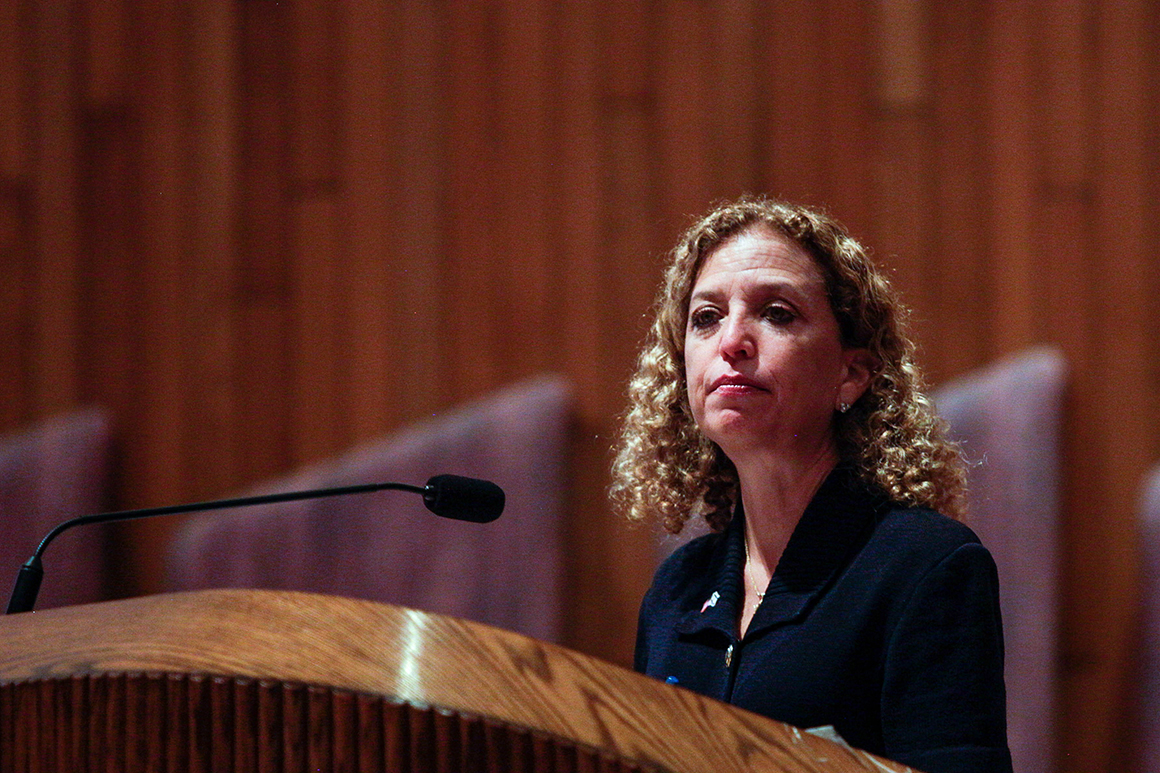
Wasserman Schultz filed the Breast Cancer Research Stamp Reauthorization Act (HR 8358) with Rep. Beth Van Duyne, a Texas Republican. “The Breast Cancer Research stamp program proves that small actions can make a big difference, raising nearly $100 million for lifesaving research over the past three decades,” Van Duyne said.
Moody will carry a Senate companion bill with Sen. Jacky Rosen, a Nevada Democrat.
The bill has the backing of several major groups supporting cancer research.
“Susan G. Komen applauds the leadership of Sens. Rosen and Moody and Congresswomen Van Duyne and Wasserman Schultz in introducing legislation to reauthorize the Breast Cancer Research Stamp and urges Congress to swiftly act,” said Molly Guthrie, vice president of policy and advocacy for the Susan G. Komen Breast Cancer Foundation.
“This bicameral, bipartisan legislation represents a critical opportunity to sustain a proven, innovative funding mechanism that has advanced lifesaving breast cancer research.”

Florida man out
John Phelan, a Florida businessman named last year as Navy Secretary, was fired this week by the White House, the latest victim of an administration shake-up.
“Secretary of the Navy John C. Phelan is departing the administration, effective immediately,” announced Deputy War Secretary Sean Parnell. “On behalf of the Secretary of War and Deputy Secretary of War, we are grateful to Secretary Phelan for his service to the Department and the United States Navy. We wish him well in his future endeavors.”

Before his role in the administration, Phelan had run several finance operations, including MSD Capital and Rugger Management. He has lived for years in Palm Beach and raised money for Trump’s campaign before his appointment.

On this day
April 24, 1980 — “Operation Eagle Claw fails” via U.S. Army Center of Military History — American military commanders refined a plan for a possible rescue mission of hostages in Iran. President Jimmy Carter approved a military rescue operation. Operation Eagle Claw began when eight United States Navy helicopters took off from the deck of the USS Nimitz in the Arabian Sea for a 600-mile trip to rendezvous in the Iranian desert with six C-130 transport aircraft. The aircraft encountered a violent sandstorm common in the desert. Carter and his staff decided to abort the mission. As the force prepared to depart, an RH-53D helicopter crashed into a C-130 carrying extra fuel, igniting a fire that killed five Airmen and three Marines.
April 24, 1800 — “Library of Congress established” via History.com — President John Adams approved legislation to appropriate $5,000 to purchase “such books as may be necessary for the use of Congress.” The first books, ordered from London, arrived in 1801 and were stored in the U.S. Capitol, the library’s first home. The first library catalog listed 964 volumes and nine maps. By the 20th century, the Library of Congress had become the de facto national library of the United States and one of the largest in the world. Today, the collection, housed in three enormous buildings in Washington, contains more than 17 million books.
___
Peter Schorsch publishes Delegation, compiled by Jacob Ogles, edited and assembled by Phil Ammann and Ryan Nicol, with contributions by Drew Dixon.