
Sports
Managerial Turnover in UEFA’s Top 10 Leagues Since 2020/21
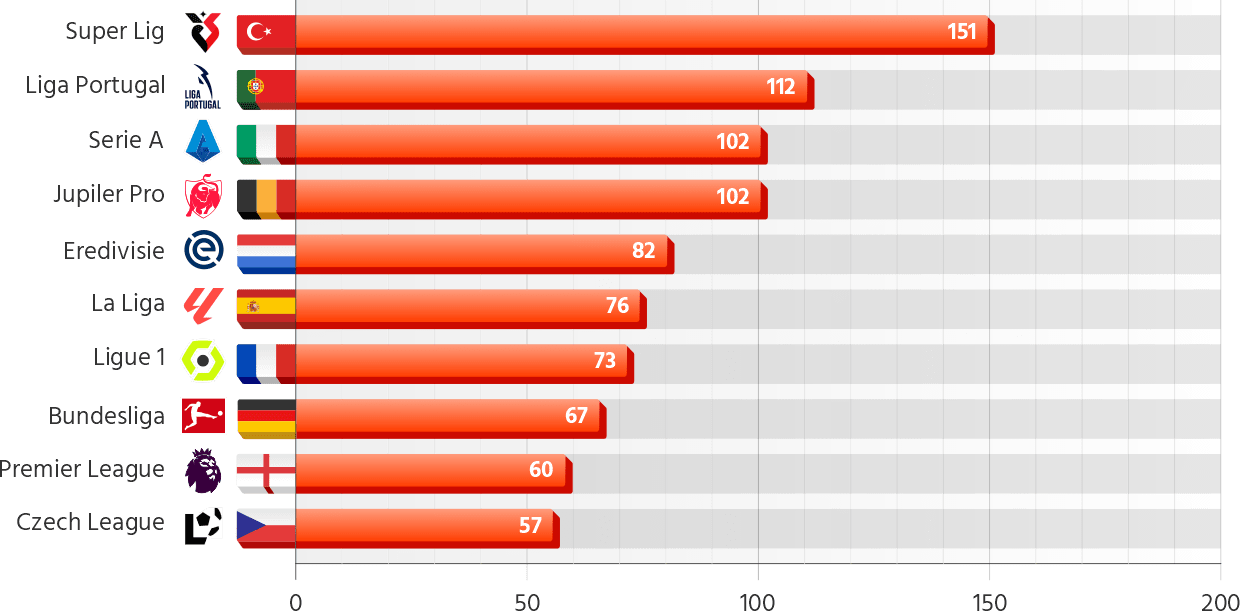
Managerial changes vary from 151 in Turkiye’s Super Lig to just 57 in the Czech league
Football management in Europe is more volatile than ever. With expectations rising and results demanded instantly, top clubs across UEFA’s top 10 ranked leagues have shown little patience for underperformance. Sportingpedia’s latest report examines the scale of managerial changes since the start of the 2020/21 season, offering a rare long-term perspective on the most restless – and the most stable – football environments at the very summit of the European game.
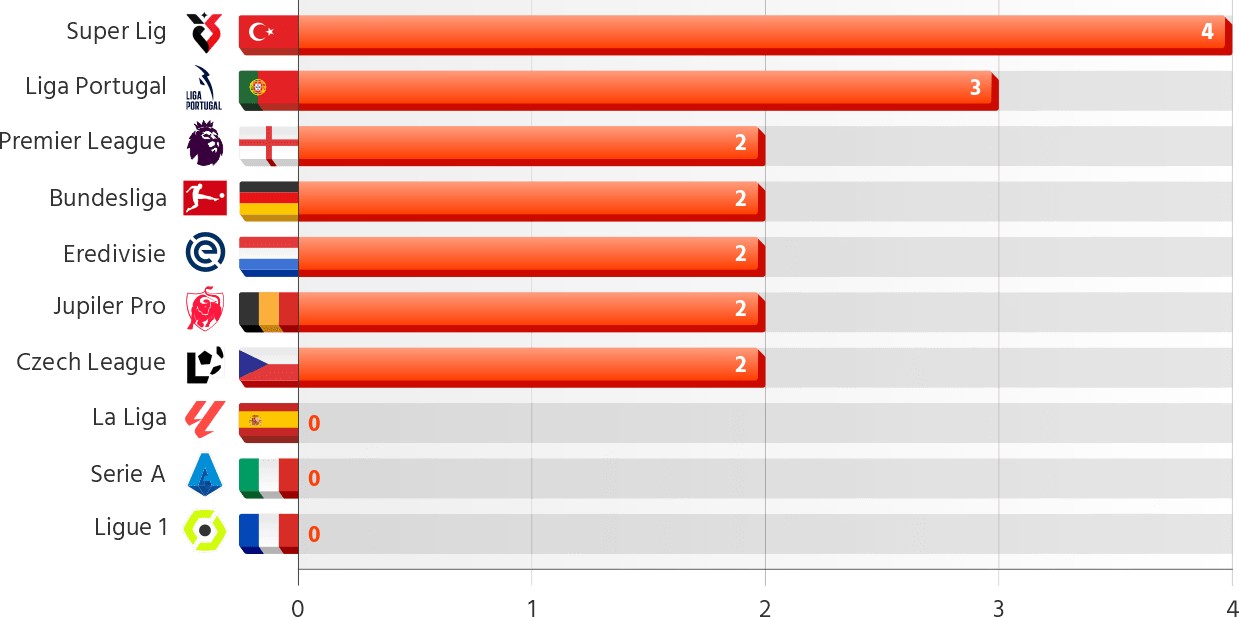
One of the report’s most curious highlights is the sheer scale and disparity of managerial turnover across Europe’s elite competitions. A total of 882 managerial changes have taken place across UEFA’s top 10 ranked leagues since the beginning of the 2020/21 season. Turkiye’s Süper Lig leads all others, recording a remarkable 151 coaching changes – more than double the number seen in Italy’s Serie A (102) and nearly triple the English Premier League’s 60. At the other end of the spectrum, the Czech League has registered just 57 managerial departures in the same period, making it the most stable among the continent’s top leagues. Already, in the early weeks of the 2025/26 campaign, Turkiye’s Super Lig and Portugal’s Liga Portugal are pacing ahead, while La Liga and Serie A have yet to record a single managerial switch.
Key Takeaways:
- Turkish Süper Lig has had the highest turnover by far, with 151 managerial changes since 2020/21.
- The Premier League is Europe’s most stable top league, with just 60 changes in six seasons.
- Serie A’s 2023/24 campaign set an Italian record, with 28 managerial changes.
- Spain’s La Liga peaked at 16 changes in 2020/21 but has shown a downward trend since.
- France’s Ligue 1 saw volatility spike with 18 and 19 changes in 2020/21 and 2022/23, but overall remains below Italy and Turkiye.
- Bundesliga’s most turbulent year was 2020/21, with 19 changes – a number unmatched in recent seasons.
- Liga Portugal hit a high with 27 changes in 2024/25, confirming its reputation as a coaching hotspot.
- Belgium’s Jupiler Pro League is consistently active, with managerial changes ranging from 18 to 21 per season.
- In the Dutch Eredivisie, Twente is the only club in the sample to have already made two managerial changes this season.
- The Czech League is Europe’s calmest top league, with annual changes rarely breaking double digits.
Managerial Changes in UEFA’s Top 10 Leagues Since 2020/21 Season
Data Source: Transfermarkt
Turkish Super Lig
The Turkish Super g remains Europe’s most volatile managerial environment. Since 2020/21, 151 coaching changes have been recorded – by far the highest turnover in this report. The 2020/21 season set the benchmark for instability, with 39 changes at 17 clubs. While numbers have dipped since, the league remains restless, with 27 managerial departures as recently as 2024/25 and four clubs already changing managers in 2025/26.
Liga Portugal
Portugal’s league is another championship marked by frequent reshuffles, with 112 managerial changes since the 2020/21 season. The 2024/25 campaign saw a high-water mark of 27 changes at 14 clubs. Other recent years have seen between 19 and 23 changes annually, making it one of the more unstable environments in Western Europe. Already, three clubs have made coaching changes in 2025/26.
Serie A
Italy’s Serie A has experienced considerably more flux, with 102 managerial changes since 2020/21. The 2023/24 season was the most volatile, with 28 changes at 17 clubs – the highest single-season tally here. Even quieter years saw double-digit turnover, with only the current campaign (2025/26) so far offering a brief respite.
Managerial Changes in UEFA’s top 10 Leagues for 2025/26 Season
Data Source: Transfermarkt
Jupiler Pro League
Belgium’s Jupiler Pro League has also seen steady managerial activity, with 102 changes since 2020/21. Annual totals have remained consistent, ranging from 18 to 21 changes in most campaigns. Only two changes have occurred so far in 2025/26, possibly hinting at a calmer campaign ahead.
Eredivisie
The Dutch Eredivisie has experienced moderate but consistent managerial turnover. In the last six seasons, 82 changes have been made. The highest volatility came in 2022/23 and 2023/24, with 18 changes each. Most seasons have hovered between 13 and 16 changes. The 2025/26 campaign has begun with two changes – both at Twente – showing managerial changes remain a regular feature.
La Liga
Spain’s La Liga has also exhibited a degree of managerial stability compared to some continental peers. Over the past six seasons, 76 managerial changes have been registered. The 2020/21 season was the most volatile, with 16 changes at 13 clubs. Since then, turbulence has gradually declined, with just 12 changes in 2024/25 and, so far, none in 2025/26 – a rare display of patience in Spanish football.
Ligue 1
France’s Ligue 1 has seen its share of instability, though less than Italy or Turkiye. There have been 73 managerial changes since 2020/21. The 2020/21 and 2022/23 seasons both brought heightened volatility, with 18 and 19 changes, respectively. More recent years have shown greater stability, and there have been no changes so far in 2025/26 – a sign the managerial merry-go-round may be slowing, at least for now.
Bundesliga
Germany’s Bundesliga sits in the middle regarding managerial churn, with 67 changes since 2020/21. The most dramatic period was 2020/21, when 19 changes were made at 14 clubs – a level unmatched since. The annual totals have trended downward, with just 10 changes last season and only two so far in 2025/26, hinting at a period of relative calm.
Premier League
The English Premier League stands out for its comparative stability among Europe’s top divisions. Since the start of 2020/21, just 60 managerial changes – a total lower than most other elite leagues. The 2022/23 campaign brought an unprecedented spike with 18 changes at 11 clubs, marking the most turbulent period in recent years. In contrast, 2023/24 matched the lowest figure in this span with just nine changes. Two clubs have already made changes in the current campaign, suggesting that familiar churn may continue.
Czech League
The Czech League stands out for its comparative stability. Since 2020/21, just 57 managerial changes have occurred there. No season has seen more than 14 changes, and several have seen as few as nine or ten. The 2023/24 campaign was the busiest, with 14 changes at 11 clubs. The early weeks of 2025/26 have seen two departures, reinforcing the Czech League’s reputation as one of Europe’s calmer coaching landscapes.