Connect with us

Business

Lyft CEO on the time Bill Gates told him he was making ‘the stupidest decision I’ve ever heard anyone made’

Published

on


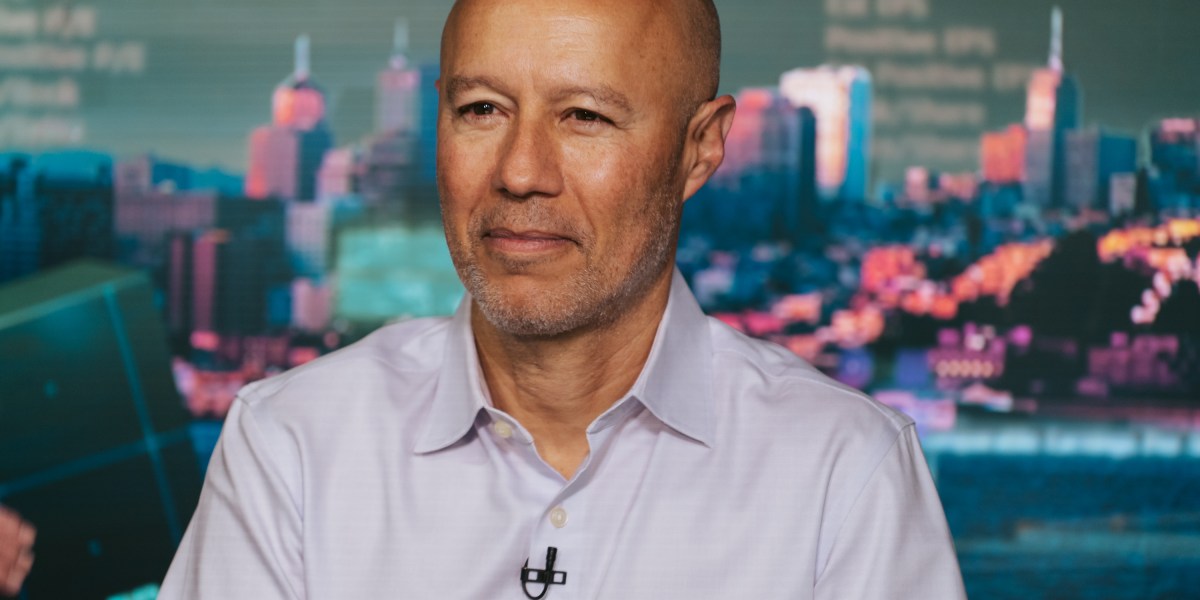
Before David Risher was tasked with scripting a “comeback story” for ride-sharing company Lyft, he made a career move so audacious that it prompted a direct, and blunt, intervention from Microsoft co-founder Bill Gates. In a recent appearance on Fortune‘s Leadership Next podcast, Risher shared the moment Gates told him he was making “the stupidest decision I’ve ever heard anyone made.”

The year was 1996, and Risher was enjoying a successful career at Microsoft during the heyday of Windows. In fact, Risher noted he and his wife just had their 30th wedding anniversary, having met “on the first day” at Microsoft. He said it was a very formative time for him and his career at a very competitive company.

But he had been in talks with a man named Jeff Bezos, who was running a brand-new startup called Amazon. When Risher decided to leave the tech giant to join the fledgling online retailer, Gates himself sent an email and called him into his office.

“He says, ‘Hold on for a second. You mean to tell me you’re leaving this company for some tiny, little internet bookstore that nobody’s ever heard of … that has got to be the stupidest decision I’ve ever heard anyone made,’” Risher recalled.

While Risher admitted the move wasn’t “entirely rational,” he said he was drawn to the opportunity. He had first connected with Bezos a year earlier, when the Amazon founder was conducting a reference check. What ultimately convinced Risher to take the leap was Bezos’s intense focus on the customer. “He was very customer-obsessed,” Risher said, noting Bezos’s logic that on the internet, “everyone is one click away from somebody else, so you have to create a great customer experience.” (In fact, Bezos’s management style stressed to Amazonians that they should approach every day from a “day one” mindset.)

Bezos also laid out a compellingly ambitious vision: to grow the then-$15.6 million business into a billion-dollar company by the year 2000. Risher, an avid reader, was captivated by the chance to build something new at the “crazy intersection of technology and culture.” He joined Amazon as its 37th employee, tasked with helping build the “everything store” by adding music, video, and toy categories. The company hit its billion-dollar target a year early, in 1999. The move paid off so well that a “Thank You” letter from Bezos to Risher, dated February 2002, remains on Amazon’s website to this day.

One of the great comebacks

Now, as CEO of Lyft, Risher is applying that same foundational principle of customer obsession to engineer what he hopes will be “one of the world’s great comeback stories.” He said when he took the job in 2023, the company had “lost its way” a little bit, as it was losing market share, and it wasn’t profitable. (Lyft stock is down roughly 20% over the last five years, but has risen 60% year-to-date.) Risher’s strategy has been to return to the basics: understanding what customers actually want.

To achieve this, he famously works “undercover” as a Lyft driver in Napa Valley and San Francisco to learn firsthand about the rider and driver experience. A conversation with a passenger stressed by variable pricing led directly to the creation of Lyft’s “Price Lock” feature. He insists on viewing drivers as customers, too, which led to a 70% earnings guarantee—ensuring drivers always receive at least 70% of what riders pay, a move that has given Lyft a 19-point advantage in driver preference over competitors.

This obsessive focus on improving the service is part of Risher’s fight against what he calls “enshittification,” borrowing the phrase from Cory Doctorow that was named the “word of the year” by both an Australian dictionary and the American Dialect Society for how it summed up widespread frustration with the tech sector, even with modern life. Risher described it as the gravitational pull that makes services worse over time due to profit and investor pressures. By breaking down problems piece by piece, his team has drastically improved the user experience, cutting the driver cancellation rate from a “super irritating” 15% down to below 5%.

From receiving a stark warning from a tech titan to earning a permanent thank-you from another, Risher’s unconventional career has been defined by taking on ambitious challenges. Now, he’s betting that the same customer-first philosophy that turned a small online bookstore into a global empire can drive Lyft’s next chapter of growth.

For this story, Fortune used generative AI to help with an initial draft. An editor verified the accuracy of the information before publishing. 

Fortune Global Forum returns Oct. 26–27, 2025 in Riyadh. CEOs and global leaders will gather for a dynamic, invitation-only event shaping the future of business. Apply for an invitation.


Source link

Continue Reading

Business

Down Arrow Button Icon

Published

on


Investors are trying to remain level-headed as tensions between the U.S. and Europe escalate, with many drawing on experience from Liberation Day as a tool for how to navigate current geopolitical volatility.

Analysts are, understandably, uneasy. Their concern stems from President Trump’s claim that a bevy of European nations would face new tariffs within a matter of weeks if they did not support America’s bid to purchase Greenland, currently a territory of NATO member country Denmark, which is not putting the island up for sale.

At the time of writing, the VIX volatility index is up 27% over the past five days, its highest since April last year when the Oval Office announced sweeping tariffs on every nation on the planet. While markets in the U.S. are yet to have the opportunity to react to the news after being closed for the Martin Luther King holiday, assets in Europe are looking pale.

Germany’s DAX is down 1.57% at the time of writing, London’s FTSE is down 1.4% and France’s CAC 40 is down 1.2%. Asia is similarly queasy, Tokyo’s Nikkei 225 is down 1.11% while Hong Kong’s Hang Seng Index is down 0.29%. A preview for U.S. trading comes in the form of futures, with the S&P 500 trending down 1.75% at the time of writing.

Meanwhile, gold prices—a barometer for investors fleeing to safety—are climbing higher still, up 1.17% overnight.

However, the damage could have been worse: investors don’t even need to cast their minds back a year for inspiration. Markets plummeted following Trump’s Rose Garden address on April 2, his so-called Liberation Day, despite the fact many of his threatened tariffs were delayed within a matter of days. And so the ‘TACO’ trade was born: Trump Always Chickens Out.

Jim Reid of Deutsche Bank noted to clients this morning that there’s “room for bigger moves” in markets, and highlighted that Trump’s duties imposition on key trading partners is already on shaky ground. This is on account of an imminent Supreme Court ruling on whether the White House’s initial round of tariffs were carried out legally. This “might end up further constraining Trump’s room for maneuver on tariffs. However, no one knows when this will come through (apart from maybe the judges).”

“The market has been burnt before by overreacting to tariff threats,” Reid continued. “Obviously, there was Liberation Day but more recently Trump’s escalation with China in October prompted a -2.71% decline for the S&P 500 on that day, before he then met with Xi and the trade truce was extended by a year.”

Over at UBS, chief economist Paul Donovan described a rational market: “Investors and the U.S. administration are likely to keep focus on the U.S. bond market, which weakened modestly in the wake of Trump’s latest tariff threats. The implications of additional tariffs are more U.S. inflation pressures and a further erosion of the USD’s status as a reserve currency. So far, bond investors do not seem to be taking the threats too seriously.”

Markets also “dismissed” another barb from Trump aimed at French President Macron, over duties levied on champagne and Bordeaux if the European leader refuses to cough up $1 billion to join the Board of Peace for Gaza.

Unconvinced traders

Further evidence of TACO traders comes from Polymarket. At the time of writing, only 17% of betters believe all the tariffs Trump has threatened against Europe will go into effect on February 1. A further minority of 40% believe any tariffs will go into effect in a fortnight’s time.

Odds are also declining on a country-to-country basis. For example, Denmark leads Polymarket’s polls as the most likely country to face levies from the U.S., but that still sits as the outlying outcome at 40% and decreasing. Meanwhile France’s odds of tariffs are at 38%, and Norway is at 37%.

Potentially buoying the idea that the president will make another U-turn is political polling, especially with midterm elections approaching in November. Trump’s approval ratings have been declining across a number of outlets, with nine in 10 Americans telling a Quinnipiac survey they were against taking Greenland using military force. A further Reuters/Ipsos poll found just 17% of voters support Trump’s efforts to acquire Greenland.

However, if investors—or foreign governments—rely too heavily on the notion that Trump will chicken out, they could shoot themselves in the foot. After all, if the White House sees markets behaving in a fairly stable manner, then this could give him the confidence to push ahead with the very plans that investors were betting against. As Deutsche Bank’s Henry Allen framed Trump’s August 1 tariff deadline last year: “The paradox is that as markets discount the tariffs and perform strongly, that’s actually making the higher tariffs more likely as the administration grows in confidence.”


Source link

Continue Reading

Business

Why Jollibee is turning to a U.S. IPO to fuel global growth

Published

on


Good morning. Chickenjoy—its crispy, juicy fried chicken—and Jolly Spaghetti are signature menu items at Jollibee, a Filipino fast-food chain that is building a growing fan base in the U.S. Now, the company is setting its sights on Wall Street. 

The Philippines-based Jollibee Foods Corporation (JFC), the restaurant’s parent company, disclosed earlier this month that it plans to spin off its international operations and pursue a U.S. initial public offering for that business. The contemplated spin-off and listing are targeted for late 2027, leaving “quite a bit of time ahead of us for the work to be done,” Jollibee Global CFO Richard Shin said during a Jan. 14 media roundtable.

JFC, which includes restaurant brands such as Smashburger and The Coffee Bean & Tea Leaf, is currently traded as a single group on the Philippine Stock Exchange and operates in 33 countries. Over the past 15 quarters, JFC’s international network has posted a 26.7% compound annual growth rate, outpacing the group’s overall 15.1% rate of expansion. The separation reflects increasingly distinct strategic profiles for the domestic and international businesses, Shin said.

In March 2025, Jollibee launched its first U.S. franchising program. After opening its first North American location in 1998 in Daly City, California, the brand has since expanded to more than 100 locations across the U.S. and Canada as of early 2026.

Why go the route of a U.S. IPO? “I think there’s a fact that we can all agree on: the U.S. capital markets have deep investor-based experience in valuing global consumer and restaurant growth companies,” Shin said on the call.

Many such companies are still growing into their potential yet are often rewarded with higher multiples and valuations, he said. While that outcome is not guaranteed for JFC, a U.S. listing offers greater capital depth, liquidity, and broader analyst coverage, with any final decision subject to valuation and required approvals, he added.

The IPO market in the U.S. is heating up again, Fortune’s Jeff John Roberts writes in a new feature article. “While 2026 will almost certainly not match the banner year of 1999, which saw 476 companies go public, investors should have far more choices than they did four years ago, when just 38 firms held an IPO,” he writes.

Shin also framed the separation of JFC in terms of simplifying how investors assess the corporation, noting the group includes businesses at different stages of their life cycles, with varying returns and opportunities. Distinct domestic and international entities, he suggested, could offer investors clearer, more targeted investment options as the strategic profiles of the two segments continue to diverge.

Reasons for pursuing the separation include improved transparency, discipline in capital allocation, execution against the growth strategy, and the ability to attract an investor base aligned with the risk–return profile of each business rather than being judged solely on short-term financial metrics, he said.

“The transaction is aligned with the Jollibee Group’s long-term value creation strategy,” Shin said.

With its eyes on Wall Street, Jollibee is betting that global taste and investor appetite, will be on its side.

Sheryl Estrada
sheryl.estrada@fortune.com

Leaderboard

Helen Cai was appointed senior executive vice president and CFO of Barrick Mining Corporation (NYSE: B), effective March 1, following the departure of long-serving finance chief Graham Shuttleworth, who will be leaving the company after its year-end results. Cai has served on Barrick’s board since November 2021 and brings more than 20 years of experience in equity research, corporate finance, capital markets, and M&A at firms across the mining, industrial, and technology sectors, primarily with Goldman Sachs and China International Capital Corporation.

Meredith Peck was named CFO of Zekelman Industries, the largest independent steel pipe and tube manufacturer in North America. Peck succeeds Mike Graham, who will retire on May 15 following a planned transition period. She brings more than 20 years of financial leadership experience to Zekelman Industries and most recently served as CFO for COTSWORKS, Inc., after earlier roles as the company’s controller and then vice president of finance and administration. Earlier in her career, Peck held senior leadership roles at KeyBank and began her career in public accounting at PwC, and she is also a former U.S. Coast Guard officer.

Big Deal

In a blog post on Sunday, OpenAI CFO Sarah Friar provided an update on the tech giant, including its revenue. In 2023, revenue reached $2 billion in annual recurring revenue; it rose to $6 billion in 2024 and jumped to more than $20 billion in 2025.​

This revenue growth closely tracked an expansion in computing capacity. OpenAI’s computing capacity rose from 0.2 gigawatts (GW) in 2023 to 0.6 GW in 2024 and about 1.9 GW in 2025.​

Friar writes: “Compute is the scarcest resource in AI. Three years ago, we relied on a single compute provider. Today, we are working with providers across a diversified ecosystem. That shift gives us resilience and, critically, compute certainty.”​

In an accompanying LinkedIn post, Friar said that from a finance perspective, demand is real and growing at rates never seen by any company previously, and that customers are paying in proportion to the value delivered. She added that capital is being deployed deliberately into the constraints that actually matter, especially compute. 

Going deeper

ACCA (the Association of Chartered Certified Accountants) and IMA (Institute of Management Accountants) have published a Global Economic Conditions Survey, based on the results of their Q4 2025 poll. Members from around the world share their views on the macroeconomic environment. 

Confidence among CFOs improved somewhat, but remained below its historic average, and the key indicators point to caution at their firms, according to the findings. Accountants flagged economic pressure, cyber disruption, and geopolitical uncertainty as the top risk priorities, underscoring that risks are increasingly complex and interlinked. 

“Accountants remain cautious entering 2026, amid a highly uncertain global backdrop,” Jonathan Ashworth, chief economist of ACCA, said in a statement. “The global economy performed better than expected in 2025 and looks set to remain resilient in 2026 amid recent monetary easing by central banks, stock market gains, supportive fiscal policies in key countries, and the ongoing global AI boom.” However, there remains significant uncertainty, amid a wide range of risks, “not least on the geopolitical front, which are more heavily skewed to the downside,” he said.

Overheard

“We are entering an IPO ‘mega‑cycle’ that we expect will be defined by unprecedented deal volume and IPO sizes.” 

—Goldman Sachs’ global co-head of investment banking, Kim Posnett, recently told Fortune. Posnett discussed how she sees the current business environment and the most significant developments in 2026 in terms of AI, the IPO market, and M&A activity. Posnett, named among the leaders on Fortune’s Most Powerful Women list, is one of the bank’s top dealmakers and also serves as vice chair of the Firmwide Client Franchise Committee and as a member of the Management Committee.


Source link

Continue Reading

Business

Khosla-backed Formulary raises oversubscribed $4.6 million seed round for its AI-powered private fund manager software

Published

on


Alfia Ilicheva came from the world of public markets, including four years at one of the world’s largest hedge funds, Bridgewater. But when she transitioned over to the private side, including serving as the CEO of an Apollo-backed investment platform, she realized the difficulty of fund administration for operations like private equity and venture capital. Instead of having access to real-time and accurate data like at Bridgewater, which can rely on publicly available information, this new world was filled with manually compiled and fragmented data subject to human error and inconsistent metrics.  “How could it be that hedge funds are so into the future and private capital markets are so backward,” she remembers thinking. 

As private markets explode and AI makes automation increasingly possible, Ilicheva saw an opportunity to build the next generation of fund administration software for everyone from venture capital outfits to PE giants like Apollo. After initially planning to bootstrap the project, which she named Formulary, Ilicheva was introduced to Hari Arul, a partner at Khosla Ventures, who immediately saw the appeal of the idea. Khosla is leading Formulary’s $4.6 million seed round, which Ilicheva says is three times oversubscribed, with participation from Human Ventures, Serena Williams’s venture firm, and others. 

In the red-hot field of private investments, buoyed by the rise of private credit and massively valued companies like SpaceX and OpenAI, fund administration may not be the most alluring area for innovation. But the ability to track investments, returns, and performance—and accurately convey the information to investors, or limited partners—is a necessary foundation. 

The existing options fall into two camps: the service side, or high-touch accounting companies, like SS&C and Citco, or the software side, like Carta. As Ilicheva interviewed general partners and former clients in her user research, she realized that nearly everyone was dissatisfied with the existing options to the point that most turned to shadow fund administration, where they would hire outside firms but keep their own books at the same time. “When you raise a fund, your dream is to generate alpha by investing capital, not redoing someone’s work,” Ilicheva said. 

Ilicheva planned to find a happy medium between the two models by leveraging AI to massively scale up the service approach, creating software for their own in-house accountants, which Ilicheva playfully calls bionic accountants. “They’re really focused on having a grip on the numbers and delivering service, but they’re not manually entering things in an Excel spreadsheet, which has been the industry’s burden for the past decades,” she said.  

The challenge in creating a tech-enabled services company, of course, is scale, with a pure SaaS model able to grow at a much faster clip. When I asked Khosla’s Arul how he thought about the approach, he said the key is to deliver the vast majority of the product through technology: “It’s important for any entrepreneur or any investor to look at an AI-enabled services business and say, the margin of how this business runs looks more like a technology company than a services company.” 

Arul said that while Khosla is not yet using Formulary, which is just now coming out of stealth, he’s optimistic for a future where tedious processes like ensuring data accuracy for LPs can be fully, reliably automated. Ilicheva mentioned one possible future use case for Formulary as drafting LP letters, which Arul wholeheartedly endorsed, along with a portal where investors could communicate directly with the system to understand the value of positions, fund deployment, and future capital calls. “[That] sounds pie in the sky relative to what the reality is today,” Arul said, “But it doesn’t feel out of reach.” 

Leo Schwartz
X:
 @leomschwartz
Email: leo.schwartz@fortune.com

Submit a deal for the Term Sheet newsletter here.

Joey Abrams curated the deals section of today’s newsletter. Subscribe here.

This story was originally featured on Fortune.com


Source link

Continue Reading

Trending

Copyright © Miami Select.