Some people may go back and volunteer at the hospital where they were born, or even fewer may go on to become a health care professional there. But it’s extremely unique to make a multimillion-dollar donation there.
That’s what political powerbroker George Norcross was able to recently do, though.
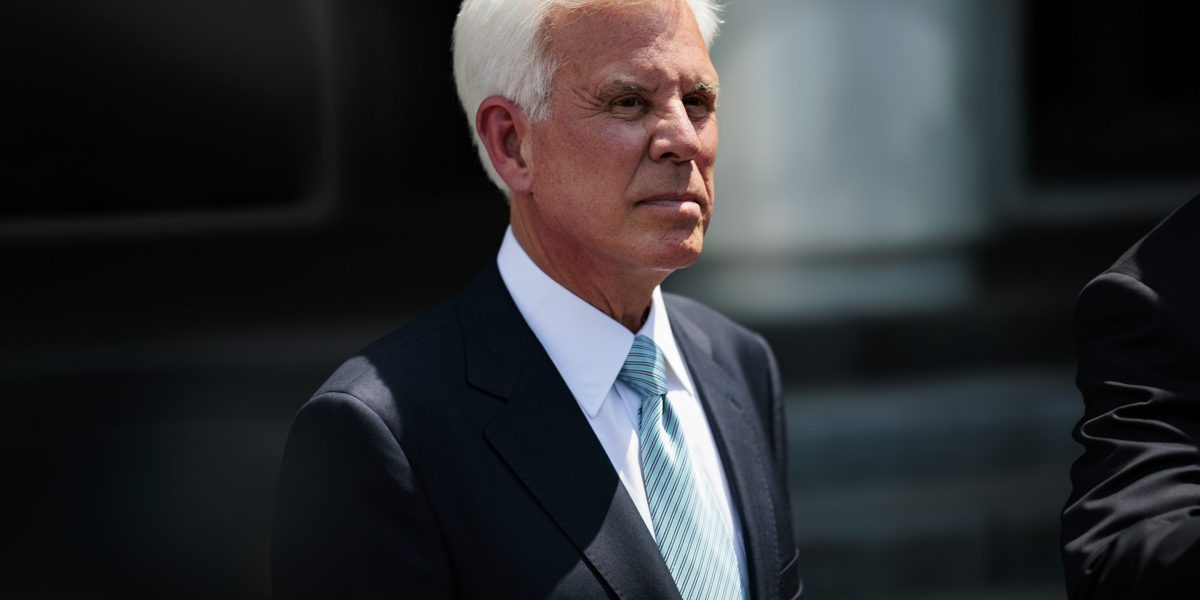
Norcross, who is considered one of the most powerful political players in New Jersey and serves as chairman of Conner Strong & Buckelew, one of the nation’s largest insurance brokerages, earlier this summer announced he’d give $100 million to Cooper University Health Care in Camden, N.J. Norcross, along with his three brothers, were all born at Cooper, according to the health care organization’s announcement. That started a multidecade relationship between the Norcross family and Cooper.
Norcross’ recent gift is the largest single philanthropic donation in the health system’s history, and one of the largest ever made to a hospital in New Jersey. It’s part of the system’s $3 billion expansion in Camden. In his honor, the family will add the Norcross name, although they haven’t designated which buildings or programs will carry it.
“For more than 50 years, our family has been dedicated to Cooper, and we are so proud to make this contribution to ensure that Cooper and the thousands of talented, committed professionals who make a difference every day for the people of Camden and South Jersey can continue the important work of investing in their future and in Camden’s continued renaissance,” Norcross said in the announcement.
The family’s five decades at Cooper span more than one-third of the hospital’s 139-year history.
A family legacy and connection to state tax breaks
Norcross’ late father, George E. Norcross Jr., was a labor leader who served on the hospital’s board from 1976 to 1983 and pushed to keep quality health care in Camden while other hospitals spread to the suburbs. Norcross’ mother, Anne Carol Conner Norcross, spent years advocating for seniors and underserved Camden residents. The $100 million gift was made in their honor.
Norcross himself has served on Cooper’s board since 1990 and is the longest-serving chairman in its history. Under his leadership, Cooper has grown into a top-tier academic health system and the only state-designated Level 1 Trauma Center in South Jersey. It’s also Camden’s largest employer, with 14,000 employees.
The system said the Norcross gift will also flow into Camden and its broader South Jersey service area. That tracks with how Norcross has historically given: Through his family foundation, he helped launch the Camden Health and Athletic Association with a $1 million commitment. That program has since put more than 1,000 Camden kids into youth sports.
Norcross has long framed his Camden investments as personal rather than transactional. He said his drive to invest in his hometown isn’t influenced by money.
“I’ve already made my money,” he told The Philadelphia Inquirer in 2018. Instead, he said he wants to restore Camden to “the mecca it was when my father was a boy” growing up there.
But some people have had their doubts over the years. Norcross spent years at the center of Camden’s controversial state tax-incentive program that dates back more than a decade.
A ProPublica and WNYC investigation found Norcross and his allies received $1.1 billion of $1.6 billion total state tax breaks tied to Camden, including an $86 million award for his own firm to relocate to the city.
Norcross, however, has maintained he’s invested more in Camden than he’s gotten back in tax breaks. In 2024, he and five others were indicted on racketeering charges. New Jersey’s then-attorney general alleged they used political influence to seize valuable Camden waterfront property and tax credits, but a judge dismissed the case in February 2025. An appeals court upheld that ruling, and in early 2026 the state declined to appeal to the Supreme Court. Norcross always maintained his innocence and called the case politically motivated. The matter is now closed.
“Nothing would have occurred in Camden without these tax incentive programs,” he told Philadelphia public radio WHYY in 2019. “They did precisely what they were designed [to do] by the legislature and the governor.”
He had been defending himself for a while before that, telling the Inquirer in 2018: “I’ve made some mistakes in the past. I can’t think of what they were at the moment. But I don’t have a guilty conscience.”
And now, his name will be strewn across the health care organization his family has been connected to for years.