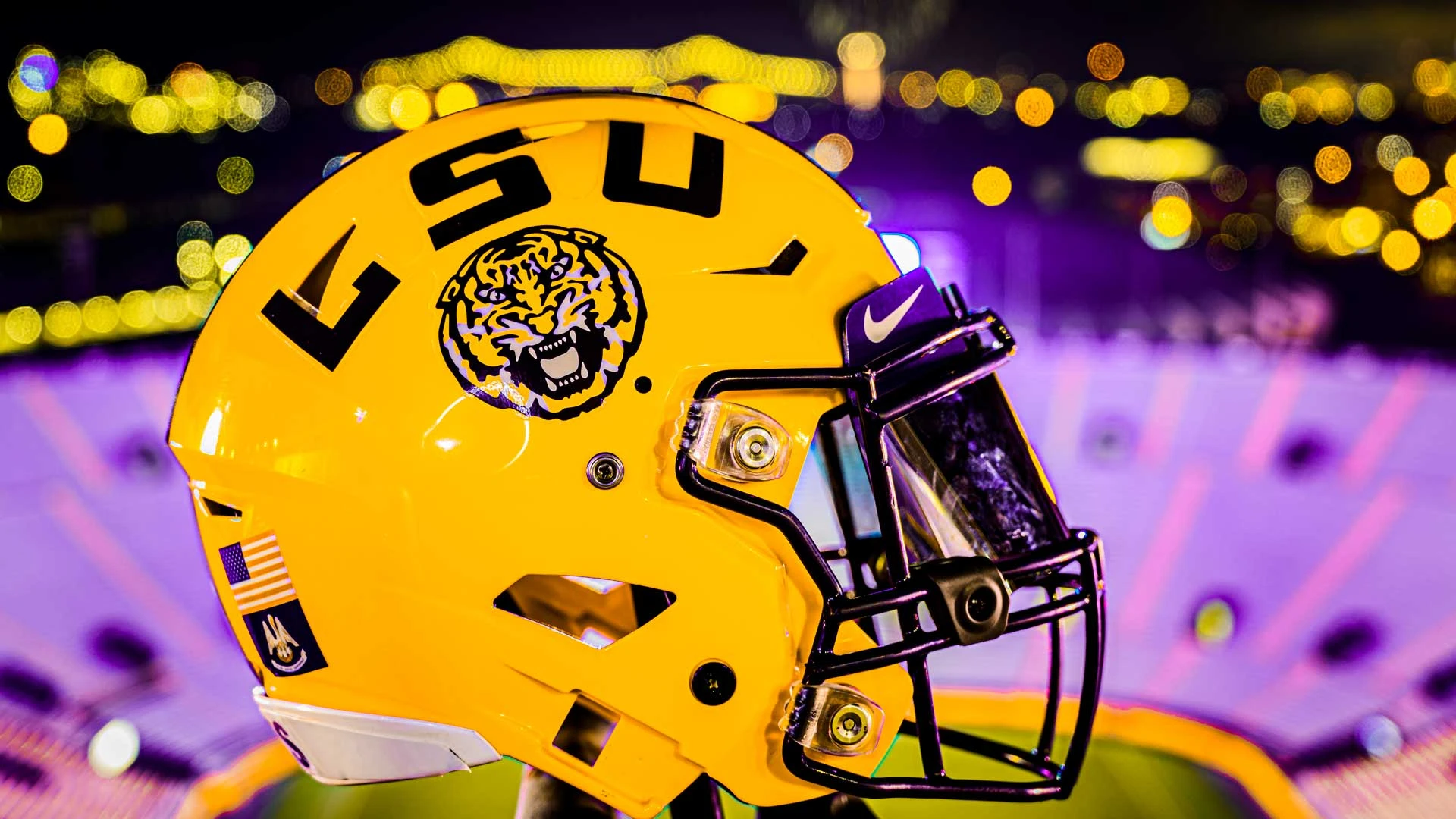
LSU Tigers 2025-26 Season Preview: Hype or Reality?
The LSU Tigers enter the 2025–26 campaign with high expectations and a significant amount of hype. Ranked as high as No. 7 in the preseason polls, there’s no denying the national buzz surrounding this team. But despite the excitement, questions remain. Head coach Brian Kelly has gone on record saying this is the most talented roster he’s had at LSU—but will that talent come together to form a legitimate national title contender, or will it fall short of the lofty expectations?
MUST READS
SPORTS TALK UNITED
SPORTS TALK FLORIDA
One major reason for optimism is that LSU has been ranked as the No. 1 transfer portal team in the country. However, the true source of fan excitement is the return of quarterback Garrett Nussmeier. The veteran signal-caller passed for 4,052 yards last season while completing 64.2% of his throws, racking up 29 touchdowns against 12 interceptions. He enters the year as a potential Heisman Trophy candidate and the centerpiece of the offense.
The key question on offense is whether the offensive line can keep Nussmeier upright. LSU loses four starters up front, including both starting tackles—Will Campbell and Emery Jones—who departed for the NFL. Tyree Adams has some playing experience, and D.J. Chester is the lone returning starter. LSU did add Braelin Moore through the portal, and he’s expected to take over at center. The Tigers will also rely heavily on freshman Harlem Berry, the top-rated running back in the 2025 class, to contribute early.
In the receiving corps, Aaron Anderson returns after leading the team with 51 receptions for 884 yards. However, he’s the only member of last season’s top five wide receivers returning. LSU hopes it struck gold in the transfer portal again, adding Nic Anderson from Oklahoma and Barion Brown from Kentucky—both of whom are expected to start. With a seasoned quarterback at the helm, there’s reason to believe this offense can stay productive, but it will depend heavily on how quickly the new-look offensive line gels.
On the defensive side of the ball, there’s talent, but not a ton of proven production. One of LSU’s biggest needs was finding consistent edge rushers. The Tigers addressed that by bringing in Patrick Payton from Florida State and Jack Pyburn from Florida via the portal. The cornerback position is also in flux. Highly touted freshman DJ Pickett will likely start, and LSU added Mansoor Delane from Virginia Tech to bring some experience to the secondary.
Linebacker Harold Perkins returns after an injury-plagued season and will be the heart of the defense. Still, questions remain—especially when it comes to whether this unit can hold up against the best teams on LSU’s schedule.
Leaning heavily on transfer talent can be a gamble—it can either create a quick turnaround or lead to chemistry issues as the season progresses. As an SEC team, LSU will get the benefit of the doubt when it comes to national perception, but this year’s squad will be tested early. Week 1 features a tough road matchup at Clemson, followed by a Week 3 showdown with Florida. The Tigers also travel to Alabama in November, in what could be a season-defining game.
A lot needs to go right for LSU to live up to its top-10 billing, but one thing is certain—this team will be fascinating to watch. If the pieces come together, the Tigers could make a legitimate push for the College Football Playoff.
The 2025 college football coaching carousel has erupted into one of the most dramatic in recent memory, with four powerhouse programs—LSU, Florida, Penn State, and UCLA—now searching for new leadership.
Each vacancy offers a unique blend of tradition, resources, and pressure, but one stands above the rest: LSU. With elite facilities, a $199 million athletic budget, and a $26.5 million NIL war chest, the Tigers boast the most complete infrastructure for immediate success.
Florida and Penn State remain formidable destinations, and UCLA presents an intriguing rebuild opportunity, but LSU’s combination of SEC dominance, aggressive boosters, and championship pedigree makes it the most coveted job on the market
Lane Kiffin: The SEC’s Most Wanted
Lane Kiffin is the top target for both Florida and LSU, with insiders confirming he’s at or near the top of each school’s list. His success at Ole Miss, offensive innovation, and SEC pedigree make him the most coveted name in the 2025 coaching carousel. While Florida offers familiarity and in-state recruiting, LSU’s infrastructure and NIL war chest may give it the edge.
Penn State Is Drawing Plenty of Attention
Penn State’s coaching search has drawn national attention following the dismissal of James Franklin, and several high-profile names have emerged as potential successors. Nebraska’s Matt Rhule is widely considered a frontrunner due to his Big Ten experience and proven ability to rebuild programs.
Iowa State’s Matt Campbell also remains a strong candidate, praised for his culture-building and player development according to USA Today. Missouri’s Eli Drinkwitz has gained traction as a “great fit” thanks to his recruiting acumen and offensive innovation.
Longtime Penn State assistant Terry Smith is viewed as a continuity option, while Texas A&M’s Mike Elko has been linked to the job but remains noncommittal. With elite resources and national expectations, Penn State is expected to pursue a coach capable of delivering playoff success and restoring championship credibility.
Why Alex Golesh Is a Fit at UCLA
Alex Golesh, head coach at USF, has quickly emerged as a leading candidate for the UCLA job, thanks to his offensive expertise and proven ability to elevate programs with limited resources. Despite UCLA’s ongoing financial constraints, Golesh’s impressive 2025 campaign—including a signature win over Florida and a 6–2 start—has positioned him as a compelling choice for a rebuild in Westwood.
The Bruins reportedly made an initial run at Arizona State’s Kenny Dillingham, but he declined. With budget limitations ruling out marquee hires, UCLA is now focused on landing a proven Group of Five head coach or a rising coordinator who can deliver results without a premium price tag.
Facilities: Rose Bowl is iconic but aging; limited upgrades
NIL Resources: Modest; donor fatigue and budget constraints
Buyout Paid: $6M to DeShaun Foster
Top Candidates: Alex Golesh, Kenny Dillingham
Pros: Big Ten access, LA market, academic prestige
Cons: Financial instability, weak fan engagement
Final Take: LSU Leads the Pack
LSU’s combination of SEC dominance, NIL firepower, and elite facilities makes it the most desirable job in college football right now. Florida and Penn State offer strong alternatives, but LSU’s infrastructure and urgency to win now give it the edge. UCLA, while intriguing, faces too many financial hurdles to compete at the same level.
The Tampa Bay Rays are one step closer to calling Tampa their new home. Team leaders and Hillsborough College approved a non-binding memorandum of understanding that allows formal negotiations to begin. The agreement focuses on redeveloping roughly 113 acres of the Dale Mabry Campus into a modern stadium district.
Redevelopment Plan Covers Stadium and Mixed-Use District
The proposal outlines a multi-phase project including a new ballpark, hotels, housing, retail, and new academic facilities for the college. Supporters say the plan could reshape Tampa’s sports corridor and strengthen the city’s identity as a major sports hub.
Supporters See a Transformative Opportunity
Tampa resident Sergio Castillo praised the project during the public meeting. He said the stadium cluster could boost the city’s profile and fan experience. Castillo noted the proximity to Raymond James Stadium and Amalie Arena, calling the location ideal for sports fans. Supporters also highlighted the campus’ closeness to Tampa International Airport, which adds to the site’s appeal.
St. Petersburg Voices Concern Over Potential Loss
Across the bay, the reaction was far more cautious. Author Peter Golenbock said the move would hurt St. Petersburg’s identity as a major league city. He doubts many Pinellas County residents would regularly travel to Tampa for games. Golenbock recalled how the Rays helped revitalize Central Avenue and fears losing that momentum.
Key Terms of the Memorandum
The agreement does not finalize financing, design, or construction timelines. Instead, it grants both sides 180 days of exclusive negotiations to reach binding contracts. Hillsborough College would retain a portion of the land known as the “College District.” The Rays would lease the remaining acreage for at least 99 years and control the stadium and surrounding development. The mixed-use district could include hotels, retail, multifamily housing, sports facilities, and commercial buildings. The Rays would have exclusive control over the mixed-use development during and after construction.
College Operations Will Be Protected During Construction
Both parties must agree on construction plans. The memorandum requires stadium work to minimize disruption to college operations. Temporary facilities may be built to support academic programs during construction.
Next Steps in a High-Stakes Stadium Race
The deal is not final, but it marks the clearest step yet toward a Tampa stadium. The Rays and Hillsborough College aim to complete a formal agreement within six months. If successful, the project could reshape Tampa’s sports landscape for decades.
Morocco’s head coach Walid Regragui shakes hands with Morocco’s Prince Moulay Rachid as FIFA President Gianni Infantino (R) looks on duirng presentation ceremony at the end of the Africa Cup of Nations (CAN) final football match between Senegal and Morocco at the Prince Moulay Abdellah Stadium in Rabat on January 18, 2026. (Photo by FRANCK FIFE / AFP)
Yes, the 2025 Africa Cup of Nations (AFCON) had its flaws with controversial officiating but none of that changes the bigger truth that Morocco staged a tournament that celebrated African football.
The 2025 Africa Cup of Nations (AFCON) will be remembered as one of the finest editions in the tournament’s long and proud history.
The month-long football spectacle went far beyond goals and tactics as it became a celebration of African culture, unity, and sporting excellence.
From state-of-the-art infrastructure and seamless transportation to passionate crowds and unforgettable matches, AFCON 2025 reaffirmed why the competition remains one of the most compelling international tournaments in world football.
Despite late controversy surrounding the final, the overall success of the tournament should not be overshadowed. Instead, Morocco’s hosting has set a new benchmark for African football and reinforced AFCON’s growing global relevance.
AFCON 2025 transcended football
It was a cultural festival as six historical Moroccan cities hosted 24 African nations, welcoming fans from across the continent and the global African diaspora.
Cities such as Rabat, Casablanca, Marrakech, Fez, Tangier, and Agadir came alive with music, colour, and celebration.
Stadiums were packed, fan zones buzzed with activity, and local businesses flourished as visitors immersed themselves in Moroccan hospitality.
Morocco supporters watch at the Rabat Fanzone the Africa Cup of Nations (CAN) Group A football match between Morocco and Mali at Prince Moulay Abdellah Stadium in Rabat on December 26, 2025. (Photo by Abdel Majid BZIOUAT / AFP)
What stood out most was how seamlessly Morocco combined football with cultural identity, from traditional cuisine to music and street festivals, AFCON 2025 felt like a showcase of African pride, not just a sporting competition.
A new standard for African development
One of the most impressive aspects of AFCON 2025 was Morocco’s infrastructure and they demonstrated why they are viewed as one of Africa’s most capable sporting hosts.
The rail network connecting Fez, Rabat, Casablanca, and Marrakech made travel between host cities efficient and affordable.
Fans could attend matches in different cities without the logistical chaos that has plagued previous tournaments.
Even cities like Tangier and Agadir, though geographically distant, were well integrated into the tournament thanks to Morocco’s modern transport system.
At the heart of Morocco’s footballing vision lies the Mohamed VI Football Complex, a facility widely regarded as one of the best training centres in the world with 10 world-class training pitches amongst other facilities.
In addition, the complex served as a blueprint for how African football infrastructure should be developed and it is no exaggeration to conclude that Morocco delivered an organisational standard comparable to major FIFA tournaments.
Algeria’s goalkeeper #23 Luca Zidane and Nigeria’s forward #09 Victor Osimhen shake hands after the Africa Cup of Nations (CAN) quarter-final football match between Algeria and Nigeria at the Grand stadium in Marrakesh on January 10, 2026. (Photo by SEBASTIEN BOZON / AFP)
African football excellence takes centre stage
Back to the pitch, the 2025 Africa Cup of Nations delivered thrilling football action from start to finish, with Morocco waiting until the second half to score two goals against Comoros and Senegal’s hard-fought win against the hosts in the final game.
With four African coaches – Walid Regragui (Morocco), Pape Thiaw (Senegal), Eric Chelle (Nigeria), and Hossam Hassan (Egypt)- guiding their teams into the last four, the tournament showcased Africa’s tactical sophistication, depth of talent, and competitive balance.
A total of 121 goals were scored in the tournament which further asserted the rise of the continent’s explosive forwards like Brahim Diaz, Victor Osimhen, Mohamed Salah, Amad Diallo, Ademola Lookman and Sadio Mane.
Similarly, the impact of goalkeepers who showed the world that they can’t be ignored, from Edouard Mendy who made a historic penalty save in Sunday’s final to Stanley Nwabali who made two penalty saves in the third-place match against Egypt and Yassine Bounou’s brilliance as the tournament’s best shot-stopper.
AFCON 2025 shouldn’t be defined by final stain
Several irregularities marred Sunday’s final match between Senegal and Morocco at the Prince Moulaye Abdellah Stadium but it would be grossly unfair to allow these moments define the success of the 35th edition of the Africa Cup of Nations.
In comparison to the World Cup, the Euros and the UEFA Champions League, there have been controversial finals but the controversial incidents do not erase weeks of planning, world-class action and fans’ unity.
Sunday’s events – the controversial disallowed Senegal goal and the disputed penalty call – should prompt a deeper reflection and better officiating standards, and not overshadow Morocco’s organisational success.
The sparring between Major League Baseball Commissioner Rob Manfred and the Executive Director of the Major League Baseball Players Association Tony Clark continues as MLB gets ready for the 2026 season. The collective bargaining agreement between the players and the owners ends in December and the central issue seems to be this. The owners want cost certainty which could mean a salary cap and the players want no part of that. There is also the question of how much the owners are really hurting financially when the Los Angeles Dodgers owners can give Kyle Tucker a $64 million signing bonus within a four-year deal reportedly worth $240 million and the owner of the New York Mets franchise Steve Cohen can hand out a three-year deal to Bo Bichette that reportedly is worth $126 million. Of course, New York and Los Angeles are the two biggest markets in the country with a lot of wealth. It is the small market owners who are going to tell Manfred that cannot compete with the Dodgers and the Mets.
Manfred is trying to put a positive spin on the negotiations. “Until I got elected commissioner, all I did was labor relations. That’s how I made my living. I’ve never been in a negotiation where, before the first piece of paper went across the table, I, or anyone I represented, was out there saying, ‘This, we absolutely will not talk about.’ I just think it’s a hard way to begin a negotiation.” The players put out a statement that contradicts Manfred. “The league and owners say they want to avoid missing games but at the same time they appear to be dead-set on trying to force players into a system that, the last time they proposed it, led to the most missed games ever and a cancelled World Series” in 1994. The sniping continues.