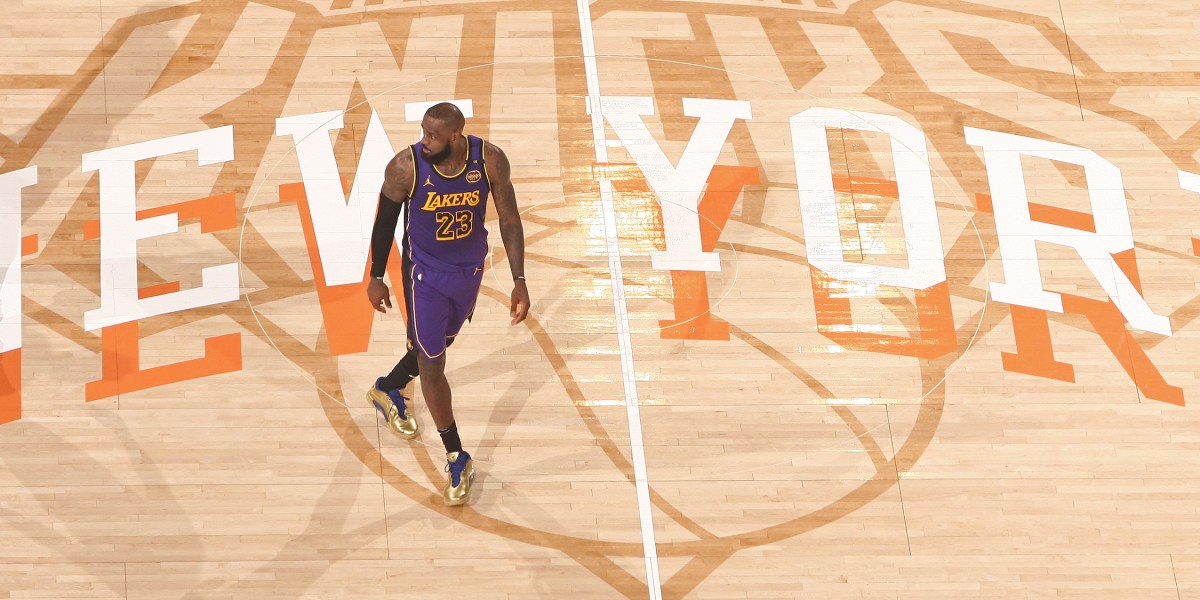
LeBron James is the NBA’s first and only active player to reach billionaire status. The Chosen One has four championship rings, reached the finals 10 times, and brings with him a history of giving back to the community, both philanthropically and with the increased economic activity for his team’s city. While he can call the Philadelphia 76ers his next home court, his next home is still up in the air—literally.
James is reportedly toying with living in New York while playing for the Sixers, commuting to games and practices by helicopter. Several basketball insiders posted on X this weekend that James could commute by chopper, and noted NBA insider Shams Charania said the option to live in New York while commuting to Sixers practices and games by helicopter added to Philadelphia’s appeal. James has not disclosed where he’ll actually live.
That presents two issues: being a supercommuter isn’t easy on the taxes, and there’s an ongoing campaign in New York to stop helicopters.
New York wasn’t a hypothetical for him. Sources told Hoops Wire that James’s camp reached out to the Knicks during free agency, but New York wasn’t interested in pursuing him, preferring to keep the roster that had just won a championship intact.
Meanwhile, his 76ers deal is notable even without the commute. James is currently the only active NBA player worth a billion dollars, and he signed a two-year, $8 million contract with Philly, dropping to the league’s veteran’s minimum salary. That represents a pay cut of roughly $48 million, or more than 90% of what he made last season with the Lakers.
By contrast, the Philadelphia are could see a windfall. The Boyd Company, a corporate location consulting firm, projects James’s arrival will generate between $250 million and $430 million in regional economic activity during his first season.
He wouldn’t be the first Sixer to make this exact trip. J.J. Redick, who coached James with the Lakers last season, commuted from his family’s home in Brooklyn to Philadelphia while playing for the 76ers from 2017 to 2019. Wilt Chamberlain did something similar decades earlier, living in New York during the season while playing for Philadelphia and running a nightclub in Harlem.
Helicopter bans, pied-à-terre taxes, and supercommutting costs
The appeal of the helicopter option is speed. A helicopter flight between New York City and Philadelphia takes about 45 minutes, covering roughly 150 kilometers, compared with a car ride of about an hour and a half. Charter operators already run the route regularly, connecting multiple Manhattan lounges to several Philadelphia heliports.
That convenience is colliding with a New York City political fight that’s been building for years. Mayor Zohran Mamdani said during last year’s campaign that he opposed nonessential helicopter travel, after a tourist helicopter crash into the Hudson River killed six people. Now, helicopter opponents are pressing him to follow through by restricting flights from the city’s own heliports. Over the 12 months ending in June, the city logged more than 17,000 helicopter-related noise complaints, and a city council proposal would limit the two city-owned Manhattan heliports to essential flights only.
Then, if James does buy real estate in the city rather than rent, he’ll run into another new cost. New York’s pied-à-terre tax, which took effect July 1, applies to second homes valued at $1 million or more, with properties above $5 million facing a 6.5% annual surcharge. A part-time New York residence—even for a player calling another city home for tax and team purposes—would sit squarely in the tax’s target zone. The New York state governor’s X account posted a joke about James: “LePied-a-Terre.”
Then there’s the tax question tied to the commute itself, which is more complicated than a simple double bill. Ordinary supercommuters face a real asymmetry: New York City has no income tax on nonresidents who work there, so a Philadelphia resident commuting into Manhattan pays nothing to the city itself but is still subject to New York State taxes on those wages.
On the flip side, a New York resident working in Philadelphia owes Philly’s nonresident wage tax on top of full New York State and city resident taxes, and it isn’t settled whether the credit system fully cancels out that overlap.
Regardless of what and where James chooses, many basketball fans online are wondering whether James purposely took the minimum offer so he can finally call New York City home, more than 15 years after he toured his first apartment in the Big Apple. (He never bought it, so a pied-à-terre tax on that does not potentially yet apply to him.)
“Nothing says ‘I’m fully committed to the city of Philadelphia’ like refusing to actually step foot in Pennsylvania unless there’s a game,” wrote one person X.