Portuguese group Impetus is working with Straight Lines AI, which specialises in artificial intelligence solutions for the fashion industry, to develop products faster and more efficiently.
Impetus partners with American AI company
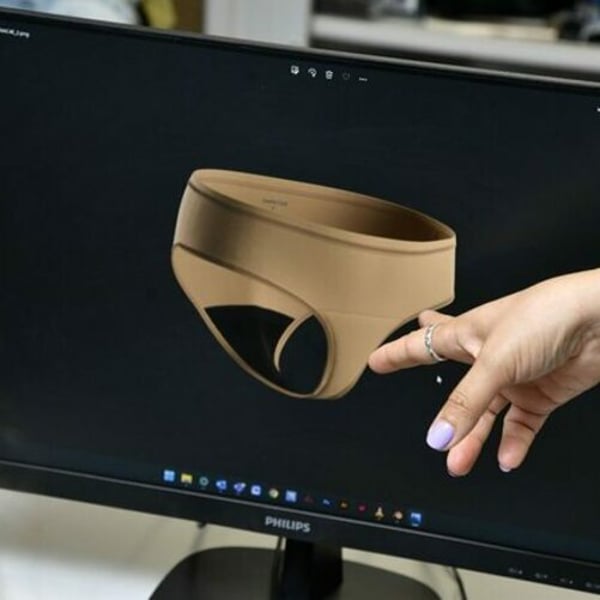
As part of this collaboration, Impetus will integrate the Straight Lines AI Creative Design Platform into its creative processes, with the aim of streamlining and accelerating product development, boosting operational efficiency and reducing costs, while also shortening the time-to-market for new underwear collections.
“At Straight Lines AI, we are committed to transforming the fashion industry with our state-of-the-art artificial intelligence solutions,” says Dale Kort, CEO of Straight Lines AI. “We are thrilled to partner with Impetus and to support the company in harnessing the power of AI to enhance its design capabilities, optimise operations, and bring innovative products to market more efficiently,” he adds.
Recognised for the quality of its underwear collections, Impetus views the integration of artificial intelligence as a strategic opportunity to bolster creativity and innovation. Using the Straight Lines AI platform will enable it to automate more labour-intensive tasks, freeing teams to focus on creative development and product design.
“Through this partnership with Straight Lines AI, we will optimise our processes, cut costs and devote more time to what we love most: designing quality products for everyone,” says Nuno Sousa, designer and head of Impetus’s 3D implementation project. “This collaboration will help us increase our efficiency and continue to innovate in this market,” he believes.
Impetus’s commitment to artificial intelligence is not new, as it is already one of the company’s drivers of innovation. On various occasions, including the second episode of the podcast Entre Linhas e Bytes (Between Lines and Bytes), part of the Texp@ct project, which Impetus leads, Nuno Sousa has underlined the central role that 3D technologies currently play at Impetus, highlighting their direct impact on efficiency, collaboration and sustainability in product development. According to the designer, the company already develops between 500 and 600 products per season using 3D and has dispensed with traditional photo shoots, using digital images for presentation and commercialisation.
This article is an automatic translation. Click here to read the original article.
Munich Fabric Start (MFS) is gearing up for its January 27–29 edition. Designers, product managers, and buyers will be able to explore around 1,000 spring/ summer 2027 collections from international fabric and trim manufacturers at the MOC Munich.
Trade visitors can explore around 1,000 collections over the three days of the trade fair in Munich. – MUNICH FABRIC START
With the lead theme of “Pleasure,” the trade show’s organisers aim to spotlight “attitude, sensuality, and emotional materiality” over the three days of the fair. The lead theme frames fashion as an emotional space, an expression of attitude and cultural reflection. Colours, surfaces and materials become conduits for self-confidence and joie de vivre.
“After seasons of restraint, spring/ summer ’27 marks a deliberate counter-design: optimism, sensuality, and creative freedom take the place of pragmatism and neutrality. Physical presence and individuality are regaining importance- as a response to uncertainty, exhaustion and algorithmic predictability,” according to MFS.
“Efficiency and pragmatism are shaping current market developments. And these are not easy times for us as trade fair organisers either. We are countering this with a clearly structured trade fair and a strong positioning as a key source of inspiration, an interactive business forum, and a platform bringing together textile expertise. In terms of fashion and trends, we are heralding a change of perspective: optimism instead of restraint. Self-confidence instead of uncertainty,” adds managing director Florian Klinder.
With the integrated shows Bluezone, Keyhouse, and The Source, the trade fair brings together all relevant fashion segments: high-quality fabrics and trims, international denim expertise, and forward-looking innovations along the entire textile value chain. International reach, collaboration, and sustainability remain central themes.
Impressions from the summer edition of the trade fair. – MUNICH FABRIC START
The consolidation of the trade fair segments at the MOC has proven successful. The trade fair with its eight areas will once again be held under one roof.
Bluezone and Keyhouse with “Sustainable Innovations” will once again be anchored in the high-footfall area of Hall 2 at the upcoming event- directly connected to the Fabrics and Additionals areas.
The Design Studios in Hall 4 are now positioned even more centrally. And the sustainable sourcing area Resource is also set to have a stronger presence, located directly next to The Source in Hall 1.
To provide buyers and designers with a holistic overview, the Bluezone denim trends will be integrated directly into the trend worlds built around the lead theme in the MOC foyer. This new form of presentation reflects market developments in which denim and classic fashion segments are increasingly merging within collections.
Once again, numerous brands from the mainstream, premium and contemporary segments are expected, including Drykorn, shown here with menswear designer Fred M. Götz. – MUNICH FABRIC START
The exhibitors will once again include well-known names from the fabric and textile industry, including the Albini Group, Kiki Fashion, Calik, Lanificio di Tollegno, Bornemann Etiketten, Manteco, Pontetorto, Riopele, Thermore, Bureaux Bo, Can Tekstil, and Troficolor Denim Makers.
As usual, a supporting programme of keynotes, panel discussions, and trend presentations will round off the trade fair offering. Current industry topics will be discussed and contextualised on the “Stage” with Peclers Paris, David Shah, O/M Collective, Olivia Does Design, and Monsieur-T, among others. The curator of Sustainable Innovations, Simon Angel, will offer in-depth sessions on future-oriented, sustainable material solutions.
This article is an automatic translation. Click here to read the original article.
An industrial building occupied by Italian fashion group Salvatore Ferragamo on the outskirts of Florence caught fire, Italian fire services said on Thursday.
Ferragamo is known for its luxury footwear, clothing, and accessories – Reuters
The fire has been put out and no one was injured, they said. Two teams and two fire engines intervened at 12:50 p.m. (1150 GMT) in Sesto Fiorentino, a north-western suburb of the Tuscan capital city, which is home to several factories serving the luxury leather industry.
“The firefighters extinguished the fire, which affected the extraction system outside the industrial building” and cooling operations were underway, the Florence fire department said in a statement.
Ferragamo was not immediately available for comment.
Kering’s Balenciaga and resolutely independent Manolo Blahnik announced a first-time collaboration on Thursday on a trio of styles created for the Fall 2026 collection.
Manolo Blahnik x Balenciaga
They said it’s “an exchange shaped by shared values and an admiration for couture tradition. The partnership reflects the House of Balenciaga’s enduring commitment to artisanal mastery, as well as creative director Pierpaolo Piccioli’s distinct approach to fashion, long inspired by the legacy of Cristóbal Balenciaga”.
It makes sense for the two labels to work together given their dual Spanish roots, as well as “the elegance of craft that unites them”.
So what does the capsule comprise? There’s a low-heeled mule and a slingback with either a 105mm or 50mm heel. With a décolleté cut, we’re told “the silhouettes reveal skin, the body, a display intrinsically linked to the primacy of the human form”.
The styles are “in and of themselves a dialogue, a duet, drawn from designs from the Manolo Blahnik archive, chosen by Piccioli, and fused together. All three are executed in silk-satin, proposed in various colours and lined in Balenciaga grey”.
Each shoe style also features crystal embroidery across a low-cut vamp, something for which Blahnik is known. The company said the embellishments “simultaneously recall archival Blahnik designs and [reference] the 1960s bijoux created by Cristóbal Balenciaga”.
Manolo Blahnik said that “Don Cristóbal Balenciaga is, to me, the ultimate designer. I have adored his work for as long as I can remember. As a Mediterranean boy myself, I have always felt a deep connection to his Spanish culture and sensibility. To be partnering with Balenciaga, and with Pierpaolo, fulfils a lifelong dream. [His] direction for Balenciaga resonates profoundly with my own ideas of how the modern woman should dress in 2026, a vision of timeless elegance rooted in craftsmanship and enduring beauty.”