Politics
Here are the Top 10 political stories from South Florida in 2025
If last year was a big year for South Florida politics on the national and international stage — and it most certainly was — 2025 didn’t slow things down.
Broward, Miami-Dade and Palm Beach counties attracted attention from across the state, country and globe. Some were of the good variety. Others… Not so much.
Cutting the list of the year’s most important stories to a definitive “Top 10” wasn’t easy, nor was it scientific. Many headline-grabbers didn’t make the cut, from fallout over the state’s affordable housing and condo safety reforms to Miami-Dade’s removal of fluoride from its drinking water and LGBTQ advocates and officials’ outrage over the removal of rainbow street designs.
Hollywood Sen. Jason Pizzo, thought by many to be a likely Democratic Primary frontrunner for Governor, dramatically quit the party, declaring it “dead” — an arguable exaggeration, based on recent events.
Former Miami-Dade Commissioner Joe Martinez and ex-Jackson Health System executive Charmaine Gatlin were both sentenced to years in prison for using their offices for personal gain (Martinez is appealing).
Gary Farmer, a former state Senator, was forced from the Broward Court bench following complaints of judicial misconduct. CFO Blaise Ingoglia’s DOGE tour landed a 1-2-3 combo, declaring all three counties and some of their municipalities fiscally irresponsible.
And throughout the year, the Rep. Fabián Basabe show continued, with the sophomore lawmaker successfully pursuing the firing of a Town Attorney and an audit of Miami Beach, both of which drew rebukes from local officials and media but didn’t deter endorsers from both sides of the aisle from getting behind his re-election effort.
None of those stories made the list. We believe the stories that did spotlight the especially high (and low) points of the year.
10. Mayor’s effort to evict a theater over a pro-Palestine film draws sharp criticism
Miami Beach Mayor Steven Meiner learned the hard way that censorship is counterintuitive to engendering support.
In March, he moved to terminate the city’s lease and grant funding for O Cinema after the independent theater screened “No Other Land,” an Oscar-winning, strongly pro-Palestine documentary about the Israel-Palestine conflict.
Meiner, who is Jewish, labeled the film as a “one-sided propaganda attack on the Jewish people” inconsistent with the values of Miami Beach, which has a large Jewish population. The issue quickly attracted widespread attention, with the New York Times, NPR, BBC, Times of Israel, Guardian and other outlets seizing on the story.
O Cinema CEO Vivian Marthell admitted she’d initially agreed not to screen the film under pressure from Meiner, but reversed course after consulting with staff and the nonprofit’s Board, citing free speech principles.
At a contentious City Commission meeting later that month that drew a large crowd of protesters, an emotional Meiner withdrew his proposal after five of his six peers on the dais said they’d oppose it, promising to instead explore ways to encourage broader dialogue without dictating content.
The issue wounded Meiner’s standing in the city, but not fatally; he won re-election to a second term in November with just over 51% of the vote.

9. Rest in peace: South Florida loses notable figures
South Florida bid farewell to several influential political figures in 2025 who served in both elected and unelected capacities.
Former U.S. Rep. Lincoln Díaz-Balart, a towering leader in Florida and Cuban American politics, died at 70. He served for 8 years in the Florida Legislature and 18 years in Congress, where he championed human rights, immigration protections and a free Cuba. He also co-founded the Congressional Hispanic Leadership Institute and authored landmark measures, including the Nicaraguan Adjustment and Central American Relief Act.
Rep. Joe Casello, an ex-firefighter who represented parts of Palm Beach County, died at 73. First elected in 2018, he was widely respected for his quiet leadership and strong constituent services. His legislative legacy includes helping to establish Florida’s Purple Alert system for missing adults with cognitive difficulties.
Miami Commissioner Manolo Reyes, who ran for the City Commission five times before winning his seat in 2017, died at 80 just six months after winning re-election. He was known for his integrity, compassion and dedication to District 4.
Former Rep. Roy Hardemon, a blunt, neighborhood-first lawmaker and lifelong Liberty City advocate, died at 63. He served one term in the House, where he sought funding for youth and senior services, public health and community infrastructure. After leaving office, he remained active in local advocacy and ran several times to regain his old post.
G. Holmes Braddock, a longtime Miami-Dade School Board member, died at 100. He served 38 years, shaping desegregation, bilingual education and student involvement initiatives, leaving a lasting legacy in local public education.
Daniel Liftman, a longtime aide to late U.S. Rep. Alcee Hastings known for his quiet dedication and principled voice, died at 73 after devoting more than three decades to constituent service and political advocacy.
Seth Gordon, a Miami publicist and lobbyist who shaped political campaigns, championed culture and creativity, and helped fund the New World School of the Arts, died at 77.
8. DeSantis continues to exert his influence on South Florida
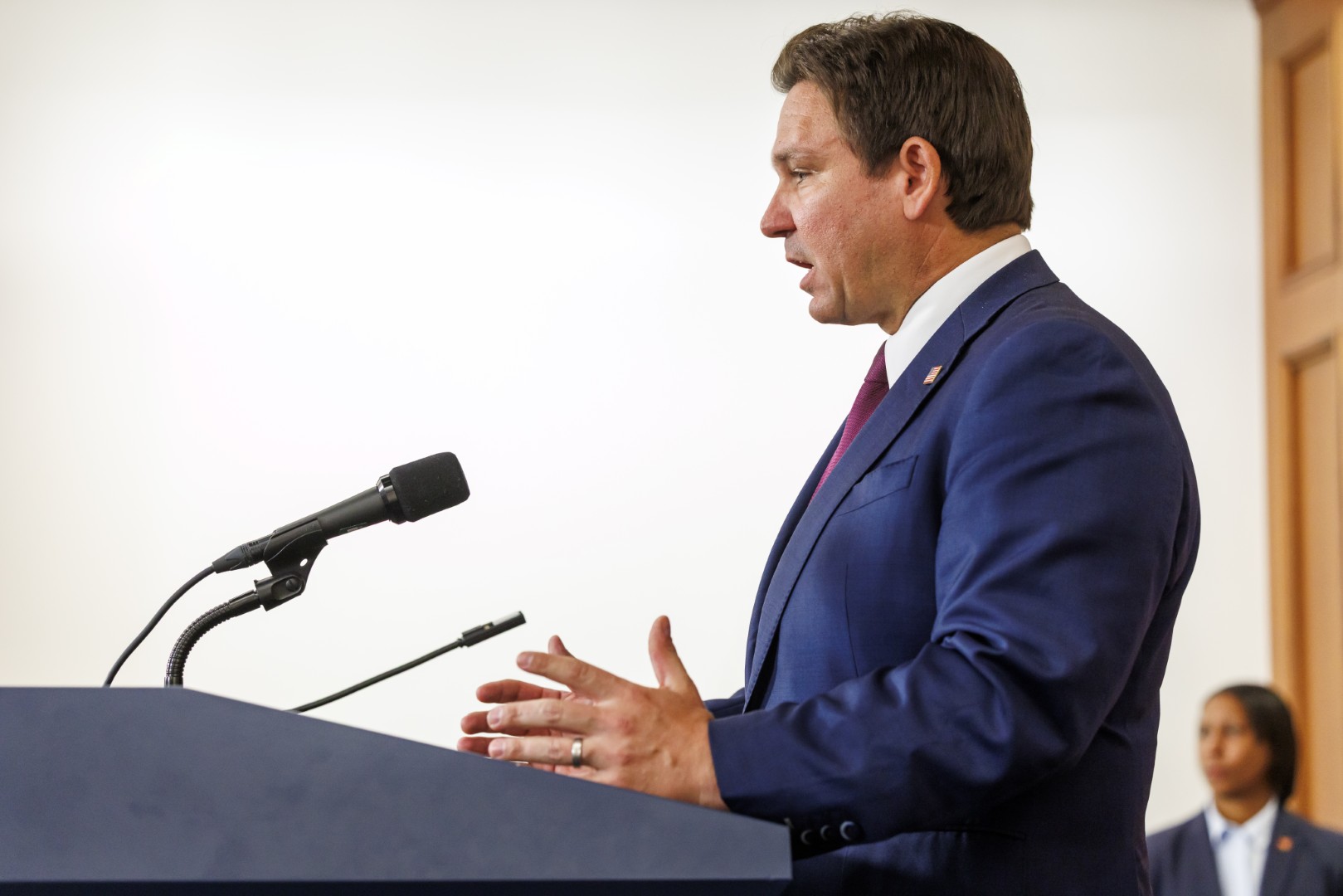
Former U.S. House Speaker Tip O’Neill famously averred, “All politics is local.” You can’t accuse Gov. Ron DeSantis of not acting on that maxim.
Over the years, the Governor has reshaped Florida in his ideological image, and he’s certainly paid attention to its most populous region.
In 2025, DeSantis appointed former state Rep. Mike Caruso to serve as Palm Beach County Clerk and added ally Adam Cervera to the Broward County School Board. The Broward College Board of Trustees, all there by way of DeSantis appointments, confirmed Torey Alston — whom the Governor previously placed on the Broward County Commission and School Board — to serve as the school’s new President.
DeSantis appointed a slew of Judges across the tri-county area and named Board members at the Children’s Trust of Miami-Dade, North Broward Hospital District and Memorial Healthcare System.
He also picked Florida Highway Safety and Motor Vehicles Executive Director Dave Kerner and repeat appointees Tracy Caruso and Michael Barnett to serve on the Palm Beach State College Board.
In mid-June, the Florida International University Board, whose membership is mostly influenced directly or indirectly by DeSantis, unanimously confirmed his former Lieutenant Governor, Jeanette Nuñez, as the school’s seventh President.
Then on Sept. 11, he added two more members, former state Rep. José Félix Díaz and decorated homicide detective Juan Segovia, to the Miami Dade College Board. Less than two weeks later, the Board — composed entirely of DeSantis appointees — participated in a vote that grabbed national headlines and attracted a lawsuit.
More on that at No. 6.
7. Miami-Dade’s active voter count flips red for the first time
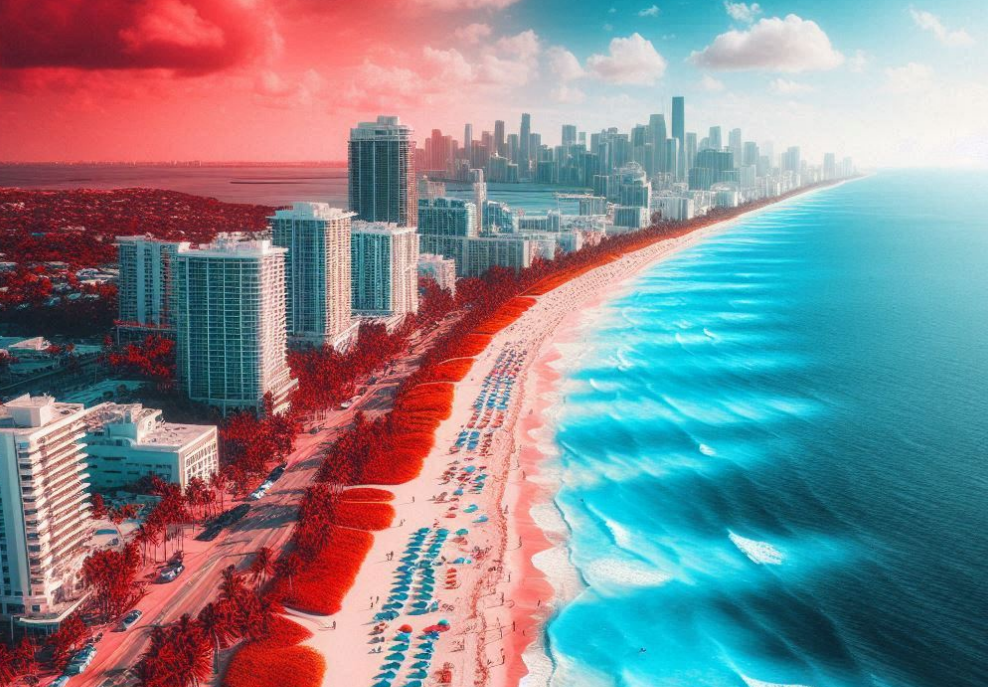
If the November 2024 election was a seismic, rightward shift for Miami-Dade, a May update to the county’s voter rolls was the aftershock.
It marked the first time that, among active Miami-Dade voters, Republicans outnumbered Democrats. “Miami-Dade is Red!” declared Florida GOP Chair Evan Power. “Nobody would have predicted this 10 years ago,” DeSantis wrote on X.
At the time, the county had 449,337 active Republican voters, 414,680 active Democrats and 417,144 active voters registered as belonging to a third or no party (NPA).
The GOP’s lead has continued to grow since. Through Dec. 1, both major parties saw voter falloffs, but the difference was startling. While Republicans shed just 537 voters (an interesting numerical coincidence), Democrats lost more than 13.5 times as many (7,298).
The lost voters didn’t all switch to NPA; that group saw just a 2,521-voter uptick.
Notably, Democrats may still have more actual registered voters than Republicans — they did in May, as Florida Politics pointed out — but the state only counts active voters, which better represents the true voting power each party has in a given jurisdiction.

6. Miami Dade College gives away prime public land for a future Trump library
The groundwork for a Donald Trump presidential library was laid in Spring 2025 and solidified in June, when DeSantis signed legislation stripping local governments of authority over presidential libraries. By September, Miami — not Trump’s home city of Palm Beach — was targeted for the facility’s construction.
And later that month, the Miami Dade College Board of Trustees voted quietly and unanimously to give up a 2.63-acre waterfront parcel off Biscayne Boulevard valued at more than $67 million for the project. The Florida Cabinet then swiftly signed off on the giveaway.
The backlash was immediate. Retired professor and local historian Marvin Dunn sued, arguing the college Board violated Florida’s Sunshine Law by rushing its vote without proper public notice. Circuit Judge Mavel Ruiz agreed, temporarily blocking the transfer and scheduling a trial for August 2026. Attorney General James Uthmeier then stepped in to defend the college.
But that trial won’t come. The Board held a redo vote Dec. 2 and, after hours of public testimony, reached the same decision. Ruiz dismissed Dunn’s complaint just over two weeks later, ruling that any notice violations had been cured. Dunn said he’s filing a second lawsuit soon.
Though legally sufficient now, the land transfer remains unpopular. Polling from October found that only 14% of Miami-Dade voters approve of the move, while a whopping 74% believe the parcel should remain with the college for future expansions.

5. Under Daniel Perez, the Florida House regrows its backbone
Perez, a Miami Republican, hit the ground running when he took the gavel last November, reshaping the House committee apparatus, overhauling the chamber’s website and revamping many of its rules.
He promised, during a brief confirmation speech, to refocus the House on delivering more for Floridians than for corporate and special interest groups. It would also tamp down on government spending, he said, including the Governor’s use of state funds for political messaging.
With support from House leaders and lawmakers, Perez then set about delivering on that promise and, in the process, threw off DeSantis’ game like none before him. It started with a rejection of the Governor’s January call for a Special Session on illegal immigration, which Perez and Senate President Ben Albritton substituted with one of their own that better aligned with Trump’s dictates.
After DeSantis publicly fumed at the House for overriding his vetoes, advancing tort bills he opposed and eschewing his budget and tax proposals, Perez called the Governor “emotional” and prone to “temper tantrums” while stressing, “I consider him a friend. I consider him a partner.”
When questions arose about the Governor and his inner circle’s role in rerouting $10 million in Medicaid settlement dollars through First Lady Casey DeSantis’ Hope Florida charity to fund ads attacking proposed abortion and cannabis amendments, Perez called for answers and tasked state Rep. Alex Andrade with getting them.
That initial effort ended abruptly in April, though Perez said “all options are still on the table” and the issue has since sprouted an ongoing grand jury probe.
Since then, the Speaker has led the chamber in tackling several top-of-mind matters, including working on Trump’s call for mid-decade redistricting and multiple property tax reform proposals the Governor unsurprisingly dislikes.
Miami-Dade has produced three House Speakers this century — Marco Rubio from 2006 to 2008, José Oliva from 2018 to 2020 and now Perez. A fourth is coming in 2030; freshman Rep. Mike Redondo clinched the spot in July.
4. Sheila Cherfilus-McCormick indicted for stealing vaccine money
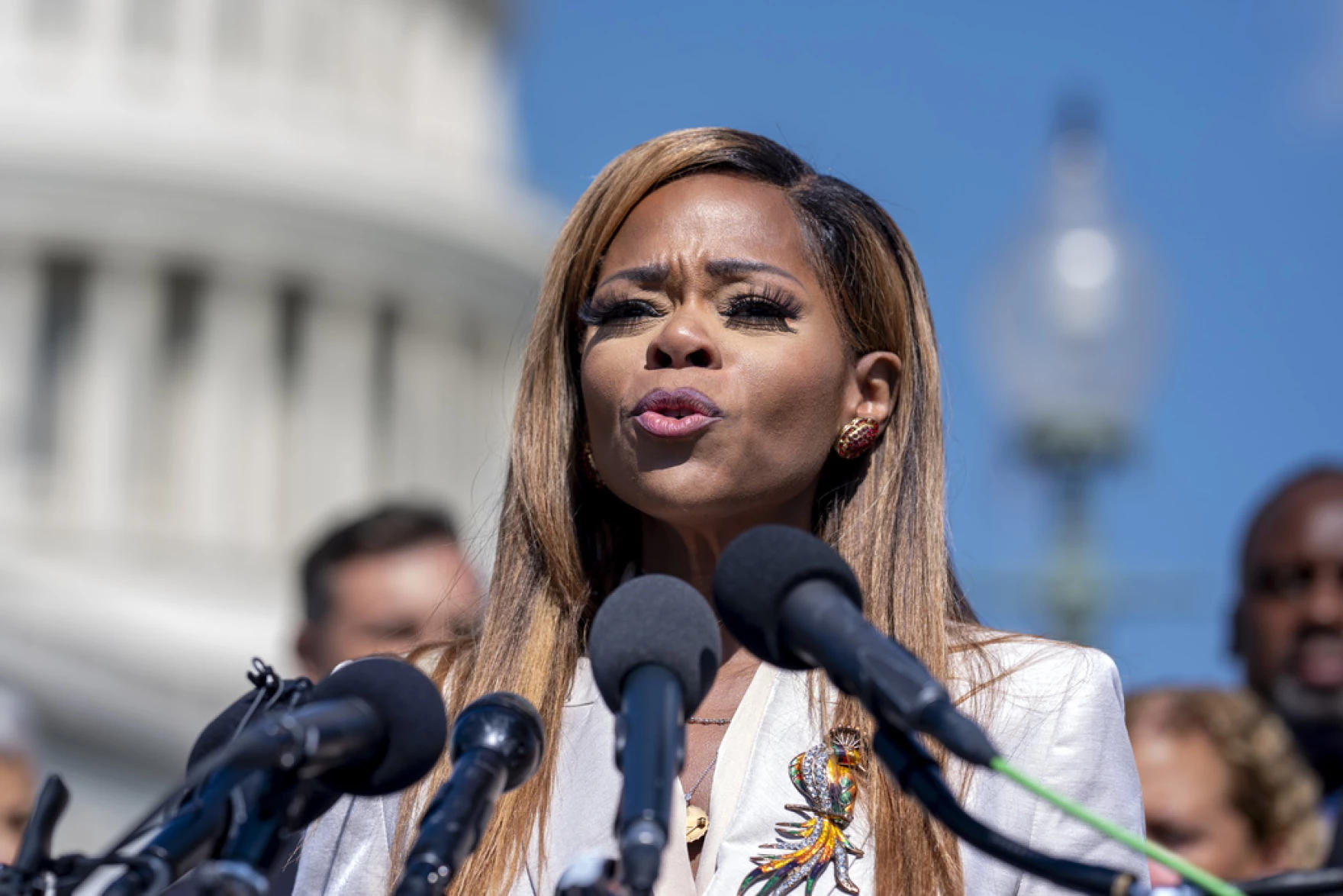
Cherfilus-McCormick, a Miramar Democrat representing Florida’s 20th Congressional District, has been dogged for years by accusations that she misappropriated funds her former health care company received to register people for COVID vaccinations, using the money to instead finance her 2022 election.
She has denied the allegations through a persistent House Ethics Committee probe, which was reauthorized in July. Now, she’ll defend herself against the accusations in a criminal case.
On Nov. 19, a federal grand jury indicted Cherfilus-McCormick on charges that she stole $5 million in COVID-related overpayments and rerouted them to her campaign. The Justice Department is prosecuting the case, which the Miami offices of the Federal Bureau of Investigation and Internal Revenue Service are investigating.
If found guilty on all counts, the 46-year-old lawmaker — who made history as the first Haitian American Democrat elected to Congress — could face up to 53 years in prison.
For her part, Cherfilus-McCormick hasn’t let on publicly that recent developments have shaken her much, despite her swift removal from a committee leadership post and calls for her resignation.
She’s even fundraised off the issue, telling voters by text that she needs help “fighting back” against a “politically motivated” attack against her.
In a cheeky bit of one-upsmanship, one of her Primary challengers, Elijah Manley — whom she’s suing for defamation for accusing her of generally the same misdeeds detailed in the indictment — is fundraising off of her fundraising.

3. Alligator Alcatraz stirs controversy, immigration debate
When Trump retook the White House in January, it was a foregone conclusion that immigration enforcement would be a major pillar of his administration’s agenda. And based on DeSantis’ past actions on the issue, including the controversial migrant flights program he launched under ex-President Joe Biden, many were confident Florida would play an outsized role in that effort.
It sure has, and to a marketable degree. In just weeks in June, the state seized what was previously a Miami-Dade training airport in the Everglades, erecting a makeshift detention center composed of tents, portable toilets, fencing and generators.
Uthmeier dubbed the facility, completed through more than $200 million in no-bid contracts, “Alligator Alcatraz.” And the name stuck — not only in people’s minds, but on shirts, hats and other MAGA merch.
In the weeks and months that followed, Alligator Alcatraz welcomed thousands of detainees, drew widespread and ongoing protests, and spurred inquiries by Democratic members of Congress. It also attracted numerous lawsuits from environmental groups, civil liberties organizations and the Miccosukee Tribe of Indians, which decried, respectively, the facility’s environmental impacts, treatment of detainees and misuse of ancestral land.
It also inspired copycat facilities in Indiana and Nebraska, which the Department of Homeland Security (DHS) dubbed the “Speedway Slammer” and “Cornhusker Clink.”
Legal challenges this year briefly cast doubt on Alligator Alcatraz’s future. One environmental suit led a Judge to order the facility to wind down and stop admitting new detainees, but an appellate court stayed that order, keeping it open.
A federal Judge rejected a separate detainee suit this month, ruling that the legal standard for immediate closure had not been met. Other, similar suits — including ones over access to lawyers — are ongoing.
As for the ongoing price tag of the operation, which includes an estimated $450 million needed yearly to keep things running, Florida got a boost just before the government shutdown, when DHS sent $608 million to cover costs.
Some of those funds may go to a second detainment center, dubbed the “Deportation Depot,” which opened just outside of Jacksonville in September.

2. Eileen Higgins shatters glass ceiling in bellwether race
Polling ahead of Election Day showed Higgins was on track to win. National Democrats poured into the area to bolster her support and energize voters. Further helping her odds was a growing disdain for the harsh treatment of immigrants, many of whom call Miami home, and rising unaffordability in the “Magic City” that she’d expressly made a top issue during her campaign and prior tenure on the Miami-Dade Commission.
But history wasn’t on her side — until it was. Higgins’ victory last month over former City Manager Emilio González marked the first time ever that Miami voters elected a woman as Mayor. She’s also the first Democrat to capture the office in nearly 30 years.
It was a massive accomplishment in a race that many viewed as a bellwether for the 2026 Midterm, and top figures from both political parties treated it as such.
Trump, DeSantis, U.S. Sen. Rick Scott, U.S. Rep. Byron Donalds and a slew of other GOP pols and groups got behind González, who outraised and outspent Higgins ahead of Election Day.
But it was to no avail. Higgins — who enjoyed support from U.S. Reps. Debbie Wasserman Schultz and Frederica Wilson, Miami-Dade Mayor Daniella Levine Cava, former U.S. Transportation Secretary Pete Buttigieg and many more state and local officials — trounced him by 19 points.
Miami voters also said “no thanks” to perpetuating a few political dynasties this year. In June, they picked Ralph Rosado over fellow Republican Jose Regalado, the son of former Mayor Tomás Regalado — now Miami-Dade’s Property Appraiser — and sister of Miami-Dade Commissioner Raquel Regalado.
Then in November, voters rejected mayoral candidates Joe Carollo and Alex Díaz de la Portilla — both former City Commissioners with families boasting decades in Miami politics — and picked newcomer Rolando Escalona over Joe’s brother, Frank, in a race for the Commission’s District 1 seat.
Higgins’ win wasn’t the only history-maker this year. In Miami Beach, Democratic Commissioner Alex Fernandez scored a record-setting victory by taking 84% of the vote against a GOP challenger. Bryan Calvo, a Republican, also became the youngest person ever elected Mayor of Hialeah. And in the Special Election for House District 90 in Palm Beach County, Democrat Rob Long won by more than 27 points, the largest margin of victory there since redistricting.
1. South Florida sees unprecedented representation in D.C.
Trump became America’s first President from Florida when he took office in January. He’d served his first term while still registered to vote in New York. But in 2019, while mounting a comeback campaign, he changed his registration to the Sunshine State. And since he regained control of the White House, he’s remade its halls, walls and offices in his image.
He’s done the same for Washington, D.C., and its many national and international extensions.
Accordingly, a sizable share of key Washington figures are from South Florida. By our count, more than a dozen top Trump administration figures are from or live in the area.
From Miami-Dade, there’s Secretary of State Marco Rubio, U.S. Marshals Service Director Gadyaces Serralta, Under Secretary of State Jacob Helberg and Under Secretary of Defense Emil Michael.
From Palm Beach, there’s Deputy Secretary of Labor Keith Sonderling, Federal Housing Agency Director Bill Pulte, Under Secretary of State Thomas DiNanno, Under Secretary of Defense Anthony Tata, Deputy Attorney General Todd Blanche, Federal Procurement Policy Administrator Kevin Rhodes and Deputy Assistant Secretary of Homeland Security Sara Perkins.
Supreme Court Justice Ketanji Brown Jackson, a Biden appointee, grew up and graduated from high school in Miami.
Many of America’s diplomats are from South Florida, too. From Miami-Dade, Trump tapped former County Commissioner Kevin Marino Cabrera for Panama, health care entrepreneur Benjamín León Jr. for Spain, Howard Brodie for Finland and Michael Kavoukjian for Norway.
He also chose Palm Beach’s John Arrigo, Duke Buchanan III, Sergio Gor, Kimberly Guilfoyle, Michael Issa, Lee Lipton, Nicole McGraw, Roman Pipko and Anjani Sinha to represent U.S. interests in Portugal, Morocco, India, Greece, Lebanon, the Philippines, Croatia, Estonia and Singapore, respectively.
Florida’s growing government and lobbying power in Washington was the focus of Florida Politics’ final issue of INFLUENCE this year, and for good reason; it’s unprecedented and represents a shifting political landscape that increasingly looks to our state for direction.
And with Trump in the Oval Office, Perez as Florida House Speaker, Rubio as Secretary of State and a host of other South Floridians calling shots, South Florida’s influence factors heavily into where America will go next.