
Politics
Hayden Dublois foresees serious fines for fraud if Florida can’t get food stamp errors under wraps
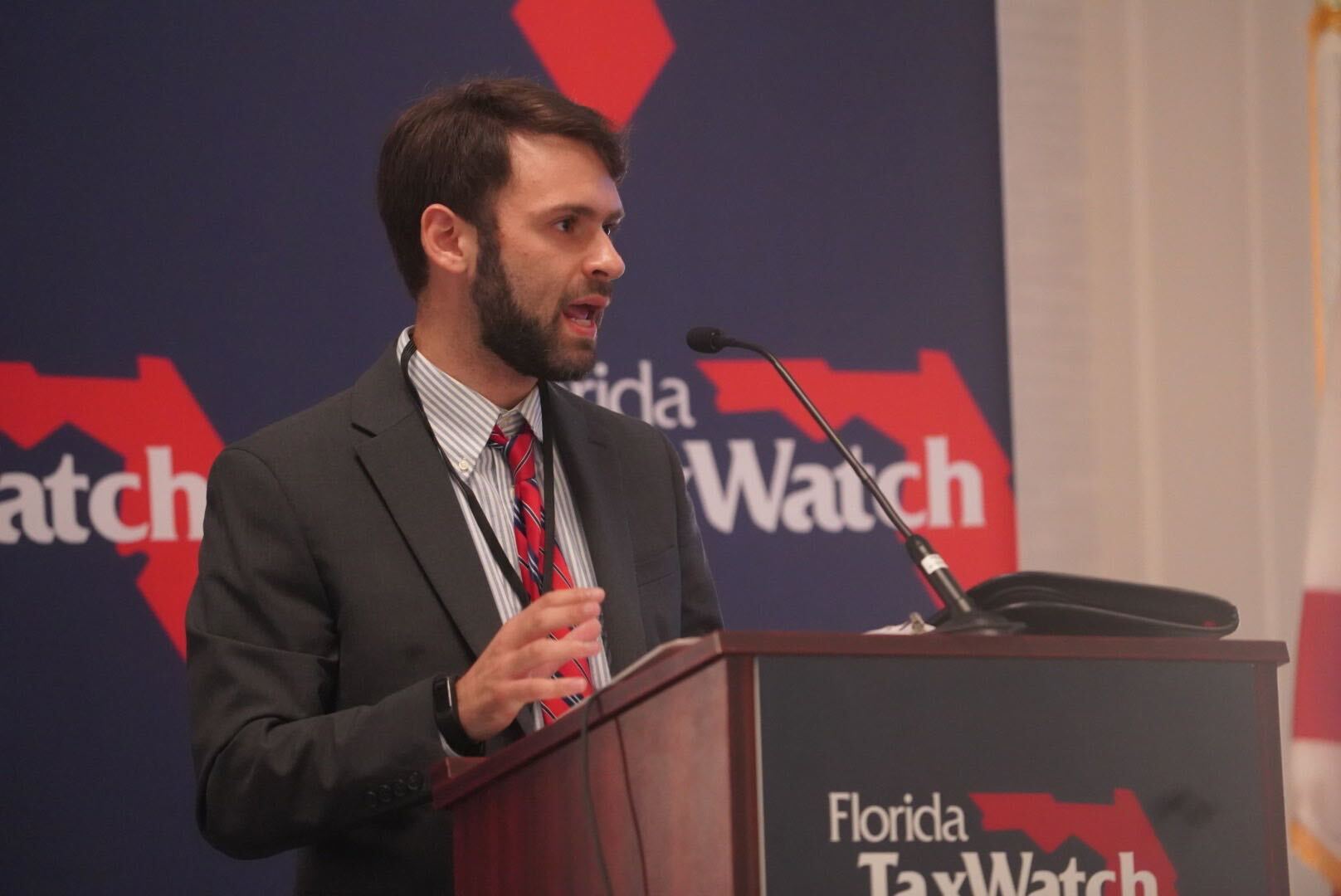
Hayden Dublois still recalls a news report with a woman discussing breaking off a drug addiction and becoming financially independent. One phrase always stood out.
“Jocelyn said, I quote, ‘It was harder for me to get free from food stamps than it was for me to get free from heroin,’” Dublois recalls. “That is the crisis of dependency — not a crisis of bad people, but rather a crisis of toxic government policy that, under the guise of compassion, traps tens of millions of Americans from realizing their self-worth.”
Dublois today serves as Data and Analytics Director for The Foundation for Government Accountability, an influential federal think tank founded in Naples. He spoke about the organization’s mission as the keynote speaker for Florida TaxWatch’s Chairman’s Dinner.
He discussed the fight against fraud and waste at the state and national level, but also believed that social welfare programs for years served not as a “war on poverty,” but a “war on work.”
He said Florida, despite years of efforts to limit spending, still has problems with its own food stamp program.
“Florida’s food stamp error rate is 15.1%. That’s not only worse than the national average, but it’s actually among the five worst states in the nation,” he said. “In the most recent fiscal year, Florida spent $920 million on improperly issued food stamp benefits.”
He said massive welfare reform will be enforced in the wake of the One Big Beautiful Bill signed by President Donald Trump last year.
“For the first time ever, states will be required to cross-check their enrollment data against records from other states and against death records, and for the first time ever, states will need to prove their Medicaid waivers are budget-neutral before getting approval from the federal government,” he said.
He said the changes will prove consequential for Florida. “These changes come with big consequences for states that don’t act because the war on work is over. It’s now a war on fraud,” Dublois said.
For example, if Florida’s eligibility rate next year is one percentage point higher than the new national threshold, the state could face a $200 million fine.

“Food stamps have historically been 100% federally financed. Not anymore. States with high error rates will now bear a portion of those costs,” he said.
“Remember when I said Florida had a food stamp error rate far above the national average? If Florida’s error rate remains where it is today, state taxpayers, starting in Chicago, fiscal year 28, will be on the hook for, as I mentioned, another $990 million that will have to come out of our general fund in annual penalties.”
He said the problems were also keeping resources away from those truly in need. Florida has more than 20,000 people on a waiting list for disability care, for example.
“That’s why fixing our welfare programs is not just a question of dollars and cents,” he said. “It’s a moral obligation.”